Values
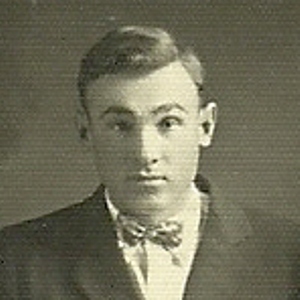
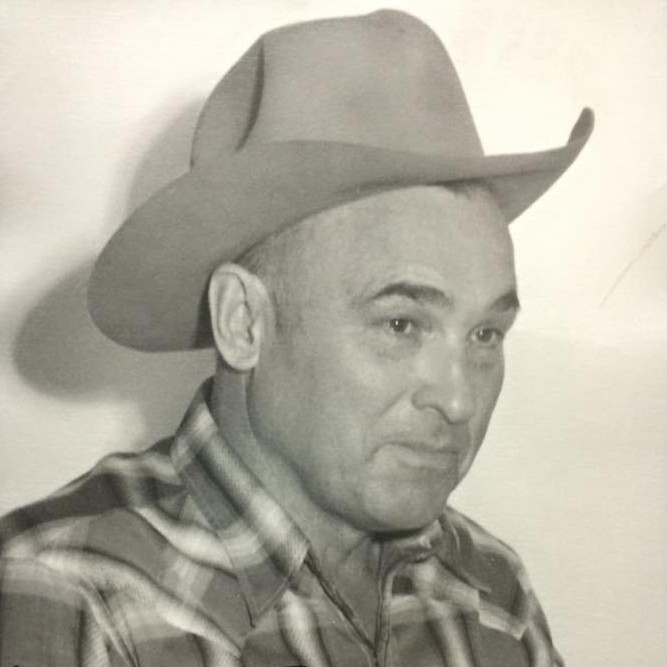 When my husband, Bob’s grandfather, Andy Schulenberg was a boy of 14 years, he was involved in a hunting accident, in which his leg was injured. Things were different in those days, and medicine just wasn’t as advanced as it is now. Not that medicine was antiquated in 1920, but much has been learned about how to save limbs since those days. Grandpa’s leg did not fare well, and after fighting infections, most likely gangrene, and losing the battle, it became apparent that if they were to save his life, they would have to sacrifice the leg.
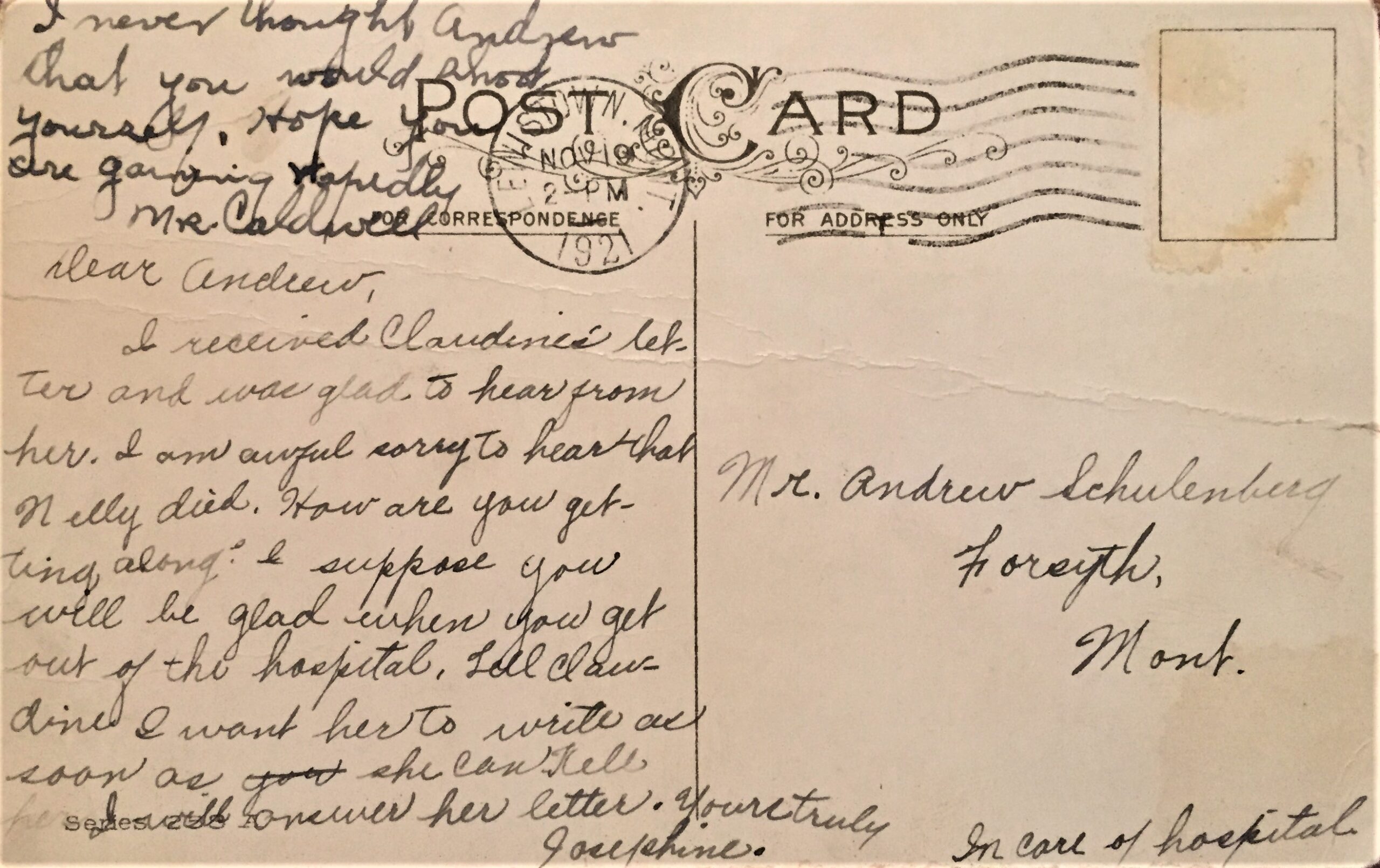
Following the accident and with the amputation, Grandpa send 14 months in the hospital. Now that’s a long time for anyone, but for a 14-year-old boy, that must have felt like an eternity. He missed a year of school, as well as all the fun things kids that age were doing. He also missed helping his parents with various chores, something which might not seem to be a negative thing, but when boredom sets in, a person would far rather work on the farm than lay in a bed. While inventors had dabbled 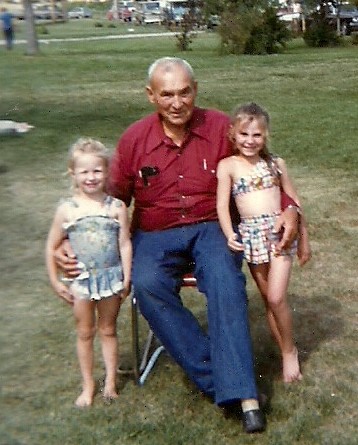
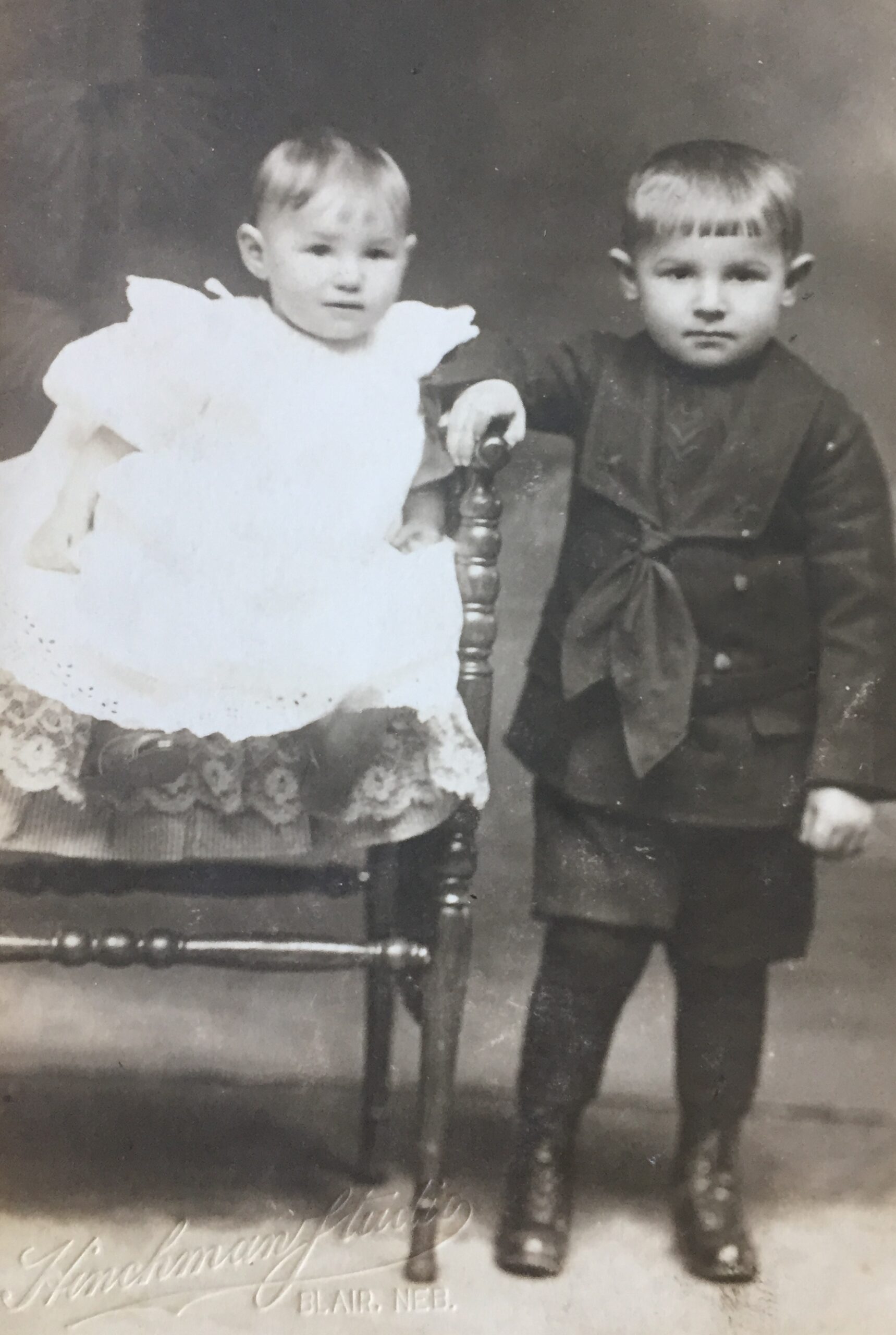 with the invention of the television, it was by no means perfected, and so he basically had the visitors who came in and books for entertainment. Not much fun really, especially since a lot of boys aren’t terribly interested in reading. Thankfully for Grandpa, his family tried to rally around him, and he received a number of postcard letters during that time. I would imagine he lived for the mail delivery, hoping he got a letter, after which he devoured the words on the page, even if the writer didn’t always pick their words very carefully. It was his connection to the outside world.
Grandpa was fitted with a wooden peg leg, but it would still be a long road learning to walk with it. I never knew exactly how high the leg went, but I believe it was probably mid-thigh. It was during this time that Grandpa would show his true fortitude He could have laid in that bed, giving up and letting other people take care of him, but he didn’t do that. He got up and worked hard to recover his mobility. Sure, he knew that things would never be the same, but he had things he wanted to do, and he was determined not to let this take him out of commission.
He went on to become the Sheriff of Rosebud County. One might think that he would never want anything to do with guns again, but while he didn’t really see the need for them much as sheriff, he was still well able to use 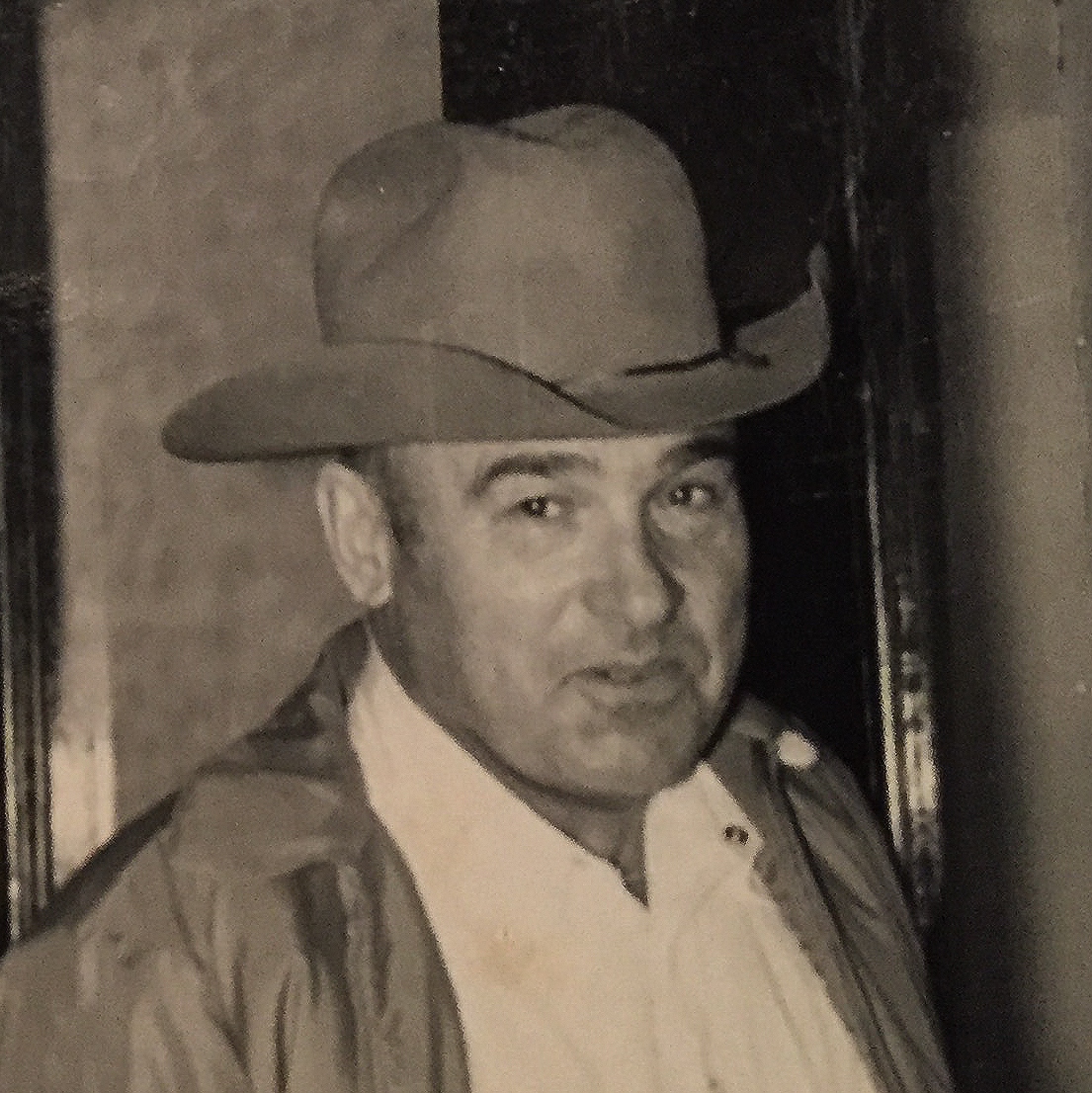
 them. He was sheriff between 1955 and 1972, and during that time, he was well known as “the sheriff without a gun.” It’s hard to imagine a sheriff who has a reputation big enough to be able to work without a gun, including making arrests, but that was what he did. I don’t know if guns bothered him or not, but if so, he was quite successful at hiding it. Today is the 116th anniversary of Grandpa’s birth. Happy birthday in Heaven, Grandpa Schulenberg!! We love and miss you very much.
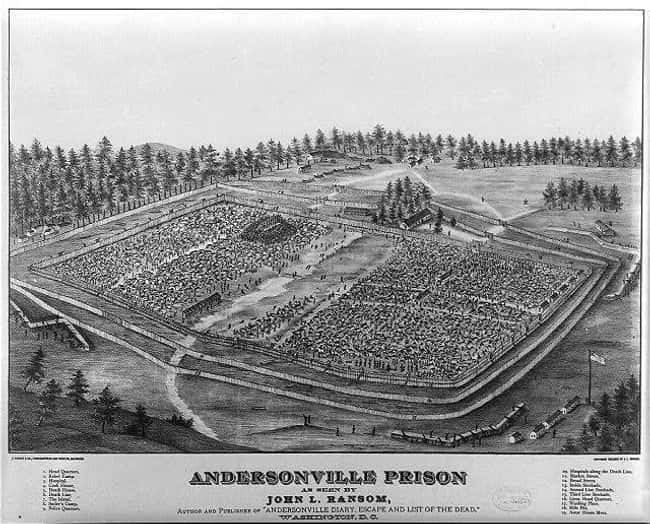
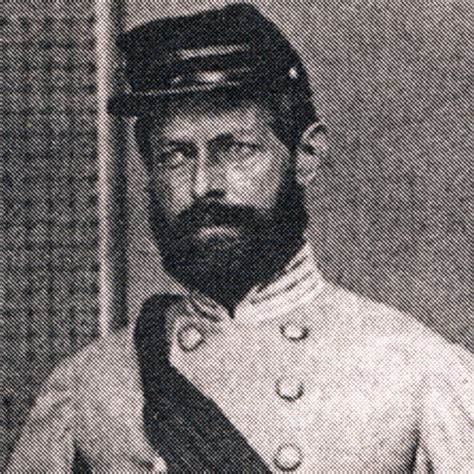 Andersonville POW camp was a Civil War era POW camp that was heavily fortified. It was run by Captain Henry Wirz, who was tried by a military tribunal on charges of war crimes when the war was over. The trial was presided over by Union General Lew Wallace and featured chief Judge Advocate General (JAG) prosecutor Norton Parker Chipman. The prison is located near Andersonville, Georgia, and today is a national historic site that is also known as Camp Sumpter. To me, its design had a somewhat unusual layout in that it had what is called a “Dead Line”. Some people might know what that is, but any prisoner who dared to tough it, much less try to cross it, found out very quickly what it was, because they were shot instantly…no questions asked. For that reason, prisoners rarely escaped from Andersonville Prison. The “dead line” was set up by the Confederate forces guarding the prison, to assist in prisoner control. The prison operated between February 25, 1864, and May 9, 1864. During that time, a total of 4,588 patients visited the Andersonville prison hospital, and 1,026 never left there alive.
According to former prisoner, enlisted soldier John Levi Maile, “It consisted of a narrow strip of board nailed to a row of stakes, about four feet high.” The “dead line” completely encircled Andersonville. Soldiers were told to “shoot any prisoner who touches the ‘dead line'” “It was the standing order to the guards,” Maile explained. “A sick prisoner inadvertently placing his hand on the “dead line” for support… or anyone touching it with suicidal intent, would be instantly shot at, the scattering balls usually striking other than the one aimed at.” It was a risk the prisoners took if they chose to be anywhere near the “dead line” at all. Prisoner Prescott Tracy worked as a clerk in the Andersonville hospital. He said, “I have seen one hundred and fifty bodies waiting passage to the “dead house,” to be buried with those who died in hospital. The average of deaths through the earlier months was thirty a day; at the time I left, the average was over one hundred and thirty, and one day the record showed one hundred and forty-six.” The major threats in the prison camp were diarrhea, dysentery, and scurvy.
A sergeant major in the 16th Regiment Connecticut Volunteers, Robert H. Kellogg what he saw when he entered the camp as a prisoner on May 2, 1864, “As we entered the place, a spectacle met our eyes that almost froze our blood with horror, and made our hearts fail within us. Before us were forms that had once been active and erect…stalwart men, now nothing but mere walking skeletons, covered with filth and vermin. Many of our men, in the heat and intensity of their feeling, exclaimed with earnestness. “Can this be hell?” “God protect us!” and all thought that he alone could bring them out alive from so terrible a place. In the center of the whole was a swamp, occupying about three or four acres of the narrowed limits, and a part of this marshy place had been used by the prisoners as a sink, and excrement covered the ground, the scent arising from which was suffocating. The ground allotted to our ninety was near the edge of this plague-spot, and how we were to live through the warm summer weather in the midst of such fearful surroundings, was more than we cared to think of just then.”
After hearing the accounts of men who had the misfortune of being incarcerated in this horrific POW camp, I 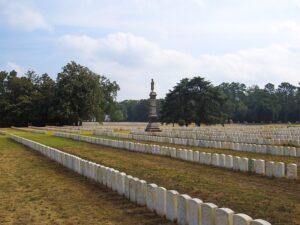
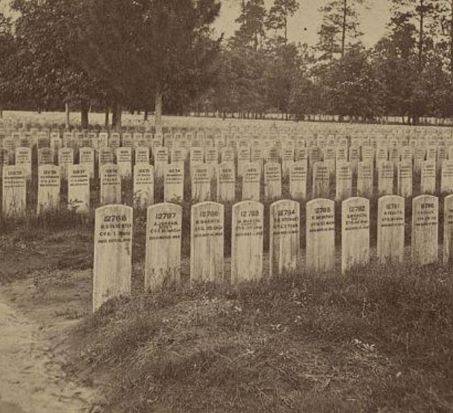 wondered if there might have been some changes had the camp been run in more modern times. Of course, there is no guarantee of that, since there has been mistreatment of prisoners-of-war in all wars, and the treatment ultimately falls on the people running the camp and the soldiers monitoring the prisoners. It is, however, a sad state of affairs when prisoners are starved, beaten, frozen, and otherwise mistreated in these camps. The point is to hold them, not murder them.
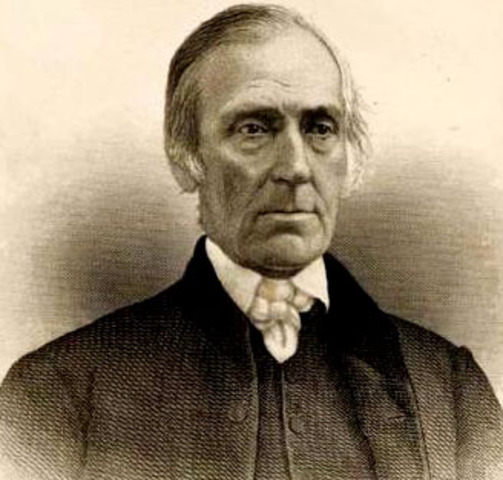
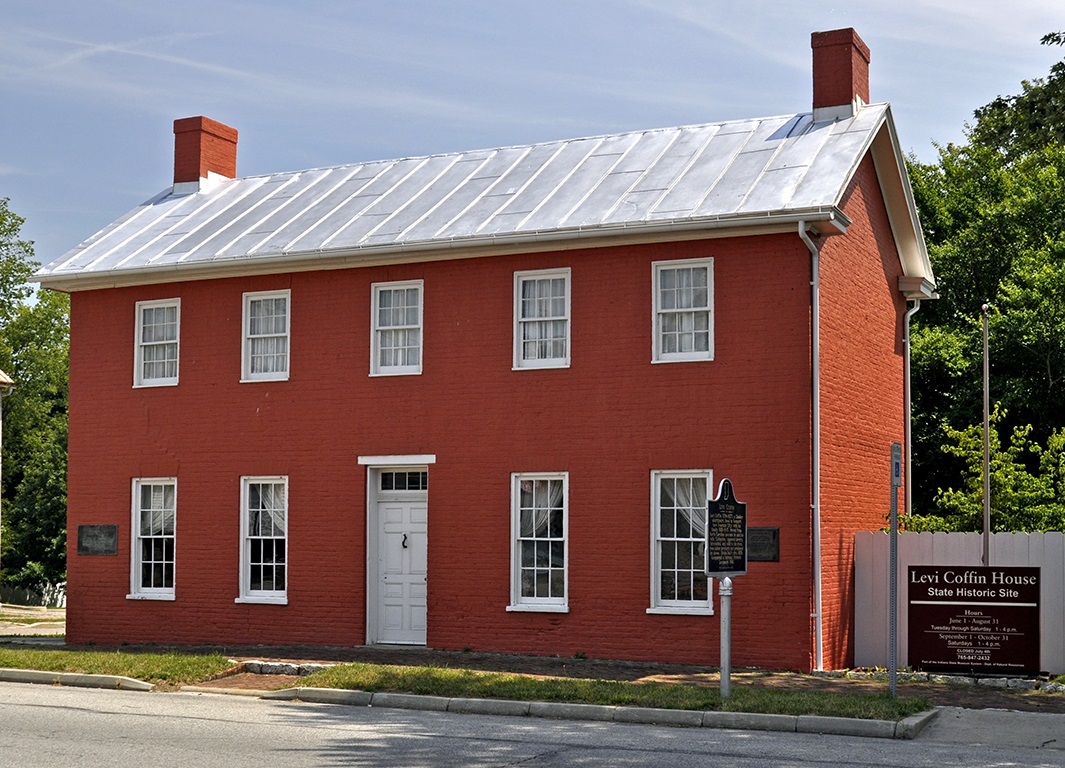 In any kind of slavery situation, there are always people who are willing to help those who are being held against their will. Just like during the Holocaust, when the slaves were in trouble, people came to their rescue by forming the Underground Railroad. One hero of the Underground Railroad was Levi Coffin. In the winter of 1826-1827, fugitives began to come show up at the Coffin house. It started out as a well-kept secret and just a few slaves came, but the numbers increased as it became more widely known on different routes. These slaves were running away from bondage, beatings, and limitless working hours. Their lives were little better than death, and they knew they had to escape or die.
When they arrived at the Coffin house, they were welcomed in and given shelter, they would usually sleep during the day, and then they were quickly forwarded safely on their journey. Neighbors who had been too fearful of the penalty of the law to help at first, saw how well the Underground Railroad was being run and soon they felt encouraged to help. A big part of the change of attitude came from the fearless manner in which Levi Coffin acted and the success his efforts produced. The neighbors began to contribute clothing the fugitives and aid in forwarding them on their way. They were still too afraid to shelter them under their own roof, so that part of the work fell to the Coffin household. There were the “content to watch” people, who obviously wanted to see the work go on…as long as someone else took the risk. And of course, there were those who told Levin Coffin he was wasting his time. They tried to discourage him and dissuade him from running such risks, telling him that they were greatly concerned for my safety and monetary interests. They tried to convince him that continuing this risky business could damage his business and possibly even ruin him. The told him he could be 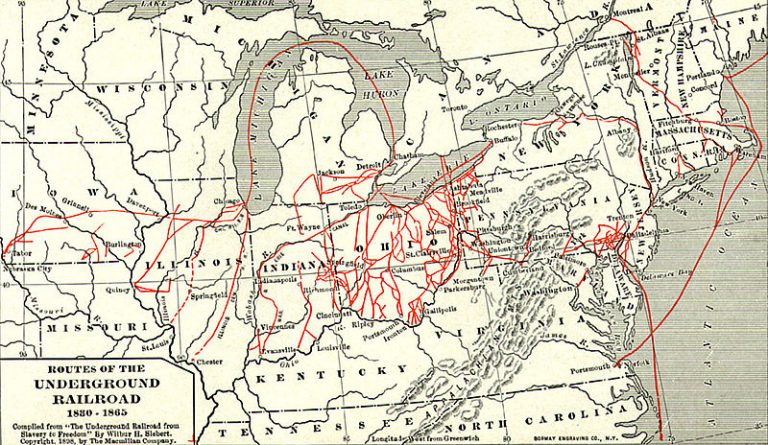 endangering himself and his family too. I suppose it could have, because there are always those who sympathized with the slave-owners, but Levi Coffin could not stand to see the horrible treatment the slaves endured. He had to do something, no matter what it cost him, just like those who helped the Jews during the Holocaust.
Levi listened to these “counselors” and then told them that he “felt no condemnation for anything that I had ever done for the fugitive slaves. If, by doing my duty and endeavoring to fulfill the injunctions of the Bible, I injured my business, then let my business go. As to my safety, my life was in the hands of my Divine Master, and I felt that I had his approval. I had no fear of the danger that seemed to threaten my life or my business. If I was faithful to duty and honest and industrious, I felt that I would be preserved and that I could make enough to support my family.”
Even some of those people who were opposed to slavery, felt it was very wrong to harbor fugitive slaves. They figured that the slaves must be guilty of some crime, such as possibly killing their masters or committed some other crime in their escape attempts…making those who helped them an accomplice to the “crime” they were supposedly guilt of. Oh, they had every imaginable objection, and figured it was, at the very least, their duty to make their thoughts known. Once they had voiced their objections, their conscience was clear, and if Levi met with a tragic end, they could at least say, “I told him!!” Levi, in return asked one such “neighbor’s keeper” neighbor, if he thought the Good Samaritan stopped to inquire whether the man who fell among thieves was guilty of any crime before he attempted to help him? He said, “I asked him if he were to see a stranger who had fallen into the ditch would he not help him out until satisfied that he had committed no atrocious deed?” I suppose it was a “crime” to escape their masters, but then some laws should not be laws, and slavery certainly falls into that category. Levi Coffin had to follow his spirit and do what he felt God would expect of him, and in 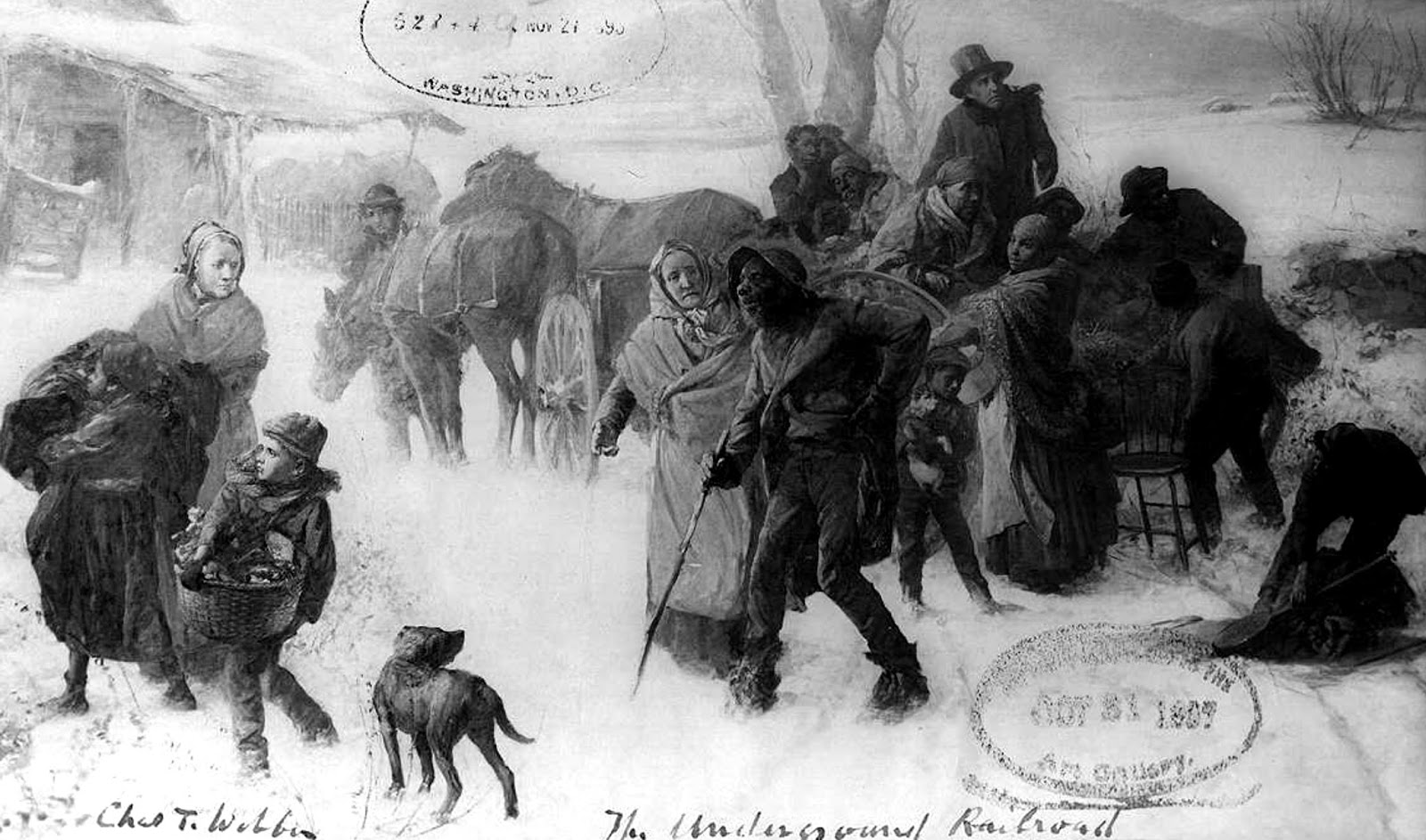 the end, he saved many lives.
Many of Levi’s pro-slavery customers left him for a time, and sales were down. For while his business struggled, but Levi knew that he was doing God’s will, and so God would take care of him and his business. Before long, new customers replaced those who had left him. New settlements were rapidly forming to the north and Levi’s own was filling up with emigrants from North Carolina and other States. His trade increased and his business grew. He says of this time in his life, “I was blessed in all my efforts and succeeded beyond my expectations.”
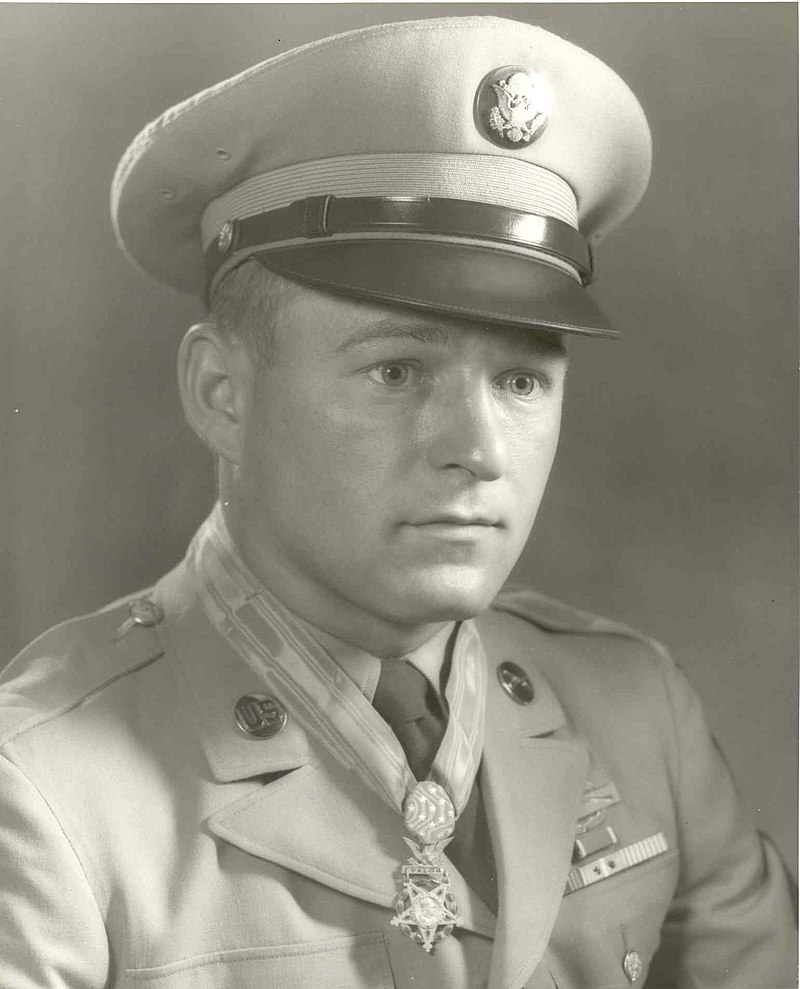 What makes a Medal of Honor winner? I don’t mean what act actually earns them the medal, but rather what causes them to get to that point and beyond. The Medal of Honor is the United States government’s highest and most prestigious military decoration that may be awarded to recognize American soldiers, sailors, marines, airmen, Space Force guardians, and coast guardsmen who have distinguished themselves by acts of valor…or great courage in the face of danger, especially in battle. I seriously doubt if the winner gave any thought to what he had to do to win the medal…there is just no time, and people don’t perform heroic acts just for the medal. It’s bigger than that.
One man, Corporal Ronald Rosser, earned his Medal of Honor while serving in the 38th Regiment of the 2nd Infantry Division during the Korean War. Rosser enlisted in Army at the age of 17 and served from 1946 until 1949. His tour was finished, and he went home, but then his younger brother was killed in Korea in February of 1951. Rosser was devastated, but instead of wallowing in grief, he chose to honor his brother. Rosser re-enlisted to “finish his [brother’s] tour” of duty. Revenge was the only thing he could do for his brother now, and Rosser wanted revenge. In January of 1952, Rosser was a part of the regiment’s L Company. L Company was dispatched to capture an enemy-occupied hill. The battle there was fierce and enemy resistance caused heavy casualties. L Company was reduced to just 35 men from the initial 170 sent out, but they were ordered to make one more  attempt to take the hill. Orders are orders, and as I said, the men didn’t really have time to think about how they could prove their courage. Rosser rallied the remaining men and charged the hill. Enemy fire continued to be heavy, but Rosser attacked the enemy position three times, killing 13 enemy soldiers, and although wounded himself, carried several men to safety. It truly was a courageous act, and one worthy of the Medal of Honor, but not one that Rosser had planned in any way. He just knew that he needed to save as many lives as he could, because he couldn’t live with himself if he didn’t. On June 27, 1952, Rosser was awarded the Medal of Honor by President Harry Truman at the White House for his heroism. On September 20, 1966, another of Rosser’s brothers, PFC Gary Edward Rosser, USMC, was killed in action, this time in the Vietnam War. Rosser requested a combat assignment in Vietnam but was rejected and subsequently retired from the army soon after. Rosser married Sandra Kay (nee Smith) Rosser who died November 28, 2014. He was the father of Pamela (nee Rosser) Lovell. Rosser died on August 26, 2020, in Bumpus Mills, Tennessee at the age of 90.
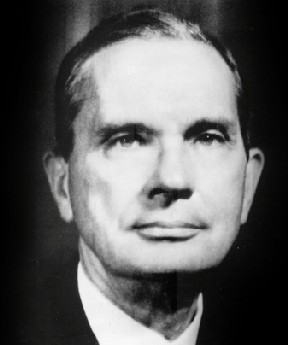 During their reign of terror, Japan, like Germany had their sights set on world domination. Japanese troops landed in Hong Kong on December 18, 1941, and an immediate slaughter began. The process started with a week of air raids over Hong Kong, which was a British Crown Colony at the time. Then on December 17, Japanese envoys paid a visit to Sir Mark Young, who was at that time, the British governor of Hong Kong.
The envoys’ message was simple: “The British garrison there should simply surrender to the Japanese—resistance was futile.” The envoys were sent home with the following retort: “The governor and commander in chief of Hong Kong declines absolutely to enter into negotiations for the surrender of Hong Kong…”
The unsuccessful negotiations brought a swift wave of Japanese troops, who in retaliation for the refused surrender, landed in Hong Kong with artillery fire for cover and the following order from their commander: “Take no prisoners.” The troops quickly overran a volunteer antiaircraft battery, and the Japanese invaders roped together the captured soldiers. In a complete disregard for human life, a complete disregard for the Geneva Convention rules, or any rules of common decency, the Japanese proceeded to bayonet them to death. Even those who offered no 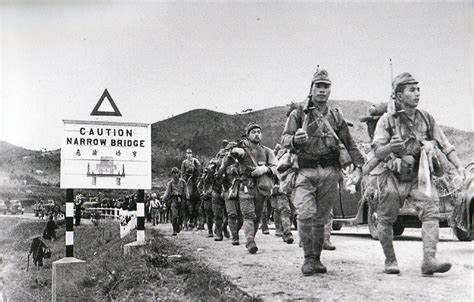 resistance, such as the Royal Medical Corps, were led up a hill and killed. They showed no mercy, just hate and evil. Following the initial slaughter, the Japanese took control of key reservoirs. With the water under their control, they threatened the British and Chinese inhabitants with a slow death by thirst. With their backs against a wall, the British finally surrendered control of Hong Kong on Christmas Day.
On that same day, the War Powers Act was passed by Congress, authorizing the president to initiate and terminate defense contracts, reconfigure government agencies for wartime priorities, and regulate the freezing of foreign assets. It also permitted him to censor all communications coming in and leaving the country. President Franklin D Roosevelt appointed the executive news director of the Associated Press, Byron Price, as director of censorship. Although invested with the awesome power to restrict and withhold news, Price took no extreme measures, allowing news outlets and radio stations to self-censor, which they did. Most top-secret information, including the construction of the atom 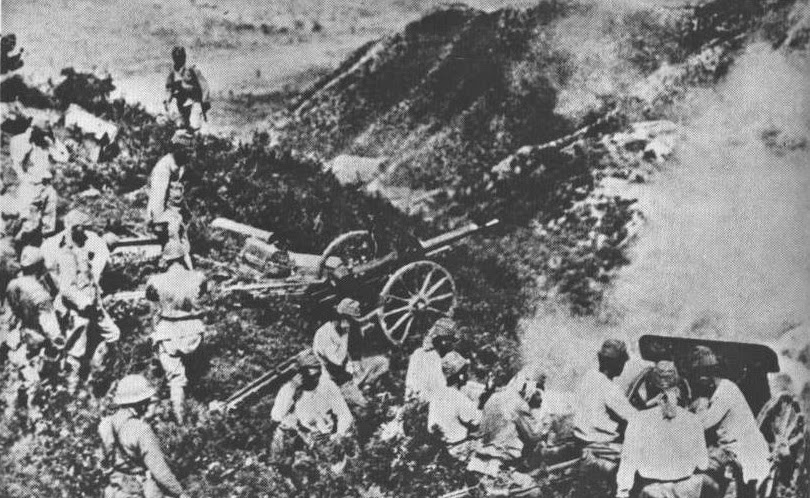 bomb, remained just that…strangely, but then those were different times.
“The most extreme use of the censorship law seems to have been the restriction of the free flow of “girlie” magazines to servicemen…including Esquire, which the Post Office considered obscene for its occasional saucy cartoons and pinups. Esquire took the Post Office to court, and after three years the Supreme Court ultimately sided with the magazine.” It amazes me just how much times have changed. These days the “girlie” trash is totally acceptable, but truth is censored and lies are allowed. Too bad we are so far out from those days.
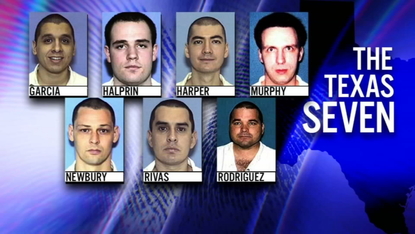 Maybe they were just wanting to be home for Christmas, and not knowing exactly how long it would take…while hiding out from the law, that is…the Texas Seven decided to get a jump start on the journey. No, probably not. It wasn’t Christmas with loved ones that was on their minds…it was freedom. On December 13, 2000, seven prisoners dubbed the “Texas Seven” by the media, broke out of maximum-security prison in South Texas, setting off a massive six-week manhunt. The prisoners were Joseph Christopher Garcia, Randy Ethan Halprin, Larry James Harper, Patrick Henry Murphy Jr, Donald Keith Newbury, George Angel Rivas Jr, and Michael Anthony Rodriguez. The escapees overpowered civilian employees and prison guards in the maintenance shop where they worked and stole clothing, guns, and a vehicle. The men left a note saying: “You haven’t heard the last of us yet,” and they were right. These men were convicted of crimes like murder, rape, and robbery. They were set to be executed soon, so they had nothing to lose.
These were not the kind of people that anyone wanted to have running around the state…or anywhere outside of prison walls. Soon after escaping from the Connally Unit lockup in Kenedy, Texas, the fugitives picked up another getaway vehicle. This one provided by the father of one of the men. They robbed a Radio Shack store in Pearland, Texas, coming out with cash and police scanners. On Christmas Eve, the escapees struck a sporting-goods store in Irving, Texas, where they stole a large amount of cash and weapons. In the process, the men killed police officer Aubrey Hawkins, shooting him multiple times with multiple weapons and running him over. Now they really had nothing to lose. Now, they were cop killers on top of everything else. It looked like it was time to get out of Dodge…or in this case, Texas.
The Texas Seven headed to Colorado, where they purchased a motor home and told people they were Christian missionaries. They rented a spot at a trailer park near Woodland Park, Colorado. They were there about a month before things started to fall apart. On January 22, 2001, after seeing the “Texas Seven” profiled on the TV program America’s Most Wanted, someone tipped off the police to the group of seven “missionaries” near Woodland Park. During the raid, ringleader George Rivas was captured along with three of the other men. Larry James Harper decided that he was not going back to prison, so he committed suicide after being surrounded by 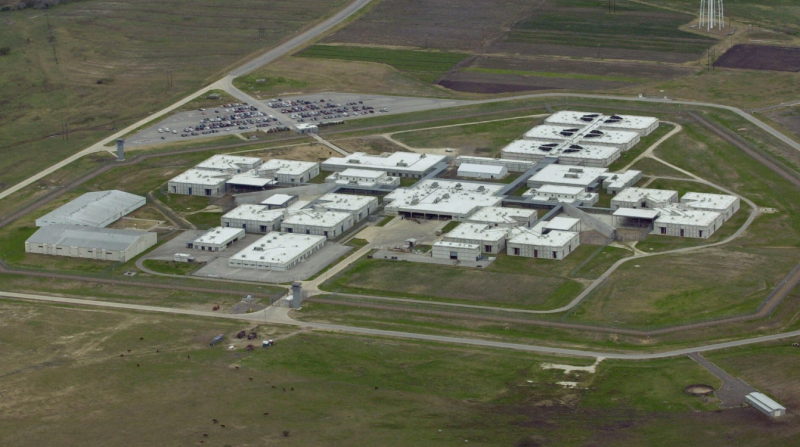 police. Two days later, law enforcement officials closed in on the two remaining escapees at a hotel in Colorado Springs. A standoff ensued, during which the fugitives conducted phone interviews with a TV news station and claimed their escape was a protest against Texas’ criminal justice system. Someone always has to add a bit of drama to justify their new crimes. There was no evidence indicating their claim was justified. The men then surrendered to authorities. Their crime spree was over. Of the six remaining, four have since been executed. Randy Ethan Halprin and Patrick Henry Murphy Jr are currently back at Polunsky Unit in Livingston, Texas on Death Row awaiting execution.
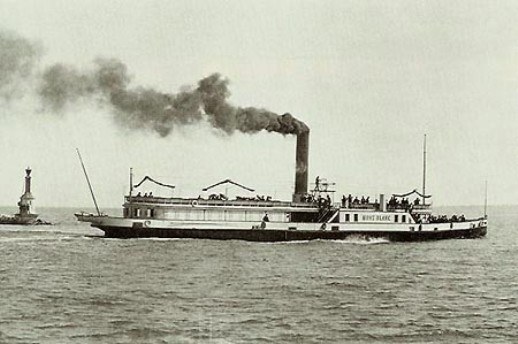 Disaster was eminent that December 6, 1917, and indeed, the disaster had already begun, but it was very likely to get far worse. Vincent Coleman and his co-worker, Chief Clerk William Lovett were working at the Richmond station where they received word that there was a crash between the French munitions ship, SS Mont-Blanc, and a Norwegian ship, SS Imo. A collision, in and of itself, would not have been any more serious than any other collision, except that the French munitions ship, was carrying a deadly cargo of high explosives. The likelihood of an explosion was the eminent disaster that was waiting to happen.
That day, in what was called the Halifax Explosion, Coleman is remembered as one of the heroic figures, because of his quick-thinking message to an oncoming train to stop and remain out of range before the explosion. Coleman knew what was coming, and he saved many lives as a result of holding back that train. born on March 13th, 1872, was a train dispatcher for the Canadian Government  Railways. Moments after the collision, the SS Mont-Blanc caught fire and the crew abandoned the ship. Now it was up to Vincent, trying to hold back a sense of panic, to figure out what trains were going to be coming into Halifax. He knew they had to be warned.
Part of the reason for such a panicked state was that the French ship had drifted from the middle of the channel to the pier. While still burning, she beached herself on the shore in a matter of minutes. The captain warned Coleman of the deadly cargo on the ship, and Coleman flew into action. He immediately sent a telegraph to the Number 10 overnight express train that was coming in from Saint John, New Brunswick, carrying over 300 passengers, telling them to stop where they were and remain there until further notice, thereby saving the lives of passengers and crew. Then, Lovett and Coleman quickly evacuated their station, but Coleman couldn’t stay 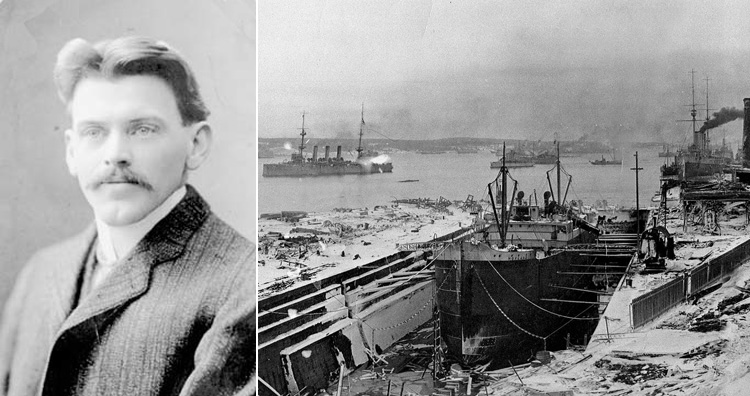 away. There was too much danger. Coleman returned to the station and continued to warn trains all the way to Truro in order to stop them from any closer to the scene. Coleman’s morse was code message was this: “Hold up the train. Ammunition ship afire in harbor making for Pier 6 and will explode. Guess this will be my last message. Good-bye boys.” While Coleman’s message stopped the Number 10 train, saving the lives of 300 people, and also likely saved other lives with his warnings to stay back, he lost his own life in the endeavor when the ship exploded. Staying at the station was a courageous act that cost Coleman his life.

 A strange thought, indeed, but Posthumous Marriage is not illegal in France…at least not since the Malpasset Dam disaster of December 2, 1959. While most of us would consider Posthumous Marriage to be a rather morbid idea, there are a couple of reasons that are considered legitimate reasons for the request for such a marriage to be granted. One such reason is, of course, a matter of deep emotional feelings for the lost fiancé. Another reason is to legitimize any children the couple already had, prior to the marriage…which I guess I can see, to a degree. There are rules that must be followed in order to have such a marriage approved…no matter what the reasons. The living partner must ask the deceased partner’s family for permission, and the invitations to the wedding must have already been sent out (showing intent from both members of the couple). The family can choose to allow, or not to allow the marriage, and if they do not agree, it is over. If family approval is given, the living partner must go before a judge to get legal permission to “marry” the deceased partner…who is usually represented at the service with a photograph. And…there are things that do not come with the marriage, such as any of the deceased partner’s property or money. In all reality, it is simply a symbolic event declaring their love for their partner. Nothing more!!
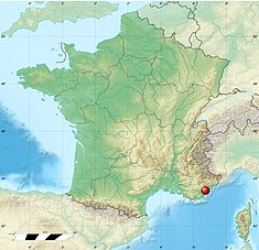
So how did such a strange idea get started in the first place. On December 2, 1959, the Malpasset Dam, an arch dam on the Reyran River, which is located approximately 4 miles north of Fréjus on the French Riviera (Côte d’Azur), Southern France, in the Var department collapsed, killing 423 people in the resulting flood. Signs of an imminent collapse began in November 1959, when a “trickle of clear water observed high on the right [side]” and then cracks noticed later in the month in the concrete apron at the dam toe. The dam was breached at 9:13pm on December 2, 1959. The break was partially due to rainfall and thus the rising level of water. By noon that day, the reservoir had reached its maximum level, and the guardian André Ferro asked for permission to release the excess water, but was denied the ability to do so until 6:00pm of that day. By then, the amount of water was so high that it took three hours to release only a few centimeters of water. The entire wall then collapsed leaving only a few blocks on the right bank. Pieces of the dam are still scattered throughout the area to this day. The damage amounted to an equivalent total of 68 million US dollars.
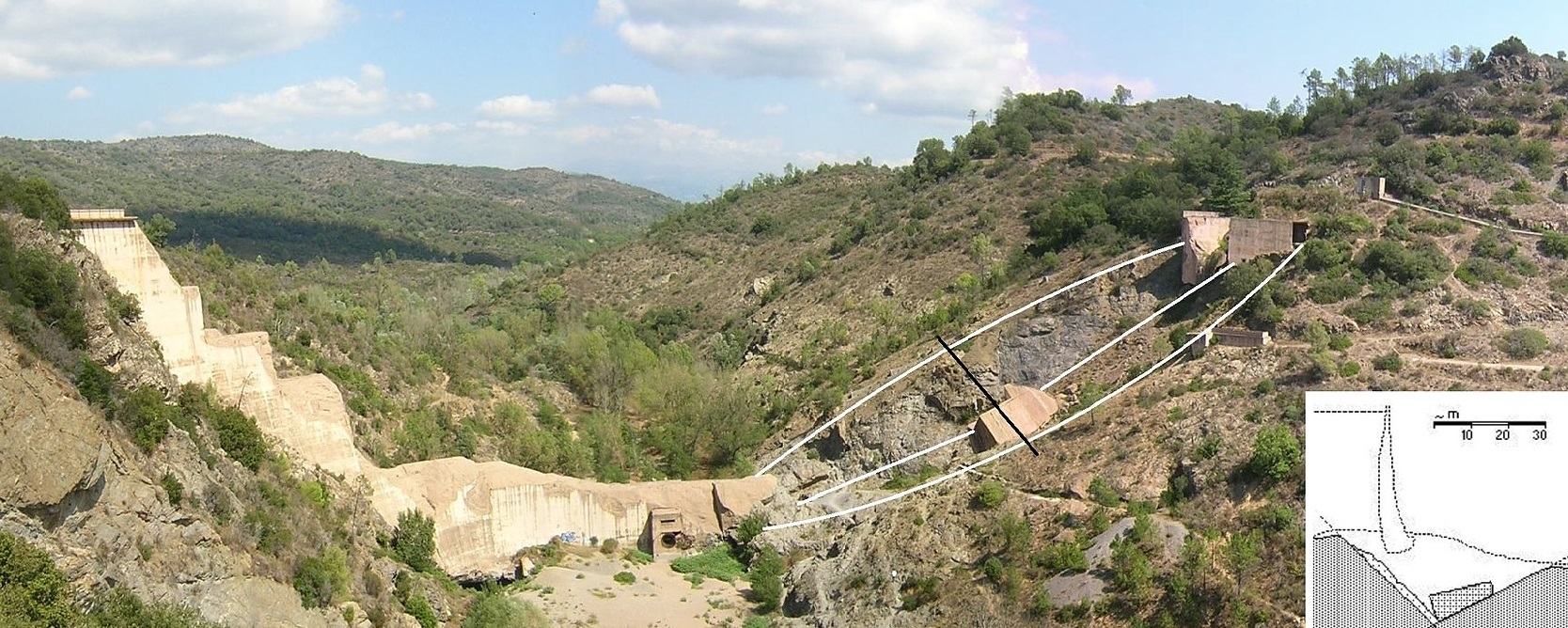
Apparently, there were so many women who lost their fiancés, that the event also ushered in the practice of posthumous marriage in France. It’s hard for me to imagine that out of 423 people, there were enough fiancés to warrant the need for a new law. I could assume that at least some of those couples were…dating yes, but not planning their weddings. Remember, that the invitations had to have been sent out, so there were a lot of couples in varying stages of wedding planning. Still, posthumous marriage is a very strange idea.
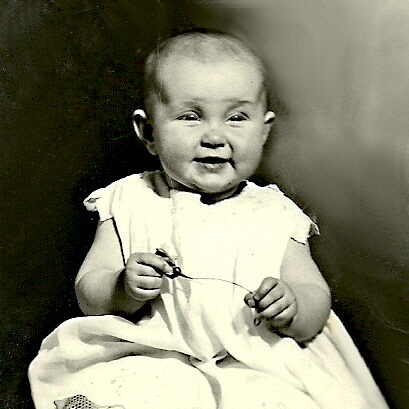
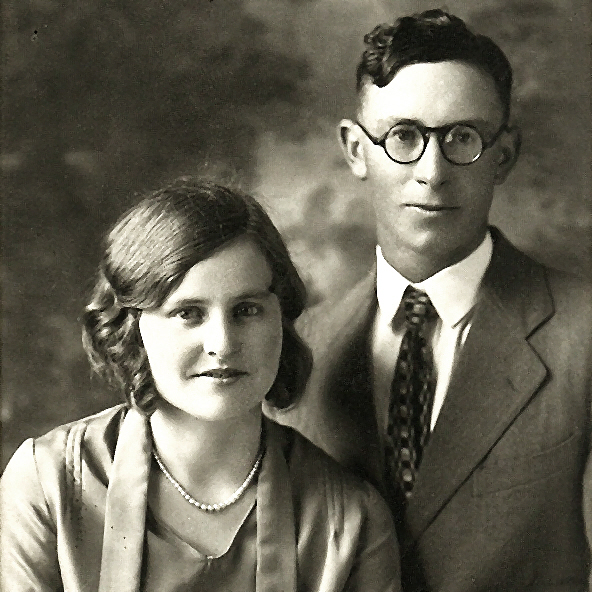 For a while now, in my Bible study, I have been studying about Jesus as the good shepherd. While that may not really remind most people in our family of my husband’s grandpa, Robert Knox, it does remind me of him. Jesus’ stories about how a good shepherd would do what it takes to keep his flock of sheep safe, are really true of any “good” shepherd. The whole job of a shepherd is to fight off the coyote, mountain lion, bear, or any other predator that might harm or even kill the sheep. In Biblical times, and maybe even to this day, the shepherd is often the only one with the sheep, because as we all know, sheep are a fairly docile animal. Predators…however, are definitely not docile. They are ravenously hungry, and you, the shepherd, are the only thing that lies between them and their next meal. That puts you, the shepherd…in the way.
At this point, you might be wondering how that applies to Grandpa Knox, but it does. Grandpa was a shepherd for a time in his working days, and he had an even bigger reason to keep predators away from his flock. While many shepherds were along with their flock, Grandpa was not. He had his wife, Nettie and their three-year-old daughter, Joann Knox (Schulenberg) with him, and it was his most important job to keep them safe. I can’t say that he ever wrestled a coyote, mountain lion, or bear, but it’s possible that he had to kill a few with a gun.
Grandpa Knox did not really seem the type to be a mighty hunter or killer of predators, but I suppose he would 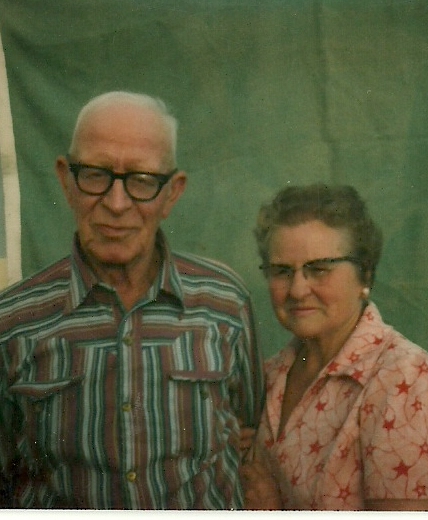
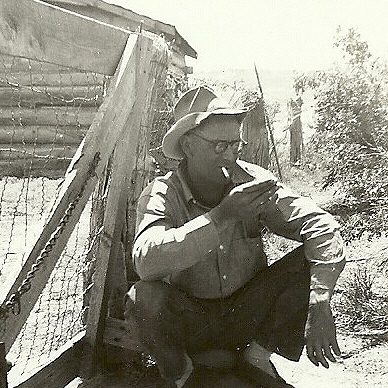 have had to become that in the event of a situation. The Grandpa Knox I met when I joined this family was more the gardener type. Grandpa spent much of his summer hours tending the garden on my in-laws place that provided our family with lots of great vegetables. I thought that the biggest predator Grandpa handled was a stray cow or maybe a hungry bunny rabbit. I suppose he did handle those too, but once upon a time, he protected the sheep in his flock, just like the stories Jesus told us about the shepherd and the predator. Today is the 113th anniversary of Grandpa Knox’s birth. Happy birthday in Heaven, Grandpa Knox!! We love and miss you very much!!
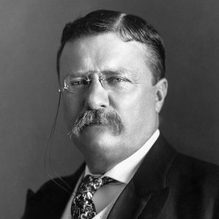
 I have always known that I was stubborn, and “bull headed” and if you ask my sisters, they will very much agree with me on that fact, but I seriously doubt if they would ever call me stubborn if I were compared to President Theodore Roosevelt. I don’t think many people are as stubborn as Roosevelt was. Roosevelt didn’t run for his initial term in office, but rather became president of the United States because William McKinley was assassinated while Roosevelt was serving as vice president. He did run for and win a second term in the election of 1904, during which he promised not to run for a third term thereafter. A man of his word to a point, Roosevelt stuck to that promise through the 1908 election, but then he decided to run for President again in 1912, first losing the Republican primary to the incumbent William Taft and then running at the head of a brand-new party, the Progressive “Bull Moose” Party. It is a strange name for a political party, but I think it might have been appropriate for Roosevelt.
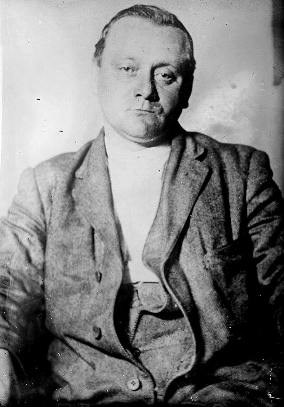
When Roosevelt decided to run for president again in 1912, a saloon owner named John Schrank became obsessed with him, and after having a nightmare that convinced Schrank that Roosevelt was responsible for McKinley’s assassination. That fueled his obsession, and on October 14, 1912, he walked up to Roosevelt as he exited a Milwaukee hotel on route to a campaign event and fired a .38-caliber revolver right into his chest. For most people, this would be the end of the story, but this is where Roosevelt really earned the name attached to the political party of which he was a member.
Unfortunately, Schrank was not a bad shot, and the bullet hit its mark. Fortunately, the path of the bullet was not an easy one. After passing through Roosevelt’s glasses case and 50 pages worth of notes in his breast pocket, which slowed it down considerably the bullet hit Roosevelt’s chest. The items in its way likely slowed the bullet enough to save Roosevelt’s life. Then, in typical “bull headed” fashion, the former president coughed into his hands to check for blood, and upon finding none, continued on to the Milwaukee Auditorium, where he delivered an 84-minute speech that began with the following lines, “Friends, I shall ask you to be as quiet as possible. I don’t know whether you fully understand that I have just been shot; but it takes more than that to kill a Bull Moose. But fortunately, I had my manuscript, so you see I was going to make a long speech, and there is a bullet – there is where the bullet went through – and it probably saved me from it going into my heart. The bullet is in me now, so that I cannot make a very long speech, but I will try my best.”
The bullet stayed lodged in his ribs throughout the rest of his unsuccessful campaign, and until his passing in 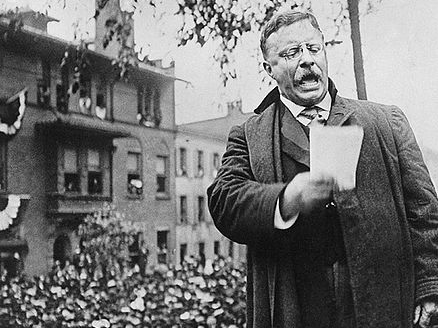
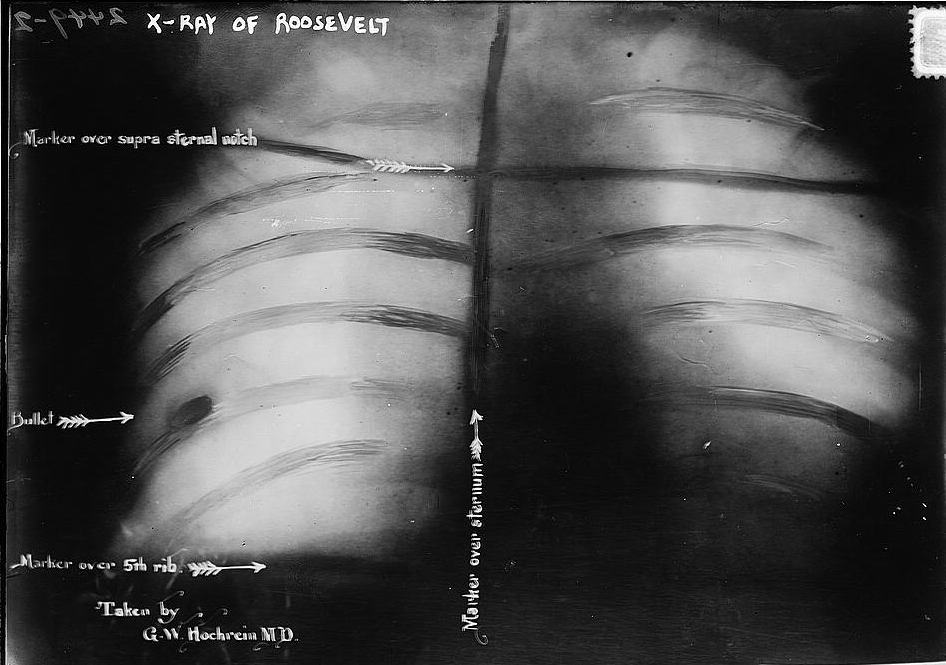 1919. While Roosevelt lost his race, his determination did show the kind of fortitude it takes to be president of this country. Being the leader of the free world, is not something that can be handled easily. The President of the United States must be an anointed position, and it is not one that just anyone can handle. In many ways, the best presidents are a type of “bull moose.” They have to be to take the pounding they have to take, and then keep coming back for more.

