Monthly Archives: January 2026

 Remember the last time you went to the movies? There might have been a line to get in, but with movies now available at home on TV, the lines probably aren’t what they used to be…if people go out to the movies at all. I remember standing outside for over an hour just to get inside, even in the freezing winter, because you really wanted to see that movie. When I was a kid, the theater would be packed with children eager to watch the latest Disney film, and as soon as the lights went out, the excitement would erupt into loud screams. It was pure, uncontainable joy spilling out in the form of shouts. That is a thing of the past for sure.
Let’s take a trip back to when movies were brand new, and the thrill of them hadn’t worn off like it has today. Back then, not everyone had seen a moving picture show. Even as kids, brimming with excitement for the latest film, we couldn’t imagine the level of wonder that came with those very first shows. Sure, some people might have thought this new kind of entertainment wasn’t a good idea, but most saw it as something thrilling they wanted to experience. I doubt anyone back then could have guessed the enormous impact those early moving pictures would have on humanity.
Today, we have much more than old-fashioned moving picture shows, and television, found in nearly every American home, offers far more than just entertainment. With a simple click, we’re instantly connected to weather alerts, breaking news, politics, sports, and, of course, entertainment. We can explore learning channels that teach us about everything from animals to languages to space and even watch programs from our favorite religious leaders.
A lot has changed since the days of the first moving picture show. While we still go to the movies, the lines are rarely as long, likely because films play in multiple theaters with several showings a day, including matinees. 
 Many people skip the theater altogether, opting to wait for a release on television. They feel like the snacks have become such an expensive part of the show, that it’s cheaper to skip the theater an make our own snacks at home. These days, we have even more options, like watching on a PC, laptop, tablet, or even smartphones. However we choose to enjoy it, it all began with the moving picture show.

 Palais Bulles, also called “Bubble Palace” is a sprawling residence in Théoule-sur-Mer, near Cannes, France. It was designed by Hungarian architect Antti Lovag and originally built for French industrialist Pierre Bernard. It was later purchased by fashion designer Pierre Cardin as a holiday retreat. I can see why these people might like the Bubble Palace. After all, it is unique. Certainly, no one else is likely to have the same house. Many people are very opposed to “cookie cutter houses” after all….and this house was definitely not cookie cutter!! This 13,000-square-foot house was built between 1975 and 1989 for French industrialist Pierre Bernard. Architect Antti Lovag, who saw straight lines as “an aggression against nature,” designed it as a playful space full of joy and surprises.
After Bernard’s death in 1991, fashion designer Pierre Cardin purchased the house. Strangely, Bernard never lived there, yet he described it as his own slice of paradise. He mentioned that its cellular shapes had long mirrored the essence of his creations. He considered it a museum showcasing the work of contemporary designers and artists. It is strange to purchase a palace to use as a museum, but never open it to the public. I 
 guess he wanted his own museum, or he simply never got the whole plan into place, unfortunately.
In 2016, French architect Odile Decq completed a five-year renovation. By March 2017, the property was on the market for €350 million, but it didn’t sell. Instead, it could be rented out to groups for $33,200 a day…not something the average family could afford. After Cardin’s death in December 2020, there were suggestions to transform the building into a public space for art exhibitions. The house features a reception hall, a panoramic lounge, a 500-seat open-air amphitheater, 10 bedrooms, and multiple swimming pools and waterfalls set within expansive landscaped grounds. The Palais features 29 rooms, 11 bathrooms, and ten bedrooms, each uniquely decorated by a different artist, including Patrice Breteau, Jerome Tisserand, Daniel You, François Chauvin, and Gerard Cloarec.

 The house has been featured is several movies and music videos. While its design is unique, it is really a unique oddity that began in the mind of an artist-architect-designer, and probably never a practical building. It does have a bubble-like look, which makes it interesting, but not practical. I think designers of unusual buildings might be a bit eccentric, and maybe that explains the Bubble Palace.

 These days, service dogs, and even cats, are fairly commonplace…sometimes to the point that we wonder if the owner really needs a service animal. Nevertheless, it’s not for any of us to say whether or not the service animal is necessary or not. If the person is scamming the system…well, that’s on them. There are far more people who really need the service animal than those who don’t. The animal provides a number of key services for the owner. Some have been trained to tell if their owner is having an epileptic attack, a PTSD attack, or anxiety attack, and a number of other attacks. However, the first “service dog” was actually a dog to guide blind people, thereby giving them independence. The exact time when dogs were first used to assist people with disabilities is unknown, but ancient artwork from Pompeii and China seems to show dogs guiding those with visual impairments. In 1785, Frenchman Valentin Haüy founded the First Institute for Blind Children and introduced the concept of using dogs for this purpose, but it wasn’t until after World War I that the modern Guide Dog movement truly began.
The movement to use dogs to guide the blind took time to get around the world, but in 1929, the United States saw the opening of The Seeing Eye, Inc. The Seeing Eye is a guide dog school located in Morris Township, New Jersey, and it is the oldest guide dog school in the United States, as well as one of the largest. The Seeing Eye campus features administrative offices, student dormitories, a veterinary care center, and kennels, along with a breeding station located in Chester, New Jersey. The school is a lead researcher in canine genetics, breeding, disease control, and behavior, all things necessary to provide the best dogs for the people they serve. The Seeing Eye pairs about 260 people who are blind or visually impaired with guide dogs each year. By 2023, there were roughly 1,700 active guide dog users in the United States and Canada, and since the school’s founding, The Seeing Eye has matched more than 17,500 people with dogs.
The Seeing Eye has its roots in Europe in the 1920s when Dorothy Harrison Eustis moved from the United 
 States to Vevey, Switzerland. Her purpose was to establish a breeding and training center for German shepherds. She was joined by Elliott S “Jack” Humphrey, an American trainer and geneticist, who worked with her to create their own scientific method for breeding and training. During World War I, many German soldiers lost their sight, and many suffered visual impairments. That prompted several schools in Germany to experiment with training guide dogs in specific skills. Eustis later wrote about this in an article for The Saturday Evening Post titled “The Seeing Eye,” published on November 5, 1927. Afterward, Eustis received numerous letters from blind individuals inquiring about how to get a guide dog.
An article was read to Morris Frank, a 19-year-old blind man from Nashville, Tennessee, who had lost his sight in two separate accidents. Frank was convinced that a guide dog could help him regain independence, so he wrote to Eustis. Although she had never trained dogs for the blind, Eustis decided to help. Frank also expressed his wish to promote guide dog training for the blind in the United States. Eustis and Humphrey, experienced in training other working dogs, began adapting their methods. In April 1928, Frank met his first guide dog, Kiss, whom he renamed Buddy…the name he gave to all six of his future Seeing Eye dogs. The name has now been retired by the organization. Over six weeks, Frank and Buddy formed a strong bond and learned to navigate streets, obstacles, stairs, and crowds together. On January 29, 1929, Eustis and Frank founded The Seeing Eye in Nashville. The school’s first class was held in February 1929.
After receiving a generous donation, The Seeing Eye relocated to Whippany, New Jersey, in 1931, setting up a permanent spot for training and student housing. In 1965, it moved again to its current 60-acre campus in Morris Township, New Jersey, which houses administrative offices, student residences, a veterinary clinic, and kennels. The Seeing Eye was the first guide dog school established outside of Europe and remains the oldest one still operating in the world, celebrating its 95th anniversary in 2024. The Seeing Eye Dog was named the official state dog of New Jersey in 2020. Back in April 2005, a lifelike bronze statue of Morris Frank and his dog 
 Buddy was placed on the northeast corner of the Morristown Green, showing Frank giving the “forward command.” The Seeing Eye played a key role in passing a state law that made it a crime to harm a service dog or a service dog in training. The bill was inspired by Dusty, a Seeing Eye puppy-in-training who was badly injured in a pit bull attack and had to leave the program. On January 17, 2014, Governor Chris Christie signed Dusty’s Law. In September 2021, Jim Kutsch, the school’s first graduate to become its CEO, was honored with both a portrait and a statue on the Morris Township campus. The guide dog program has done so much for people who are blind or visually impaired, and it is very likely to have been the inspiration for other types of service dogs too.

 It’s National Amy Day!! Who knew that was even a thing? In our family, we usually celebrate Amy Day on June 1st, which is our Amy’s birthday. But since today is the official National Amy Day, we’re celebrating again! Simply put, it’s a day dedicated to celebrating girls named Amy. It’s not the only name with its own special day, but this one and National Corrie Day are two special ones for me, as mom to daughters, Corrie Petersen and Amy Royce. Our daughter, Amy has decided that from now on, this will be her cue to take a day off. So, today, that is what she did. So now, January 28th will be a personal day for Amy from now on.
National Amy Day is celebrated every year on January 28th. In modern French, Amy is the English version of the Old French name Aimée, which was a translation of ‘Amata,’ a Latin name from ‘Amatus,’ meaning ‘beloved.’ That meaning was one of the things I loved about the name Amy. Amie and Ami are other possible spellings. 
 While it’s far less popular for babies now, Amy was the second most popular girl’s name in the 1970s, right after Jennifer. That makes sense, since my Amy was born in 1976. It remains a short, charming, “Little Women” style classic name even today, but not the reason we chose it.
I first heard the name, not from the movie “Little Women,” but from an old western show I watched years ago called “The Monroes.” It only ran for a year, from 1966 to 1967, and told the story of five kids heading West after their parents died in an accident. Determined to fulfill their parents’ dream, they pressed on. The youngest sibling, played by Tammy Locke, was named Amy. She was a sweet, adorable little girl. I had never met anyone named Amy before, but I liked that little girl on the show, even though that wasn’t her real name. The name fit her. I suppose that’s how many names catch on. In any case, we’ve always felt blessed to have our Amy, and her older sister, Corrie, who, I’ve discovered, also has her own special day.


Little did I know that there is also a National Corey Day, that falls on December 10th…but that’s a story for another day. Today is National Amy Day, so happy National Amy Day to all the Amy’s out there, and especially to my own Amy!! Our Amy is sweet and kind, but she was also feisty…and still can be, if someone crosses her. Nevertheless, she has always been a blessing to us, as has her sister. I am very proud of Amy and of all her accomplishments. Have a great day Amy and happy National Amy Day!!

 My niece, Lacey Killinger has had a year of ups and downs. There is really no other way to say it. The hardest of the downside of the year, was losing her mother, Alena Stevens to cancer on April 23, 2025. It doesn’t seem right to bring sadness into a birthday story, but my sister was very close to her children, and I know they all miss her terribly. Kids expect that their parents will be around for many years of their lives, but for Lacey, that was not to be. Her mother left her when Lacey was just 32 years old, and that makes me very sad for Lacey…and for her dad, siblings, and the rest of their family and extended family.
While the Spring was a hard time of this year, there is light at the end of the tunnel for this family. Lacey married the love of her life, Chris Killinger on October 28, 2023, and became a stepmom to his kids, Brooklyn and Jaxon. Now, 
 they are going to grow their little family by adding a new baby in early August 2026. When Lacey told her aunts, my sisters, Cheryl Masterson, Caryl Reed, Allyn Hadlock, and me that she was pregnant, we were all so excited. Lacey said, “Thank you! We are super excited, but starting this journey without my mom has been really hard. Still, I know we have a supportive family.” I know they wish Alena could be here, because she would be so excited, but she is watching from Heaven, and we know she is very happy too. While she is now with us in person, she is in spirit, and this is her family too. We don’t know what this baby will be yet, or even if they will reveal the gender, but that doesn’t matter. This baby will be very loved…is already loved. We’re all very excited.


Lacey has been a wonderful stepmom to Brooklyn and Jaxon, and they love her very much. Lacey is a cosmetologist by profession, and the kids get to enjoy the bounty that brings. They can have just about any hairstyle they choose, or want to experiment with, and they know it will turn out great. It saves a lot of money too, on both sides. Much of Lacey’s work is makeup and hair for weddings, and she is becoming quite well known. The shop she owns is called Lux Lou, and Lacey is usually pretty busy. She and Chris are building a good life, and the future is very bright for them and their little family. Today is Lacey’s birthday. Happy birthday Lacey!! Have a great day!! We love you!!

 It’s so hard for me to believe that my youngest great grandson, Cristian Petersen is one year old today. It seems like just yesterday that he arrived. Cristian is all smiles and personality. He has the ability to turn on that charm and steal your heart in a minute. His big blue eyes light up when he sees the people he loves, especially his older brothers, Justin and Axel. Cristian thinks his brothers are the greatest. They love to make him laugh and when the three of them get going, it’s like a giggle festival. Cristian hates to take a nap, because he might miss something, so he fights it as long as he can.
Now that Cristian can crawl and walk along the furniture, he is pretty much everywhere at once. Keeping up with him is a full-time job for anyone “in charge” of him. Cristian thinks he is the one in charge, you know. When he is planning 
 to do something he knows he isn’t supposed to, he quickly crawls toward his target, stops and turns to look at you, to see if you are going to stop him, then grins and quickly move toward his target. He seems to think his charm alone will keep him out of trouble…and he could be right. He’s a hard one to be upset with. He really does know how to pour on the charm.
Cristian also loves to be chased. He will crawl as fast as he can, and if it seems like he got away, he will peek around the corner, just daring you to come after him. He loves playing “I’m gonna get you” with me. He loves being caught and tickled. He laughs and laughs!! Then, he takes off again to see if you’ll chase him again. Cristian loves to look at books, but doesn’t have time to hear the story yet. He prefers to look at the pictures, 
 for now anyway. He loves listening to nursery songs and dancing along. Like his brothers, he will know the words before long. And Cristian loves to stick out his tongue.
He’s been getting very brave about letting go of the tables and chairs he is hanging onto these days too. I would expect that he will be walking within a month or so. He is very motivated. He knows that his brothers walk around, and he wants to do everything his big brothers do. He loves everything about his big brothers, but then Cristian is a very loving boy. The minute he sees people he loves, his face lights up. Today is Cristian’s 1st birthday. Happy birthday sweet boy!! Have a great day!! We love you!!
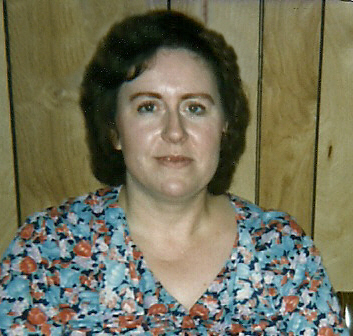
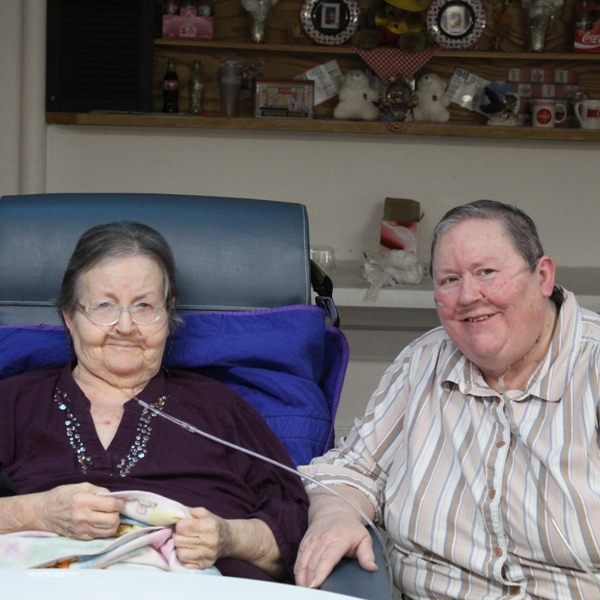 My husband’s aunt, Margee Kountz is the last of her siblings still alive. She came into this world almost 18 years after her oldest sister, Joann Schulenberg. In fact, Margee was just six months old when her sister was married. My father-in-law, Joann’s husband, Walt Schulenberg was very taken by Margee. He told my mother-in-law, that when they were married, he wanted to have a daughter, just like Margee. Their marriage actually produced four daughters and two sons, so I guess he got his wish. I know he was always a great dad and loved all his children very much.
Margee went on to marry, and have two children of her own, Dan and Sandy. She was there for them in every way…from early childhood, through the school years, and beyond. She’s been a hands-on mom, grandma, and great grandma. Life isn’t always easy…it has its ups and downs, and especially for kids, we need to guide them through it all. Margee was always supportive of her family, helping them through life’s tough moments and celebrating the good ones right alongside them. Then she celebrated with the grandchildren and is enjoying the great grandkids. It really is the reward we receive for having kids. 
Like most of us, I’m sure Margee thought her siblings would be around for years yet, but of course, with Joann being 18 years older, she knew that wouldn’t be. Nevertheless, when Joann was diagnosed with Alzheimer’s Disease, Margee stepped up to help out with her sister. She came for visits when Walt had to go to the doctor or other appointment. We couldn’t have managed all we needed without Margee’s assistance. We always knew she would be there for us. That time was so important, because even as her memory faded, having family around helped her hold on to what she could remember. Margee would talk with her about their childhood, their parents, and grandparents. Those conversations became gifts that Margee gave her sister, and a treasure to me, knowing how much they meant to my mother-in-law. The worst thing a family member can do to someone with Alzheimer’s is to only remember them as they once were and never visit. It doesn’t matter if they forget the visit later…what matters is that they knew at the time that there was a visit from a loved one. Kindness doesn’t get more perfect than that, and Margee visited her sister as often as possible. We knew she was always there for her, even when it was hard to be, but we knew it.
Margee also had another sister, Linda Cole, who lived in Winnemucca, Nevada. They didn’t get to see each other often, but they spoke on the phone as often as they could. Unfortunately, that came to an end too, when 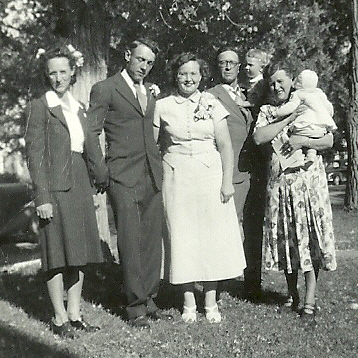
 Linda passed away in September 2016. Years had gone by since her sisters last saw her, which made her passing even more heartbreaking. They always felt like there would be more time, but when it was gone, all that remained was the sadness of her absence. While Margee has dealt with much loss over the years, she has also managed to move forward with the life. While she misses her sisters and other loved ones, she is enjoying every day that she lives. Today is Margee’s 77th birthday. Happy birthday Margee. Have a great day!! We love you!!
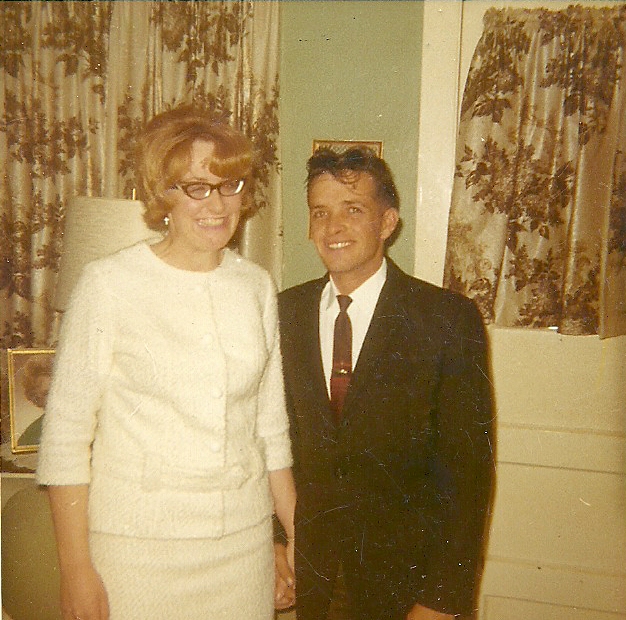
 My husband’s uncle, Bobby Cole, was born and raised in South Dakota. I’m not certain about all the details of how he met my husband’s aunt, Linda “Knox” Cole, but I know they crossed paths in Colstrip, Montana, where her parents were living at the time. I would imagine that Bobby was working at the coal mine there, when a certain girl caught his attention. Once he met Linda, he was smitten, knowing she was the love of his life…and as it turns out, he was right. They married on December 29, 1965, and shared their lives together until Bobby’s passing on May 30, 2014.
Bobby grew up on his parents’ farm, so the country lifestyle was second nature to him. Still, like many kids, the idea of a change of pace…and a little independence…was enticing. After high school, most kids either move out for work or head to college, and for Bobby, moving to Colstrip, Montana turned out to be the best decision he ever made. When he met Linda, everything fell into place. They dated for a while before heading to Las Vegas, Nevada to get married. After their wedding, they welcomed two children…a daughter, Sheila, and a son, Patrick…and later, their lives were further blessed with multiple grandchildren.
When their kids were young, Linda and Bobby moved to Kennebec, South Dakota, where they ran a hotel and welcomed a few guests…pretty good for such a tiny town. For us, visiting felt like staying at a bed and breakfast, though the other guests had to find breakfast elsewhere. Too bad for them!! Our trips were always so relaxing, filled with that unmistakable small-town charm I loved. I wouldn’t want to live in a small town full-time, but as an annual getaway, it was perfect. Maybe it was the break from daily life that made it so appealing. Since we didn’t see Linda and Bobby often, having unhurried time together was a rare treat. Visits were always filled with laughter and fun.
A few years later, their hotel was hit by lightning during a summer storm and burned to the ground. After the 
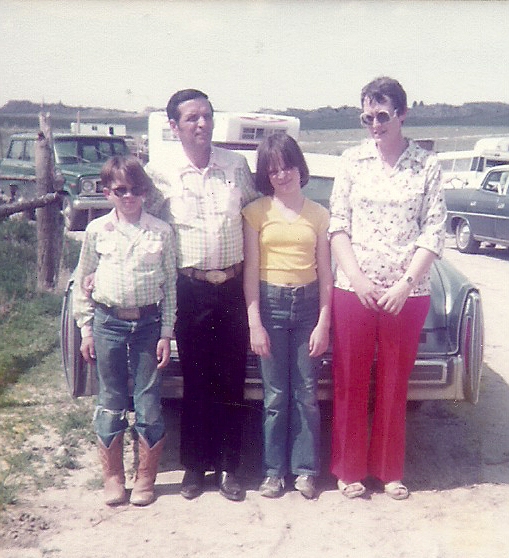 fire, they decided to leave both the hotel business and Kennebec. That’s when they moved to Winnemucca, Nevada, and for the most part, the annual trips came to an end. Winnemucca was just too far for a weekend getaway like Kennebec had been. I was always sad to see those trips stop…it felt like the end of an era. The only thing sadder was when Bobby passed away, and later, when Linda did. I’ll always miss them. They were a fun couple, and we really enjoyed visiting them. Today would have been Bobby’s 83rd birthday. Happy birthday in Heaven, Bobby. We love and miss you very much.

 Sometimes, I am amazed by the eccentricity of people, especially when they are people in power. Eccentricity is putting it mildly when it comes to Roman Emperor Gaius, also known as Caligula. Emperor Gaius may have been a great leader, but that is not what he has been remembered for unfortunately. He is remembered for being…maybe a little crazy. Emperor Gaius was a kind enough man, both to people and to animals. He loved his horses especially…so much, in fact, that he made one of his favorite horses a senator within his government. His horse was named Incitatus, and Emperor Gaius made sure he lived in luxury, giving him a marble stall, an ivory manger, a jeweled collar, and even a house…for a horse!! Emperor Gaius also allegedly planned to make his trusty steed Consul before he was assassinated.
Gaius was born on August 31, 12 AD, to Germanicus, a well-loved Roman general, and Agrippina the Elder of the Julio-Claudian dynasty. Soldiers fondly called him “Caligula,” or “little boot,” because of the tiny military boots he wore as a child. After his father’s death in 19 AD and the political chaos that followed, Gaius and his family endured many hardships, including the execution of several relatives under Emperor Tiberius, leaving a lasting impact on him. Caligula became emperor in AD 37 at just 24 years old, after the death of Tiberius. At first, he was well-liked and introduced reforms, including public works and building projects to help the people of Rome. But things soon shifted, as his reign grew marked by extravagance, cruelty, and demands to be treated like a god. He’s often remembered for strange behavior, like supposedly wanting to make his horse a consul, along with acts of violence against those he saw as enemies.
Caligula is still seen as a controversial figure, often remembered as one of history’s most notorious rulers, representing the extremes of power and the risk of tyranny in the Roman Empire. His life and reign continue to spark fascination and debate among historians and scholars. Caligula’s reign lasted only four years. The eccentric Emperor met his fate in a conspiracy involving the Praetorian Guard. After a serious illness, Gaius’ 
 bizarre behavior and bold claims of divinity stirred unrest among the people. On January 24, 41 AD, he was assassinated by Cassius Chaerea, Cornelius Sabinus, and others, along with his wife and daughter. His rule had been infamous for extravagant spending, ruthless treatment of rivals, and even naming his horse as consul…a symbol of his unchecked power. this likely led to the unrest among the people. His death signaled the end of an era and stood as a warning to future emperors about the dangers of their actions and the threat of violent uprisings. It was a pivotal moment in Roman history, paving the way for his uncle Claudius to take the throne. While historical accounts often depict Caligula in a negative light, some modern historians believe many accusations against him were likely exaggerated or driven by political agendas. I suppose we will never know for sure.

 John Moses Browning, often called the “father of modern firearms,” was born in Ogden, Utah, on January 23, 1855. He was the son of a talented gunsmith, Jonathan Browning. As was typical in the Mormon church community at the time, Jonathan Browning practiced polygamy, marrying three wives. He had 22 children, including John Moses, and also helped raise two stepdaughters with his wife Elizabeth Caroline Clark.
Browning started working in his father’s Ogden shop at just seven years old. There he learned basic engineering and manufacturing skills. His father also encouraged him to try out new ideas, thereby fostering his creativity. While still apprenticing under his father, Browning built his first rifle…a single-shot, falling block action design. In 1878, he teamed up with his younger brother to found the John Moses and Matthew Sandefur Browning Company, later known as Browning Arms Company. There, the brothers produced their own designs and other non-military firearms. By 1882, their half-brothers Jonathan, Thomas, William, and George had joined the business. Many legendary guns associated with the American West…like those from Winchester, Colt, Remington, and Savage…were actually based on Browning’s designs.
At 24, Browning earned his first patent for a rifle that Winchester produced as the Single Shot Model 1885. Impressed by his ingenuity, Winchester asked Browning to create a lever-action repeating shotgun. He did, but he soon realized a pump-action design would be more effective, leading to his first pump-action shotgun patent in 1888. At their core, all of Browning’s manually-operated repeating rifle and shotgun designs focused on one goal…making it faster and more reliable for shooters to fire multiple rounds, whether aiming at game birds or people. Lever and pump actions let the user fire a shot, work the lever or pump to eject the spent shell, load a fresh cartridge, and fire again in just seconds.
By the late 1880s, Browning had mastered the manual repeating firearm, but to make guns fire even faster, he needed to remove the slow process of humans operating the mechanisms. What could replace the effort of pulling a lever or pump? The answer came to him at a local shooting competition, where he noticed “reeds between a shooter and the target being blown violently aside by gases escaping from the muzzle.” Browing had the idea of harnessing that escaping gas to automatically operate the repeating mechanism. He started working on his idea in 1889, and by 1892 he had a patent for the first rough version of a fully automatic weapon. It worked by capturing gases at the muzzle to power a mechanism that reloaded the next bullet automatically.


I am amazed at the mind of this man. Over the years, he improved the design, and by the time US soldiers headed to Europe in World War I, many were armed with Browning Automatic Rifles and his powerful machine guns. Over a career lasting more than fifty years, Browning’s firearms evolved from iconic weapons of the American West to lethal instruments of world war. Remarkably, since his death in 1926, the modern firearm industry has seen no major fundamental changes. No improvements could be made, it seems.

