Monthly Archives: July 2025

 My grandniece, Zoey Iverson is such a happy girl. She is the middle child of my niece, Kassie Franklin and her partner (Zoey’s bonus dad), William Burr, but in many ways, Zoey is the oldest child, since her older brother, Lucas has Down Syndrome. Zoey is such a great sister to Lucas and her younger sister Alicen. Zoey has a mother’s heart, and mothering ways. I think that someday she will be a great mom, but that is definitely down the road a bit, since Zoey is just turning ten today. Still, that is a landmark age…the age of double digits, and in that, Zoey has arrived.
Zoey probably grew up quicker that other kids. She knew at a young age that her big brother needed extra help with things, and she stepped up as her mother’s helper in that area. She loved her brother and wanted him to 
 have the best life that he could have. I know that Zoey was instrumental in her brother’s development, and he is a great kid who can do so many things because of her. These days, Zoey is still being a great sister to both of her siblings. She and Alicen are best friends, and love playing together. Alicen is 2½ years old now, and she thinks her big sister is the greatest. Of course, that is all part of Zoey’s charm. No, it isn’t an act…that’s who Zoey is. Her sweet disposition has rightly earned her the title of the greatest where her family is concerned.
Zoey is a great help to her mom and dad. And she always has a great time with her family. She loves camping and being in the outdoors in general. She is an active girl who loves nature, and all the beauty it holds. That’s probably why the camping appeals to Zoey. She loves swimming and summer in general, but then what kid 
 doesn’t. Even when a student is good in school, like Zoey is, there is just nothing like summer and the freedom it brings. The freedom to sleep in, play all day, and go to bed just a little bit later than usual…let’s face it, it doesn’t get better than that. Zoey loves crafting and selling her crafts, so she can make more crafts. She got her craftiness from her mom, who is Zoey’s hero, and always will be. In fact, her mom is where Zoey got to be the person she is now. Today is Zoey’s 10th birthday. Happy birthday Zoey! Have a great day! We love you!
 Sailing a ship anywhere during World War II, whether a war ship or not, was a dangerous undertaking. Nevertheless, the ships were necessary, and so they went. Normally these ships had a destroyer escort, but on July 30, 1945, the USS Indianapolis did not have a destroyer escort due to a combination of factors, including high demand for destroyers, assumptions about low risk in the area, and the belief that the cruiser could operate safely on its own, especially after completing its primary mission. The story goes that they ship was supposed to sail in a zigzag fashion, which is ridiculous since ships can’t zigzag at a speed fast enough to dodge much of anything.
The Indianapolis had already completed its major mission: the delivery of key components of the atomic bomb that would be dropped a week later at Hiroshima to Tinian Island in the South Pacific, having made its delivery to Tinian Island on July 26, 1945. The mission was highly classified, and even the crew of the ship had no knowledge of its cargo. After departing from Tinian, the Indianapolis headed to the U.S. military’s Pacific headquarters in Guam. In Guam, USS Indianapolis received orders to rendezvous with the battleship USS Idaho at Leyte Gulf in the Philippines to prepare for the invasion of Japan. 
As the ship made its way across, it was halfway between Guam and Leyte Gulf, when, shortly after midnight on July 30, a Japanese sub hit the Indianapolis with a torpedo, sparking an explosion that split the ship and caused it to sink in approximately 12 minutes, with about 300 men trapped inside and completely unable to escape. Little did those men know that their fate was the easier one. The remaining approximately 900 men went into the water, where many died from drowning, shark attacks, dehydration, or injuries from the explosion. An even bigger atrocity was that there was no help coming. Somehow the fact that the ship did not arrive at its destination was overlooked as they thought it must have been reassigned somewhere else. In fact, help would never have arrived, if passing planes didn’t spot the survivors in the water…those left anyway. Four days after the torpedo hit, on August 2, an anti-submarine plane on routine patrol happened upon the men and radioed for assistance. Of the approximately 900 men in the water, only 316 survived.
On August 6, 1945, the United States dropped an atomic bomb on Hiroshima, Japan, causing nearly 130,000 casualties and destroying over 60 percent of the city. Three days later, on August 9, a second atomic bomb was dropped on Nagasaki, with casualties estimated at more than 66,000. During this time, the U.S. government withheld news of the Indianapolis tragedy until August 15 to ensure it was overshadowed by President Harry  Truman’s announcement of Japan’s surrender. They wanted to save face after they didn’t protect the ship.
After the Indianapolis tragedy, its commander, Captain Charles McVay, faced a court-martial in November 1945 for not sailing a zigzag course, which supposedly might have helped the ship avoid enemy submarines, which we all know wouldn’t have helped. McVay, the only Navy captain court-martialed for losing a ship during the war, tragically took his own life in 1968. Many of his surviving crew members believed he was unfairly scapegoated. In 2000, 55 years after the Indianapolis sank, Congress officially cleared McVay’s name, not that it mattered in light of his suicide years earlier.

 My grandniece, Raelynn “Rae” Masterson, has always been a little bit shy, and so stepping out of her comfort zone isn’t always easy. Raelynn is the oldest of my niece, Dustie Masterson and my nephew, Rob Masterson’s kids. (Rob also has an older daughter from his first marriage). Rae has a younger brother, Matt Masterson and a younger sister, Taylor Masterson. The three of them are very close. Rae has now reached the age that her mom was when she had Rae, and for Dustie, that is a little shocking to think about. Dustie says that she and Rae did a lot of their growing up together, and I suppose that is true. Our kids, especially that first child, teach us so much. We just think we are all grown up…until our kids show us just how much we have yet to learn.
A year ago, Rae got a job at “Let’r Buck Car Wash” on the west side of Casper. Her mom was not too sure about the job, for a number of reasons, the main one being that Rae is somewhat shy. Dustie recommended that she keep looking even after she was hired, because it just didn’t seem to Dustie like it would be a good fit for Rae. Nevertheless, before long, Rae told her mom that she loved the job and was going to go full-time. They really like her too and have started having Rae train the new hires. Rae told her just the other day that now she knows what it’s like to be the “experienced” one at work. Now, her boss has her training the new people on how to close. She does so well with it that she is the one in charge at night, running the crew. Her parents couldn’t 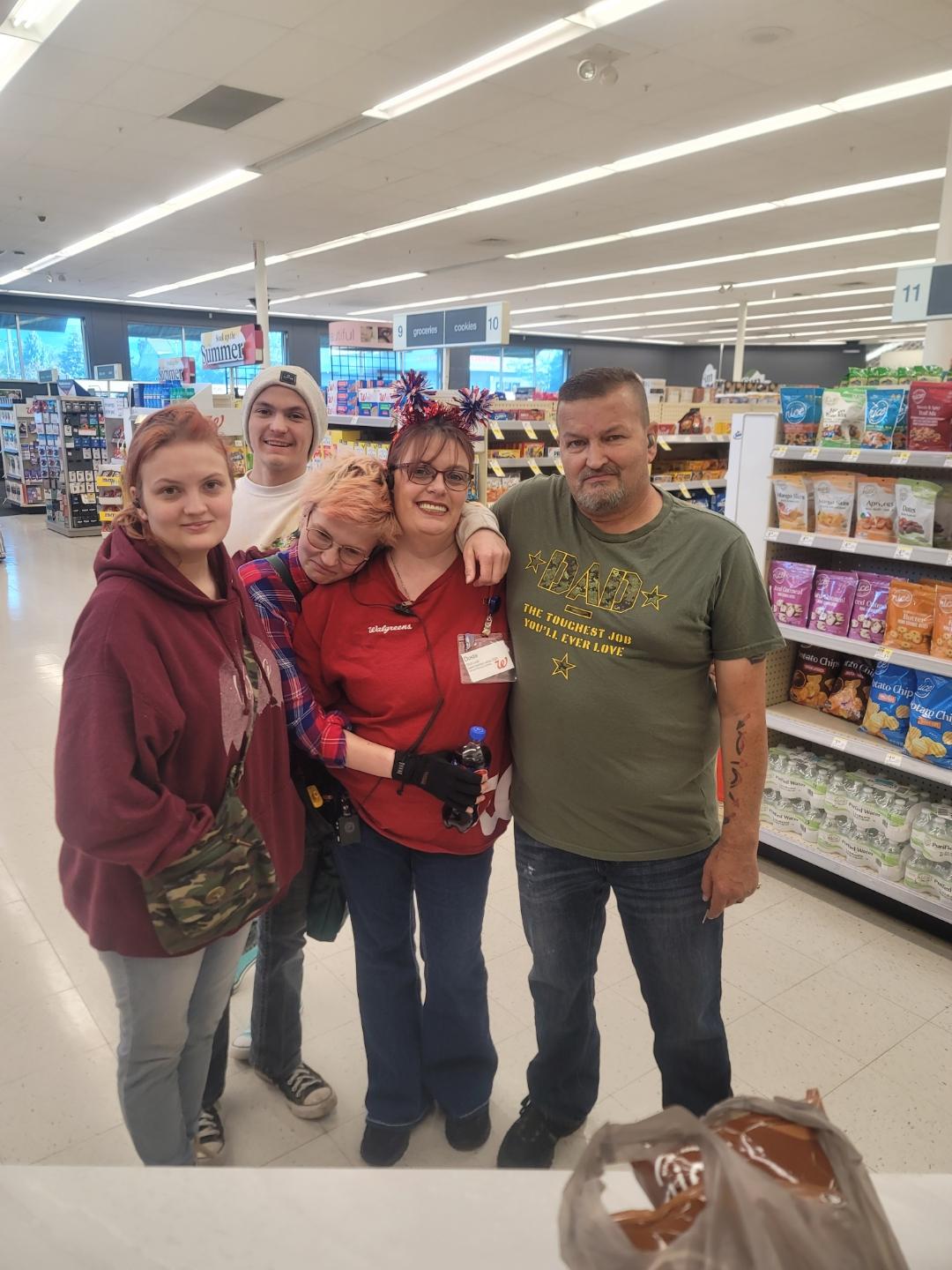
 be more proud of her. Rae’s sister, Taylor mentioned that helping new people with training and helping with what they were struggling with isn’t easy, but Rae does it all without complaining or questions. Dustie tells me that she really thought she wouldn’t like her job, so it is really shocking to her that Rae is perfectly happy there. Rae says, “It’s hard work but at the end of the day I feels like I have worked hard, and I come home feeling accomplished.” Last night at dinner Rae told the family that she dealt with her first difficult customer. The customer wanted to be let through the wash after everything had been shut down and cleaned up. She kept her cool and didn’t let the woman go through. Dustie thinks that “with Rae’s sweet voice the lady couldn’t have possibly stayed mad.” Nevertheless, Rae had to stand up to the lady, because it wouldn’t be fair to make the crew re-clean the place for one person. Rae’s sister, Taylor, is so proud of her sister too, because she knows that handling rude people and the challenges that come along at her job is not easy, but Rae takes it all in stride. She is a very calm person, and that shows in difficult situations. Rae is really moving up in life.
Rae has also been getting out more with her friends and Dustie is really happy about that. Dustie says, “She needs it, to get out of the house and just hang with people outside of the family. At her age I think it’s important to forge those friendships.” Taylor agrees, as her sister works hard and needs time out with friends. Dustie says, “The happy, little beautiful baby I had 22 years ago has turned into the most beautiful, wonderful, 
 happy woman. I don’t know what this year will bring for Rae, but I do know that it will be amazing! She’s been going out with friends more and getting more social interactions these past few months and I am proud of her for getting out there more.” It’s a big step, and I’m proud of Rae too.
Taylor says, “Rae is one of my favorite people, she’s always ready to help people when they need it. She’s one of my biggest supporters and I don’t think there will ever be enough words to express just how much she means to me. I love my sister more than anything can describe and my best laughs are with her. Happy birthday Rae!! I hope you have the best day!” Today is Rae’s 22nd birthday. Happy birthday Rae!! Have a great day!! We love you!!

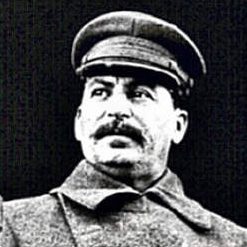 I guess in a war, sometimes it all comes down to who you are more afraid of. That was the position the Russian soldiers found themselves in on July 28, 1942. After an agreement not to invade each other’s nation, Hitler began his advance into Russia anyway. Soviet dictator, Joseph Stalin knew that is men would be afraid, because Hitler was known to be crazy. Stalin had to find a way to make sure that his men would not take the easy way out due to the fear of the German army. Everyone knew that Hitler’s army would stop at nothing in their pursuit of victory, because they had no choice. They knew that Hitler would kill them for showing fear. The German army was far more afraid of Hitler, that they were of Stalin’s army or anyone else. Stalin was going to have to have a way to make his men stay on point. So, on July 28, 1942, Stalin issued Order Number 227, which was famously known as the “Not one step backward” order, in response to German advances into Soviet territory. The order
  stated, “Panic makers and cowards must be liquidated on the spot. Not one step backward without orders from higher headquarters! Commanders who abandon a position without an order from higher headquarters are traitors to the Motherland.” That put Stalin’s army between a rock and a hard place.
Germany’s early victories against Russia gave Hitler confidence about his plans to capture Leningrad and Stalingrad. However, the attack on Stalingrad was considered reckless by Hitler’s generals due to Russia’s superior manpower. A determined Hitler wouldn’t listen, and the heavy toll was taken on German resources and troops by a determined Soviet force, bolstered with additional men and supplies. Nevertheless, the Germans then turned their sights on Leningrad. Stalin needed to “motivate” both officers and civilians alike in their defense of Leningrad, bringing about the need for Stalin’s Order Number 227.
On the same day the order was issued, Russian peasants and partisans in the Leningrad region killed a German officer named Adolf Beck, who was responsible for transporting agricultural products from occupied Russia to 
 Germany or to German troops. The Russian patriots also burned down the granaries and barns where these agricultural goods were stored before being shipped. A partisan pamphlet issued an order of its own, “Russians! Destroy the German landowners. Drive the Germans from the land of the Soviets!” The people were patriots, and they were determined to fight for their country.
 Astronauts are normally all business as they prepare for their space flights, but even these professionals have a sense of humor, and on occasion, they have been known to pull a fast one on NASA officials. Over the years, things like sandwiches and pizza smuggled onboard the spacecraft, and other things have shown up onboard…after they were in orbit, so nothing could be done about it. Call it rebellion if you want to, but these people are going to be up there for a while, they need a little humor too.
For example, during the Apollo 14 lunar mission, Commander Alan Shepard famously played a round of “cosmic golf” on the Moon after completing his exploration of its surface. NASA had no idea what was coming, but on February 6, 1971, during the Antares lander’s second day in the Fra Mauro region, the astronauts had some downtime after completing their scientific objectives. Seizing the moment, Shepard pulled out a custom-modified Wilson Staff Dyna-Power 6 golf club head, which he had secretly stashed in the tool compartment, and attached it to the handle of a lunar sample scoop. In a historic first, he took two swings that were somewhat accurate, considering the gravity, or the lack thereof, officially introducing golf to the lunar surface.
It’s hard to say what NASA thought about this extra baggage. One account claims that Apollo 14 mission  director Bob Gilruth knew about the commander’s plan and reluctantly approved it, but only after all scheduled Moon tasks were finished. Another version suggests Shepard secretly brought the golf club head aboard, inspired by fellow astronaut John Young. Either way, mission control was completely caught off guard by the first extraterrestrial golf swing.
As a dedicated golfer, Shepard went through all the usual rituals for a great shot, including donning a golfer’s glove. Naturally, the Moon’s low gravity and the limitations of the extravehicular activity suit posed challenges, Shepard had to swing with one hand instead of both. Both shots were off-target, and the balls only traveled a few dozen meters. However, Shepard never confessed to this in an interview back on Earth. In a “fisherman-like embellishment,” he boasted that the balls flew “for miles and miles and miles.” I’m sure he had hoped that his skills would have produced better results and was disappointed when they didn’t.

The astronauts spotted where Shepard’s first ball landed, but the second one disappeared from view due to limited visibility through the spacesuit visor. It took 50 years to locate it. Space imagery specialist and astronomy enthusiast Andy Saunders examined photos of the Apollo 14 landing site and found it 22 meters from the impact point. The first ball, on the other hand, traveled slightly farther, reaching 36.5 meters. Apparently, it is very hard to distinguish the round golf ball from the similarly colored and sized pebbles of the lunar surface. Finally, Saunders utilized orbital images of the Apollo 14 landing site taken by NASA’s Lunar Reconnaissance Orbiter to figure it out.

 My grandnephew, Ryder Birky is a typical three-year-old boy. He loves his mommy, Sierah Birky; daddy, Riley Birky; and his big brother, Jace. Ryder loves doing anything his parents and older brother are doing. Ryder loves being outdoors. He loves running around with his brother. They are best friends. Ryder loves going to the park and playing on the toys there. One of his favorite things in going on the slide. That is typical of three-year-olds. Ryder takes great pleasure on all of the playground equipment. As he grows, he gets better at each one, and having a big brother to show him the ropes helps a
 lot too. Ryder is a busy, active boy. That too is typical for his age.
A year ago, Ryder and his family received a miracle when his daddy, Uncle Tucker, and two of their friends were badly burned in a car fire involving fireworks. Ryder could have lost his daddy that day, but he did not, and in fact, none of the men had bad scars on their faces. I’m not sure about scars in other areas, but they are alive…Ryder and Jace still have their daddy. Much prayer went out or the men, and God answered our prayers. Ryder was so happy when his daddy got to come 
 home from the hospital. It was a wonderful day for all of them.
Every day, Ryder learn more and more things. His brother helps with that process. Big brothers have a tendency to do that. As they influence their younger siblings, they set the stage for the way the younger kids are. Jace has been a big influence on Ryder, and since they are pals, it has become a great thing. I look forward to watching both of these boys as they learn and grow. Today is Ryder’s 3rd birthday. Happy birthday Ryder!! Have a great day!! We love you!!
 He began his life as Josiah Horner on September 15, 1849, in Harrison Township, Henry County, Indiana, though later it was proven that he was actually born in Virginia, about 15 miles from Richmond. He was the son of John Wesley Horner and Mary Jane Clemmons, and he had two sisters, Minnie Bell Horner and Mary Jane Sams. Eventually he drifted into Texas and started working as a cowboy. Deciding that the cowboy life wasn’t really for him, he started robbing banks and rustling cattle in 1871, which at the time was a capital offense. On October 10, 1874, Horner got into a gunfight with some Buffalo Soldiers, killing one and wounding the other. In 1877, he was arrested for robbing a bank in Comanche, Texas. He escaped from Texas Ranger custody and deciding that he had better get out of Texas, he moved to Ogallala, Nebraska, and took up ranching under the alias Frank M Canton. In the days before social security and driver’s licenses, it was much easier to change your name and simply disappear.
As Frank Canton, he lived his life, an American Old West fugitive, who later began a career as a deputy US marshal under his assumed name. Once a stock detective and ex-sheriff in Wyoming, Canton and his associates were accused of relying more on assassination than on law enforcement. Extrajudicial actions, like the lynching of Ellen Watson, stirred public outrage against the prominent big ranchers Canton worked for. To regain control over grazing, these ranchers financed a full-scale attack on smaller operators they deemed rustlers. Canton led Frank Wolcott’s hired gunmen in the vigilante campaign called the Johnson County War, which was swiftly halted by a local posse. Marked in Wyoming, Canton decided it was best to leave the state and spent much of his remaining career working in law enforcement under the infamous hanging judge, Isaac C Parker.
Frank Canton worked as a stock detective for the Wyoming Stock Growers Association during a period of growing tensions between wealthy cattle ranchers, rustlers. The increasing number of homesteaders was disrupting “free ranging” and altering the political landscape. Elected sheriff of Johnson County, Wyoming, in 1885, he became known as a firm enforcer for the cattle barons. A Pinkerton Agency letter recommending Tom Horn to Canton underscores his strict approach to rustling suspects. Then, after just four years, Canton resigned following the suspicious escape of a major ranch foreman in his custody. Though he still worked part-time as a US Deputy Marshal, the rumors continued to circulate that he had actually acted as a hired assassin and intimidator. The unsolved murder of a homesteader, who alleged that Canton had threatened him due to evidence implicating Canton’s friends in an earlier killing, further fueled mistrust among the homesteaders. After a mob formed, Canton was arrested, and when he was defended by big ranchers, his lawyer was able to secure his release. Canton quickly fled to Illinois, and by the time new evidence emerged later, he was considered unimportant, so the case was ultimately dropped.
Over the years, Canton worked in law enforcement in Illinois and Oklahoma. Then, in 1897, Canton headed to  Alaska to join the gold rush, but his role as a Deputy US Marshal ended controversially amid allegations of misusing public funds. He returned to the US in 1907 and became the Adjutant General for the Oklahoma National Guard. Eventually, Canton admitted he was actually Josiah Horner, and the Governor of Texas granted him a pardon.
Canton was showing clear signs of aging by 1925. He was bald, his vision was poor and sensitive to light, and he had nearly lost all his hearing. Canton could no longer work as a cattleman or as a lawman, so he was left unemployed. The Texas Cattlemen’s Association granted him a small pension, and his unmarried daughter, Ruby, supported him and his wife, Annie, who moved into Ruby’s home. On September 1, 1927, Canton couldn’t get out of bed, so Ruby called a doctor. The doctor diagnosed him with terminal cancer and said he had only days left to live. Despite this, the family celebrated his seventy-eighth birthday on September 15 at Ruby’s house. Canton passed away on September 27, 1927, in Edmond, Oklahoma.

 The reasons why people moved west in the 1800s, or any move in history, are varied. For Otto Friedrich Heinrich Franc von Lichtenstein, later known as Otto Franc, it was for his health. He was told he needed to get out of New York and go to a drier climate. At first Otto decided to go to Wyoming for go hunting. That could serve two purposes, I suppose…the first would be to get to a drier climate as prescribed, and the second to see if Wyoming was going to be for him. So, on July 24, 1878, Franc and a group of weary easterners exited their passenger train in dusty Rawlins, Wyoming Territory. It was Franc’s first real look at the West. He was 32 years old.
In New York City, Franc worked with his two brothers in the banana-importing business until his doctor recommended that he move to a drier climate for his health. New York had not been good for Franc. In Wyoming, which he described in his journal as “the finest and wildest country I have ever seen, abounding with fish and game,” Franc discovered the site of what would become his future home in the Bighorn Basin. It was a beautiful place that he later called the Pitchfork Ranch.
Otto Franc was born in 1846 near Frankfurt, which was then part of the German Confederation. Not much is  known about his childhood, but it seems he came from an ambitious and well-connected family, advantages he later utilized effectively. After completing his education, Franc left Germany in 1866 to join his older brothers, Charles and Carl, in New York City. They were managing a successful business importing bananas from their plantation in what was then part of Colombia, on the Isthmus of Panama. By the time Otto arrived, they had established a fleet of vessels transporting the fruit from the Caribbean and distributing it to American customers. Things were going well, until Franc’s health began to give him trouble. So, a trip to go hunting seemed like just the thing to revive him. Following a successful hunting trip, Franc went home to New York, but he returned to Wyoming the following year to stay. He might have stayed on the first trip, but concerns over Indians took him home for a year. Still, the lure of the West was strong.
On his return the next year, Franc ventured farther north into the basin, eventually locating a wide natural pasture on the upper Greybull River along the eastern foothills of the Absaroka Mountains. While Indians and buffalo still frequented the area, Franc understood he could locate a large open-range cattle operation there. He would make himself prominent among the area’s early white pioneers, and the Pitchfork Ranch was born.


The Pitchfork Ranch is on the market for $67 million. Established in 1878, this historic property covers about 96,000 acres and is renowned for its cattle operations and rich heritage. This marks only the third ownership change in its history, and it’s being sold as a fully functional ranch with facilities for 1,300 cattle. In many ways, I think it is quite sad that it has changed hands, but then, change is inevitable, I guess.

 When it comes to gullibility, a study by Cornell University researchers in 2014 found that “Most people will believe whatever you tell them, at least as long as a chart is involved.” What?? Well, when you think about it, that makes more sense than people know, and as technology gets better and better…especially AI, many people find it hard decipher what is real and what is fake. AI can even animate a photograph from the 1800s, but in 2014, all that AI wasn’t available. Still, people were taken in, by something as simple as a chart. If a speaker had a confident voice and a chart, it suddenly became believable.
The study at Cornell University came in the form of a series of three experiments. Researchers Aner Tal and Brian Wansink presented 174 study participants, most of whom had some college education, with various descriptions of a cold medicine. Among those shown a graphic alongside the text, 97 percent believed the medicine was effective. In contrast, only 68 percent of participants who saw the text without a graphic believed it worked. They say, seeing is believing, but when it comes to false information, we really need to beware.
But that’s not all the researchers discovered. People who claimed to “believe in science” were more likely to trust the cold medicine after seeing the chart. Charts aren’t the only marketing strategy around either. According to Bloomberg Businessweek, simply hearing that something is backed by science makes people more likely to believe it, whether that statement can be proven or not. For instance, when researchers included Florinef’s chemical formula in a description, “It’s carbon-oxygen-helium-and-fluorine based.” participants believed it would last two hours longer than when no formula was mentioned.
“Overall, the studies contribute to past research by demonstrating that even trivial elements can increase public persuasion, despite their not truly indicating scientific expertise or objective support,” the researchers wrote. Perhaps it’s time for all of us to use our minds, and work on being less gullible. We have all come to a point where we think that if it’s on the internet, it must be true, and that just isn’t necessarily so. It used to be that we demanded “truth in advertising” and held our media accountable for statements made to us. I’m all for freedom of speech and freedom of the press, and we can’t afford to let them take these things away, but we as 
 a people must make them accountable when they blatantly lie to is about a product, study, or story. When we do, they will be less likely to try to pull a “fast one” on us again. I don’t suppose we can take them to court exactly on these things, but we can “out them” on their own personal accountability, and maybe if we do that, they will get to a point where no one pays any attention to their lies. If we do that, we become the winners, not the blind masses. It is our responsibility to make sure that we aren’t fooled.

 When we think of the planets in our solar system, most of us quickly picture Saturn because of its elaborate ring system. Actually, there are four planets that have rings. Voyager 1 discovered rings on Jupiter on March 7, 1977, and on Uranus on March 10, 1977. Those were the only planets known to have rings, until July 22, 1984, when the rings of Neptune were discovered. Neptune’s rings, mainly consisting of five principal ones, were initially thought to be “arcs” and were discovered through simultaneous stellar occultation observations by Patrice Bouchet, Reinhold Häfner, and Jean Manfroid at the La Silla Observatory (ESO). Their program was proposed by André Brahic, Bruno Sicardy, Françoise Roques of the Paris-Meudon Observatory, and William B. Hubbard’s teams at Cerro Tololo Interamerican Observatory in Chile. A stellar occultation occurs when a bright star is obscured by a planetary ring system as seen from Earth. The rings were later imaged in 1989 by the Voyager 2 spacecraft. While parts of Neptune’s rings are as dense as the less prominent sections of Saturn’s rings, like the C ring and Cassini Division, much of Neptune’s ring system is faint and dusty, resembling Jupiter’s rings, in some ways. Neptune’s rings are named after notable astronomers: Galle, Le Verrier, Lassell, Arago, and Adams. Additionally, Neptune has a faint unnamed ring aligned with the moon Galatea’s orbit, and three other moons…Naiad, Thalassa, and Despina orbit between the rings.
Neptune’s rings are composed of very dark material, likely organic compounds altered by radiation, much like those in Uranus’s rings. Neptune’s contain a high proportion of dust (20% to 70%) but have a low to moderate optical depth, less than 0.1. The Adams ring stands out with its five distinct arcs: Fraternité, Égalité 1 and 2, Liberté, and Courage. These arcs occupy a narrow range of orbital longitudes and have remained surprisingly stable since their discovery in 1980. While the mechanism behind their stability is still debated, it’s likely linked to the resonant interaction between the Adams ring and its inner shepherd moon, Galatea.
The first mention of Neptune’s rings dates back to 1846 when William Lassell, who discovered Triton, Neptune’s largest moon, believed he saw a ring around the planet. However, his claim was never verified and was thought to be an observational error. The first confirmed detection came in 1968 through stellar occultation, though this went unnoticed until 1977 when Uranus’ rings were discovered. Following that discovery, a team led by Harold  J. Reitsema from Villanova University started searching for Neptune’s rings. On May 24, 1981, they observed a star’s brightness dip during an occultation, but the dimming didn’t indicate a ring. Later, after Voyager’s fly-by, it was revealed that the event was caused by Neptune’s small moon Larissa, an incredibly rare occurrence.
In the 1980s, Neptune experienced far fewer significant occultations than Uranus, which was near the Milky Way and moving through a denser star field. On September 12, 1983, Neptune’s next occultation hinted at a possible ring detection, but ground-based observations were inconclusive. Over six years, around 50 other occultations were observed, with only about one-third yielding positive results. There was evidence of something around Neptune, likely incomplete arcs, but the ring system’s details were unclear. The Voyager 2 spacecraft solved the mystery during its Neptune fly-by on August 25, 1989, passing just 3,080 miles above the planet’s atmosphere. It confirmed that earlier occultations were caused by arcs within the Adams ring. Post-Voyager, earlier terrestrial occultation data was reanalyzed, revealing features of the arcs from the 1980s that aligned almost perfectly with Voyager 2’s findings.
Since Voyager 2’s fly-by, the brightest rings of Neptune, Adams and Le Verrier, have been captured by the Hubble Space Telescope and Earth-based telescopes, thanks to improvements in resolution and light-gathering capabilities. These rings appear slightly above background noise levels at methane-absorbed wavelengths, where Neptune’s glare is significantly reduced. However, the fainter rings remain below the visibility threshold for these instruments. Finally, in 2022, the James Webb Space Telescope (JWST) captured images of the rings, marking the first observation of the fainter ones since Voyager 2’s visit.
Neptune looks very different when viewed by JWST and Hubble. Let’s start with color. The Hubble Space Telescope observes Neptune in visible light, the same kind of light humans can see. In visible light, Neptune appears as a brilliant blue planet due to the methane in its atmosphere, which absorbs red light and reflects blue. Hubble captures this familiar blue hue. In contrast, the JWST uses infrared light, which is invisible to the human eye. Infrared shows Neptune in a completely new way, highlighting heat instead of color. In JWST images, Neptune looks white with a glowing, ghostly vibe. This happens because methane gas absorbs red and infrared light so strongly that the planet appears quite dark in near-infrared wavelengths, except in areas with high-altitude clouds.
One of the most amazing features of Webb’s image is the incredibly sharp view of Neptune’s rings, a sight we haven’t enjoyed with such clarity in over 35 years. The last time these rings were so clearly visible was in 1989, 
 during Voyager 2’s historic flyby. Even powerful telescopes like Hubble have struggled to capture the faint rings due to their low reflectivity and Neptune’s vast distance from the Sun. As I write this, it occurs to me just how much I have to learn about astronomy, nevertheless, I guess my research has managed to increase my knowledge a little bit.

