Monthly Archives: November 2025
 So much hatred!! It makes no sense to me, but throughout history, the Jewish people have been hated and abused. One of the worst occurrences happened between November 30 and December 8, 1941, in the forest near Riga, Latvia. During that time, 25,000 Jews were murdered in the Rumbula Forest or on their way there during World War II. Apart from the Babi Yar massacre in Ukraine, it was the largest two-day killing of the Holocaust. Most of the victims…around 24,000, were Latvian Jews from the Riga Ghetto, while about 1,000 were German Jews brought by train. Hitler hated the Jewish people, for no reason. So, he decided to “create” the perfect race…basically one he could control. He planned to kill anyone he deemed “undesirable” or not Aryan (The Aryan race, as defined during World War II, referred to a concept promoted by the Nazis that characterized people of Northwestern European descent, particularly those with traits such as tall stature, blonde hair, and blue eyes). It was such a strange concept, since Hitler was of average height, with brown hair and blue eyes, but I guess he could overlook his own “flaws” but not anyone else’s.
So, the killings began, and took on many forms, starvation, beatings, neglect, overwork, cold, shootings, and  the gas chamber. There were no trials, no mercy, just elimination. The Rumbula Massacre was carried out by Nazi Einsatzgruppe A, aided by local collaborators from the Arajs Kommando and other Latvian auxiliary forces. It was led by Friedrich Jeckeln, the Higher SS and Police Leader, who had overseen similar massacres in Ukraine. Rudolf Lange, later present at the Wannsee Conference, also helped plan the killings. Evidence links Latvian Herberts Cukurs to the Arajs Kommando’s role in emptying the Riga Ghetto.
While less known than the atrocities of infamous Nazi camps like Auschwitz, the Rumbula massacre is a grim and important part of Holocaust history. It was one of the largest mass killings of Jews before the Nazi death camps began operating in 1942. Looking back at what happened in the Rumbula forest over those two horrific days gives a chilling glimpse into the cruelty of the Nazi genocide against European Jews. It is so important that we honor and remember these victims. The massacre goes by several names, like “The Big Action” and “Rumbula Action,” but in Latvia it’s usually called “Rumbula” or “Rumbuli.” Sometimes it’s referred to as the Jeckeln Action, after commander Friedrich Jeckeln. The Nazis used the word “Aktion” to mean action or  operation in English, as a euphemism for murder. For Rumbula, the official term was “shooting action” (Erschiessungsaktion).
Today, the Rumbula Forest stands as a somber reminder of the Holocaust’s impact on Latvia. Now it is a memorial complex dedicated to the victims of the Rumbula massacre. The site includes a stone marking the path through the mass graves, a Menorah, and plaques in several languages telling the story of the tragedy. It’s both a place of remembrance and education, highlighting the atrocities of World War II and the ongoing effort to honor the victims. The memorial reflects the lasting fight for justice and the need to keep the memory of the Holocaust alive.

 Sometimes, we look at a masterpiece and think that the artist must have spent hours creating such a piece. That is probably true, but sometimes, what we consider a masterpiece was something the artist didn’t really like, and maybe struggled with. In fact, the world’s most famous painting, Leonardo da Vinci’s Mona Lisa, was never finished. That surprised me…until i really looked at the painting.
The fact is that da Vinci was almost as famous for not finishing his work, as he was for the Mona Lisa itself. Maybe it’s just one of the idiosyncrasies of artists, or maybe it’s just this artist. I rather think it might be just this artist, but then again, artists are trying to create a picture of what they see in their minds, and if it doesn’t perfectly translate to the canvas, I suppose they might try to fix it.
For da Vinci, the problem was in Mona Lisa’s eyebrows and eyelashes, causing him to leave subtle details that are open to interpretation. The Mona Lisa, however, has puzzled art historians for centuries. Da Vinci was a known perfectionist, so I suppose that might have been why some of his paintings were never finished. He just never felt like they were “perfect” and so da Vinci often left projects unfinished, working on the painting sporadically over four years and abandoning it multiple times. When experts examined his work using X-ray scans, they could see that he originally painted eyebrows and eyelashes on Mona Lisa, but later he removed 
 them, perhaps to give the portrait a more ethereal, otherworldly look…hard to say. One school of thought is that Mona Lisa’s unfinished touches reflect Renaissance beauty trends, when aristocratic women plucked their eyebrows and hairlines to create higher foreheads. Da Vinci’s quest for anatomical perfection drove him to constantly revise the work, layering transparent glazes to achieve the soft, mysterious sfumato effect (a technique of allowing tones and colors to shade gradually into one another, producing softened outlines or hazy forms) that we admire today. The missing eyebrows continue to inspire theories about his intentions and artistic vision. Obviously, I’m no artist, but while the Mona Lisa is interesting and extremely valuable, it would never be my taste.

 A few years ago, while my husband Bob and I were walking along the walking path near our home, we spotted a friend’s vegetable garden. It had gone from freshly plowed dirt to medium-sized plants almost overnight, so we knew they had planted seedlings rather than seeds. This sparked a memory for Bob from his childhood. On the land his parents, Walt and Joann Schulenberg, shared with his grandparents, Robert and Nettie Knox, they had a large garden. Bob recalled checking it nearly every day to see if the seeds had started to sprout. He and his grandpa would walk through the rows, and young Bob, called Bobby back then, would excitedly point to something green where the seeds had been planted, asking, “Is that a plant, Grandpa?” only to be let down when his grandpa replied, “No, that’s a weed.” It was precious time spent with his grandfather, learning about gardening and just spending time with his grandfather.
I was reminded of my husband’s grandfather, who wasn’t much of a socializer most of the time, but in the garden, he truly came alive. I could picture Grandpa and young Bob out there, with Grandpa teaching his grandson the finer points of gardening. He was skilled at many things, but the garden was where he seemed most at home. In his younger days, he worked on several ranches, so being outdoors and working with his hands just fit. I doubt many men are passionate about gardening, and I can’t quite picture Grandpa in a flower garden, but when it came to a vegetable garden, he took great pride in it and in the food that it provided for the family. Even in his old age, he was providing for the family, and that was important to him. No one wants to feel like they are no longer useful. The garden was a huge part of who Grandpa was, and our memory of him.

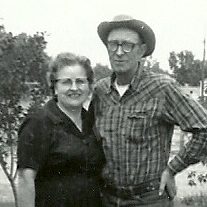 When the vegetables were ripe, he’d pick them and the canning would begin. I remember joining the family and seeing the canning in full swing. It took the whole day, but when it was done, we had enough vegetables to last the year. Canning wasn’t always my favorite task, but there was a certain satisfaction in opening those jars at dinner, knowing exactly where they came from. The best part of having Grandpa tend the garden was that he did all the hard work, and we enjoyed the rewards. I’m not much of a gardener myself…especially when it comes to weeding…so it was definitely more Bob’s idea of a pleasant memory than mine. Still, it’s a wonderful memory for Bob, who was named after his grandfather. Today is the 117th anniversary of Grandpa Knox’s birth. Happy birthday in Heaven, Grandpa Knox. We love and miss you very much.
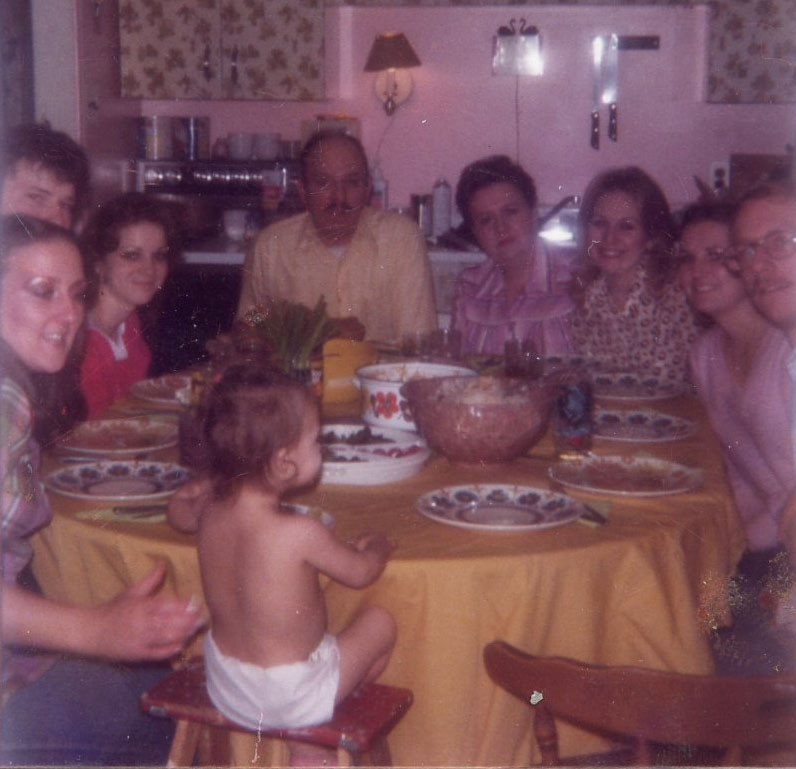
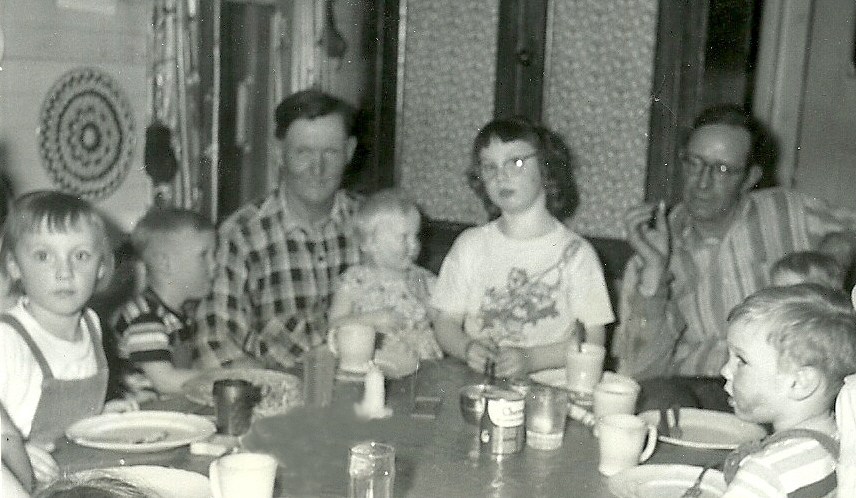 With the passage of time, the holidays begin to take on a different look. When I was a kid, the Thanksgiving was a day of wonderful smells and delicious food. That is one Thanksgiving tradition that hasn’t changed, but probably the only one. Those childhood Thanksgivings included my parents, Al and Collene Spencer, as well as my four sisters, one of whom, Alena Stevens, lives in Heaven now with Mom and Dad and others who have gone home. Of course, with Mom and Dad in Heaven, Thanksgiving is normally spent with our own families, because my sisters and I have families that have become too big to put in one house. Nevertheless, we connect via text messages, and we are all thankful for those who are still with us, while always missing those who are in Heaven. While things have changed over the years, we will always have much to be thankful for, because with each new year come new blessings. As new family members join us, either through marriage or birth, we realize that we are growing and we are so very blessed by each and every new member. Some have moved away, and we miss them very much too, and pray that their day is blessed as well. As our family grows, it also changes, with each new member being different than the others, but nevertheless, just as precious. It makes me think of how Thanksgiving got started in the first place.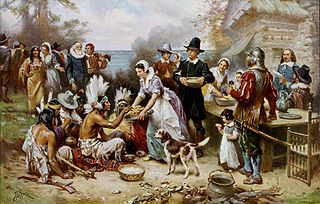
Thanksgiving started, of course, when the pilgrims, who had suffered a hard time in the new land, gathered with the Wampanoag Indians, who had become their friends. Most of us would have imagined a big party where the Pilgrims and the Wampanoag Tribe came together to celebrate new friendships, but that’s not quite how it happened. Many in the Wampanoag, along with the entire Patuxet Tribe, had died from smallpox. To make matters worse, the Pilgrims were on the brink of starvation. They didn’t know much about farming, and between the smallpox, harsh winter, and lack of food, they were in serious trouble. With the help of the Wampanoag, however, they found they had many reasons to be truly thankful. The Wampanoag people were vital to the Pilgrims’ survival, forging a peace treaty that set the stage for a complicated relationship between the two communities.
The Wampanoag Confederacy, led by Chief Massasoit, lived in what is now southeastern Massachusetts. When the Pilgrims landed on the Mayflower in November 1620, they faced a brutal winter and had trouble setting up their settlement in Plymouth Colony. The Wampanoag had already been severely reduced by diseases brought by earlier European explorers, wiping out up to 90% of their population between 1615 and 1619. This situation 
 paved the way for the Pilgrims to depend on the Wampanoag for survival. No wonder the two very different peoples came together to celebrate their friendship and their survival. It serves as a reminder that even though we have survived hardship and loss, we are strong and with God’s help, we will persevere and yes, even succeed in our lives. It is something to be very thankful for.
 The Cold War was a strange and rather unique time in history. Nuclear weapons were a big concern, and the United States government felt a need to be prepared…just in case. The Cold War was primarily caused by ideological differences, geopolitical tensions, and the power vacuum left after World War II, leading to a prolonged rivalry between the United States and the Soviet Union. Because the United States didn’t know if the Soviets would dare to launch a nuclear weapon, they decided that it was necessary to prepare for the possibility of a long nuclear winter…which would actually last for years. Many people thought, and possibly for good reason, that the Soviet government was insane.
While the logic was great, the procedure seems more than a little strange to me. Nevertheless, I suppose it could have and probably would have worked, in the event of that nuclear attack. The government’s solution was to construct massive underground bunkers filled with processed cheese as emergency food supplies for surviving a nuclear apocalypse. When I read this, I first thought, “What???” It seemed as insane as I knew the Soviets were. These “cheese caves” were carved into limestone formations in Missouri and other states. They stored millions of pounds of government-surplus cheese wheels that could feed survivors for years after a nuclear attack. That seems absolutely incredible. Of course, I know cheese can last a long time, but years…really. I’m no expert, so I would have no idea, I guess, but the government thought it would work.
What started as a simple agricultural policy to support dairy farmers eventually morphed into part of the national defense strategy, with military planners convinced cheese was vital for survival after a nuclear disaster. At this point, if you’re like me, you are thinking, “Who’s crazy idea was this?” I mean, I know cheese is good for us, but as the whole diet…I just don’t know. Nevertheless, the government officials were convinced that the plan had merit. Officials regularly checked the underground cheese reserves, rotating stock and testing for  radiation resistance to make sure the dairy would still be safe to eat after fallout. Kept under tight security and absolute secrecy, access to the cheese bunkers was limited to authorized personnel who treated them like classified national security assets. This odd mix of farming policy and doomsday planning turned the government into one of America’s biggest cheese hoarders, holding enough reserves to feed entire cities during a long-term collapse. While it was a viable plan, I guess…I’m sure that many people were thankful it was never needed. first the idea of living underground for years at a time, and second, the idea of eating just cheese…seriously, both are unthinkable.
 Many people are superstitious or just afraid of new or unusual things, and Britain was no different when it came to technology, at least. When the early motorized vehicles came out, the British decided that there had to be a way to let pedestrians and horses know that theses “contraptions” were coming down the road. So, Britain implemented the Red Flag Act of 1865. The law required every motor vehicle to be led by a man on foot waving a red flag to alert pedestrians and horses of its approach. This odd rule capped speeds at 4 mph in the countryside and just 2 mph in towns, which made early cars slower than walking. I guess the only way it made sense would be if the vehicle had a passenger who couldn’t walk in it, but then again, they could have been transported in a wheelchair or cart. Still, I suppose that would not be acceptable within the part of the community that could afford a car.
The Red Flag Act had certain rules to it, including that the man walking on foot, called a flag bearer had to stay 60 yards ahead of the vehicle he was warning people about. The whole process turned car travel into an impractical and costly venture thanks to the need for a dedicated flag carrier. No worker in their right mind is going to walk around town ahead of their employer’s car without getting paid for it…right?
Basically, the law reflected Victorian fears about new technology and concern for horses, which were prone to panic when encountering the strange mechanical contraptions. Maybe the concern for the horses made sense, but they could and did get used to the automobiles eventually. Because of the Red Flag Act, the sale of  automobiles to the British suffered. It all just made no sense. When a person can walk somewhere faster than they can drive it, they might as well walk. That made automobile manufacturers angry. Their business was suffering, so they lobbied against the Red Flag Act for over 30 years, arguing that it stifled innovation and made Britain’s automotive industry uncompetitive. It’s shocking to me that it took longer than 30 years to finally get that law repealed, but it wasn’t repealed until 1896, a fact that significantly delaying Britain’s eventual adoption of automobile technology, as compared to other European nations and the United States. When you think about it, fear and superstition can really be detrimental to progress and mental health.
 William Magear “Boss” Tweed was born on April 3, 1823, at 1 Cherry Street on Manhattan’s Lower East Side. The son of a third-generation Scottish chair-maker, he grew up on Cherry Street. His grandfather had emigrated from a town near the River Tweed, close to Edinburgh. While his religious affiliation wasn’t widely known during his life, The New York Times later reported, quoting a family friend, that his parents were Quakers and members of the old Rose Street Meeting House. At 11, he left school to learn his father’s trade, later apprenticing with a saddler. He also studied bookkeeping and worked as a brushmaker for a company he invested in before joining the family business in 1852. On September 29, 1844, he married Mary Jane C Skaden and lived with her family on Madison Street for two years.
Tweed joined the Odd Fellows, the Masons, and volunteered with Engine Number 12. In 1848, invited by state assemblyman John J Reilly, he and friends formed the Americus Fire Company Number 6, or “Big Six,” adopting a snarling red Bengal tiger from a French lithograph as their emblem…a symbol tied to Tweed and Tammany Hall for years. Volunteer fire companies were fiercely  competitive, often linked to street gangs and ethnic communities, sometimes fighting each other instead of fires. Known for wielding an ax in brawls, Tweed was elected “Big Six” foreman until chief engineer Alfred Carlson pushed him out. Fire companies also served as political recruiting grounds, bringing Tweed to the attention of Democratic leaders in the Seventh Ward, who backed him for Alderman in 1850 at age 26. He lost to Whig candidate Morgan Morgans but won the seat the following year, marking his first political role. He soon aligned with the “Forty Thieves,” a notoriously corrupt group of city aldermen and assistant aldermen. After beginning his association with “Forth Thieves,” Tweed started down the road to corruption. He rose to prominence in Tammany Hall, New York City’s powerful Democratic political machine, in the late 1850s. By the mid-1860s, he had taken over as its leader and created the “Tweed Ring,” a group that openly bought votes, promoted judicial corruption, siphoned millions from city contracts, and held a tight grip on New York City politics.

In 1871, the Tweed Ring hit its height of corruption with the remodeling of the City Court House, a shameless embezzlement of public funds exposed by The New York Times. Tweed and his cronies hoped the backlash would fade, but thanks to relentless critics like Harper’s Weekly cartoonist Thomas Nast, who waged a fierce campaign against him, nearly every Tammany Hall member was ousted in the November elections that year. All members of the Tweed Ring were eventually tried and sent to prison. Boss Tweed served time for forgery, larceny, and other charges, but in 1875 he escaped and fled to Cuba and then Spain. On November 23, 1876, Spanish police arrested him, reportedly recognizing him from a well-known Nash cartoon. After being extradited to the United States, he was sent back to prison, where he died in 1878.
 The world is full of firsts, and John Bennett Herrington is one of them. Born on September 14, 1958, a member of the Chickasaw Nation in Wetumka, Oklahoma, Herrington grew up in Colorado Springs, Colorado, Riverton, Wyoming, and Plano, Texas, where he graduated from Plano Senior High School. After high school, he moved to Colorado to pursue a bachelor’s degree in applied mathematics, from the University of Colorado at Colorado Springs. While there, Herrington developed an interest in rock climbing in the Colorado mountains.
Herrington earned his commission in the United States Navy after graduating from the Aviation Officer Candidate School at Naval Air Station Pensacola, Florida, in March 1984. A year later, he became a Naval Aviator and headed to Patrol Squadron Thirty-One (VP-31) at Moffett Field, California, for P-3C Orion training. His first operational role was with Patrol Squadron Forty-Eight (VP-48), where he completed three deployments…two to the Northern Pacific from Naval Air Facility Adak, Alaska, and one to the Western Pacific from Naval Air Station Cubi Point, Philippines. During his time with VP-48, he served as a Patrol Plane Commander, Mission Commander, and Patrol Plane Instructor Pilot.
After finishing his first operational tour, Herrington returned to VP-31 as a Fleet Replacement Squadron Instructor Pilot. While there, he was chosen to attend the United States Naval Test Pilot School at Naval Air Station Patuxent River, Maryland, in January 1990. He graduated that December and joined the Force Warfare Aircraft Test Directorate as a project test pilot for the Joint Primary Aircraft Training System. He also took on  additional flight test assignments, flying various P-3 Orion models along with the T-34C and the de Havilland Canada Dash 7. After becoming an Aeronautical Engineering Duty Officer (AEDO), Herrington attended the United States Naval Postgraduate School, earning a Master of Science in aeronautical engineering in June 1995. He then worked as a special projects officer for the Bureau of Naval Personnel Sea Duty Component before being selected for the astronaut program.
During his military service, he was awarded the Navy Commendation Medal, Navy Meritorious Unit Commendation, Coast Guard Meritorious Unit Commendation, Coast Guard Special Operations Service Ribbon, National Defense Service Medal, Sea Service Ribbons (3), and various other service awards. Selected by NASA in April 1996, Herrington reported to the Lyndon B Johnson Space Center in August 1996. He completed two years of training and evaluation and qualified for flight assignment as a mission specialist. Herrington was assigned to the Flight Support Branch of the Astronaut Office where he served as a member of the Astronaut Support Personnel team responsible for Shuttle launch preparations and post-landing operations.
Herrington served as a mission specialist on STS-113, the sixteenth Space Shuttle trip to the International  Space Station. To honor his Chickasaw heritage, Herrington, an enrolled citizen of the Chickasaw Nation, carried its flag on his thirteen-day trip to space. The flag had been presented to him by Chickasaw Nation Governor Bill Anoatubby. Endeavour launched from Kennedy Space Center on November 23, 2002, carrying the P1 Truss segment to support the Station’s radiators. It also brought the new Expedition 6 crew and returned to Earth on December 7, 2002, with the Expedition 5 crew after their six-month stay in space. The mission lasted 13 days, 18 hours, and 47 minutes. During the flight, Herrington completed three spacewalks totaling 19 hours and 55 minutes, an achievement honored on the reverse of the 2019 Sacagawea dollar coin.

 My niece, Kelli Schulenberg has always loved to travel and hike. She and her husband, my nephew, Barry have traveled many places, but this summer they decided to take a trip to the northeast part of the state of Wyoming. They live in Casper, so this was a shorter trip overall, but don’t let that fool you, because while they may not have driven a lot of miles, they walked a lot of miles. I don’t know how many exactly, but they found a lot of great trails, and the call of the trail was so inviting to Kelli and Barry that they couldn’t resist it. They have never been able to resist the call of the trail, whether it is on Casper Mountain right near home, the Platte River Trail, also near home, or trails in various parts of he country. They just love hiking and are always ready to get back out there and enjoy the great outdoors. Summer is their favorite, but in the Winter, they can be found snowshoeing the trails too. Kelli isn’t a fan of snow, but she manages to work her way through it.


Kelli and Barry’s trip to northeastern Wyoming took them to the Devil’s Tower area. There are five scenic trails near Devil’s Tower, some easy and some strenuous. Kelli and Barry are accomplished hikers, so I’m sure they hike all or most of them. The various views at and around the tower were amazing. I think there are probably lots of trails all around northeastern Wyoming, and while they were on vacation, Kelli and Barry hiked a lot of them. The area around Sundance was especially pretty. I loved the pictures they took up there. There is just something about being out in the woods on a rail, where it’s peaceful and quiet, to put things into perspective. Our lives are so hectic these days, and sometimes we just need to get back to nature, and that is where Kelli and Barry love to be.
One of the coolest parts of their hiking took Kellie and Barry to the furthest northeastern corner of Wyoming. At 
 that corner, three states actually come together. Of course, for this one, you can actually drive pretty close, but it’s still worth the trip. There is something about being at the exact spot where three state borders come together, that is very cool. Kelli tried to figure out a way to be in all three states at once, and I’d say she did it, even if it was only in the air space above the actual marker. I am always fascinated at the different places Kelli and Barry have found to go hiking. It just goes to show you what can be accomplished when the trail calls your name. Today is Kelli’s birthday. Happy birthday Kelli!! Have a great day!! We love you!!

 During the Old West years, and even into World War II, a phenomenon known as the Medicine Show was commonplace. Medicine shows were touring acts that traveled by truck, horse, or wagon teams peddling “miracle cure” patent medicines and other products between various entertainment acts. They evolved from European mountebank (swindler) shows and were popular in the United States during the nineteenth century.
Medicine shows often touted “miracle elixirs,” sometimes dismissed by real doctors as “snake oil liniment.” The peddlers and their so-called cures boasted they could heal diseases, erase wrinkles, remove stains, extend life, or remedy countless common ailments. Most of these shows featured their own “patent medicine” which were usually unpatented products given the name to sound official. To attract crowds, the shows often featured a mix of entertainments like freak shows, flea circuses, musical acts, magic tricks, jokes, and storytelling. Each was hosted by a man pretending to be a doctor, who kicked things off with a monologue to reel people in. Performers such as acrobats, strongmen, magicians, dancers, ventriloquists, exotic acts, and trick shooters kept the audience hooked until it was time for the salesman to pitch his medicine.
Showmen selling miraculous cures have existed since ancient times, and really still exist today. It seems like there is always some new “miracle cure” being peddled on television or Facebook these days. Of course, now the salesperson doesn’t have a circus act or other crazy show to catch the eye, but then they only have a  minute or so on television, so they have to get right to it. As for the Old West, the performances became more elaborate to attract a mostly rural audience, and they had a lot more time to “grab” their audience.
In the nineteenth century, traveling mountebanks evolved into more polished medicine shows, fueled by the booming patent medicine industry. By 1858, there were at least 1,500 “patent medicines” on record, giving wandering salesmen a specific product to pitch. These so-called “medicines” rarely treated the actual causes of illness, instead relying on stimulants or drugs to create a pleasant effect. Common ingredients like alcohol, opium, and cocaine not only made them addictive but also kept customers coming back, while their supposed health benefits provided a convenient excuse. By 1900, the patent medicine business was worth $80 million. The rise of the medicine show was also boosted by the growing advertising industry, which provided cheap posters, flyers, handbills, and other promotional materials. Other marketing tactics included catchy jingles, dramatic testimonials, and scare-based messaging.
Medicine shows mixed lively entertainment with sales pitches from self-proclaimed “doctors” peddling miracle cure-alls. These events could take place outdoors from a wagon, platform, or tent, or indoors in a theater or opera house, often with free or very cheap admission. Pitchmen made bold claims about their products, sometimes even planting people in the crowd to give fake testimonials. The idea was to stir up a need or fear, then present their unique remedy as the only solution. By alternating engaging acts with persuasive sales talk, they wore down the audience’s resistance until people were eager to buy. The shows would stay in town as long as possible…anywhere from one night to six weeks…before packing up and heading to the next stop. Imagine taking that “cure” for six weeks, becoming addicted, and then the dealer is gone. Medicine shows often brought entertainment to rural communities that might not have any other sort of performances for years at a time. Whatever the quality of the medical advice, some spectators enjoyed the free entertainment.
As mass-produced pharmaceuticals became widely available in the early 20th century, home remedies lost their popularity, and medicine shows leaned more on their entertainment to draw crowds. With America becoming 
 less rural and more urban, new entertainment like movies, vaudeville, and later radio pushed the traveling medicine show toward extinction. By the 1930s, only a handful of these troupes still toured, and even fewer survived the Great Depression and World War II. The few that made it into the 1950s faced competition from television and were seen as relics of a bygone era. In the end, their novelty, more than the remedies they sold, kept the last of them alive.

