Monthly Archives: November 2025

 As the West opened up in the early 1800s, the reality was that often, in those early days, more men went West than women…especially during the Gold Rush years. Once there, and especially as life became mundane from lack of success in the mining process, the men there became very lonely. That opened up a couple of possibilities…prostitutes and mail-order brides. Not many decent men wanted to spend a lot of time with a prostitute, so the mail-order bride option became popular. In fact, in the Old West, mail-order brides were a notable social trend, sparked by a gender imbalance and the settlers’ desire for companionship. I suppose it would be similar to today’s online dating, except for the fact that the mail-order bride already had the proposal before she came west.
In the 19th century, during America’s westward expansion, men far outnumbered women, creating a huge gender gap. In some places, there was just one woman for every 200 men. This imbalance led to social issues like isolation and made it hard to form families and build stable communities. To cope with the shortage of women, many men turned to mail-order advertisements to find brides. Loneliness is a powerful motivator. They placed ads in Eastern newspapers, sharing details about themselves and the kind of wife they wanted. Women who were interested would reply, and the couple often exchanged letters until they decided to marry. This approach let men find partners without having to leave their homesteads at risk of being claimed by others.
Many women who responded to these ads were looking for fresh opportunities or a way out of challenging situations at home. Motivations for becoming a mail-order bride ranged from seeking adventure and financial security to various personal reasons. As the demand for brides increased, matchmaking agencies sprang up to connect men and women. They promoted their services in newspapers, charging fees and promising to link eligible bachelors with women in search of stability and companionship.
The mail-order bride trend not only changed individual lives but also left its mark on the social fabric of frontier society. Divorce was not so easy to get then, so marriage over the mail service, or dating by mail was a big 
 step and not one to be taken lightly. Still, it offered a unique answer to the gender imbalance, giving many women the chance to find husbands and start fresh in the Old West. Their stories often mix hope, necessity, and the pursuit of happiness in a fast-changing world. The use of a mail-order bride service shows us how loneliness changed the lives of those who braved the unknown in search of love and stability in tough conditions.
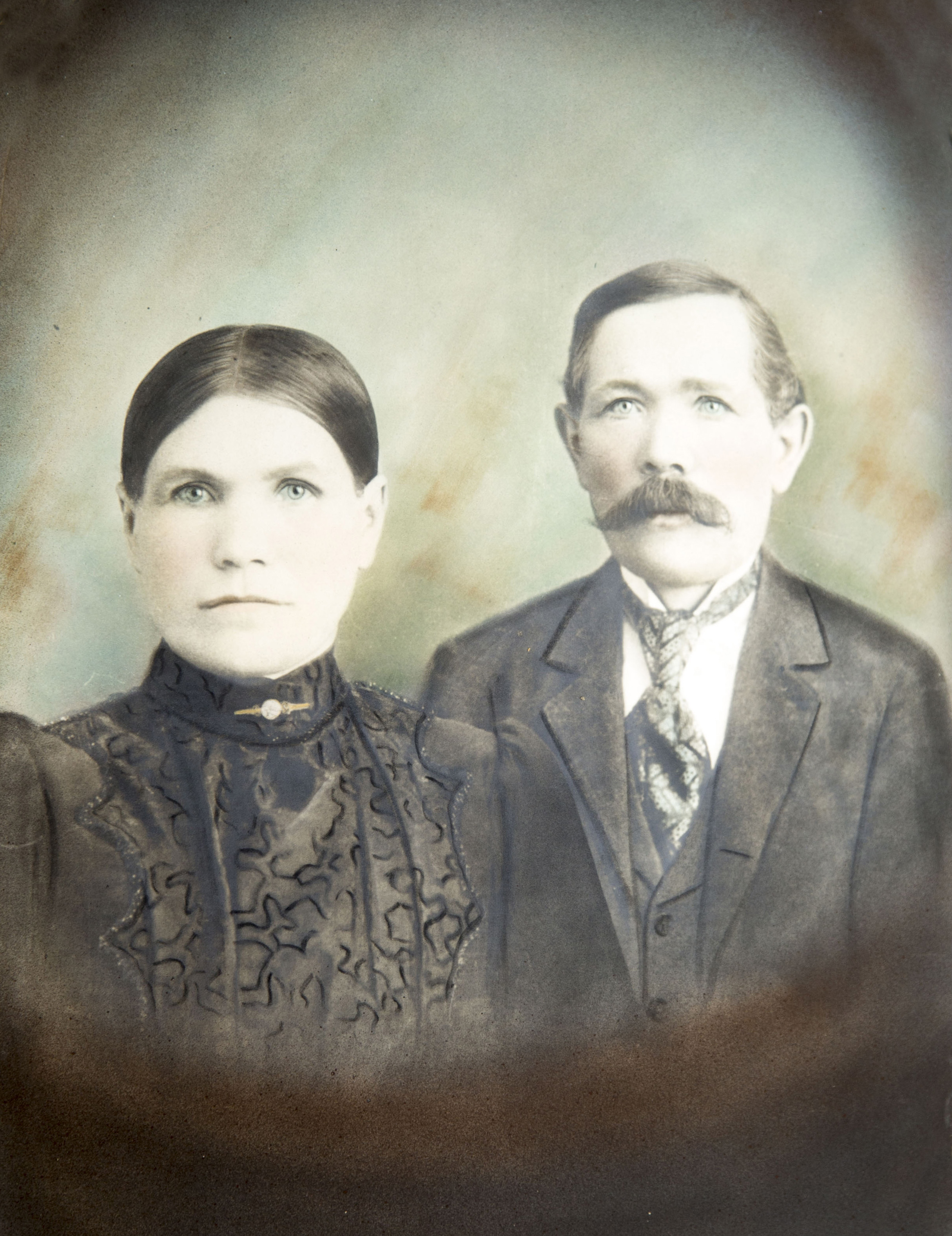 Photography arrived in the United States in 1839, and looking at portraits from that era, you’ll notice the subjects rarely smiled. I always thought of that as being sad, but the truth is that there were reasons for that. Most monochrome prints from the 18th century feature people in regal poses with serious expressions, and the absence of color adds to the somber feel. One reason for the lack of smiles was the long exposure time in early photography, which could take around 20 minutes. It was much easier to hold a relaxed face than to maintain a steady smile, and subjects had to remain perfectly still to avoid any blur in the final image.
By the early 1840s, the exposure time for photographs had dropped to about 20 seconds, yet people still kept serious expressions in their portraits. There could have been a number of reasons…habit, etiquette, and even poor dental care. For whatever reason, people in those days were actually not told to say “cheese” but rather “prunes.” The point was to keep a more neutral look on their faces. I wondered about that, and so I tried saying prunes instead of cheese, but it doesn’t seem like that would produce a neutral face exactly. To me it almost produced a pucker or an “o” face. I could be wrong I suppose, but in choosing “cheese” the persons face almost has to form a smile to get the word “cheese” out. The word “prunes” just doesn’t seem 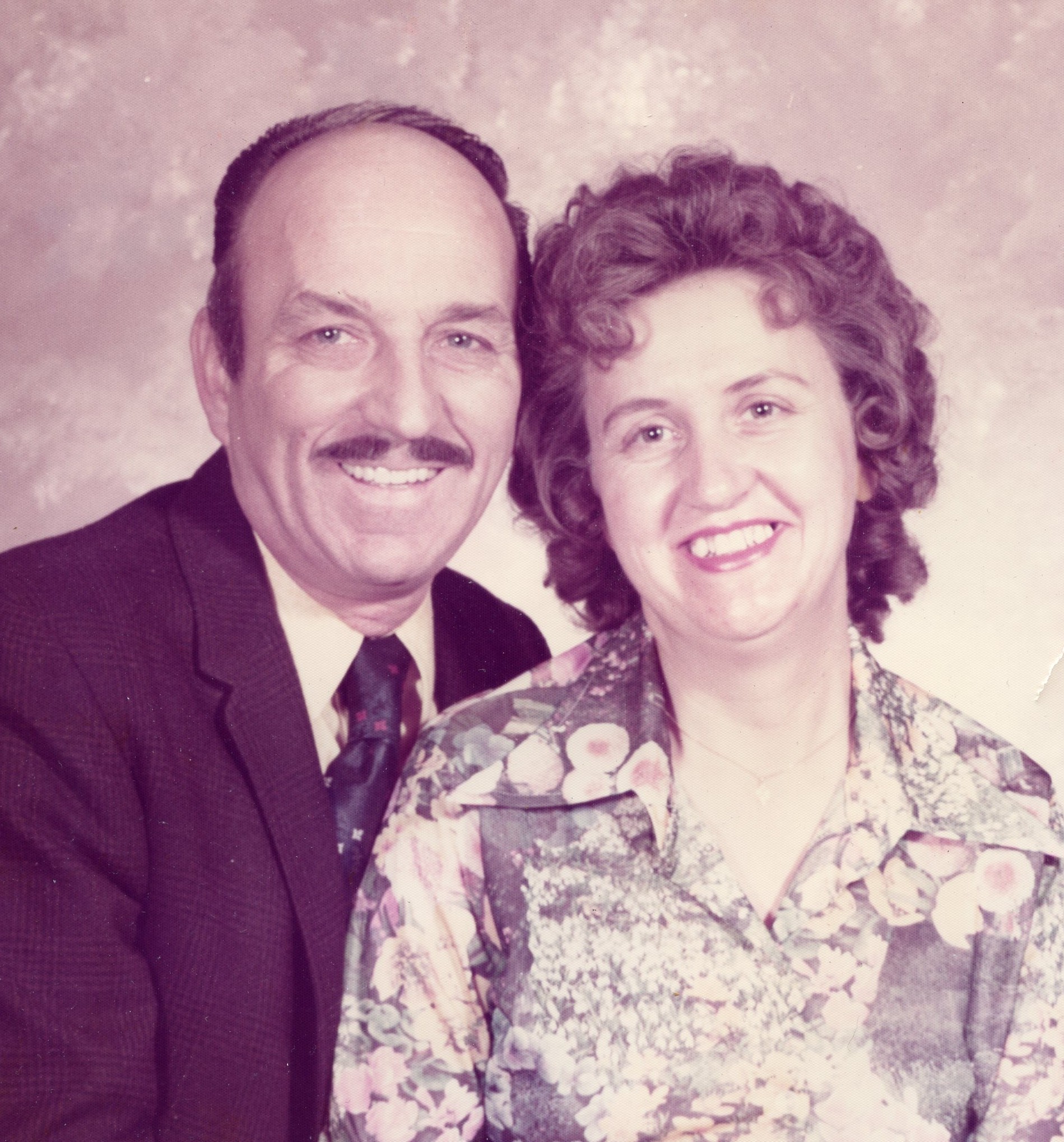 to produce the opposite effect for me.
Smiling for photos didn’t really catch on until the 20th century, which is also when saying “cheese” became popular. Unlike “cheese,” which makes you grin. Saying “prunes” tightens the lips for a more modest, refined look that fit the beauty standards of the time. This trend was started by Britain’s first portrait photographer, Richard Beard, who used it to help his subjects create a sharp, composed image. For me, it seems rather sad that all those old photographs had a serious look to them, like life was mean and harsh, instead of being happy. Actually, the opposite was usually true. People were usually happy, but history will never record that fact, because the people were told to say “prunes.” Personally, I prefer the smiles…don’t you?
 A good con man can fool even the savviest of people in the right circumstances. Cousins, Philip Arnold and John Slack were “prospectors” who were pretty good at conning people. The Diamond Hoax of 1872, also known as The Great Diamond Hoax, was a scam where the two prospectors duped prominent businessmen in San Francisco and New York City into buying a fake American diamond deposit. This scheme sparked a short-lived diamond rush across the western United States, including Arizona, New Mexico, Utah, Wyoming, and Colorado.
In 1871, Arnold and Slack traveled through Navajo territory with James Cooper on their way to San Francisco, collecting chrome diopsides, pyrope garnets, and ilmenites. They mixed these with some flawed industrial-grade diamonds that Cooper already had and showed them to a local jeweler and bankers, securing funding for an expedition. The men were joined by Asbury Harpending, and they bought flawed South African stones from Leopold Keller jewelers in London. Back in San Francisco, they displayed their “findings,” and Harpending took some to Charles Lewis Tiffany for appraisal. Valued at $150,000, this appraisal led to the creation of the Golconda Mining Company. As the ruse continued, they hired mining consultant Henry Janin to inspect the mine, and Arnold later acquired more rough diamonds, low-grade rubies, emeralds, and other gems in London and Paris, mixing them with more Navajo spinels, sapphires, and pyrope garnets. These were planted near Diamond Peak, Colorado, on a sandstone outcrop containing itacolumite. In June 1872, they led Janin to the site, where he declared the “mine” to be “wonderfully rich.” Janin’s endorsement of the mine attracted investors like George B McClellan, Nathan  Rothschild, Tiffany, and twenty others, and they bribed Spoons Butler to pass legislation granting access to federal land under the General Mining Act of 1872.
Later, the investors persuaded the cousins to sell their stake for $660,000 (about $17.3 million today) and went on to form the San Francisco and New York Mining and Commercial Company. New York attorney Samuel Latham Mitchill Barlow was brought in as their legal representative, who then suggested adding United States Congressman Benjamin F Butler to the legal team. Barlow established a New York corporation called the Golconda Mining Company with a capital stock of $10,000,000. Butler received one thousand shares for amending the General Mining Act of 1872 to include the phrase “valuable mineral deposits,” which enabled legal mining claims in the diamond fields. On August 31, 1872, United States Attorney General George H Williams clarified that “valuable mineral deposits” covered diamonds, and the company was ready to begin mining activity.
Soon everything began to unravel. Geologist Clarence King who had led a survey team that recently completed a Geological Exploration of the Fortieth Parallel had a chance meeting with Janin on a train. King and his team were alarmed at the reports of such a prominent diamond field which their survey had not noted. I’m sure they wondered what they had miss, or maybe they suspected foul play. King sent geologist Samuel Franklin Emmons and cartographer A D Wilson ahead to investigate, with King joining them soon after. Upon locating the site, they quickly concluded that it had been “salted.” As a geologist, King knew that the various stones found in the mine were formed under different conditions and would never be found together in a single deposit. He immediately notified the duped investors.
Meanwhile, the cousins knew it was time to “get out of Dodge” before they were found out. Arnold fled to  Kentucky, taking his proceeds from the scheme and bought a two-story brick house in his native Elizabethtown, as well as some five hundred acres of nearby farmland…all of which he had deeded in the name of his wife Mary. In 1873, Arnold ventured into the banking business by purchasing a defunct financial institution in Elizabethtown. In 1878, a feud with another local banker led to a shootout, leaving him with a serious shotgun wound to the shoulder. He died six months later from pneumonia at the age of 49. Slack chose a quieter life, and in 1896, he died in White Oaks, New Mexico, where he had become a coffin maker. Neither of the men ever faced charges for the scam. Law enforcement was different back then.
 Many people love the movie, Heidi, but even Heidi fans have their limit…at least those who are in the middle of a football game. On November 17, 1968, the Oakland Raiders scored two touchdowns in just nine seconds to defeat the New York Jets. Now that would have been a great game, but no one saw it because they were watching the movie Heidi instead. In one of the biggest blunders in history within the television network community, up to that date anyway, with only 65 seconds left in the game, NBC cut away to its scheduled program, a made-for-TV adaptation of the children’s story about a young girl and her grandfather in the Alps. Outraged viewers flooded the network with complaints, teaching executives a lesson they’d never forget…”Whatever you do, never cut away from an NFL game,” one viewer said.
The Jets and Raiders game was turning into an instant classic, showcasing two of the league’s top teams and boasting 10 future Hall of Famers. By the final minute, the lead had changed hands eight times. The high intensity led to a flurry of penalties and timeouts, stretching the game longer than usual, which was the whole reason that the network cut away became a problem. With just over a minute to go, the Jets nailed a 26-yard field goal to pull ahead 32-29. After the kickoff, the Raiders started from their own 23-yard line. What followed became legendary…quarterback Daryle Lamonica hit halfback Charlie Smith with a 20-yard pass, and a  facemask penalty put the ball on the Jets’ 43-yard-line. On the very next play, Lamonica connected with Smith again, who took it all the way for a touchdown, putting Oakland up 36-32. Then, on the ensuing kickoff, the Jets fumbled, and Preston Ridlehuber scooped it up and ran it in from two yards out. In just nine seconds, the Raiders scored twice and sealed a 43-32 victory.
Unfortunately, nobody outside the Oakland Coliseum saw any of that spectacular ending, because NBC cut to a commercial right after the Jet’ kickoff and never returned. Instead, they stuck to their long-standing plan…at 7 PM, they aired a new version of Heidi, because they were confident it would score big ratings during November sweeps. Before kickoff, network executives had already discussed the possibility of the game running late and decided they’d air the movie no matter what. So, that’s what NBC programmer Dick Cline did. “I waited and waited,” he said later, “and I heard nothing. We came up to that magic hour and I thought, ‘Well, I haven’t been given any counter order, so I’ve got to do what we agreed to do.'”
The reality was that NBC executives had a last-minute change of heart and tried to reach Cline to tell him to keep the game on until it ended. But the phone lines were jammed with thousands of people calling to push for Heidi to air on time, while thousands more demanded the football game stay on. Fans got even angrier when NBC flashed the game’s final score at the bottom of the screen 20 minutes after it was over. The flood of furious calls overwhelmed NBC’s switchboard, prompting people to start phoning the telephone company, the New York  Times, and even the NYPD, whose emergency lines were tied up for hours. I guess I can understand the telephone company calls…to see if phone lines are down, but the New York Times and the NYPD!!! What are they going to do about it? The New York Times and the NYPD have no say in the matter.
Not long after the infamous Heidi incident, the NFL added a clause to its TV contracts ensuring that all games would be shown in full in their home markets. They didn’t ever want to deal with another fiasco like the one they called the “Heidi Game” again!! So, NBC set up a special phone, dubbed the “Heidi Phone” in the control room with its own exchange and switchboard. The network promised viewers that such a fiasco would never happen again. I wonder how long it took for their ratings to come back!!

 For as long as humans have contemplated the universe, they have wondered if our planet is the only on out there that is inhabited. I’m not sure what I think on that line, but I expect that if there are other inhabited planets, it is likely that they are not the same as this one. Of course, people are free to disagree with me and they have a right to believe what they want to. Nevertheless, scientists have been trying to prove that there is other life out there for quite some time now.
The only real way to prove it, would be to “test the waters” so to speak, so on November 16, 1974, a full eight years before the movie E.T. came out, in which E.T. was told to “Phone Home” on the big screen, researchers sent humanity’s first real-life, deliberate radio message into outer space to extraterrestrials. The message went out from the Arecibo Observatory in Puerto Rico, where the Arecibo radio telescope was getting a major upgrade and conducting a ceremony to mark the upgrades.
The message received no response, and maybe none was really expected, but the researchers, wanted to showcase humanity’s technical advancement, even though they weren’t expecting an answer. “It was strictly a symbolic event, to show that we could do it,” Donald Campbell, professor of astronomy at Cornell University, told the Cornell Chronicle in 1999. He had been a research associate for the Arecibo Observatory at the time. Maybe they didn’t expect an answer, but I’m sure if they had received something, they would have patted themselves on the back with the statement, “We knew it!!” tacked on for good measure.
The transmission was a simple, visual message, created by astronomers Carl Sagan and Frank Drake, was aimed at possible intelligent life in the globular star cluster called M13, located at the edge of the Milky Way, some 21,000 light years from Earth. The message included the formula for DNA, a crude diagram of the solar system, a drawing of the Arecibo telescope and a stick figure of a human. The message sent strikes me as odd, given the fact that we would have had no idea what a species of life from another planet could understand, but I guess they had to start somewhere, and so the used the resources they had.
No return transmissions came to the Arecibo telescope, nevertheless, it shaped cosmic research for six decades. The telescope collapsed in 2020 after two cable failures. Two years later, the National Science Foundation announced it would decommission and dismantle it, replacing it with an education center. At the 2021 Lunar and Planetary Science Conference, presenters wrote that Arecibo “left an indelible mark on planetary science, radio astronomy and space and atmospheric sciences.”
The only “possible” transmission ever received from outer space was dubbed “The Wow!” signal. On August 15, 1977, Ohio State University’s Big Ear radio telescope picked up a strong narrowband radio signal while scanning for signs of extraterrestrial intelligence. The signal seemed to come from the constellation Sagittarius and had traits expected of an extraterrestrial source. A few days later, astronomer Jerry R Ehman noticed the anomaly while reviewing the data, circling the intensity reading “6EQUJ5” and jotting “Wow!” beside it, giving the event its famous name. The signal lasted the entire 72-second observation window, but despite many follow-up 
 searches and theories, ranging from space debris reflections to comet hydrogen clouds, it was never detected again, and no definitive explanation has been found. While some people believe it may have been an alien transmission, its one-time occurrence makes that idea hard to prove. “The Wow!” signal remains a source of curiosity, inspiring targeted searches and scientific debate.
 Back when Nebraska ran from the present Nebraska–Kansas line north to Canada, in a section that would later become Montana, a man named John Coulter found himself in a fight for his very life. The year was 1806, and Coulter was a part of the company of men that crossed the continent to the Pacific Ocean with Lewis and Clark. As they made their way back in 1806, Colter saw many signs of beaver on the headwaters of the Missouri River. He really wanted to trap beaver, so he got leave of Captain Meriwether Lewis to stay there and trap. That area of the country was filled with the terrible Blackfeet Indians. A man named Captain Lewis had killed a Blackfeet warrior who was trying to steal horses, and from that time on, the tribe hated white men and killed them without mercy.
That was not news to Colter, but he loved to trap, so with another hunter named John Potts, he set out into the wilds of the best beaver streams of the Blackfeet hunting grounds. The two men understood the great risk they faced and were familiar with the ways of the Indians. Being prudent, they set their traps at night, collected them early in the morning, and stayed hidden during the day. While they tried to stay safe, it was probably inevitable that they would eventually cross paths. That day came early one morning when they were softly paddling up a small creek in their canoe to take in some traps. Suddenly, they heard trampling along the bank. Colter whispered, “Indians,” and wanted to turn back, but Potts said, “Buffalo,” and kept going. After a few more strokes of the paddle, they found themselves surrounded on both shores by hundreds of Blackfeet warriors signaling for them to come closer. They knew that there was no way to escape, so Colter steered the canoe toward shore. As they landed, an Indian grabbed Potts’ rifle, but Colter, being very strong, wrenched it back and handed it to Potts. Acting immediately, Potts managed to kill one of the warriors, but was quickly struck down, riddled with arrows.
The Indians captured Colter, stripped him, and discussed how they would kill him. At first, they considered using him as target practice, but the chief, wanting more excitement, asked if he could run fast. Colter, understanding their language, claimed he was a poor runner, though he was actually one of the fastest among the hunters, and the chief was misled. The chief led him a few hundred yards onto the prairie and set him loose  to run for his life. With a war-whoop, the Indians gave chase as Colter sprinted across the open plain toward the Jefferson River, six miles away. Coulter’s only problem was that not only was he naked, but he was also barefoot, and that could prove to be a serious problem. The open plain was covered with cactus, and at every step he ran Coulter’s bare feet were being ripped to shreds. The fact that he was naked mattered very little at that point. His feet were filled with cactus thorns. Nevertheless, a man who knows that death is running behind him, also knows that cactus thorns in his feet matter as little as does the fact that he is naked. So, Colter ran faster than he had ever run in his life, with hundreds of Blackfeet warriors right behind him. He ran nearly halfway across the plain before he dared to look back over his shoulder. He saw that he had far outrun all the Indians except one who carried a spear and was not more than a hundred yards behind him.
With that, a glimmer of hope rose in Colter’s heart. Still, he had run so hard that blood was streaming from his nose, fully covering him. Coulter pressed on until he was within a mile of the river, when he heard the footsteps of the Indian with the spear close behind him. Glancing back, he saw the man was barely twenty yards away. Colter stopped abruptly, turned, and spread his arms. The sudden move startled the Indian, who tried to stop but, because he was so exhausted, he collapsed and broke his spear. Colter snatched up the spear point and drove it through the brave and into the ground, pinning the man there. He then sprinted on as the other Indians reached their fallen comrade, howling over his body. Seizing the moment, Colter ran on, reaching the cover of the riverside trees and dove into the water.
A little way out was an island, at the upper end of which was a great raft of driftwood in the water. After some trouble, Colter dived under this raft and got his head above the water between large logs that screened him from view. Almost immediately after Coulter got his head hidden the Indians came down the riverbank yelling like banshee. The Indians hunted the shores, walked out on the raft of driftwood over Colter’s head, pulling the logs, and peering among them for hours. Once, Colter thought they were about to set the raft on fire. Colter  didn’t dare leave his hiding spot until night fell and the sounds of the Indians faded away. He swam far down the river before climbing onto the bank. Alone in the wild, he had no clothes, no weapon, and his feet were shredded by cactus thorns. The nearest trading post on the Yellowstone was hundreds of miles away, deep in hostile territory. Still, he was alive…fearless and strong, despite his injured and bleeding feet.
After the attack, the Blackfeet continued to attack the white men and especially the trappers, who they felt were robbing them of their food supply. Finally, the encounters drove Colter to give up trapping. Using the money from selling furs, he relocated to New Haven, Missouri, and bought a farm. In 1810, he married a woman named Sallie, but his peaceful days as a farmer were soon interrupted by the War of 1812. Coulter enlisted and fought under Nathan Boone. Coulter died while in service to his country, but he was not killed by the British. Sadly, he died of jaundice. After his death, his remains were shipped back to Missouri to his wife, who was said to have buried him on a bluff overlooking the Missouri River near New Haven, Missouri.
 With the proposal accepted, it was time to plan the wedding. John and Frances Canning knew exactly how they wanted their day to go…or did they. Like most people there are things that are important, like the wedding dress, the tuxedoes, the cake, the venue, and of course, the guest list. Most of the planning was going along without any surprises, but then, something happened that was anything but expected. In fact, it was…well, shocking.
John and Frances found out that on their wedding day, by pure chance, Queen Elizabeth was going to be in Manchester, England, where their nuptials were being held. On a whim, the couple decided to invite the queen to the wedding, knowing full well that there was no way she would show up, but at least they could say that they had invited the queen to their wedding. That, in itself, was something that most couples couldn’t say. Of course, they knew that the queen would never show up, because she had an itinerary that she would be following. Her time was valuable, and she couldn’t be bothers with a commoner wedding. didn’t really expect Queen Elizabeth to come to their wedding, but when they learned she was going to be in Manchester, England, on the day of their nuptials, they sent an invitation on a whim.
With all the invitations sent, the couple moved on to the rest of the wedding planning, and things were coming together nicely. The day of the wedding finally arrived, and the couple was so excited. They had waited for what seemed like a very long time to become husband and wife, and nothing would be more perfect than their wedding day. Little did they know how true that was about to be. When their day arrived, they found out that they were to be the recipients of a very special gift, and one that clearly, most couples would never receive…Queen Elizabeth was not only in town, but she had decided to accept their invitation, and she had decided to actually attend the wedding. The queen actually showed up.
Well, to say the least, the couple was shocked, but when you invite a guest, you have to understand that they 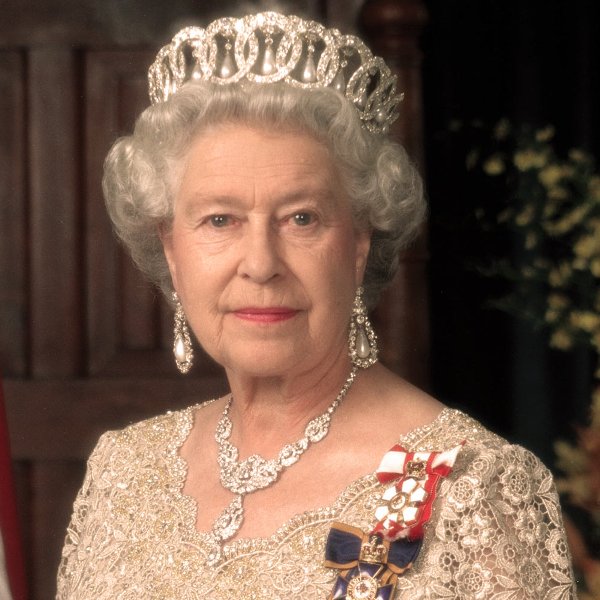 have every right to attend. So, despite the shock that accompanied the queen’s attendance, the groom had the presence of mind to bow, and the bride to curtsey as the monarch appeared and congratulated them. It was a wonderful wedding gift, and the queen’s husband Prince Philip also wished the couple well. Queen Elizabeth was in Manchester Friday on official duties that included visits to Central Manchester University Hospitals and a new BBC complex. She was making appearances around the country this spring as she celebrated her Diamond Jubilee, marking her 60 years on the throne. The year of her Platinum Jubilee…70 years on the throne, was also John and Frances Canning’s 10th anniversary. Sadly, Queen Elizabeth passed away on September 8, 2022. She was a hard act to follow and has been missed very much.
 If you had recently been promoted, how do you think you might treat your boss…good, or might you be rude to him? Well, on November 13, 1861, President Abraham Lincoln made a late-night visit to General George McClellan, whom he had recently appointed as general in chief of the Union army on November 1, 1861, and was snubbed by the man he had just entrusted with control of a large part of the Union army. While President Lincoln placed a large amount of confidence in McClellan, the general didn’t treat the president with the respect that should have been afforded him. This was the most well-known example of McClellan’s blatant disregard for the president’s authority. Lincoln appointed him to lead the Army of the Potomac, the main Union force in the East, in July 1861, following the Union’s crushing defeat at the First Battle of Bull Run in Virginia.
McClellan was a competent leader and had quickly set about building a strong army. Very soon he was promoted to general in chief after Winfield Scott resigned that fall. While he earned praise for his military efforts, he also gained a reputation for arrogance and disdain toward Washington’s political leaders. Once in the top army role, he openly aligned himself with Democratic leaders in Congress and made little effort to hide his  disregard for the Republican administration. In letters to his wife, he described Lincoln as “nothing more than a well-meaning baboon” and called Secretary of State William Seward an “incompetent little puppy.”
Like most high-level security jobs in Washington, the work hours for the army were never expected to be a 9-to-5 job. That said, President Lincoln often visited McClellan’s home in the evenings to talk strategy. On November 13th, he arrived with Seward and presidential secretary John Hay, but McClellan was out, so the men waited. Finally, an hour later, McClellan returned, was told his guests were there, and yet he went straight to his room without saying a word. After another half-hour, they learned he had gone to bed. Hay thought Lincoln should have been offended, but Lincoln said it was “better at this time not to be making points of etiquette and personal dignity.” Lincoln never visited McClellan’s home again, and in March 1862, he removed him as general in chief of the army. He really had no choice.
While President Lincoln chose not to make a scene, he had lost all respect for McClellan, and he couldn’t get  that back. It was obvious that McClellan was not interested in the necessary strategizing that was needed to plan a war. He was not an ally of President Lincoln’s. They did not share the same values. It was a tough decision, but McClellan was more of a liability than an asset. He had to go. So, President Lincoln made the tough decision to replace him. It was necessary, and a good decision in the end. President Lincoln replaced McClellan with Edwin Stanton, an American lawyer and politician who took on the role of US Secretary of War for most of the Civil War. Stanton played a key part in organizing the North’s huge military resources and steering the Union toward victory. Still, many Union generals saw him as overly cautious and a bit of a micromanager. That makes me wonder what those generals’ political views were.

 You may have heard of “the charge of the light brigade” and maybe even read the poem on that subject, but this was not a fictional event. The charge actually took place during the Crimean War. The war was fought between the Russian Empire and an alliance of troops from the French, British, Ottoman, and Sardinian forces. The war began in the Fall of 1853 and ended in March 1856 with the signing of the Treaty of Paris. The war claimed many lives and left lasting impacts for countless people.
The Charge of the Light Brigade was a daring but disastrous attack by British light cavalry against Russian forces during the Battle of Balaclava in the Crimean War, leading to heavy losses. On October 25, 1854, Lord Cardigan led the Brigade in a head-on assault against a well-defended Russian artillery position with clear fields of fire. The charge stemmed from a misinterpreted order by commander-in-chief Lord Raglan, who had meant for them to target a different position better suited for light cavalry, to stop the Russians from removing captured guns from Turkish lines. Despite braving intense fire and reaching the guns, scattering some defenders, the Brigade was forced into a swift retreat.
The Light Brigade of the British cavalry was made up of the 4th and 13th Light Dragoons, the 17th Lancers, and the 8th and 11th Hussars, led by Major General James Brudenell, 7th Earl of Cardigan. Also on the field that day, was the Heavy Brigade, commanded by Major General James Yorke Scarlett, which included the 4th Royal Irish Dragoon Guards, the 5th Dragoon Guards, the 6th Inniskilling Dragoons, and the Scots Greys. These two brigades were the only British cavalry at the battle. The Light Brigade, riding unarmored, fast, and agile horses, carried lances and sabers. Designed for speed and mobility, they specialized in reconnaissance, skirmishing, and swiftly cutting down infantry and artillery as they tried to retreat. They were simply not suited for head-on battle against a heavily armored enemy force.
The Light Brigade rode into the valley with Cardigan at the front, leading the charge on his horse, Ronald. Suddenly, Nolan dashed across, cutting in front of Cardigan. Perhaps he realized they were charging the wrong target and tried to halt or redirect them, but an artillery shell struck and killed him, and the cavalry pressed on undeterred. Captain Godfrey Morgan was close by and stated, “The first shell burst in the air about 100 yards in front of us. The next one dropped in front of Nolan’s horse and exploded on touching the ground. He uttered a wild yell as his horse turned round, and, with his arms extended, the reins dropped on the animal’s neck, he trotted towards us, but in a few yards dropped dead off his horse. I do not imagine that anybody except those in the front line of the 17th Lancers saw what had happened.”
Heavy fighting continued, but in the end, the British were soundly defeated. The brigade was not completely destroyed, but did suffer terribly, with 118 men killed, 127 wounded, and about 60 taken prisoner. After regrouping, only 195 men were still with horses. The futility of the action and its reckless bravery prompted the French Marshal Pierre Bosquet to state: “C’est magnifique, mais ce n’est pas la guerre.” (“It is magnificent, but it is not war.”) He continued, in a rarely quoted phrase: “C’est de la folie” (“It is madness.”) The Russian commanders are said to have initially believed that the British soldiers must have been drunk. No, just terribly misinformed and horribly unprepared for the battle.
Alfred, Lord Tennyson told of the events in his narrative poem “The Charge of the Light Brigade” (1854), 
 published just six weeks after the battle took place. The verses highlight the bravery of the cavalry as they followed orders despite the danger. The blame for the miscommunication remains unclear, as the order was vague, and Captain Louis Nolan…who delivered it with some added oral explanation…was killed within the first minute of the charge. Wars bring with them killing and injuring, but rarely is such carried out in such an insane manner.
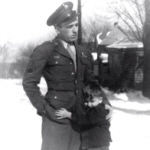 Veteran’s Day is a time to reflect on sacrifice, honor, duty, dedication, war, and peace, but for me it’s also a day filled with thoughts of my dad and how much I miss him. I know my sisters feel the same, as does the rest of our family. For anyone who’s lost a loved one who was a veteran, this day brings their memory close. I think of my Grandpa Byer, my uncles Ted Byer, Cliff Byer, Larry Byer, and Jim Wolfe, and my cousin Larry Wolfe…all gone now, but thankfully not lost in war. I remember those in World War II who couldn’t serve in combat but contributed at home in the shipyards and Rosie the Riveters, like my Aunt Ruth Wolfe, Aunt
 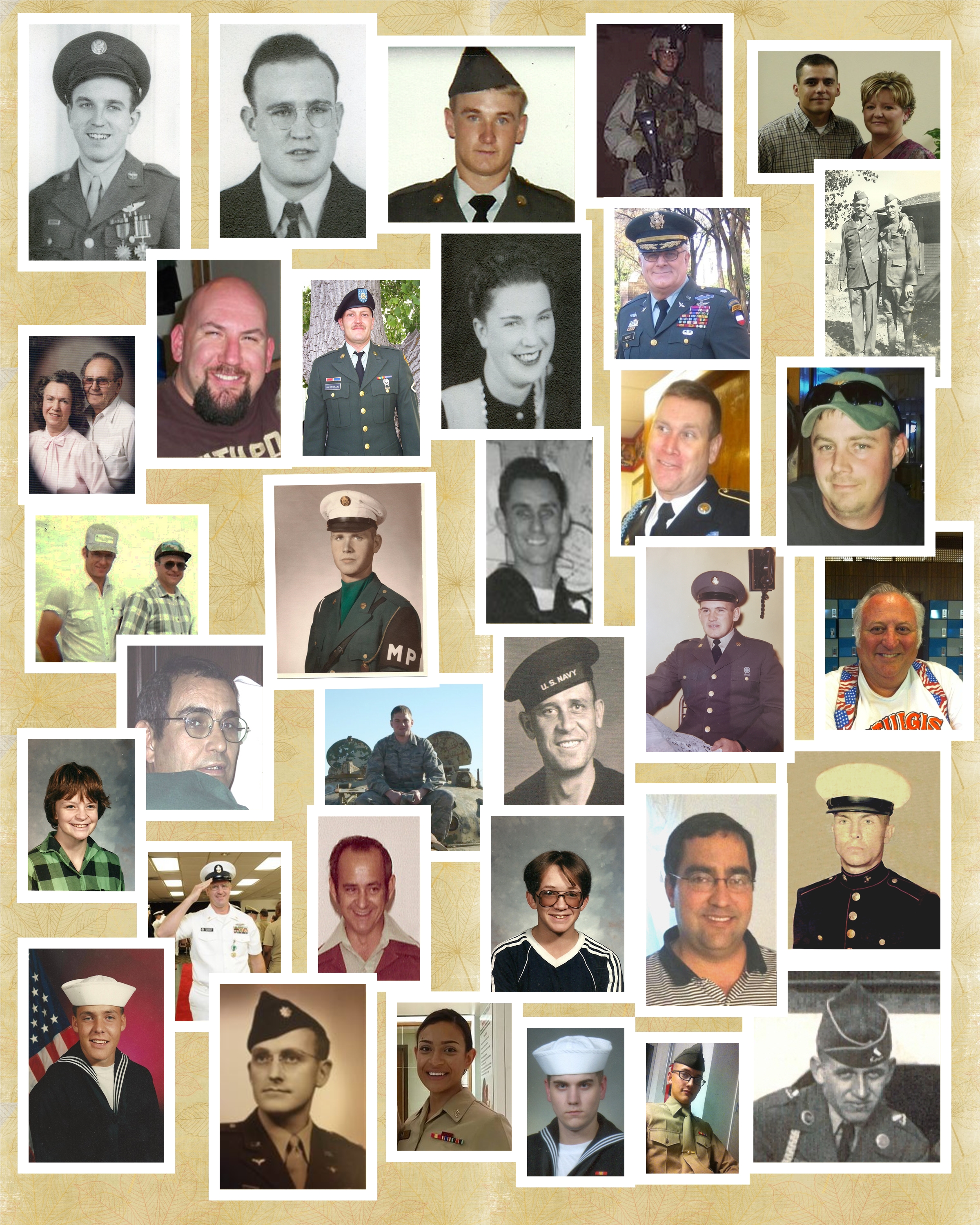 Laura Fredrick, and Uncle Bill Spencer…who was kept from service by a hernia and flat feet. And I think of so many others…too many to name…who have fought and returned, and those still serving to protect our nation and prevent terrorism around the world.
Their sacrifice is beyond measure, a debt we can never repay. Every day in service, they work without knowing if they’ll return to their loved ones or if this will be the day a bullet, rocket, or bomb claims them. They face fear as if it’s their constant companion, and yet they know it’s no friend at all. They push past that fear and do their job because it’s necessary—because they are necessary…without them, our nation stands unprotected. Most of us sleep peacefully at night, confident in what tomorrow will bring, because we live in a country where freedom is for everyone. But we must remember, it doesn’t come free. Over the years, we’ve lost countless young lives to war…young people who were our hope for the future, full of promise, with plans and dreams…all gone now.
War is a terrible thing, and none of us truly wish to take part in it. Yet, evil exists and works tirelessly to bring chaos to the world. If we stand by and do nothing, countless innocent lives will be lost. That’s why God created 
 soldiers…people of honor and dedication, with a strong sense of duty and love for others. They are individuals of courage and bravery, able to push back the fear surrounding them. God knew they would have to be heroes, and that’s exactly what every veteran is, was, and always will be. Today, we honor those who have sacrificed so much to keep us free. Thank you for your service, and God bless every one of you.

