Monthly Archives: December 2025

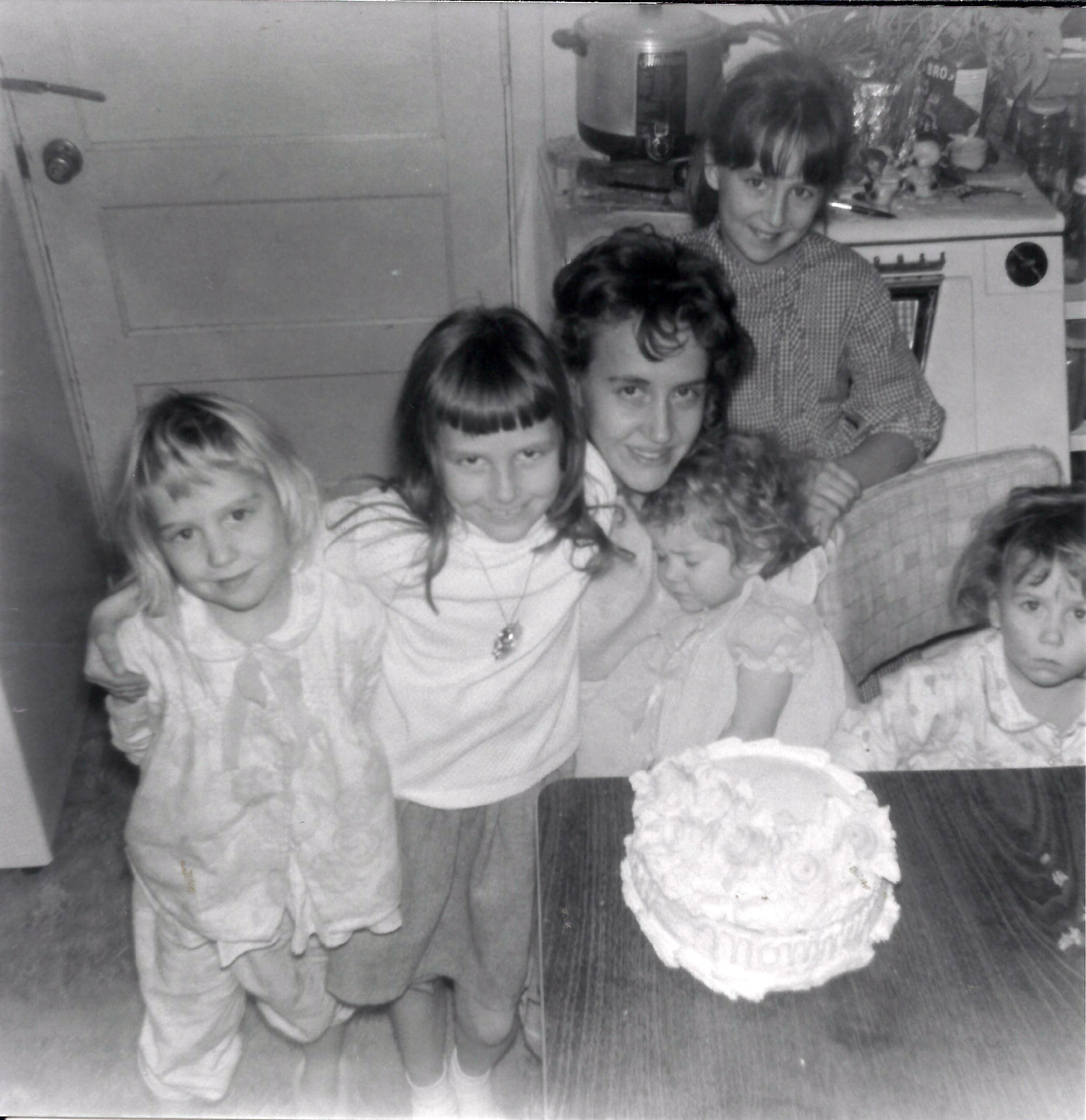 During my childhood years, my sisters, Cheryl Masterson, Caryl Reed, Alena Stevens, Allyn Hadlock, and I always knew where we would spend New Year’s Eve…and where our parents, Allen and Collene Spencer would spend theirs too. New Year’s Day was our mom’s birthday, and Dad loved to make it all a big deal. So, they threw a party and invited their friends and family. Because my sisters and I were there too, our cousins also came with their parents. That way it was fun for everyone, and no one needed a babysitter. Our little house was jam packed full of people and the party often flowed out into the yard, both front and back.
Those New Year’s Eve parties continued for the rest of Mom’s life, and beyond too. While there have been a few years without them, most years we had some kind of a party, but after mom passed, and since Dad had been 
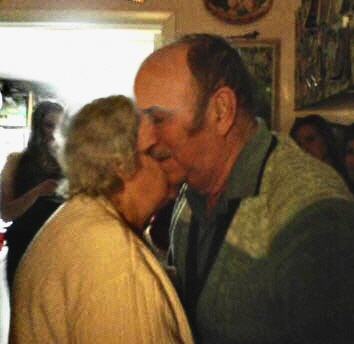 gone for eight years by then, the parties were different…even while she was still with us. I remember one party in particular, when Mom was feeling a bit sad. You see, she and Dad always danced on New Year’s Eve, but Dad wasn’t there to dance anymore. Enter Jason Sawdon, my niece Jessi’s husband. Standing was difficult for Mom without a walker. That didn’t matter to Jason. He held her up in his strong arms so, she could have her New Year’s Eve dance that year. It was such a precious moment…one that my sisters and I will never forget.
These days, both Mom and Dad are in Heaven, as is our sister, Alena, so the party will be different again. Alena didn’t always come to the New Year’s Eve parties, but we always knew that she was here, on Earth. Now, she isn’t. Nevertheless, I know that she is watching the festivities with Mom and Dad from Heaven. The party will 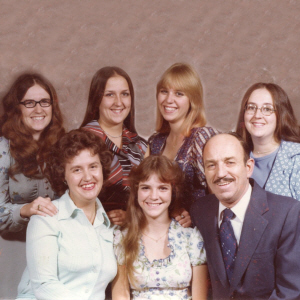
 be different again, because that is just the way it is as time marches on. Things change. People are added to the family, and people leave to go to Heaven. Nevertheless, we are still a family, and I know that Mom and Dad are very pleased to see their descendants gathering together to bring in another year. While it’s different, it is always worth looking forward to. Each new year is worth looking forward to. It is a gift from God. So, here’s to 2026. Happy New Year everyone!! May the coming year be better than the last year.
 Not every strike is legal, although these days most are. Nevertheless, in 1936, the type of strike known as a sit-down strike, or maybe a sit-in, was not legal. On the evening of December 30th at 8pm, in one of the first sit-down strikes in US history, autoworkers took over General Motors’ Fisher Body Plant Number One in Flint, Michigan. They were demanding that the United Auto Workers (UAW) be recognized as the sole bargaining representative for GM employees, an end to the practice of sending work to non-union plants, a fair minimum wage, a grievance system, and safety measures to protect assembly-line workers from injury. The strike went on for a total of 44 days.
The fact is that the Flint sit-down strike wasn’t a spur-of-the-moment move. It had been carefully planned. UAW leaders, inspired by similar actions in Europe, had been organizing it for months. It actually kicked off in smaller plants…Fisher Body in Atlanta on November 16th, GM in Kansas City on December 16th, and a Fisher stamping plant in Cleveland on December 28th. While the other plants were important, it was the Flint plant that was the real prize. The Flint plant housed one of only two sets of body dies that GM used to stamp out nearly all its 1937 cars. Taking over the Flint plant meant workers could bring the company to a near standstill.

On the evening of December 30th, the Flint Plant’s night shift stopped working, locking themselves in, and sitting down. “She’s ours!” one worker shouted. In retaliation, GM claimed the strikers were trespassing and got a court order for their removal, but the union members refused to leave. When GM cut the heat, the strikers bundled up in coats and blankets and held their ground. On January 11th, police tried to block their food supply, sparking the “Battle of the Running Bulls,” which left 16 workers and 11 policemen injured, and led the UAW to seize the nearby Fisher Two plant. By February 1st, the UAW had also taken control of the massive Chevrolet Number 4 engine factory, slashing GM’s production from 50,000 cars in December to just 125 in February. It seemed that no matter what management and police tried, the workers and the union were determined, and they were winning.
The 1936 Sit-Down Strike, known as “the strike heard round the world,” rocked the auto industry when over 136,000 GM workers in Flint, Michigan took part. Despite GM’s massive influence, Michigan Governor Frank Murphy refused to use force to end the strike. While the sit-ins were “technically” illegal, Murphy believed  sending in the National Guard would be a huge mistake. Murphy worried that using the National Guard could lead to many deaths. Instead, he announced that state authorities would remain neutral, focusing only on keeping the peace. Finally, the problem landed on the desk of President Roosevelt, who then pushed GM to acknowledge the union so the plants could get back to work. Sometimes a problem has to be taken clear to the top to get resolver. By mid-February, the automaker reached a deal with the UAW, granting workers a 5 percent raise and the freedom to chat in the lunchroom. While that battle was over, the sit-down strike had also opened the door for the right to protest peacefully.

 It seems like with every weather report, it is just as likely that the weather reporter will get it wrong as often as they get it right…maybe more often. It’s not that we think that they are lying or careless. Most of us just think that it’s impossible to really predict the weather accurately. Nevertheless, there are lots of times that they get the weather report pretty close to right on.
When we really understand all that goes into predicting the weather, we might find it easier to forgive the little errors. For example, a one-day weather forecast requires about 10 billion math calculations. Yes, a one-day weather forecast takes around 10 billion math calculations to produce. And that’s just for one day. So, tomorrow the same process repeats itself again. This huge number comes from the complex algorithms and data analysis meteorologists use to predict weather patterns with accuracy. The process involves millions of data points, like temperature, humidity, air pressure, and wind speed, all crunched by powerful supercomputers to create the forecast. Without those supercomputers, we would have hurricanes and tornadoes showing up with little warning, unless we knew very well how to read the sky. The weather reporter often gets it wrong because the atmosphere is complex and constantly changing. Meteorologists use advanced tools and models to predict the weather, but things like temperature changes, shifts in air pressure, and varying moisture levels can throw off their forecasts. Even with satellites, radar, and computer models, the ever-changing nature of the atmosphere makes long-term predictions less reliable.
For those who love a good laugh, plenty of videos and channels poke fun at the weather reporter’s blunders. They often showcase the humor in meteorologists trying to predict the unpredictable, offering a playful twist on the science of forecasting. Still, maybe we’re a bit too hard on them. While it’s easy to gripe when our weather app gets it wrong, forecasting has come a long way in recent decades. Today’s five-day forecasts are about as accurate as three-day forecasts were in the 1990s…little comfort when you’re caught in a surprise storm. The lingering stereotype of unreliable forecasts comes partly from the fact that accuracy varies. Five-day predictions are right roughly 90% of the time, but 10-day forecast accuracy drops to about 50%, and anything beyond that is basically a shot in the dark.
So, why is nailing the weather still so tricky? Well, meteorologists rely on those very sophisticated computer models that use data from satellites and other sources. These models work fairly well for short-term forecasts, especially for predicting temperature. Nevertheless, when it comes to pinpointing exactly when or where it will rain, it’s anyone’s guess. Accuracy drops for longer-term forecasts, because there isn’t enough data and the atmosphere is too unpredictable for the models to keep up. Right now, billions are being invested to improve weather predictions. One startup is using artificial intelligence to boost model accuracy. While AI seems to be a 
 source of intelligence, we have also seen where it can be manipulated, so do we believe it or not. Another information source is sending sailboat drones to gather critical data from remote ocean areas. Something like that might be more plausible, but until these technologies improve, those 90-day forecasts are best taken with a grain of salt…and maybe a good sense of humor too, for those little weather mishaps.
 Standing on Mars, as the sunset radiates its final blue hues, one might wonder if humans will ever live there. Of course, it isn’t us that is standing there watching the strange-looking sunset, but one of the rovers placed there by NASA to explore the red planet. I find it odd to think that the red planet has a blue sunset, but that is definitely the case. The rovers have clearly shown that fact. Interesting as it is to see pictures of a blue sunset, our mind tells us that it could just as easily be Sci-Fi or AI. Still, the prospect of seeing it in person is infinitely remote. And living there is even more remote.
The air is not breathable. It is only about 1% of Earth’s atmospheric pressure  and mostly toxic carbon dioxide. The water is frozen solid, buried beneath the soil or locked away in polar ice caps. The gravity is weaker than Earth’s, causing concern for its effect on human life. The fact is that nothing’s alive there anymore. There is no farmland, no trees, and no shield against dangerous cosmic rays, meaning a single day on Mars is like getting a constant chest X-ray. Even if these obstacles could be overcome, there is no equipment that would work to do the job. And ultimately, the cost to get to Mars is completely prohibitive. Every trip into space costs millions and setting up and running a colony on Mars would take an enormous amount of money too…likely more than the world currently has. We just don’t have the extra resources to overcome all the technical challenges and risks involved in building a settlement beyond Earth. Not to mention
  the cost of transporting those people back and forth from Mars to Earth as the need arises…meaning ongoing astronomical costs.
Still, if Mars is ever colonized, the people who move there will find some things in life to be very different than on Earth. The planet is covered in red dirt, and any plant life that grows there would be in a greenhouse, because plants could not grow outside. People can’t live outside either, so there would never be the opportunity to go outside for a walk…or for any other reason for that matter. And while a blue sunset might seem like a novel idea, I think the tradeoff for that blue sunset would be more than I would want to pay. I guess I’m not that much of an adventurer.

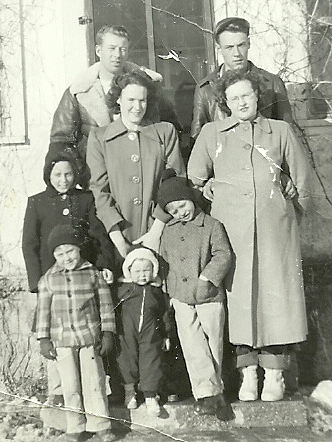 When I think of my husband’s aunt, Esther Hein, I am reminded of the relationship she had with my mother-in-law, her sister-in-law, Joan Schulenberg. These days they are both in Heaven, and I can just imagine them reminiscing about the old days. When Esther was a young girl, her family lived on a ranch in Montana. By that time, her brother, Walt Schulenberg (my father-in-law) was married and living in town. Montana winters can be harsh, making it tough for kids from rural areas to get to school. To solve that problem, from time to time, Esther stayed with her brother and his wife, my mother-in-law, Joann Schulenberg. As kids often are, she could be a bit rowdy and mischievous…not a bad child, just a kid. My mother-in-law, being a mom herself, had to maintain order, so
  whenever Esther did something she didn’t like, she’d say, “Don’t, Esther!” She might spank her own kids, but dealing with a sister-in-law was different, so her go-to discipline was just that phrase.
When my mother-in-law was older, she was afflicted with Alzheimer’s Disease, and eventually, it all clicked. I’d always known who she meant but never understood the connection to me. Esther and I had a good laugh about it, and I told Esther it was better for her to take the blame…after all, she was far away and didn’t have to deal with Mom actually being mad. As for me, I decided that if I ever did something my mother-in-law disapproved of, I’d just say, “Esther did it!” It figured it would be sure to keep me out of trouble…sorry about that Esther!!
I think Esther forgave me for my little fib when putting the blame on her. In fact, when I told her about it, she 
 thought it was really funny. When you are dealing with an Alzheimer’s patient, each day is a new story, and you have to learn to “roll with the punches,” so to speak. When my mother-in-law said, “Don’t Esther,” it gave me an out, and as her main caregiver, sometimes I needed a way out of taking the blame of “bossing” her around. Alzheimer’s patients often need to be told when to go to bed, get up, when to eat, and most other activities as time goes by. Blaming Esther gave me “a way out” of being the bad guy.

 During World War II, POWs taken prisoner by American troops often ended up in the United States, where they were “employed” in camps around the country. The men were often put to work farming and other types of labor that had been done by the soldiers in the past. At the end of the war, many of those prisoners wanted to stay in the states, because they had been treated so well by the Americans. This was in great contrast to the way Allied soldiers were treated in POW camps in Germany and Japan.
It was Christmastime in 1944, and three feet of snow had fallen on a small, isolated prisoner of war timber camp near Dubois, Wyoming. Because of the snow, the prisoners and Army camp staff were snowbound together for several days. If any of the staff had hoped to get home for Christmas with their families, they were quickly losing all hope of that happening. On Christmas Eve, POW Rudolf Ritschel noted, they all “celebrated together quite according to German custom. The men on both sides were deeply impressed by the entertainment presentations.” Sometimes situations, especially in wartime, can bring about a kind of camaraderie that would not have been possible if circumstances had been different.
Lieutenant Harold Harlamert, commander at Camp Dubois, provided details about the Christmas program the POWs put on in their mess hall, a program he said was “exceptionally good.” The prisoners arranged a special table for the American personnel and shared their Christmas treats and food with them. They even handed out typed, printed programs featuring acts and poems that playfully teased both fellow POWs and the US military members. Harlamert recalled a small orchestra playing Christmas music while the prisoners joined in singing German carols, with instruments provided by the YMCA. There was also a special Christmas tree lighting. The US Army camp interpreter, dressed as Santa Claus, pinned large “PW” letters on his back, which amused the 
 prisoners since they were required to wear those letters on their own clothes. Among Santa’s gifts were letters recently arrived from the prisoners’ families in Germany, which brought them great joy. Those letters from home, especially at Christmas are vital to morale. In addition to the wonderful letters in 1944, the men at Camp Dubois, as with most American POW camps, were treated to a nice Christmas party too. It was a good day, in spite of the three feet of snow they had received.
 The gifts are all purchased, the packages wrapped. Finally, the commercial side of the day is done. Now, at last, there’s time to reflect on the true meaning of Christmas…the birth of our Savior, Jesus. Too often we get so caught up in the holiday rush that we forget to think about the incredible gift God gave us. We were lost and headed for Hell, and He had no obligation to rescue us. We got ourselves into this mess, and He could have left us there. But God’s love isn’t like human love. We hold grudges, even toward those we love, but He chose to make a plan to change everything. He sent Jesus to Earth to live a sinless life as a human and then pay the ultimate price. And Jesus agreed to it!! For God’s plan to work, Jesus had to give His life so we could live under grace and one day receive Heaven instead of Hell. And Jesus agreed to that plan…knowing what He would have to go through and doing it anyway.
Too often, the birth of our Savior gets lost in the mix of Santa Claus and a big holiday dinner. It’s sad, especially considering the sacrifice He made for us. Imagine being God and choosing to take on human form…coming to Earth as a baby, helpless and dependent on others for every need. Then, though completely without sin, being captured, beaten, and nailed to a cross. In the only way it could work, Jesus was separated from God as He took all the sins of the world upon Himself. It had to be this way, because the worst consequence of sin is separation from God, which is far worse than Hell itself. God’s love is the most important thing we have. It is what saves us from the pit of Hell. 
There’s nothing wrong with the Christmas traditions we hold dear, and giving has always been at the heart of who God is. What matters most is that, amid all our customs, we remember to be grateful for the greatest gift ever given. “For God so loved the world that He gave His only begotten Son, that whoever believes in Him should not perish but have everlasting life” (John 3:16), one of the most important verses in the greatest book ever written…the Bible. God is love, and when we sinned, He made a way for us to be reconciled to Him by sending a Savior named Jesus. That’s the true reason for the Christmas season. Merry Christmas and may God bless you all!

 Some people open gifts on Christmas day, and some people open gifts on Christmas eve, while still others end up celebrating the holiday on a different day, due to scheduling issues. Our family had done all three of these types of celebration, and because one of our daughters lives in Washington with her family, we also have a long-distance celebration too. The reality is that life is what you make it, and celebrations are too. Flexibility is key. Rather than put a big guilt trip on people, work with them.
I think the most extreme celebration we had, was during Covid-19. My husband, Bob and I ended up having Covid on Thanksgiving. It was a bummer, but we figured, 
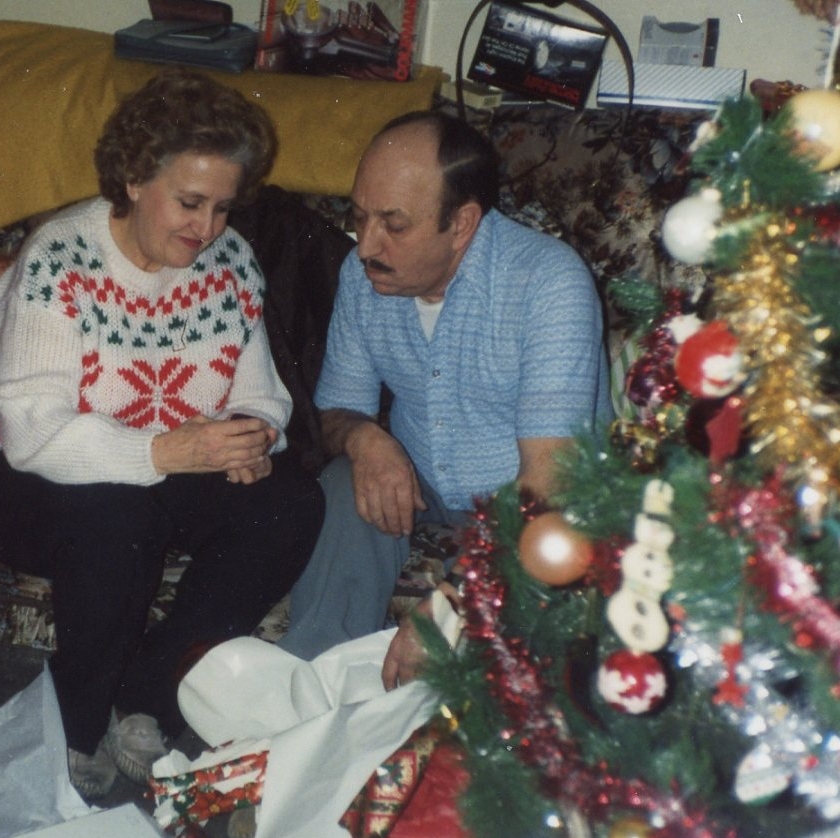 “better Thanksgiving, than Christmas” but that didn’t exactly work either. Our daughter Corrie Petersen and her husband, Kevin got it over Christmas, and to make matter worse, our family had a baby in our midst, so we didn’t want to cause her to get sick. So, that year ended up being the longest wait for Christmas since the days when Christmas had been banned in the mid-1600s. We were finally able to get together to celebrate Christmas on January 19th.
Some people celebrate Christmas Eve in a slightly different way, like my grandparents, George and Hattie Byer, who were married on that day in 1927. Marrying on Christmas Eve wasn’t all that uncommon in those days, especially if the families had moved out west. The families were together for the holiday, so sometimes it was 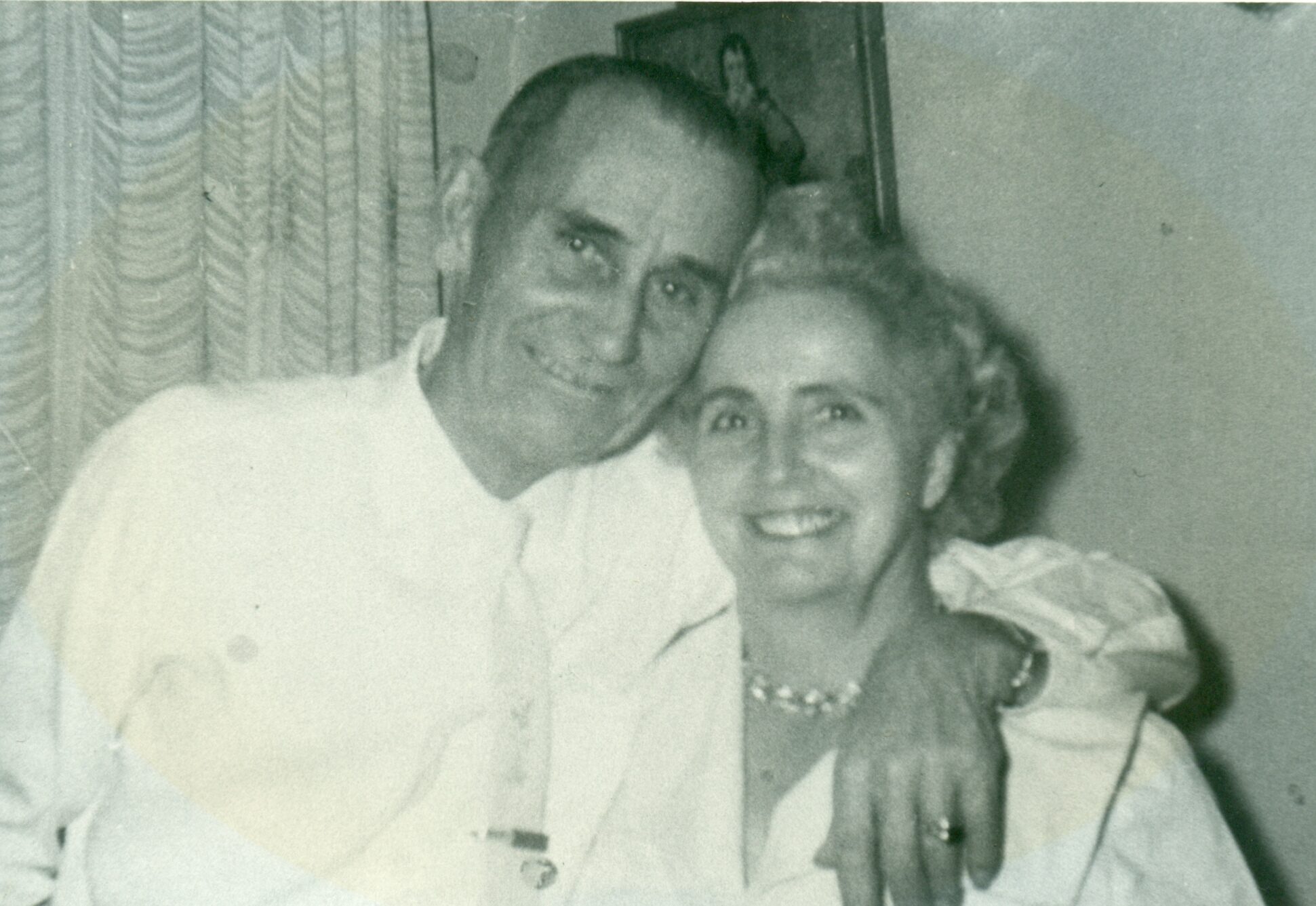
 decided to add a wedding to the festivities. Whatever the case may have been for my grandparents, their marriage started a family that boasts somewhere between 600 and 800 people now. We haven’t counted it in years, so I can’t be sure just how many of us there are, but we all feel blessed to com from such a wonderful couple, and it makes Christmas Eve just a little bit more special. Of course, Grandma and Grandpa Byer are in Heaven now, but they are fondly remembered on this their 98th anniversary. We love and miss them very much. Merry Christmas Eve everyone. I hope you all have a wonderful holiday, no matter how you celebrate.

 Whether a big rancher or a small one, the loss of cattle to rustlers is a hit that no one can afford to just write off. The cattleman, John Chisum, born in Tennessee in 1824, knew that only too well. Chisum had moved to Paris, Texas with his family when he was eleven. As an adult, he worked for several years as construction contractor. In 1854, he decided to go into the cattle ranching business, and by 1875, Chisum was running more than 80,000 head of cattle near the Pecos River in Lincoln County, New Mexico. Such a massive herd spread over a remote area inevitably drew rustlers, and Chisum claimed to have lost nearly 10,000 head to thieves. As expected, he became very frustrated, so he teamed up with two other New Mexico cattle kings to take on the small cattlemen and merchants they suspected of the thefts. Their main targets were two Irishmen who owned a large general store, known as the House, in the town of Lincoln. Not only did the House support the rustlers and small ranchers Chisum despised, but it also secured most government contracts for supplying beef to Army posts and Indian Reservations, cutting into the big ranchers’ ability to sell cattle directly to these buyers at high profits.
In 1878, when a deputy sheriff working for the House killed one of Chisum’s allies, the Lincoln County War  broke out. But the conflict was about more than just the death of his alley. It was a fight for economic and political dominance in the region. Chisum and other big ranchers turned their cowboys into gunslingers, including a likable young man named William Bonney, better known as Billy the Kid. Billy quickly became one of their most loyal and ruthless supporters, helping kill many of the House’s backers. When the House eventually won, Bonney asked Chisum for $500 for his deadly work. Chisum refused, and Billy retaliated by stealing his cattle and horses. Without the protection of Chisum and other powerful allies, Billy’s fate was sealed, and in 1881, his former friend Pat Garrett shot him dead.
After the Lincoln County War and the constant loss of cattle to rustlers and Native Americans, Chisum saw  much of his wealth and influence slip away. Still, when he passed away in Eureka Springs, Arkansas, just three years after the war ended in 1881, his estate was valued at half a million dollars…a testament to the enormous fortune he had built. If he was worth 500,000 in 1881, after losing “much of his wealth,” one can only imagine how much he had been worth in his heyday. Chisum passed away on December 23, 1884, at the age of 60, from complications following surgery to remove a growth from his jaw. Unmarried, he left his $500,000 estate and ranches to his brothers, Pitzer and James. It was a sad ending to the life of a great cattleman.
 England once had a restriction on Christmas that endured very nearly 400 years. This boycott authorized by the Puritan Parliament from 1647 to 1660 stemmed from Puritanical beliefs. The ban led to widespread public backlash and the eventual repeal of the ban. It all started during the English Nationwide conflict. During this time, the festival of Christmas was made unlawful and the people who took part in the celebrations were rebuffed. All types of Christmas festivity, including enriching, devouring, and present giving was banned and individuals who wouldn’t agree were fined or even detained. This boycott was in the end lifted, but it lastingly affected the English public’s disposition towards Christmas. Because of the pressure applied by the Puritans, in 1647, during the English Civil War, the Parliament declared Christmas illegal. The Puritans viewed Christmas as a time of excess and immorality, believing that it encouraged drinking, gambling, and other sinful behaviors. They sought to abolish festive celebrations, viewing them as contrary to their religious principles. As a result, all festivities associated with Christmas, including decorations, feasting, and gatherings, were prohibited.
As you can imagine, the ban was met with significant public resistance. Many people continued to celebrate Christmas in defiance of the law, leading to riots and protests across the country. For instance, in Norwich, riots broke out, resulting in numerous casualties. The public’s discontent was evident as they hung holly and other decorations in protest against the restrictions. While Oliver Cromwell is often associated with the ban, it was Parliament that enacted the legislation. Cromwell, as Lord Protector, enforced stricter laws against Christmas celebrations, including patrols to prevent festive gatherings. Cromwell, born on April 25, 1599, was an English statesman, politician, and soldier, widely regarded as one of the most important figures in British history. He came to prominence during the Wars of the Three Kingdoms, initially as a senior commander in the Parliamentarian army and later as a politician. Cromwell was one of the leading advocates of the execution of Charles I in  January of 1649, which led to the establishment of the Commonwealth of England.
The ban proved to be deeply unpopular, and the public’s desire to celebrate Christmas persisted despite the legal restrictions. Amazingly, the ban on Christmas remained in place until the Restoration of the monarchy in 1660. King Charles II, upon his return to power, reinstated Christmas celebrations, marking the end of the Puritanical restrictions. This reinstatement helped to revive the festive spirit associated with Christmas in England. Christmas was banned in America from 1659 to 1681 for the same reasons.

