Monthly Archives: January 2026

 It’s a strange phenomenon, the idea of a fine line between genius and insanity, but it seems that many geniuses also suffered from some form of mental illness, whether it be depression, Bi-Polar, Schizophrenia, insanity, or some other form of mental illness. It’s hard to say if their genius simply drove them “crazy” or contributed to an already present condition. Nevertheless, it seems that genius was also connected to mental illness.
Vincent van Gogh was an amazing artist. He poured his heart into every brushstroke, creating more than 2,000 pieces in just ten years. Saying he poured his heart out on the paintings, might also indicate that he would never settle for a painting that was not “perfect” in his eyes. Vincent Willem van Gogh was born on March 30, 1853, in Groot-Zundert, a mainly Catholic town in the province of North Brabant, Netherlands. He was the eldest surviving child of Theodorus van Gogh (1822–1885), a Dutch Reformed Church minister, and his wife, Anna Cornelia Carbentus (1819–1907). He was named after his grandfather and a brother who had been stillborn exactly one year earlier.
There’s been a lot of debate about the nature of Van Gogh’s illness and how it influenced his art, with many different diagnoses suggested over the years. Most agree he had an episodic condition with stretches of normal functioning. In 1947, Perry was the first to propose bipolar disorder, a view later supported by psychiatrists Hemphill and Blumer. Biochemist Wilfred Arnold argued instead for acute intermittent porphyria, pointing out that the often-cited link between bipolar disorder and creativity might be misleading. Others have suggested temporal lobe epilepsy accompanied by bouts of depression. Whatever the case, his health was probably made worse by malnutrition, overwork, insomnia, and alcohol.
His deep love for painting was intertwined with his lifelong struggle with mental illness, often leaving him in despair and isolation. The famous moment when Van Gogh cut off part of his own ear has come to represent the thin line between genius and madness. Yet, despite it all, his art stands as a powerful reminder of the strength of the human spirit. Nevertheless, on July 27, 1890, at the age of 37, Van Gogh’s mental illness caught up with him. He shot himself in the chest with a revolver. It may have happened in the wheat field where he had been painting or possibly in a local barn. The bullet struck a rib, passed through his chest, and didn’t seem to damage any internal organs, but was perhaps stopped by his spine. He managed to walk back to 
 the Auberge Ravoux, where two doctors treated him. One, Dr Gachet, had been a war surgeon during the 1870 Franco-Prussian War and was well-versed in treating gunshot wounds. Vincent may have been cared for through the night by Dr. Gachet’s son, Paul Louis Gachet, and the innkeeper, Arthur Ravoux. The next morning, Theo hurried to be with his brother, finding him in good spirits at first, but within hours Vincent’s health declined due to an infection from the wound. He died in the early hours of Tuesday, July 29. According to Theo, Vincent’s final words were: “The sadness will last forever.” He simply saw no way out of his mental illness and no reason to go on.

 People who are afraid of death, feel like they weren’t done yet, or feel like their life was stolen…and of course, have a lot of money, might consider a way to somehow prolong or even restart their lives…years after their death, when a cure for their terminal condition can be found. I don’t mean to sound like a sceptic, but…well, I’m extremely skeptical on this one. I simply don’t believe that freezing a body for years and years and then “restarting” it, curing it, and putting it back out there to live again, is even remotely possible. I suppose I could be wrong, but I don’t think so, still, I guess cloning wasn’t possible either. The thing that really settles it for me, is that no one is going to live on this Earth forever, and that would be the next logical step in the Cryonic Preservation scenario.
James Hiram Bedford was an American psychology professor at the University of California and author of several books on occupational counseling. Bedford was born on April 20, 1893, in Pittsfield, Massachusetts, to Hiram Johnson Bedford and Fanny L Bryant. Bedford was married twice. His first wife, Anna Chandler Rice, passed away in 1917, the same year they wed. In 1920, he married his second wife, Ruby McLagan, and together they had five children: Doris, Donald, Frances, Barbara, and Norman. James Bedford also had a passion for photography and loved to travel extensively. He became the first person to have his body cryopreserved after his legal death on January 12, 1967.
In June 1965, Evan Cooper, who’s contributions to cryonics were significant, as he was one of the first advocates of the concept and founded the Life Extension Society, the first cryonics organization in the world. His book, “Immortality: Physically, Scientifically, Now,” published in 1962, was a pivotal work that laid the groundwork for cryonics. Cooper, of course fully believed his theory, but as it has never been proven, we may never know. Cooper stepped away from the cryonics and life extension movement in 1969. His former wife, Mildred, said he left due to overload, burnout, and a feeling it wouldn’t be a viable option in his lifetime. In his later years, Cooper took to sailing, but in October 1982, he was lost at sea in the Atlantic Ocean.
In 1965, Life Extension Society (LES) offered to preserve one person free of charge, announcing that they had basic facilities for emergency short-term freezing and storage of humans. They promised to freeze, at no cost, the first person who wanted and needed cryonic suspension. Bedford didn’t take the offer then but later used his own money. He had kidney cancer that spread to his lungs, which was untreatable at the time. Bedford died in 1967 at the age of 73. In his will, he left $100,000 for cryonics research, and his wife and son spent even more in court defending both his will and his cryopreservation against challenges from other relatives.
Bedford’s body was frozen in hopes of one day being revived, with Alcor’s Mike Darwin saying it happened about two hours after he died from cardiorespiratory arrest caused by metastasized kidney cancer. Preservation was carried out by Robert Prehoda, author of the 1969 book Suspended Animation, along with physician and biophysicist Dante Brunol and Robert Nelson, president of the Cryonics Society of California. Nelson later wrote “We Froze the First Man” about the event. Compared to today’s use of cryoprotectants, the methods were rudimentary…Bedford was injected with a mix of 15% dimethyl sulfoxide and 85% Ringer’s solution, which was once thought to be effective for long-term cryogenics but likely didn’t protect his brain. Vitrification wasn’t  available yet, further lowering any chance of recovery. Initially kept at Edward Hope’s Cryo-Care facility in Phoenix for two years, he was moved in 1969 to the Galiso facility in California, then in 1973 to Trans Time near Berkeley until 1977, before being stored by his son for many years. Today, Bedford’s body is still preserved at the Alcor Life Extension Foundation, even though I don’t think anyone believes he can be revived. Nevertheless, because his body was “technically” preserved or stored in suspended animation first, I guess they have that claim to fame…for whatever value it may have.
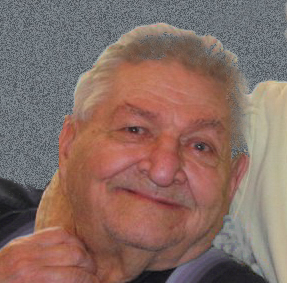 My uncle, Bill Beadle, spent much of his working life in the pipe yards before running his own rathole drilling business alongside his sons, Forrest and Steve. While he was a skilled machinist and all-around mechanic, his real passion was fishing and bird hunting in the Worland area with Steve. I think that’s why, in his later years, he was happy living with Steve, his wife, Wanda, and their family. I can picture them sharing stories about fishing trips and walking the fields in search of pheasants and chukars. Bill loved the thrill of hunting them…the sudden burst of a bird flying up out of nowhere, giving the hunter just seconds to react, with success only coming to those who were truly skilled.
Uncle Bill always felt it was his duty to keep the nephews on the right track, and if they  ran into trouble or seemed headed the wrong way, he’d sit down with them, talk things through, and have them back in line in no time. Uncle Bill knew that boys can get…competitive and might not always think things through. If they seemed to be hanging out with the wrong crowd or doing things he didn’t think they should, he would sit them down for “the talk” before things got out of hand. This trait made him especially dear to my cousin Elmer. Uncle Bill did have a few vices, one of which was his enjoyment of his pipe and his chew. Because kids are impressionable, Forrest and Elmer thought chewing tobacco was pretty cool, so as kids, they once got into a big block of chew, not realizing they shouldn’t swallow it. They did, and both turned about three shades
  of green. Though the memory still makes Elmer cringe, when he thinks of chewing tobacco.
Uncle Bill was a guy with a great sense of humor and a knack for making kids laugh. There was always a mischievous sparkle in his eye and plenty of good-natured trouble behind his smile. He loved to tease, and the kids loved every bit of it. His infectious laugh would fill the room, and we’d all have a great time together. He wasn’t often serious, at least not with most kids, unless someone was headed for trouble. Then, his tone shifted…never mean, just straightforward…and by the end, the kid knew the right path to take. Uncle Bill was truly one of a kind, and we adored him. Today would have been Uncle Bill’s 97th birthday. Happy birthday in Heaven, Uncle Bill. We love and miss you very much.

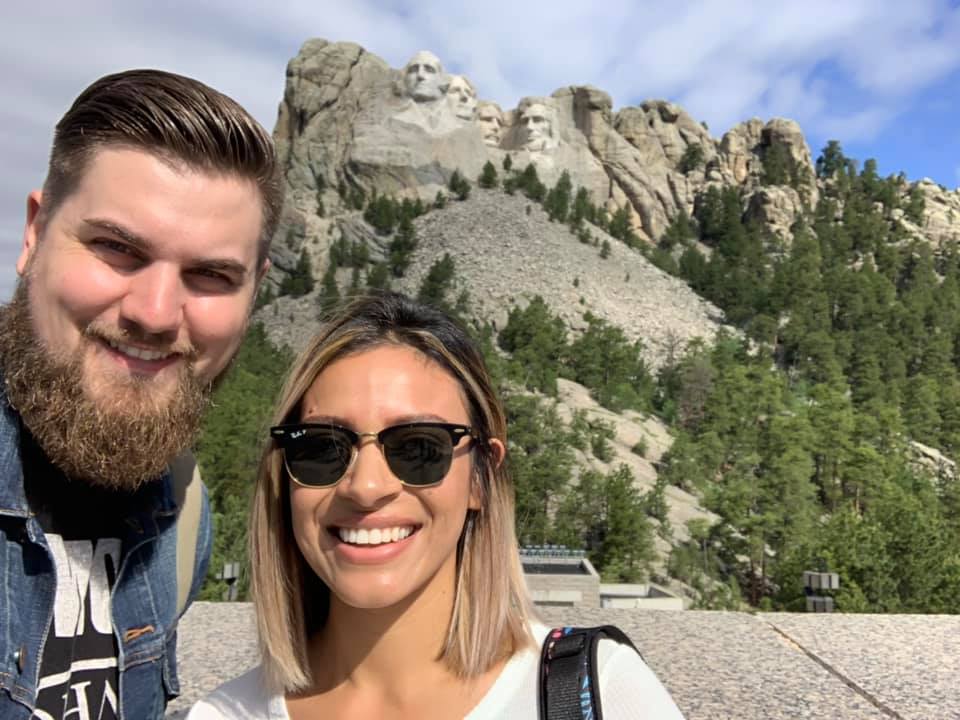 My niece, Gaby Beach, has been a dedicated athlete since before she joined the Navy years ago. Her physical health hasn’t always been easy for Gaby, but when she decided to join the Navy, she knew that she had to get into excellent shape for it. She knew that the Navy wasn’t going to be a long tern career for her, but it was a good way to get her college education paid for, and she wanted to be a nurse. Now that she’s been discharged, she’s still fully committed to her health and has never looked back. Gaby loves all kinds of sports, from hiking and weightlifting to running. When it comes to her workouts, she is fierce…never giving up and
 never slacking off. She’s a determined woman with the mindset to be the very best she can be, and I have no doubt she’ll achieve every goal and make every dream a reality. Gaby is a very determined person.
On of Gaby’s favorite forms of exercise is running. Gaby especially loves the competitive kind of running, and while I’m not sure how many marathons or half-marathons she’s participated in, I wouldn’t be surprised if it’s a dozen or more. When she’s not competing, she’s training. Her workouts are tough, and she runs with determination. What amazes me, as someone who prefers walking and only runs from a bear (just kidding), is that even in the middle of a long run, Gaby can still kick up her heels with a big smile. Meanwhile, I’d be seriously trying to catch my breath.
Gaby and Allen love to travel. After having served in Japan, where they met, they decided to take a trip back 
 there with friends. I can only imagine how they felt on that trip. They were back in their old stomping grounds, but this time, they didn’t have to go to work or anything. This trip, they were “tourists” in a place they knew very well. It wasn’t the first time they had toured the area, but they were free to really enjoy it, and to show their friends a good time. The trip to Japan was, for most people, a trip of a lifetime, but I wouldn’t be surprised if these kids don’t take several big trips like this one. They were engaged in Bali, and I wouldn’t be surprised if they took a trip back there someday. While the Navy was a way to “see the world,” it isn’t the only way to see the world. I know they have many trips in their futures. Today is Gaby’s birthday. Happy birthday Gaby!! Have a great day!! We love you!!

 Normally, my niece, Toni Chase and Her husband Dave hit the road running each year, but this past year, they got off to a slower start, not really getting in gear until March. Dave, who is always doing super nice things for Toni, had a portion of their garage closed off and made into a “she shed” for Toni. It was not a quick and easy project, and it took quite a while to get it all organized. Still, to have a “she shed” will easily make Toni the envy of all her friends and family, even though more people are building man caves and she sheds these days. I think it is a very cool thing for Dave to have done for her, but then Dave is always doing cool things for Toni.


Even though the year started off at home, it did not end there…it rarely does for Toni and Dave. They took a trip in May to Florida and made it all about the fish. Toni caught her first fish on the Gulf, and it was actually a little hammer head shark!!! Ok, cool, but yikes!!! Still, it would be fun to fish in the Gulf. While I’m not an avid fisherman, but just being on a fishing boat in the Gulf would be cool. During the trip, they spent some time in Tampa at the aquarium and around Saint Petersburg…just touring around and enjoying the scenery and the pleasant weather. They had a lovely, relaxing time.
Later in the year, they did some hiking in the snowy range and spent a couple weekends in Centennial at the cabin which was one of the best times of the year. Toni was having one of the best times with Dave, the kids (James and Manuela), Jane, and Dave’s cousins, Chuck and his wife, Chris. At the end of September, Toni and Dave took a quick trip to Yellowstone to catch the fall colors. They were not disappointed, because they were 
 just in time to see some truly stunning scenery. They also made several trips to Colorado for various activities, but mostly to attend the long-awaited return concert of one of their favorite bands, Linkin Park. Toni tells me that other than these events, it was a pretty quiet year. A pretty quiet year!! That’s more activity than most people have in two years. Today is Toni’s birthday. Happy birthday Toni!! Have a great day!! We love you!!
 The Civil War’s Battle of Shiloh left 23,000 casualties. It was a horrible battle, but something was about to happen with the wounded men…something no one expected and something they had no way to explain…at the time anyway. While in the hospital, some wounded soldiers began emitting a faint greenish-blue glow. Can you just imagine the thoughts going through the heads of those doctors? Then, something even more strange started happening. While the cause of the glow was unknown at the time, doctors observed that those with the mysterious glow tended to heal more quickly. That earned the greenish-blue glow the name of “Angel’s Glow” and the name stuck. I’m sure the doctors soon started praying for every wounded soldier to receive the strange glow.
“Angel’s Glow” would remain a mystery for nearly 140 years. Finally, the mystery behind this weird fact from history was solved. In 2001, a high school student named Bill Martin and his microbiologist mother, Phyllis, investigated the phenomenon and found it was likely caused by a bacterium called Photorhabdus Luminescens. This glowing bacterium may have even helped the soldiers recover by consuming other harmful bacteria or pathogens they encountered on the battlefield. Photorhabdus luminescens, formerly known as Xenorhabdus luminescens, is a Gammaproteobacterium in the Morganellaceae family and a deadly pathogen to insects.
There are no contemporary accounts of this phenomenon, meaning that it may be “a myth or that conditions including low temperatures, low lighting, abundance of blood, time on battlefield, presence of specific vegetation, presence of rain and humidity, and the time to organize medical evacuation would prevent the phenomenon from recurring in current conditions. Photorhabdus Luminescens’ genome has been sequenced. It contains a MACPF protein, however, this molecule appears non-lytic. It also contains the gcvB RNA gene which  encodes a small non-coding RNA involved in the regulation of a number of amino acid transport systems as well as amino acid biosynthetic genes. A deletion of the hfq gene causes loss of secondary metabolite production.” That doesn’t seem so odd when you consider that many records, especially those that seemed inconsequential or maybe too farfetched to be believable, might have been overlooked or hidden. Still, I would think that the doctors might have talked to other doctors to see if they had ever heard of such a thing. Or maybe they didn’t, because they didn’t want to look like they had some kind of “battle fatigue” or PTSD as we know it today. Whatever the case may be, the phenomenon was not well publicized, yet somehow the story did survive the Civil War. I guess there were a few people who talked.

 During the Cold War, the city of Beijing was home to underground bunkers designed to protect the occupant from nuclear bombs and the fallout from them. After the Cold War, I’m sure most people assumed all those old bunkers were abandoned, but in Beijing, that wasn’t the case. Beneath Beijing over a million people currently live in a vast network of underground bunkers…the same bunkers originally built during the Cold War. Today, the area is known as the Underground City or “Dixia Cheng.”
In 1969, under Chairman Mao Zedong’s orders and amid rising tensions with the Soviet Union, construction began on the Underground City. The goal was to create bomb shelters that could protect Beijing’s residents from potential nuclear attacks. Over the next decade, roughly 300,000 workers built an extensive network of tunnels and bunkers, designed to house the city’s entire population if necessary. At the time, Beijing was home to about six million people. I doubt if the builders had any idea of what the future would hold for the underground city. The strange fact is that today, the Underground City still houses about a million people, mostly low-income workers, students, and migrants who can’t afford the steep rents above ground. Dubbed the “rat tribe,” they inhabit cramped, crowded quarters in tunnels that stretch across a little over 30 square miles.
As you can imaging, life in these bunkers isn’t easy. The units there have the essentials, like electricity, plumbing, and sewage systems. Still, the poor ventilation in the place leaves the air stale and moldy. It’s crowded so, people often share cramped rooms, kitchens, and bathrooms, which can make things tight and unhygienic. Nevertheless, the rent was much cheaper than above ground, so living here remains a practical choice for many, and almost mandatory for others. It’s an odd arrangement, almost like people living in an old coal mine in years gone by, except for the coal dust, of course.
Technically, living in these old bunkers has been illegal since a 2010 ruling by Beijing authorities, citing safety concerns. Still, many people remain in the bunkers, facing an uncertain future as the government has largely 
 turned a blind eye by allowing them to stay despite the risks. This underground city is a hidden yet significant part of Beijing’s urban fabric, reflecting the city’s challenges with housing shortages and economic inequality. In short, these bunkers provide shelter for those unable to find affordable housing above ground, underscoring the complexities of life in one of the world’s most crowded cities. While not ideal, the city’s poor have to have a place to live. It is the sad reality of an uncertain economy.

 My grandniece, Siara Kirk is a very busy girl these days. She is a wife, mother, and a personal banker with Platte Valley Bank (a position she has held for over 10 years now), and she is a college student pursuing her bachelor’s degree in office management. Her mom, Chantel Balcerzak, says Siara is “juggling so many balls in the air and still just kicking butt!!” Siara has been on the principal’s honor roll every semester!! In addition to working full time, Siara works out every morning and still cooks home cooked meals 5 nights a week!! She allows herself a break, by ordering food from door dash on the weekends. While all of her accomplishments are important to her, Siara’s proudest accomplishments are those of wife to her husband, Chris Kirk and mother to her sweet son, Nathan Kirl. According to her mom, “my girl is a total boss!!” Siara is success in motion!!

Siara’s brother, Jake Harman says of his sister, “She is my best friend outside of my wife, Melanie and kids, Alice, Izabella, and Jaxx, all of whom dearly love Siara too.” Siara has a big heart when it comes to the people she loves. The mistakes people make can make people shun them, but Siara is a very forgiving person. She believes in those she loves, and she will stand by them to the end. Her brother tells me that his kids dearly love their Aunty Siara, and every time he goes to get something or drop something off, they want to go to just to see her and her family, because “awesome attracts awesome, and she is the kind of person that makes your day better by not even doing anything specific. There is something about her that puts you in a better place 
 and makes you believe in yourself!! Obviously, God brought me (Jake) to the place I’m in now with my wife and kids, but I truly believe He did it through Siara in many ways. I can talk to her anyway about anything and she might not agree, but she is always cool about it and helps the best way she can” Jake tells me that Siara is going to be a “crazy good mom” always, even when the kid can talk…or talk back as we all know kids eventually do, hahaha!! Jake tells me, “Siara does so much for everyone!! I know that’s going to rub off on Sir Nathaniel and he is going to be a superhero, because of it. She is the best sister aunt and mom anyone could ask for!!” I couldn’t say it any better, if I tried. Siara’s family said it all!! Today is Siara’s birthday. Happy birthday Siara!! Have a great day!! We love you!!

 My grandnephew, Ethan Hadlock continues to amaze me each year. He is 17 years old today, but he doesn’t act like a typical 17-year-old. Ethan has such a sweet nature and a kind, loving heart. Whenever I see Ethan, he greets me with a hug, and I am not alone. Ethan loves everyone in our family, and he makes sure that each and every one of us know just how much he loves us. Ethan is very kind and loving, but he also has a sense of humor much like his parents. He loves a good joke or prank, but never a hurtful one. He reminds me more and more of his dad, Ryan Hadlock every day. I would say that Ethan is his dad’s mini-me, but there is nothing “mini” about
 either of these very tall men. Nevertheless, Ethan is a chip off the old block for sure. His mom, Chelsea Hadlock wasn’t cheated though, because Ethan’s sister, Aurora Hadlock is definitely her mom’s mini-me!!
Ethan has been making a lot of changes in his life. He bought a pickup and got a job at Target in June, both of which he is quite proud. He is a responsible worker and driver too. His bosses know they can count on Ethan to be there on time and to give it his all every time. He is taking auto shop at school and loves it. The class is teaching him a lot about working on his truck. While there are women who are great mechanics, I think it’s important for a man to know how to work on their own vehicle. Ethan is embracing that challenge, and we’re all proud of him.


As he looks forward to his post high school future, he is weighing his options. This year he has been to the University of Wyoming (UW) campus tour. He’s currently debating between traditional UW classes and trade school, so he’s hoping to check out Wyo Tech in the next few months as well. The year hasn’t been all future planning though. Ethan has taken in a couple of Cowboys games, and a Broncos game with his dad. He still hangs out with the same 3 friends he has had since elementary school, but now a whole lot more boys have joined in this group of buddies. For his birthday party, Ethan decided to go to Jump Craze Indoor Trampoline Park with his friends!! I’ve never been to Jump Craze, but I hear it’s an absolute blast. Today is Ethan’s 17th birthday. Happy birthday Ethan!! Have a great day!! We love you!!
 During the Holocaust, the Nazis were systematically killing Jews just because they were Jewish. Sometimes the non-Jewish population tried to help their neighbors…to their detriment if they were caught. Some people his Jews, some smuggled them out of the country, as a few, like Dr Eugene Lazowski, born Eugeniusz Slawomir Lazowski, a Polish doctor saved thousands of lives during World War II. He was one of two physicians who staged a fake epidemic to exploit the German fear of poor hygiene. Lazowski became well-known after an article mistakenly claimed the lives saved were all Polish Jews, though he did help many Jews by secretly giving them medicine, an act that was banned and punishable by death.
Eugeniusz Lazowski was born in Czestochowa, Poland, to a Catholic family. He earned his medical degree from Jozef Pilsudski University in Warsaw just before World War II began. During the war, he served as a medic and Second Lieutenant in the Polish Army. Captured by the Soviets, he was sent to a prisoner-of-war camp but managed to escape. He later worked as a doctor on a Red Cross train and then as a military physician for the Polish resistance Home Army.
After the German occupation of Poland, Lazowski settled in the small southeastern village of Rozwadow (now part of Stalowa Wola) with his wife. It was there that their daughter Alexandra was born. In addition to running his medical practice, he also treated travelers passing through a nearby train station. It was this role that gave him the ability to really save lives. While treating travelers, he secretly hid his medicine supply and provided it to Jews in the local ghetto, which bordered his home. In doing so, Lazowski risked the death penalty imposed on Poles who aided Jews during the Holocaust.
He ran his medical practice with Dr Stanislaw Matulewicz, a friend from their days in medical school. Like Lazowski, Matulewicz had worked with the Red Cross. He discovered that healthy people could be injected with the bacterium OX 19, a strain of Proteus, which would make them test positive for typhus without actually contracting the illness. Together, the two doctors staged a fake typhus outbreak in 1941–1942 in and around Rozwadow, leading the Germans to quarantine the area. The doctor’s fake epidemic was believed to have saved around 8,000 people from being sent to German concentration camps, though his memoir and the English translation by his daughter dispute the idea that most of those saved were Jewish. The reality is, however, that non-Jewish people would not have needed saving, for the most part, anyway. The journalist who wrote the article that sparked the legend admitted to a documentarian that the main details weren’t verified, partly excusing this by saying he didn’t know Polish. So, I suppose the story could be disputed, but it has never really been denied either, so I believe it’s true.
In 1958, Lazowski moved to the US with his wife Maria and their daughter Alexandra on a Rockefeller Foundation scholarship. Alexandra had been born in 1942 in Rozwadow. The family settled in Chicago, Illinois, where Lazowski went on to become a professor of pediatrics at the University of Illinois at Chicago in 1984. Over his career, he authored more than a hundred scientific dissertations. Though he may have eased his 
 medical practice in the 1980s, he didn’t fully retire until 2004. During his semi-retirement, he wrote a memoir, Prywatna wojna: wspomnienia lekarza-zolnierza, Private War: Memoirs of a Medical Soldier, 1933-1944 was published in Polish in 1993 and later translated into English by Dr Lazowski’s daughter, Alexandra. He passed away in 2006 in Chicago, having lived in Eugene, Oregon, with his daughter. His legacy of great kindness, however, will live on.

