Reminiscing
 Depression is a disease that affects many people all over the world. That has become an accepted fact over the years, although not always looked upon as anything more than being a person of weak countenance. What many of us have never heard of, however, is that pets can also become depressed. There can be a number of reasons for this, with one of the most extreme being the loss of their owner, especially through death and especially if the pet witnessed the passing. While there’s still much we don’t know about the millions of species sharing our planet, scientists and everyday people alike generally agree that animals are capable of experiencing emotions just like we do.
One of the most documented incidences of depression is a police dog, or a military dog that loses its handler.  These animals work so closely with their handler that they almost become one unit. They can anticipate their partner’s every move, and when their handler is killed or even retires from the service, the animal is left with a hole in their heart than is hard to fill. If the dog happens to see their partner killed in the line of duty, they take it especially hard. Like any police partner, they can even feel a measure of blame…even though they were not to blame and could not have prevented the death. House pets, who have learned to trust and live closely with us, can sometimes show signs of depression or anxiety, often through unusual behaviors like losing interest in their favorite activities. For reason, other than the loss of an owner, pets can become depressed. When a household has more than one pet, the loss of companion pet can bring noticeable sadness to the remaining pet, as well as the pet owner.
In the past, these animals would be left to deal with their sadness on their own, as many still are today.  However, these days, pet psychologists can help identify these issues and provide advice on how to improve their well-being. That is rather a strange occupation, in my mind. I really don’t understand how a human psychologist can communicate with an animal to identify depression, PTSD, or any other problem…aside from possibly fear of thunder and lightning, which presents itself in a very clear way. Animals can’t tell us what is bothering them, and yet professional psychologists profess to be able to understand the problems they have. Nevertheless, Pet Psychologist is a very real profession that pays in the vicinity of $52,000 a year. I guess in might be a profession for a pet lover to consider.

 I’m sure you have seen the funny videos showing people who are walking down the sidewalk suddenly being frightened by what they thought was a statue, only to find out that it is human, and reaching out to accost them. The statue doesn’t literally mean them harm, but in their surprise, they don’t realize that. All they see in a hand reaching out at them, and they scream, drop to the ground, or run to escape the attacker. Of course, their friends can’t stop laughing at the unfortunate victim of the Human Statue Prank. My first thought at watching these videos is that the human statue is an actor, and it likely that my assumption is correct, but while those videos may have an actor as
  a human statue, that “job” is actually a real one that is used quite often and pays pretty well.
Posing as a live mannequin, adorned in paint or clothing, can be surprisingly lucrative, earning $60–$100 per hour for simply standing perfectly still. That might seem like an easy job, but it seems to me that standing perfectly still for hours on end would be…much more difficult that we might think. A human statue, or living statue, is typically a performer who poses as a statue or mannequin, often using realistic, statue-like makeup. The term can also describe art installations made by artists using live people, or other creative works by performing artists.
Contemporary performances often take the form of street busking but can also appear at paid events. A living statue act involves an artist standing completely still, occasionally moving to create a comic or surprising moment. These “human statues” are typically painted from head to toe, often in gold or silver. Australian artist Andrew Baines is known for incorporating living people into his art to convey social messages. Phil Genoux was among the earliest to perform as a living statue on the streets, starting in London in 1988, and was featured in 
 what may have been the first current affairs TV coverage of such a performance, aired in Amsterdam in 1989.
Since 1996, the annual World Statues Festival has taken place in Arnhem, Netherlands, originally called “Rijnfestijn” and now known as World Living Statues and Statues by Night. In 2000, the University of Business and Social Sciences in Buenos Aires, Argentina began hosting the National Contest of Living Statues. Since 2011, the Masca Theatre in Bucharest, Romania has organized the International Festival of Living Statues, focusing on developing the art form through research. The first fully dedicated Living Statues Festival was held in Espinho, Portugal, in 1997. Who knew that being a human statue could actually be a moneymaker?

 On May 6, 1876, Thomas Gainsborough’s painting *Duchess of Devonshire* created quite a buzz when it went up for auction at Christie’s in London. It was bought by London art dealer William Agnew for $51,540, setting a new record for the highest price ever paid for a painting at auction.
Three weeks later, Agnew wanting to show off his painting, made it the showcase in his gallery. Unfortunately, a thief named Adam Worth saw the display as too great an opportunity to miss, so he stole the painting. After the theft, Worth was dubbed the “Napoleon of Crime” by Scotland Yard and later became the inspiration for Sherlock Holmes’ nemesis Doctor Moriarty. Worth took the artwork hoping to raise bail money for his jailed brother. His brother was released without his help, but Worth chose to keep the painting despite the risks.
Adam Worth was likely one of the 19th century’s most skilled criminals. Born in Germany and raised in the United States, he served in the Union Army during the Civil War. When he was mistakenly reported dead at the Second Battle of Bull Run. Seeing that as a great opportunity, he spent the remainder of the war moving from regiment to regiment, taking enlistment pay and deserting right after. Following the war, he headed to New York and fell in with a gang of pickpockets. After being caught, convicted of robbery, and sentenced to three years at Sing Sing Prison, Worth escaped just weeks later, promising himself to be more cautious from then on. He changed his name to Henry Raymond and embarked on a profitable streak of bank robberies before taking his schemes to Europe. Thanks to meticulously planned heists and a steady forgery business, he steered clear of violence and managed to blend into respectable society. 

The theft of the Duchess of Devonshire ultimately led to his downfall. His partners in crime, Joe Elliot and Junka Phillips, grew resentful when they weren’t paid for their role in stealing the valuable painting. When Worth refused to reveal where it was, they went to the police, and he ended up in prison on unrelated charges. Four years later, in 1897, Worth was released and returned to America. Having a change of heart, he started talks with the Pinkerton Detective Agency to arrange the painting’s ransom. In 1901, the Duchess of Devonshire was brought back to England, and J P Morgan, Wall Street’s top financier, wasted no time traveling to acquire the painting for himself. He reportedly paid $150,000 for it. Worth, who had received only a small portion of his ransom, died the following year, broke and destitute.
 With the end of World War II in 1945, the United States, Great Britain, and France took control of western Germany, including the western half of Berlin, which was located deep in the east. The Soviet Union occupied eastern Germany and the other half of Berlin. As tensions from the Cold War grew between the western allies and the Soviets, it became clear that Germany wouldn’t be reunited. By the late 1940s, the United States moved to make the division official and create an independent western Germany, leading to the formal announcement of the Federal Republic of Germany in May 1949.
In 1954, West Germany became a member of the North Atlantic Treaty Organization (NATO), the mutual defense alliance between the United States and several European countries. Now, all that remained to give West Germany her independence again was for the Americans, British, and French to end their nearly decade-long occupation. 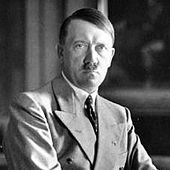 That happened on May 5, 1955, when those nations issued a proclamation ending the military occupation of West Germany. Under a previously reached agreement, West Germany could now create a military force of up to half a million men and restart arms production, though it was banned from making chemical or atomic weapons.
When the Allied occupation of West Germany ended, it marked the full recognition of the republic as part of the Western alliance against the Soviet Union. Although the Russians weren’t exactly happy about a rearmed West Germany, they were relieved that reunification was no longer on the table. They wanted to keep control of their  part of the old Germany. Not long after the May 5th proclamation, the Soviet Union officially recognized the Federal Republic of Germany. The two Germanys stayed divided until 1990, when they reunited to form a single democratic nation once again. It had been a very long road.
I’m sure that many people were very worried about Germany ever regaining any of its former power. It was easy to foresee a comeback of a Hitler-style terrorist nation, and that would simply be unacceptable. While much of the prejudice and hate of the Hitler era was gone for a time, we do see a resurgence of it these days, and that makes me very sad. There is simply no reason for it. I don’t understand why people can’t just accept other people as they are. Things like skin color and religious background should not matter. We all bleed red, and that makes us all the same…no matter what the haters think.

 On May 4, 1776, Rhode Island, the smallest state in the United States, which was founded by radical religious dissenters from the Puritans of Massachusetts Bay Colony, became the first North American colony to break ties with King George III. Ironically, it was also the last state to ratify the United States Constitution, finally doing so over 14 years later on May 29, 1790. The residents of Rhoad Island were really a very “different” people. They were unconventional and, in some ways, difficult. Still, in many ways, they fit right in with the times.
In the 18th century, Rhode Island was a hub of the transatlantic slave trade, which was a common practice of that era. Molasses from the West Indies was turned into rum in local distilleries, then traded on the West African coast for enslaved people. Those slaves were then forced to endure the brutal middle passage across the Atlantic to the Caribbean, where the survivors of the trip were sold to plantation owners in exchange for more molasses, thus continuing the cycle.
The British at that time were trying to tighten control over colonial commerce, starting with the Sugar Act of 1764, which increased molasses duties and imposed stricter trade regulations. Rhode Islanders, eager to protect their profitable triangle trade, grew frustrated with British efforts to tighten control over them. Two major clashes followed during the protests of the late 1760s and early 1770s. On June 10, 1768, British customs officials seized John Hancock’s sloop Liberty for its past role in smuggling Madeira wine, sparking a riot in Boston. Four years later, near Providence, the British customs schooner Gaspee ran aground, and angry 
 Rhode Islanders, resentful of what they saw as unfair taxes, boarded and burned the vessel, injuring its captain.
Rhode Island’s strong trade network caused nearly as much friction for the new American nation as it had for the British Empire. With thriving ports in Providence and Newport bringing in wealth, it was the only small state in 1787 that could realistically survive outside the proposed federal union. Unwilling to give up revenue from import duties to the federal government, Rhode Island resisted joining. It wasn’t until 1790, when they were faced with the heavier financial burdens of being treated as a foreign nation and all that entailed, that Rhode Island finally agreed to ratify the Constitution of the United States.

 My son-in-law, Travis Royce, is a fun-loving guy. Travis is, in many ways, a born entertainer, and he loves entertaining. Travis has never heard a joke without knowing the punchline, and he always remembers them…probably because they just click for him. My guess is that he could anticipate the punch line before he has even finished hearing a new joke. Travis is a true comedian, and not only because he recalls punchlines, but also because he can make up jokes on the spot. Travis seeing humor everywhere. I enjoy talking with him because he always brings something fun to the table. I’m sure that is one of the things that drew my daughter, Amy Royce to him, and one of the things that kept their house filled with laughter when the kids, Shai and Caalab were little.
Travis has a pretty cool job working in the local tourism industry. One of his tasks is restocking tourism flyers around the area, and the best part is doing it on the ferry boats. To fill the racks there, he gets to ride the 
 ferries, which sounds like a dream gig. Sometimes, when he works on weekends, Amy joins him, and they turn it into a fun day out. The actual work doesn’t take long, so they get plenty of time to just enjoy the ride. Maybe those trips could get routine, but it’s hard to imagine that happening with Travis. He seems to have a touch of wanderlust…he’s not one for constant travel, but he loves a good outing. Still, he’s happiest spending most evenings relaxing in the backyard.
Travis and Amy love their backyard and fixing it up. Every year brings a new addition to the design. Amy plants new flowers, and Travis improves the design of the yard to make it even more inviting than it already is. This year, Travis redesigned the firepit area, and it is beautiful. The whole family loves hanging out in the Royce backyard, as do all their friends. Their yard is the go-to hangout for all their friends. Travis has always loved yardwork, and now 
 his efforts are paying off in a big way. They also have a recreation room with a pool table, bar, and seating area for their many friends. Here Travis, Caalab, and several friends hold regular jam sessions. Both of them are excellent guitar players, and I love listening to them play. Sometimes, Shai and Amy will sing along, but mostly it’s the guys paying the music they love…which for Travis is and has been Blues for many years. Today is Travis birthday. Happy birthday Travis!! Have a great day!! We love you!!
 Some holidays celebrate a single tradition, but others, like May Day, can mean many things. When my sisters and I were kids, May Day was always special. Our mom, Collene Spencer, would go to the store to buy candy. We’d make baskets out of construction paper, fill them with treats, and sneak around the neighborhood hanging them on neighbors’ doors. After knocking, we’d run and hide. Sometimes they caught us, and other times they’d just call out “thank you,” but they were always happy to know we thought of them and did something kind for them. For us, the tradition was all about the game.
Many people see May Day as a celebration of the start of summer or at least the warmer part of spring. It’s the time when flowers seem to bloom all at once, the grass 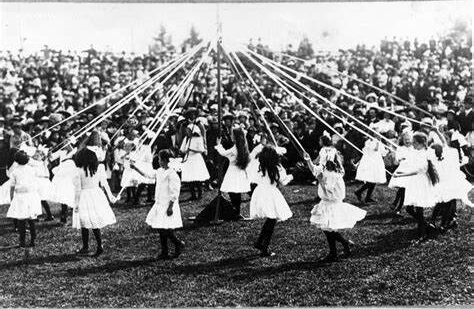 turns green practically overnight, and trees burst with new leaves. For me, it’s a perfect way to think about it, since spring and summer are my favorite seasons. I love getting outside to hike and soak up the warm weather. Some festivities include a Maypole dance, where colorful ribbons are woven around a pole to create a beautiful pattern, much like braiding…although I haven’t really heard of it happening in the United States anymore. Still, where it is practiced, it’s a fun activity for kids and a wonderful way to welcome summer!!

In the United States, May 1st holds another meaning…it’s also Law Day. Opinions about it may vary, but to me, it’s an important occasion. Our nation depends on law and order, and I think most people would agree. Law Day is a time to reflect on the role of law in the country’s foundation and to recognize its value in society. Some people criticize the police, yet turn to them when they need help, suddenly appreciating their importance. I’ve had law enforcement officers in my family, and they are among the most caring people I know. So, to them I say, Happy Law Day!! And to everyone else, Happy May Day!!

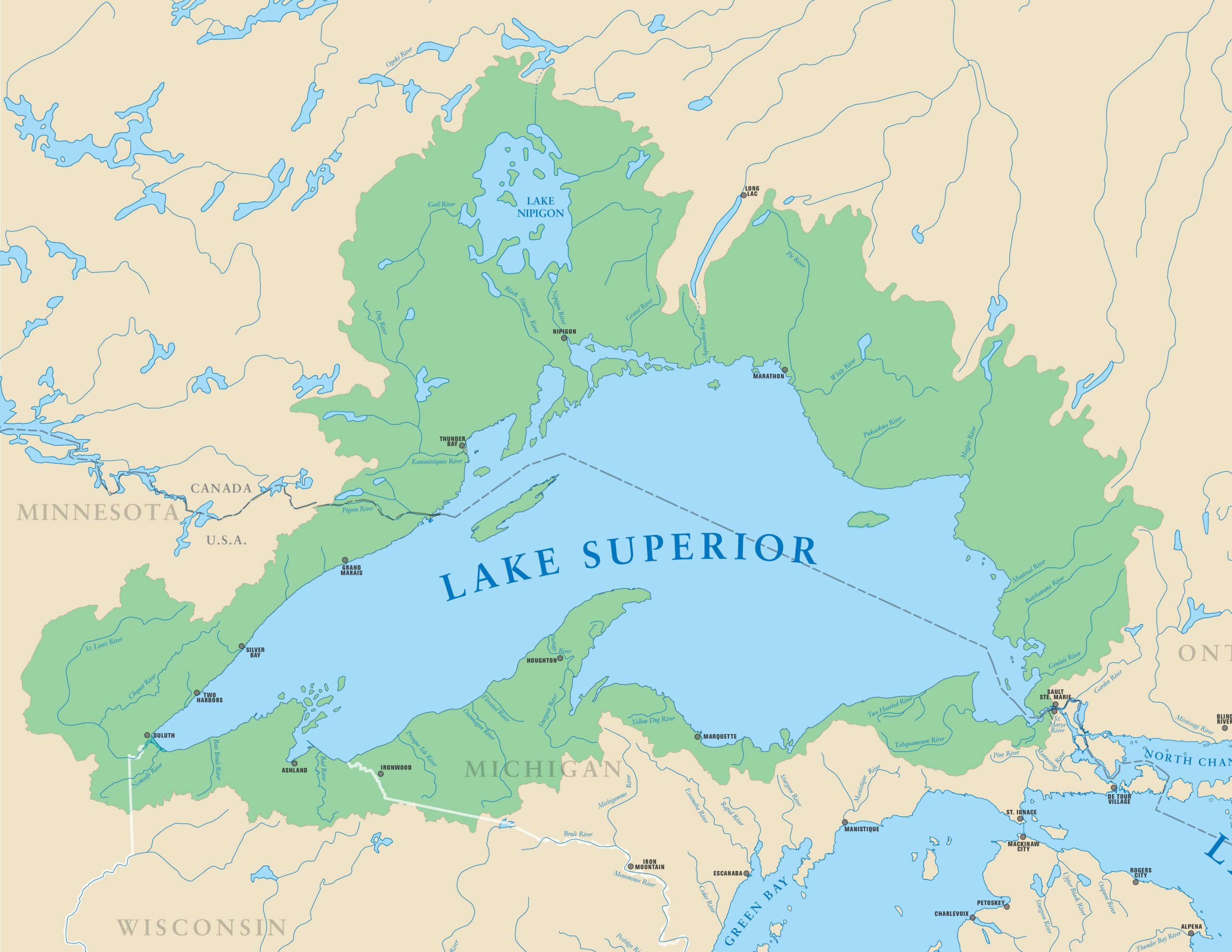 Growing up, I lived in Casper, Wyoming, and still do. However, I always knew that I was born in Superior, Wisconsin. Superior always seemed like a fairly big place to me when my parents, Allen and Collene Spencer would take my sisters and me back there for visits. Then, in 2014 when my sister, Cheryl Masterson, our mom, and I went back after a number of years away, I was rather surprised at how small Superior seemed…especially in relation to Duluth, Minnesota, which had always seemed like a sister-city to me. In reality, the two cities were originally sister-cities, but rivalries over the years changed all that and the change was evident when I was there in 2014.
Superior, Wisconsin, and Duluth, Minnesota, are the biggest cities on Lake Superior, together known as the “Twin Ports.” Back in the late 1800s and early 1900s, Superior actually had more people than Duluth, thanks to its booming role as a major shipping hub during the Great Lakes shipping expansion. At its peak in the early 1900s, Superior’s population topped 100,000, making it the largest city on the Great Lakes. Duluth was also an important port, but smaller at the time. The balance of population might have stayed that way if not for the long-standing rivalry between the two cities. It all began when Duluth wanted its own direct lake access, but it lacked a natural entry. The US government favored a cheaper plan to improve Superior’s access instead. Duluth fought back, and after a legal battle with Wisconsin leaders, some locals took matters into their own hands, secretly digging a canal at night. At the time of the final push to finish the canal, an injunction was on its way from Superior to stop the Duluth canal, but when it arrived, it was too late. By 1887, the US Army Corps of Engineers had taken control of building the lift bridge and canal, paving the way for the iconic Aerial Lift Bridge, 
 now on the National Register of Historic Places. This rivalry and the canal have been central to shaping both cities’ history and identity.
By the middle of the 20th century, Duluth’s population began to grow faster due to industrial development, especially in the iron ore mining and smelting industries, and its proximity to the Iron Range. This growth eventually made Duluth the larger city in the Twin Ports area. Today, Duluth remains the larger city in terms of population: about 87,680 residents in 2023 compared to Superior’s roughly 66,870. However, Superior remains the larger city in terms of land area (about 207.6 square miles vs. Duluth’s 80.2 square miles) and is the largest US city on the Great Lakes by land area. I don’t know if the land size really provides much consolation for the city of Superior, but the two cities seem to have worked things out…I guess. To the unsuspecting public, the two cities seem to function as one big city. the bridges that run between the two cities are always busy as people go back and forth to different businesses on both sides. The two main bridges connecting Duluth, Minnesota, to Superior, Wisconsin, are the John A Blatnik Bridge and the Richard I Bong Memorial Bridge. Opened in 1961, the John A. Blatnik Bridge carries Interstate 535 (I-535) over the Saint Louis Bay. It is a vital freight and commercial link between the Twin Ports, serving an average of 33,000 vehicles daily. The bridge is nearing the end of its service life, and a replacement project is planned, with construction expected to begin in 2026 and last until 2031. The new bridge will include a shared-use path and improved access to Superior. The Richard I Bong Memorial Bridge opened on October 25, 1984. It connects Duluth and Superior via US Highway 2. It spans approximately 
 11,800 feet, with about 8,300 feet over water, and rises 120 feet above the river to accommodate maritime traffic. This bridge handles about 16,100 vehicles daily and is currently the only pedestrian and bicycle crossing between the two cities. Together, the bridges give the two cities the feel of being one. I have family living in both cities, and when I think of them, it seems to me that they all live in the same city.

 Writing about my own birthday feels…more than strange somehow. The due date my mother was given for me was April 27th…my dad’s birthday. You can imagine how happy they were, but, as my dad liked to say, I was a stubborn child and refused to arrive on time. I know I’ve always been a stubborn person, but I don’t think that was always a bad thing. On its good side, I stick with something until I succeed, which I think of as a good quality. Still, my stubbornness wasn’t always entirely appreciated in my parents’ house when I was younger…unfortunately!!
I loved to debate…which my parents always called arguing…imagine that!! I had always had my own ideas, and I don’t think my parents really understood that, or maybe they just didn’t appreciate it. My dad probably gave me a bit more freedom in arguments than my mom would have preferred, and definitely more than my sisters thought I would survive. But somehow, I made it through childhood without my parents losing it too badly over my stubbornness, and I managed to make it into adulthood.
I think it was in adulthood that I really grew into my stubbornness. I’ve always hated losing, and it’s that stubborn streak that pushes me to keep trying and working at something until I succeed. I’ve always felt my stubbornness played a big role in why my marriage worked…along with the fact that Bob shares the same stubbornness and distain for losing. Like anyone who’s been married a long time, I’ve read all kinds of opinions on what makes a marriage succeed, but I believe that if you don’t stubbornly commit to making it work, it just won’t. No one can follow every suggested step to a perfect marriage…not if they’re actually living life. You just have to love each other, accept your spouse for who they are, and learn to get along. Of course, loving your spouse naturally involves some of those “steps,” but they happen on their own, not through planning.
My stubbornness played a role in my career too. It is what made me work hard and made me determined to succeed. It is also that stubbornness that makes me fight for the health of those I love. As a caregiver, I hated to have to put my parents or in-laws in the hospital. I wanted them to be healthy, and it infuriated me when I couldn’t keep them healthy, but I rejoiced when I was able to bring them home and watch them get strong 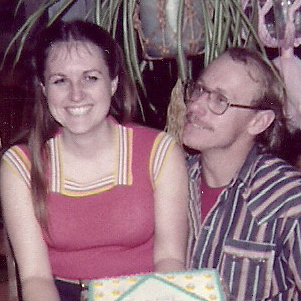
 again. I feel the same way about my husband and my aunt. My stubbornness also makes me work hard on my health.
Most people see stubbornness as a negative trait…one to avoid, but not me. I’ve learned to accept mine and even be grateful for it. It’s become a defining part of who I am. I think that’s because there are both good and bad kinds of stubbornness, and I’ve chosen to make mine work in a positive way. Stubbornness can be embraced and used to our advantage, but only if we make sure that it is directed at positive things and not at negative things.

 “York, now Toronto, was invaded by the US twice during the War of 1812. The first time, they stayed for a few days and burned the parliament and raided the library. The second time, a year later, the invading commander returned a bunch of the books, apologized for the soldiers’ theft, and then left after realizing there was no strategic benefit to remaining there.” I find it odd to think of an invading army raiding a library and stealing books, much less to have said army return a year later, with full apology to return said books, as if they were simply “overdue” and not actually stolen. Was the raid because the men needed something to read on the long Winter nights while awaiting the ability to go into battle again. Such long layovers…”wintering” as it were, were not uncommon in wars of that era. The armies had no choice during the wars, but to camp out and in the Winter, that could be brutal, so holing up in some town along the way afforded a chance at much needed warmer accommodations.
By the second year of the War of 1812, battles were raging across the United States and Canada. Washington DC, the young capital city, and the White House had not yet been burned. Believing that striking the British on their own turf could weaken their grip on Canada, American forces launched an attack on April 27, 1813. Seventeen hundred troops, supported by sixteen ships carrying eight hundred sailors and one hundred twelve cannons, assaulted York…modern-day Toronto. Two of the ships served as troop transports, a fact that might lay credence to the idea of the men needing something to read.
York, the capital of Upper Canada, was a major target with Fort York defended by 750 British soldiers and Ojibwe allies. The American forces were under Zebulon Pike, while the British were commanded by Major General Roger Hale Sheaffe, the Lieutenant Governor of Upper Canada. Sent to Canada at the outbreak of war, Sheaffe earned a barony for his service and had led a successful victory at the Battle of Queenston Heights in October 1812. Pike, known for exploring the American West and Louisiana for Thomas Jefferson, had been promoted to Brigadier General after the Battle of Tippecanoe in Tecumseh’s War of 1811. He was just thirty-four during the Battle of York.
The Americans looked at the rivers and waters of Canada with their potential for trade and transportation as a matter of great importance and had plans to take control of Canada. They had not accomplished that yet, but it was an important goal set by President Thomas Jefferson, Secretary of War John Armstrong Jr, and General Henry Dearborn. They concentrated their troops and warships at Sackett’s Harbor and desired to capture Kingston, which harbored most of the British naval vessels. After that, they planned to capture York, the capital city. They had placed three thousand troops at Buffalo; three thousand three hundred on the Niagara frontier, and four thousand at Sackett’s Harbor. There was an additional five thousand at Lake Champlain and two thousand south of Detroit. The total amount of British and Canadian forces across the entire area was seven thousand seven hundred. Sheaffe knew of those deficiencies, as well as those at Fort York, and the rear of the town, which was defenseless.
Plans changed when Dearborn learned Kingston was too heavily fortified and its British ships were still trapped in ice. The strategy flipped…Zebulon Pike and Commodore Chauncey would first depart Sackett’s Harbor, New York, to attack the capital, then move on to Kingston. Winter ice on Lake Ontario had delayed their push north, but by April 27th they reached the city, facing enemy fire from Indian allies along the route from the landing site west of town to the fort. Chauncey had been meticulous, however, in positioning his fleet after arriving near Gibraltar Point around 5am. First, he landed troops west of downtown near Grenadier Lake in Humber Bay. Second, he took a position at the foot of Dufferin Street by the British western battery. And finally, third, he blockaded the harbor directly in front of Fort York.
The attack was not really a total secret. The residents spotted the approaching ships. Poet Charles Mair wrote, “What news is this? Everyone’s on the move and heading here. York’s citizens have become warriors. The learned professions take up arms, and gentle hearts beat proudly for Canada. As you pass, you see everywhere…through the open doors and windows of each house…Canadian maids holding their departing lovers close, and loyal matrons bustling around their husbands, fastening their gear or, with tearful eyes, kissing them off to war.” At every position, Chauncey’s ship guns were too powerful to resist, allowing Pike’s men to land with ease. With their superior numbers, they quickly captured the fort, prompting General Sheaffe to order a retreat by early afternoon and leaving the local militia to negotiate the terms of surrender.
Knowing they had little chance of victory, the British retreated as the battle raged on, but not before setting the fort ablaze to keep the Americans from seizing its supplies and gunpowder. The resulting explosion of the powder magazine wounded 222 American soldiers and killed 38, including General Pike, as they were rounding up prisoners. Up to 40 British and allied soldiers were also killed. The capture came at a steep cost, and after the blast, the British and their allies endured a grueling march to Kingston. In retaliation, the remaining American forces turned on the city of York, burning public buildings, the Palace of Government, the Courthouse, and several businesses and homes. Still, they only occupied the city from April 27 to May 1, finding no strategic reason to stay. The spoils from the town and fort included two ships intended to aid in an attack on Fort Ontario that summer, though one was destroyed by the British before departure. At the time, the capital was home to just a thousand residents, most living along the River Don. Many believe that the British burned Washington DC, including the White House, in 1814 as payback for the American attack on York.


The surrender of the fort tarnished British Brigadier General Sheaffe’s reputation for yielding it so quickly, leading to his recall to England. The old Fort of New York, now known as Fort York National Historic Site, was rebuilt after the attack and served military purposes until it was transformed into a historic site between 1923 and 1934. The city of York officially became the incorporated city of Toronto on March 6, 1834.

