Politics
 Today marks a great day in the history of this great nation. We have been an independent nation for 250 years today. That is an incredible accomplishment, and on we should all be proud of. We got started when we fought against British tyranny to gain our independence, and even then, they continued to fight us. Nevertheless, this nation as persevered through it all, and went on to be the great nation it is. Now as we reach our 250th birthday, we can still look back at the years this nation has existed and be proud of all we have accomplished. When this country got started, I doubt if anyone there expected it to last as long as it has…or maybe they did. The founders of this country were visionaries, and so I suppose it is quite likely they would expect longevity, even if they weren’t sure that it was possible. This nation is great because of the greatness of her citizens…and only it’s citizens. We can’t allow illegal aliens to continue to come in and fundamentally change this nation and all the greatness it stands for. I realize that there are people who would disagree with me, and I am not saying that all illegal immigrants are bad, but the minute the cross our border illegally, they become criminals. There is a right way to immigrate and a wrong way, and we must insist on the right way.
Of course, there are also those who would still love to see this country fail, or at the very least, for it to be fundamentally changed into something that wouldn’t even remotely resemble the nation it is today. Nevertheless, I still believe that there are enough of us left in this nation that want to see it flourish that we will fight to keep out socialism and communism…and illegal immigration. These things will not work. This country is great and it must remain great. Socialism, communism, and illegal immigration have all been proven failures, so they will not succeed this time. Those who try, simply won’t succeed.
Today is a wonderful celebration of the success of this Republic. Our Constitution is the best in the world. We 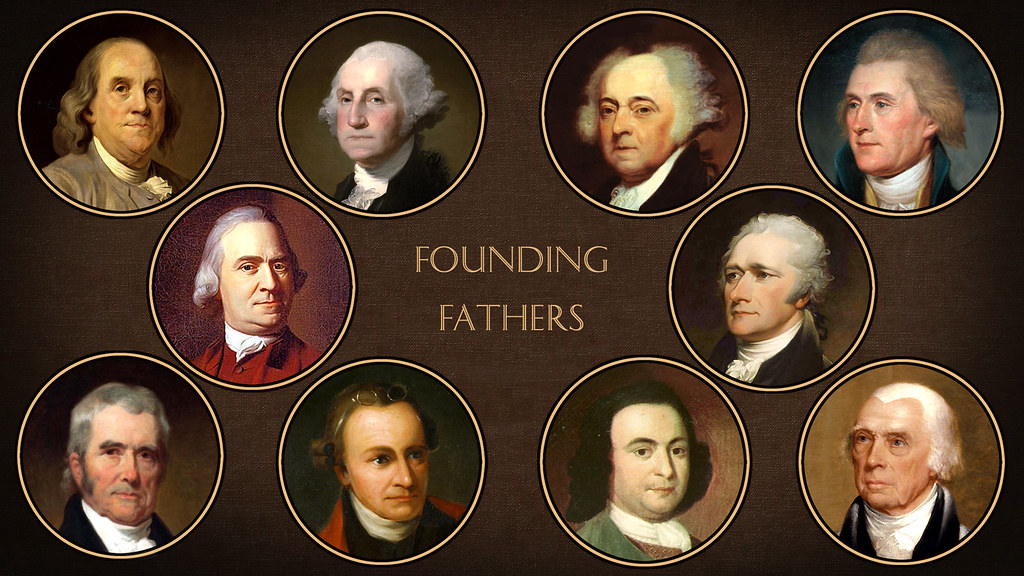 have proven that capitalism is the best way to success for all. I realize that there are those who will disagree with me and that is your right, but if you look at socialism and communism in the past, you will find failure. That cannot be changed. An honest look tells the tale. Illegal immigration only brings in the worst of other nations. The send their criminals to us and keep the good people. We need legal immigration, so we get the best of the best. Our country can remain the great nation it is today, but the rules must be followed. It is the only way that we will continue to succeed as a great nation. And we must stand and insist upon it. Happy 250th birthday to the United States of America…and many more!!
 With the end of World War II in 1945, the United States, Great Britain, and France took control of western Germany, including the western half of Berlin, which was located deep in the east. The Soviet Union occupied eastern Germany and the other half of Berlin. As tensions from the Cold War grew between the western allies and the Soviets, it became clear that Germany wouldn’t be reunited. By the late 1940s, the United States moved to make the division official and create an independent western Germany, leading to the formal announcement of the Federal Republic of Germany in May 1949.
In 1954, West Germany became a member of the North Atlantic Treaty Organization (NATO), the mutual defense alliance between the United States and several European countries. Now, all that remained to give West Germany her independence again was for the Americans, British, and French to end their nearly decade-long occupation.  That happened on May 5, 1955, when those nations issued a proclamation ending the military occupation of West Germany. Under a previously reached agreement, West Germany could now create a military force of up to half a million men and restart arms production, though it was banned from making chemical or atomic weapons.
When the Allied occupation of West Germany ended, it marked the full recognition of the republic as part of the Western alliance against the Soviet Union. Although the Russians weren’t exactly happy about a rearmed West Germany, they were relieved that reunification was no longer on the table. They wanted to keep control of their  part of the old Germany. Not long after the May 5th proclamation, the Soviet Union officially recognized the Federal Republic of Germany. The two Germanys stayed divided until 1990, when they reunited to form a single democratic nation once again. It had been a very long road.
I’m sure that many people were very worried about Germany ever regaining any of its former power. It was easy to foresee a comeback of a Hitler-style terrorist nation, and that would simply be unacceptable. While much of the prejudice and hate of the Hitler era was gone for a time, we do see a resurgence of it these days, and that makes me very sad. There is simply no reason for it. I don’t understand why people can’t just accept other people as they are. Things like skin color and religious background should not matter. We all bleed red, and that makes us all the same…no matter what the haters think.

 On May 4, 1776, Rhode Island, the smallest state in the United States, which was founded by radical religious dissenters from the Puritans of Massachusetts Bay Colony, became the first North American colony to break ties with King George III. Ironically, it was also the last state to ratify the United States Constitution, finally doing so over 14 years later on May 29, 1790. The residents of Rhoad Island were really a very “different” people. They were unconventional and, in some ways, difficult. Still, in many ways, they fit right in with the times.
In the 18th century, Rhode Island was a hub of the transatlantic slave trade, which was a common practice of that era. Molasses from the West Indies was turned into rum in local distilleries, then traded on the West African coast for enslaved people. Those slaves were then forced to endure the brutal middle passage across the Atlantic to the Caribbean, where the survivors of the trip were sold to plantation owners in exchange for more molasses, thus continuing the cycle.
The British at that time were trying to tighten control over colonial commerce, starting with the Sugar Act of 1764, which increased molasses duties and imposed stricter trade regulations. Rhode Islanders, eager to protect their profitable triangle trade, grew frustrated with British efforts to tighten control over them. Two major clashes followed during the protests of the late 1760s and early 1770s. On June 10, 1768, British customs officials seized John Hancock’s sloop Liberty for its past role in smuggling Madeira wine, sparking a riot in Boston. Four years later, near Providence, the British customs schooner Gaspee ran aground, and angry 
 Rhode Islanders, resentful of what they saw as unfair taxes, boarded and burned the vessel, injuring its captain.
Rhode Island’s strong trade network caused nearly as much friction for the new American nation as it had for the British Empire. With thriving ports in Providence and Newport bringing in wealth, it was the only small state in 1787 that could realistically survive outside the proposed federal union. Unwilling to give up revenue from import duties to the federal government, Rhode Island resisted joining. It wasn’t until 1790, when they were faced with the heavier financial burdens of being treated as a foreign nation and all that entailed, that Rhode Island finally agreed to ratify the Constitution of the United States.

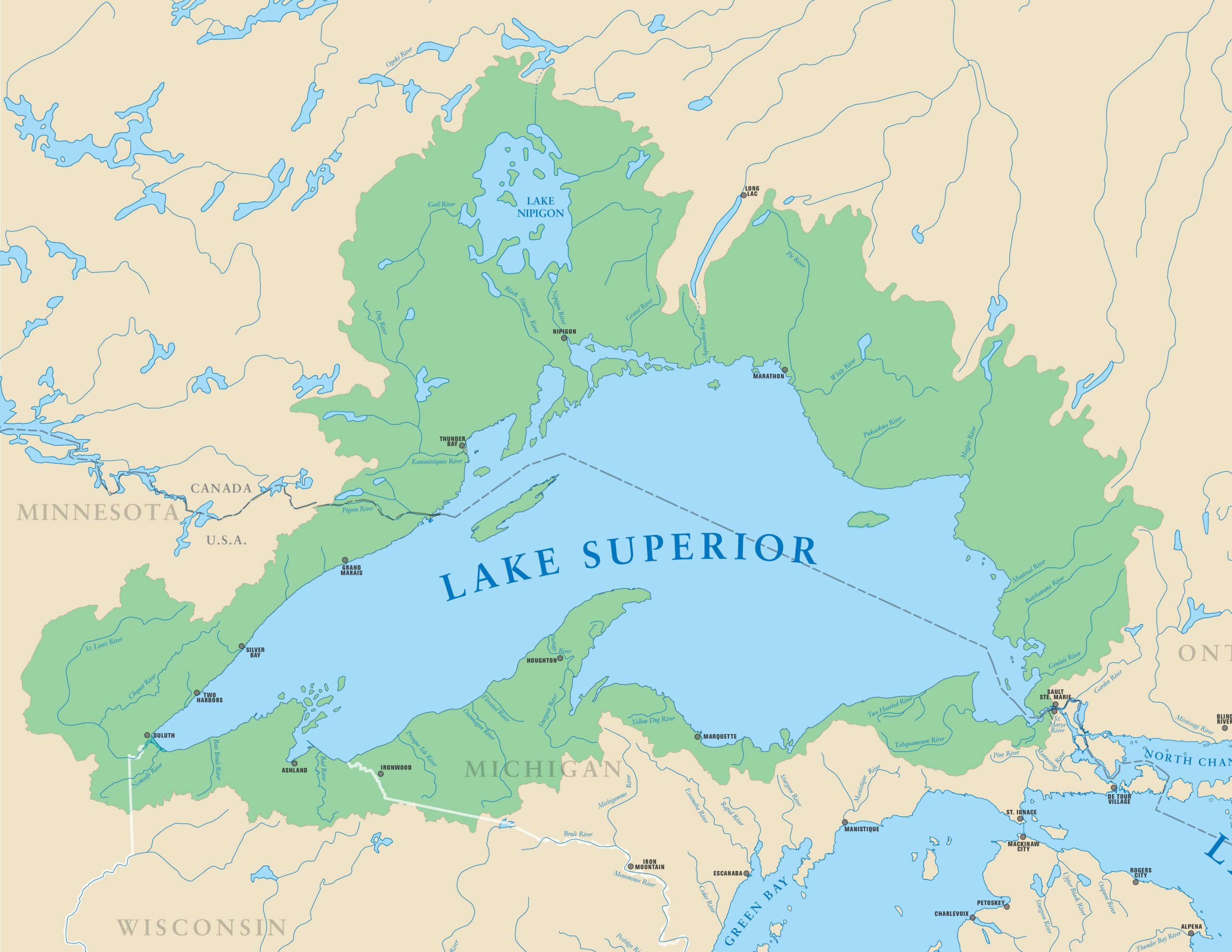 Growing up, I lived in Casper, Wyoming, and still do. However, I always knew that I was born in Superior, Wisconsin. Superior always seemed like a fairly big place to me when my parents, Allen and Collene Spencer would take my sisters and me back there for visits. Then, in 2014 when my sister, Cheryl Masterson, our mom, and I went back after a number of years away, I was rather surprised at how small Superior seemed…especially in relation to Duluth, Minnesota, which had always seemed like a sister-city to me. In reality, the two cities were originally sister-cities, but rivalries over the years changed all that and the change was evident when I was there in 2014.
Superior, Wisconsin, and Duluth, Minnesota, are the biggest cities on Lake Superior, together known as the “Twin Ports.” Back in the late 1800s and early 1900s, Superior actually had more people than Duluth, thanks to its booming role as a major shipping hub during the Great Lakes shipping expansion. At its peak in the early 1900s, Superior’s population topped 100,000, making it the largest city on the Great Lakes. Duluth was also an important port, but smaller at the time. The balance of population might have stayed that way if not for the long-standing rivalry between the two cities. It all began when Duluth wanted its own direct lake access, but it lacked a natural entry. The US government favored a cheaper plan to improve Superior’s access instead. Duluth fought back, and after a legal battle with Wisconsin leaders, some locals took matters into their own hands, secretly digging a canal at night. At the time of the final push to finish the canal, an injunction was on its way from Superior to stop the Duluth canal, but when it arrived, it was too late. By 1887, the US Army Corps of Engineers had taken control of building the lift bridge and canal, paving the way for the iconic Aerial Lift Bridge, 
 now on the National Register of Historic Places. This rivalry and the canal have been central to shaping both cities’ history and identity.
By the middle of the 20th century, Duluth’s population began to grow faster due to industrial development, especially in the iron ore mining and smelting industries, and its proximity to the Iron Range. This growth eventually made Duluth the larger city in the Twin Ports area. Today, Duluth remains the larger city in terms of population: about 87,680 residents in 2023 compared to Superior’s roughly 66,870. However, Superior remains the larger city in terms of land area (about 207.6 square miles vs. Duluth’s 80.2 square miles) and is the largest US city on the Great Lakes by land area. I don’t know if the land size really provides much consolation for the city of Superior, but the two cities seem to have worked things out…I guess. To the unsuspecting public, the two cities seem to function as one big city. the bridges that run between the two cities are always busy as people go back and forth to different businesses on both sides. The two main bridges connecting Duluth, Minnesota, to Superior, Wisconsin, are the John A Blatnik Bridge and the Richard I Bong Memorial Bridge. Opened in 1961, the John A. Blatnik Bridge carries Interstate 535 (I-535) over the Saint Louis Bay. It is a vital freight and commercial link between the Twin Ports, serving an average of 33,000 vehicles daily. The bridge is nearing the end of its service life, and a replacement project is planned, with construction expected to begin in 2026 and last until 2031. The new bridge will include a shared-use path and improved access to Superior. The Richard I Bong Memorial Bridge opened on October 25, 1984. It connects Duluth and Superior via US Highway 2. It spans approximately 
 11,800 feet, with about 8,300 feet over water, and rises 120 feet above the river to accommodate maritime traffic. This bridge handles about 16,100 vehicles daily and is currently the only pedestrian and bicycle crossing between the two cities. Together, the bridges give the two cities the feel of being one. I have family living in both cities, and when I think of them, it seems to me that they all live in the same city.

 At its peak in 1910, the coal mining industry in Colorado employed 15,864 people. That number accounted for 10% of the state’s jobs. The industry was dominated by just a few operators, with Colorado Fuel and Iron being the largest in the West and one of the most powerful corporations in the country. The large and powerful corporations cand cause more than a few problems. At one point, Colorado Fuel and Iron employed 7,050 people and controlled 71,837 acres of coal land. John D Rockefeller bought a controlling stake in the company in 1902, and nine years later handed over that stake to his son, John D Rockefeller Jr, who ran the business from his offices at 26 Broadway in New York.
Mining was tough and risky work. In Colorado, the miners faced constant dangers like explosions, suffocation, and collapsing walls. Back in 1912, the death rate in the state’s mines was 7.06 per 1,000 workers. That was more than double the national average of 3.15. Safety concerns were a big part of the reason for the strike. Suffering attempts to suppress union activity, the United Mine Workers of America secretly continued its unionization efforts in the years leading up to 1913. Eventually, the union presented a list of seven demands: 1. Recognition of the union as bargaining agent. 2. Compensation for digging coal at a ton rate based on 2,000 pounds (previous ton rates were of long tons of 2,200 pounds). 3. Enforcement of the eight-hour work-day law. 4. Payment for “dead work” (laying track, timbering, handling impurities, etc.). 5. Weight checkmen elected by the workers (to keep company weightmen honest). 6. Right to use any store, and to choose their boarding houses and doctors. 7. Strict enforcement of Colorado’s laws (such as mine safety rules, abolition of scrip), and an end to the company guard system.
The major coal companies turned down the demands, and in September 1913, the United Mine Workers of America called a strike. Striking workers were forced out of their company homes and relocated to tent villages set up by the union. These tents, built on wooden platforms and equipped with cast-iron stoves, stood on land the union had leased in anticipation of the strike. Ending the strike which had become quite bitter took a terrible turn. Colorado militiamen attacked a tent colony of striking workers, killing dozens of men, women, and children. After eviction attempts failed to end the strike, the Rockefeller interests hired private detectives who assaulted the colonies with rifles and Gatling guns. The miners fought back, and several were killed. When it became clear the strikers wouldn’t give up, the Rockefellers turned to the governor of Colorado, who authorized the deployment of the National Guard, with the Rockefellers agreeing to cover their wages.
At first, the strikers believed the National Guard had come to protect them, but they quickly realized that wasn’t the case. The militia was there to crush the strike…one way or the other. On April 20, 1914, two companies of guardsmen attacked the largest tent colony near Ludlow, home to about 1,000 men, women, and children. The assault began in the morning with a barrage of bullets into the tents, prompting miners to fire back with pistols and rifles. When a strike leader was killed while trying to negotiate a truce, fears grew that the attack would escalate. Women and children hid in pits beneath the tents to avoid gunfire. By dusk, guardsmen descended from the hills, setting the colony ablaze with torches and shooting at families as they fled. The full horror emerged the next day, when a telephone linesman found a pit under one tent containing the burned remains of 11 children and two women.
The “Ludlow Massacre” sparked outrage across the country, but it brought little relief to the struggling Colorado 
 miners and their families. Federal troops were sent in to break the coal miners’ strike, and the workers ended up with no union recognition or meaningful gains in pay or working conditions. Over the course of the strike, 66 men, women, and children lost their lives, yet not one militiaman or private detective faced criminal charges.
 Daniel Webster was an American lawyer and statesman who represented New Hampshire and Massachusetts in the United States Congress. He also served as the 14th and 19th United States secretary of state under presidents William Henry Harrison, John Tyler, and Millard Fillmore. As one of the most prominent American lawyers of the 19th century, Webster argued over 200 cases before the United States Supreme Court during his career. Webster was a member of the Federalist Party, the National Republican Party, and the Whig Party. He was among the three members of the Great Triumvirate (a group of three men holding power) along with Henry Clay and John C. Calhoun.
Webster was born in Salisbury, New Hampshire, on January 18, 1782, to Abigail (née Eastman) and Ebenezer Webster, a farmer and local official who served in the French and Indian War and the American Revolutionary War. Ebenezer had three children from a previous marriage who survived to maturity, as well as five children from his marriage to Abigail. Webster was the second-youngest of the eight siblings. Webster established a successful legal practice in Portsmouth, New Hampshire, after graduating from Dartmouth College and serving a legal apprenticeship. A prominent opponent of the War of 1812, he won election to the United States House of Representatives, where he served as a leader of the Federalist Party. Webster left office after two terms and moved to Boston, Massachusetts. He became a leading attorney before the U.S. Supreme Court, winning cases such as Dartmouth College v. Woodward, McCulloch v. Maryland, and Gibbons v. Ogden.
While he was an excellent attorney, perhaps the biggest thing he is remembered for is the Seventh of March speech. On March 7, 1850, Senator Daniel Webster delivered his Seventh of March speech, where he endorsed the Compromise of 1850 aimed at preventing a civil war. This speech was significant as it sought to unite the nation during a time of deep division over slavery and territorial expansion. Webster’s efforts to persuade the Senate to support compromise measures were ultimately unsuccessful, which also lead to his political downfall in New England, because many people viewed his stance as a betrayal of the antislavery movement.
By early 1852, Webster was suffering from cirrhosis of the liver, and his poor health increasingly made it difficult for him to serve as secretary of state. In September 1852, Webster returned to his Marshfield estate. His health continued to decline due to cirrhosis and a subdural hematoma. He died in Marshfield, Massachusetts on October 24, 1852, at the age of 70, and is buried in Winslow Cemetery near his estate. His last words were, “I still live.”
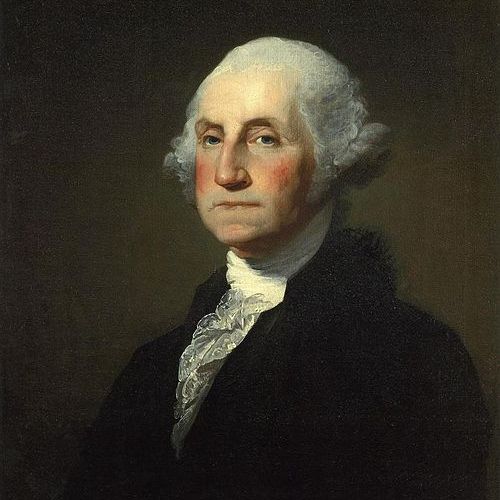
 When the Presidential Inauguration ceremony comes to mind, we all think of it being a lot of pomp and circumstance. The president is sworn in with his hand on the Bible. The tradition of using a Bible for the presidential oath of office has long been an important part of the inauguration ceremony. Nevertheless, it is not a part of official protocol, and there have been several presidents throughout history who opted to use a different object, or no object at all, when taking their oath of office. To me, that is a totally strange situation, and while it isn’t official protocol, I feel like it should be. I know that is my own opinion, but we are “one nation, under God” and that means taking the oath on the Bible.
However, since some presidents didn’t agree, there comes a need to understand the reasons why some presidents chose not to use a Bible, in order to provide insight into their personal beliefs and principles. The use of a Bible for the presidential oath began with George Washington in 1789. At his inauguration in New York City, Washington placed his hand on a Bible as he took the oath. This set a precedent that many future presidents chose to follow. Using a Bible underscored the solemnity of the oath and allowed presidents to affirm their faith as they began their term.
However, the use of a Bible is not required by the Constitution. The only requirement is that the president recite the 35-word oath as stipulated in Article II, Section 1: “I do solemnly swear that I will faithfully execute the Office of President of the United States, and will to the best of my ability, preserve, protect and defend the Constitution of the United States.” That left the matter to the president himself. So, for presidents who opted not to use a Bible, it was their personal choice. Their decisions often carried symbolic meaning about their priorities and principles as they entered office. For me, the rejection of the Bible during the oath points to a man who, does not honor God. That is something that bothers me immensely.
Some presidents, like John Quincy Adams, the 6th president, seemed to think that the Constitution said that religion had no place in government, while in reality, it says that no law can be put in place that allows government to dictate a common church. Nowhere does it say that religion should be kept out of government. Nevertheless, John Quincy Adams chose to use a book of US laws rather than a Bible at his inauguration in 1825. To this day, there is debate around why he made this choice, with some arguing it represented his deep devotion to defending the rule of law above all else. Others say he was making a statement of his strong separation of church and state views. There are also claims that Adams simply forgot to bring a Bible to his inauguration. In his later years, Adams clarified that he firmly believed in keeping his oath of office and official duties separate from religious matters. This seems to confirm the idea that his use of a law book was intentional and symbolic.
Theodore Roosevelt was another president that did not use a Bible for his inauguration in 1901 after the assassination of President William McKinley thrust him into the presidency. There was no indication that he chose to forego the Bible had anything to do with being non-Christian. In fact, the opposite was true, Roosevelt was a devout Christian. Roosevelt wanted to avoid any appearance of impropriety or disrespect toward McKinley by immediately using a Bible. Nevertheless, he felt his faith commitment did not require using a Bible to confirm his sincerity. When he was officially sworn-in months later after winning election in his own right, Roosevelt did use a Bible for the ceremony. In another possible scenario, some say that the hurried swearing-in ceremony was done without time to obtain a Bible. 
Perhaps the most religiously motivated non-use of the Bible to swear the president in was Franklin Pierce, who did not use a Bible for his inauguration in 1853. A family tragedy provides a likely explanation for this departure from tradition. Shortly before his inauguration, Pierce’s son was killed in a train accident right before his parents’ eyes. The trauma and grief from this accident caused Pierce to struggle with his faith. At the time of his inauguration, using a Bible may have felt inauthentic or difficult emotionally. His son’s death haunted Pierce throughout his presidency. It is thought that it caused his choice to forego the Bible as he entered office.
Lyndon B Johnson was sworn-in quickly following John F Kennedy’s assassination without a Bible in 1963. Apparently, that was because of the hurried nature of the impromptu ceremony onboard Air Force One. When Johnson was officially inaugurated months later, he did use a Bible. There is no evidence that Johnson wanted to depart from the tradition but that he was unable due to the extraordinary circumstances of Kennedy’s death.
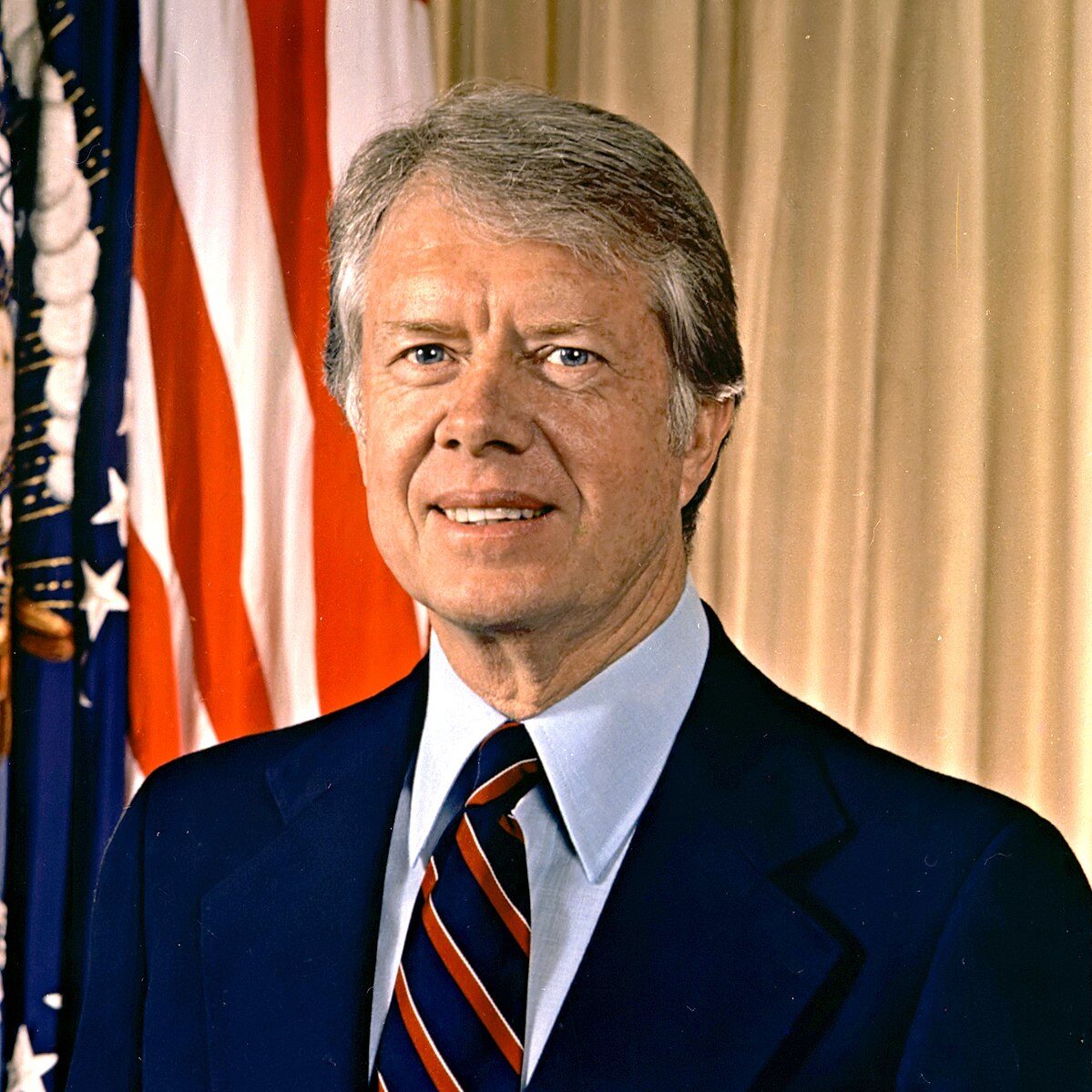
Jimmy Carter used his personal family Bible when taking the oath in 1977. What was distinctive is that he opened it to a specific passage from Micah 6:8: “He has shown you, O mortal, what is good. And what does the Lord require of you? To act justly and to love mercy and to walk humbly with your God. Carter was transparent about this choice, indicating that this Bible verse summarized how he aspired to carry out his presidency. His bold decision to open directly to a specific passage broke with precedent but reflected his sincere faith.
For his inaugurations in 2009 and 2013, Barack Obama chose to use Bibles that held historical significance. In 2009, he used the Bible used by Abraham Lincoln for his 1861 inauguration. In 2013, he used the “Robinson Family Bible” and Martin Luther King’s traveling Bible. Rather than using his personal Bible, Obama’s choices honored previous presidents and civil rights leaders who inspired him. This represented his grounding in history and promotion of inclusivity as core principles.
John F. Kennedy, who was the first Roman Catholic president, used a Catholic translation of the Bible at his 1961 inauguration. Specifically…the Douay-Rheims translation. By opting for a Catholic version, Kennedy was able to take the oath on a Bible while still honoring his own faith tradition. His decision also demonstrated religion’s important but complex role within a pluralistic democracy.
Franklin D Roosevelt’s was the only president to serve more than 2 terms as president, before or since. For his oaths, he used the Roosevelt family Bible in 1933, the West Thompson Bible (used by George Washington) in 1937, the Warburg Family Bible in 1941, and the Roosevelt family Bible in 1945. His choices were symbolistic as well. His family Bible was chosen for his first and fourth inaugurations. The Washington Bible was chosen as 
 a link to the first president and the Warburg Bible, underlining freedom of religion.
Ultimately, the choice of Bible or other object is seen as a deeply personal decision for each president. This visible decision also provides us with insights into their character and demonstration of their faith, or the lack thereof, on the day they accept the weighty responsibility of leading the nation. Whether following or departing from tradition, inauguration choices set the tone for a president’s vision and principles guiding their term.

 These days, service dogs, and even cats, are fairly commonplace…sometimes to the point that we wonder if the owner really needs a service animal. Nevertheless, it’s not for any of us to say whether or not the service animal is necessary or not. If the person is scamming the system…well, that’s on them. There are far more people who really need the service animal than those who don’t. The animal provides a number of key services for the owner. Some have been trained to tell if their owner is having an epileptic attack, a PTSD attack, or anxiety attack, and a number of other attacks. However, the first “service dog” was actually a dog to guide blind people, thereby giving them independence. The exact time when dogs were first used to assist people with disabilities is unknown, but ancient artwork from Pompeii and China seems to show dogs guiding those with visual impairments. In 1785, Frenchman Valentin Haüy founded the First Institute for Blind Children and introduced the concept of using dogs for this purpose, but it wasn’t until after World War I that the modern Guide Dog movement truly began.
The movement to use dogs to guide the blind took time to get around the world, but in 1929, the United States saw the opening of The Seeing Eye, Inc. The Seeing Eye is a guide dog school located in Morris Township, New Jersey, and it is the oldest guide dog school in the United States, as well as one of the largest. The Seeing Eye campus features administrative offices, student dormitories, a veterinary care center, and kennels, along with a breeding station located in Chester, New Jersey. The school is a lead researcher in canine genetics, breeding, disease control, and behavior, all things necessary to provide the best dogs for the people they serve. The Seeing Eye pairs about 260 people who are blind or visually impaired with guide dogs each year. By 2023, there were roughly 1,700 active guide dog users in the United States and Canada, and since the school’s founding, The Seeing Eye has matched more than 17,500 people with dogs.
The Seeing Eye has its roots in Europe in the 1920s when Dorothy Harrison Eustis moved from the United 
 States to Vevey, Switzerland. Her purpose was to establish a breeding and training center for German shepherds. She was joined by Elliott S “Jack” Humphrey, an American trainer and geneticist, who worked with her to create their own scientific method for breeding and training. During World War I, many German soldiers lost their sight, and many suffered visual impairments. That prompted several schools in Germany to experiment with training guide dogs in specific skills. Eustis later wrote about this in an article for The Saturday Evening Post titled “The Seeing Eye,” published on November 5, 1927. Afterward, Eustis received numerous letters from blind individuals inquiring about how to get a guide dog.
An article was read to Morris Frank, a 19-year-old blind man from Nashville, Tennessee, who had lost his sight in two separate accidents. Frank was convinced that a guide dog could help him regain independence, so he wrote to Eustis. Although she had never trained dogs for the blind, Eustis decided to help. Frank also expressed his wish to promote guide dog training for the blind in the United States. Eustis and Humphrey, experienced in training other working dogs, began adapting their methods. In April 1928, Frank met his first guide dog, Kiss, whom he renamed Buddy…the name he gave to all six of his future Seeing Eye dogs. The name has now been retired by the organization. Over six weeks, Frank and Buddy formed a strong bond and learned to navigate streets, obstacles, stairs, and crowds together. On January 29, 1929, Eustis and Frank founded The Seeing Eye in Nashville. The school’s first class was held in February 1929.
After receiving a generous donation, The Seeing Eye relocated to Whippany, New Jersey, in 1931, setting up a permanent spot for training and student housing. In 1965, it moved again to its current 60-acre campus in Morris Township, New Jersey, which houses administrative offices, student residences, a veterinary clinic, and kennels. The Seeing Eye was the first guide dog school established outside of Europe and remains the oldest one still operating in the world, celebrating its 95th anniversary in 2024. The Seeing Eye Dog was named the official state dog of New Jersey in 2020. Back in April 2005, a lifelike bronze statue of Morris Frank and his dog 
 Buddy was placed on the northeast corner of the Morristown Green, showing Frank giving the “forward command.” The Seeing Eye played a key role in passing a state law that made it a crime to harm a service dog or a service dog in training. The bill was inspired by Dusty, a Seeing Eye puppy-in-training who was badly injured in a pit bull attack and had to leave the program. On January 17, 2014, Governor Chris Christie signed Dusty’s Law. In September 2021, Jim Kutsch, the school’s first graduate to become its CEO, was honored with both a portrait and a statue on the Morris Township campus. The guide dog program has done so much for people who are blind or visually impaired, and it is very likely to have been the inspiration for other types of service dogs too.

 Sometimes, I am amazed by the eccentricity of people, especially when they are people in power. Eccentricity is putting it mildly when it comes to Roman Emperor Gaius, also known as Caligula. Emperor Gaius may have been a great leader, but that is not what he has been remembered for unfortunately. He is remembered for being…maybe a little crazy. Emperor Gaius was a kind enough man, both to people and to animals. He loved his horses especially…so much, in fact, that he made one of his favorite horses a senator within his government. His horse was named Incitatus, and Emperor Gaius made sure he lived in luxury, giving him a marble stall, an ivory manger, a jeweled collar, and even a house…for a horse!! Emperor Gaius also allegedly planned to make his trusty steed Consul before he was assassinated.
Gaius was born on August 31, 12 AD, to Germanicus, a well-loved Roman general, and Agrippina the Elder of the Julio-Claudian dynasty. Soldiers fondly called him “Caligula,” or “little boot,” because of the tiny military boots he wore as a child. After his father’s death in 19 AD and the political chaos that followed, Gaius and his family endured many hardships, including the execution of several relatives under Emperor Tiberius, leaving a lasting impact on him. Caligula became emperor in AD 37 at just 24 years old, after the death of Tiberius. At first, he was well-liked and introduced reforms, including public works and building projects to help the people of Rome. But things soon shifted, as his reign grew marked by extravagance, cruelty, and demands to be treated like a god. He’s often remembered for strange behavior, like supposedly wanting to make his horse a consul, along with acts of violence against those he saw as enemies.
Caligula is still seen as a controversial figure, often remembered as one of history’s most notorious rulers, representing the extremes of power and the risk of tyranny in the Roman Empire. His life and reign continue to spark fascination and debate among historians and scholars. Caligula’s reign lasted only four years. The eccentric Emperor met his fate in a conspiracy involving the Praetorian Guard. After a serious illness, Gaius’ 
 bizarre behavior and bold claims of divinity stirred unrest among the people. On January 24, 41 AD, he was assassinated by Cassius Chaerea, Cornelius Sabinus, and others, along with his wife and daughter. His rule had been infamous for extravagant spending, ruthless treatment of rivals, and even naming his horse as consul…a symbol of his unchecked power. this likely led to the unrest among the people. His death signaled the end of an era and stood as a warning to future emperors about the dangers of their actions and the threat of violent uprisings. It was a pivotal moment in Roman history, paving the way for his uncle Claudius to take the throne. While historical accounts often depict Caligula in a negative light, some modern historians believe many accusations against him were likely exaggerated or driven by political agendas. I suppose we will never know for sure.

 During the Cold War, the city of Beijing was home to underground bunkers designed to protect the occupant from nuclear bombs and the fallout from them. After the Cold War, I’m sure most people assumed all those old bunkers were abandoned, but in Beijing, that wasn’t the case. Beneath Beijing over a million people currently live in a vast network of underground bunkers…the same bunkers originally built during the Cold War. Today, the area is known as the Underground City or “Dixia Cheng.”
In 1969, under Chairman Mao Zedong’s orders and amid rising tensions with the Soviet Union, construction began on the Underground City. The goal was to create bomb shelters that could protect Beijing’s residents from potential nuclear attacks. Over the next decade, roughly 300,000 workers built an extensive network of tunnels and bunkers, designed to house the city’s entire population if necessary. At the time, Beijing was home to about six million people. I doubt if the builders had any idea of what the future would hold for the underground city. The strange fact is that today, the Underground City still houses about a million people, mostly low-income workers, students, and migrants who can’t afford the steep rents above ground. Dubbed the “rat tribe,” they inhabit cramped, crowded quarters in tunnels that stretch across a little over 30 square miles.
As you can imaging, life in these bunkers isn’t easy. The units there have the essentials, like electricity, plumbing, and sewage systems. Still, the poor ventilation in the place leaves the air stale and moldy. It’s crowded so, people often share cramped rooms, kitchens, and bathrooms, which can make things tight and unhygienic. Nevertheless, the rent was much cheaper than above ground, so living here remains a practical choice for many, and almost mandatory for others. It’s an odd arrangement, almost like people living in an old coal mine in years gone by, except for the coal dust, of course.
Technically, living in these old bunkers has been illegal since a 2010 ruling by Beijing authorities, citing safety concerns. Still, many people remain in the bunkers, facing an uncertain future as the government has largely 
 turned a blind eye by allowing them to stay despite the risks. This underground city is a hidden yet significant part of Beijing’s urban fabric, reflecting the city’s challenges with housing shortages and economic inequality. In short, these bunkers provide shelter for those unable to find affordable housing above ground, underscoring the complexities of life in one of the world’s most crowded cities. While not ideal, the city’s poor have to have a place to live. It is the sad reality of an uncertain economy.

