Politics
 In what can only be described as a shockingly gruesome act, Norman R Morrison, an American anti-war activist doused himself in kerosene and set himself on fire below the office of Secretary of Defense Robert McNamara at the Pentagon on November 2, 1965, to protest United States involvement in the Vietnam War. This action was said to have been inspired by photographs of Vietnamese children burned by napalm bombings. Morrison wasn’t the only person to set himself on fire, and in fact, he was likely “inspired” by Thich Quang Duc and other Buddhist monks, who burned themselves to death to protest the repression committed by the South Vietnam government of Catholic President Ngo Dinh Diem.
Morrison was born in Erie, Pennsylvania, and was raised Presbyterian. At 13, his family moved to Chautauqua, New York, where he joined the Boy Scouts of America and participated in the God and Country Program, becoming the youngest member in Chautauqua County to earn the award. He graduated from the College of Wooster in 1956, developed an interest in Quaker ideals, but continued attending Presbyterian seminars in Pittsburgh and at the University of Edinburgh in Scotland. In 1959, Morrison joined the Religious Society of Friends, and by 1965, he served as Executive Secretary for Stony Run Friends Meeting  in Baltimore. A strong advocate of pacifism, he openly condemned United States military actions during the Vietnam War.
On March 9th, 1965, then President of the United States Lyndon B Johnson had authorized the use of napalm in the Vietnam War, which, by the end of the war, would end up killing at least 50,000 civilians in airstrikes. Upset over that decision had spurred fellow Quaker and peace activist Alice Herz, in an action that I will never understand, to set herself on fire in an open street in Detroit, Michigan on March 16th of the same year, in similar vein as Thich Quang Duc had done in 1963. At the time of his own fiery death, Morrison was married to Anne Welsh, also a Quaker, with whom he had two daughters and a son. In what I consider a reckless and horrific act, Morrison took his daughter Emily, then one year old, to the Pentagon, and either set her down or handed her off to someone in the crowd before setting himself ablaze. He died within two minutes of leaving  in an ambulance for Fort Myer. I simply don’t understand placing your one-year-old daughter in harm’s way like that. Even if she didn’t remember seeing her daddy on fire, she will always know she was there. Morrison’s motives for taking Emily remain somewhat unclear, but Morrison’s wife later recalled, “Whether he thought of it that way or not, I think having Emily with him was a final and great comfort to Norman… [S]he was a powerful symbol of the children we were killing with our bombs and napalm – who didn’t have parents to hold them in their arms.”
Before his protest death, Morrison mailed a letter to his wife in which he reassured her of the faith in his act. “Know that I love thee … but I must go to help the children of the priest’s village”. McNamara described Morrison’s death as “a tragedy not only for his family but also for me and the country. It was an outcry against the killing that was destroying the lives of so many Vietnamese and American youth.” Morrison was survived by his wife, Anne and three children, Ben (who died of cancer in 1976), Christina and Emily.
 The second major engagement of the Civil War, fought on October 21, 1861, resulted in a devastating defeat for the Union troops. The Battle of Ball’s Bluff in Virginia produced the war’s first martyr and led to the creation of a Congressional committee to monitor the conduct of the war.
Wars can bring changes in command when the losing side is given a new leader. It reminds me of how a losing year in sports can result in a new coach being appointed. Of course, that is very different, I suppose. Nevertheless, following the Battle of Bull Run in Virginia on July 21st, President Abraham Lincoln appointed General George McClellan to reorganize the defeated Federal Army of the Potomac. It was a huge undertaking, and throughout the fall, McClellan focused on assembling and training his troops, while still facing mounting pressure from Lincoln, the public, and Congress to act against the Confederates stationed just across the Potomac River. The army just wasn’t ready, however. Finally giving in to the pressure, McClellan directed General George McCall to  conduct a reconnaissance mission across the river and instructed General Charles Stone to monitor the nearby town of Leesburg, Virginia, while McCall’s men were on the move.
Then, on the fateful night of October 20th, Stone sent a detachment across the river. It was a disaster. The inexperienced soldiers mistook shadows for a Rebel camp. They were literally freaked out by every shadow. Stone decided to send more men over, eventually amassing a force of 1,600 under Colonel Edward Baker, who was a close friend of Lincoln, and had even named his second son after him. Unfortunately, Baker positioned his men dangerously in a clearing at the edge of Ball’s Bluff, a 100-foot cliff above the Potomac. The men now had their backs to the drop and faced a wooded ridge filling with Confederate troops. The Confederates attacked that afternoon, and Baker’s forces quickly found themselves in trouble. Baker was killed, and many of his men either jumped to their deaths or scrambled down a narrow trail, only to find their boats swamped in the river. Less than half made it back across the Potomac.
It was a disaster. The Union suffered 49 killed, 158 wounded, and 714 missing or captured, while the  Confederates had 33 killed, 115 wounded, and one missing. Lincoln was devastated by the loss of his friend, Baker, who became a Northern martyr despite his poor leadership in the battle. As often happens in the political arena, angry Republicans who distrusted McClellan, a Democrat, and other generals, blamed them for the loss. In December, the Joint Committee on the Conduct of the War was formed, dominated by Republicans who wanted harsher measures against the South and slaveholders. The committee’s first investigation targeted the Ball’s Bluff disaster, making General Stone the scapegoat. He was arrested for treason and jailed for six months for his “crimes.”
 In October 1859, a man named John Brown led a group of armed abolitionists in an attack on the US military arsenal at Harpers Ferry. Harpers Ferry used to be a part of Virginia, but it is now located in the eastern panhandle of West Virginia, where the Shenandoah and Potomac rivers meet, hence the need for a ferry. The raid was meant to be the first step in a detailed plan to create an independent refuge for freed slaves in the mountains of Maryland and Virginia. It didn’t exactly end up that way. During the raid, Brown was captured. He was then convicted of treason and hanged. It was thought that the worst of the uprising might be over, but the raid actually heightened fears of slave uprisings among the white Southerners and escalated the growing tension between the Northern and Southern states which led up to the American Civil War that raged between 1861 and 1865.
John Brown was born in Connecticut in 1800 and raised in Ohio. He came from a staunchly Calvinist and anti-slavery family. Brown spent much of his life struggling with failed businesses, finally declaring bankruptcy in his early 40s and facing over 20 lawsuits. However, in 1837, his life took a drastic turn when he attended an abolition meeting in Cleveland. Brown was deeply inspired, and he pledged to dedicate himself to ending slavery. By 1848, Brown was launching plans to spark an insurrection.
In the 1850s, Brown took five of his sons to join the fight against pro-slavery forces in Kansas in the battle for  the territory. After pro-slavery men attacked the abolitionist town of Lawrence on May 21, 1856, Brown sought revenge. A few days later, he and his sons set out to raid cabins along Pottawatomie Creek, killing five men with broadswords and sparking a summer of guerrilla warfare in the area. One of Brown’s sons lost his life during the conflict.
The death of his son only served to further anger Brown, and by 1857, he returned to the East and began raising money to carry out his vision of a mass uprising of slaves. Even with the loss of his son, Brown secured the backing of six prominent abolitionists, known as the “Secret Six.” They assembled an invasion force, and his “army” quickly grew to include more than 20 men. Several black men joined Brown and three of his sons. The group rented a Maryland farm near Harpers Ferry and began to prepare for the assault.
On the night of October 16, 1859, Brown and his group seized the federal arsenal. Some of his men took several hostages, including a few enslaved individuals. News of the raid spread quickly, and by the next day, Brown and his men were surrounded. On October 18, US Marines, led by Colonel Robert E Lee and Lieutenant J  E B Stuart, stormed the arsenal. Brown was wounded and captured, while 10 of his men, including two of his sons, were killed. Brown was tried for treason and murder in Virginia. He was found guilty on November 2nd. The 59-year-old abolitionist was executed on December 2, 1859. Before his execution, he gave his guard a note that read, “I, John Brown, am now quite certain that the crimes of this guilty land will never be purged away but with blood.” The raid definitely failed, but it served to heighten tensions between the North and South and influence the 1860 presidential election. It also proved that further compromise was impossible and became a key factor leading to the Civil War.
On October 14, 1918, during the fighting in the Ypres Salient in Belgium, then Corporal Adolf Hitler was among the Germans who were wounded. Temporarily blinded by a British gas shell, he was evacuated to a military hospital in Pasewalk, Pomerania. Young Hitler was initially drafted for Austrian military service but was rejected as not physically fit. While living in Munich at the start of World War I in 1914, he sought out and received special permission to enlist as a German soldier. As part of the 16th Bavarian Reserve Infantry Regiment, Hitler went to France in October 1914. There, he saw heavy action during the First Battle of Ypres, and he earned the Iron Cross that December for rescuing a wounded comrade.
Over the next two years, Hitler participated in some of the war’s fiercest battles, including Neuve Chapelle, the Second Battle of Ypres, and the Somme. On October 7, 1916, near Bapaume, France, a shell blast wounded his leg. After recovering near Berlin, he rejoined his unit by February 1917. Hans Mend, a comrade of Hitler’s, described his deep contemplation and fiery speeches on the declining morale and dedication to the cause in Germany by saying, “He sat in the corner of our mess holding his head between his hands in deep contemplation. Suddenly, he would leap up, and running about excitedly, say that in spite of our big guns victory would be denied us, for the invisible foes of the German people were a greater danger than the biggest cannon of the enemy.” In hindsight, I think they might have noticed the crazed dictator we now know to be Hitler.
In the following year, Hitler earned more citations for bravery, including an Iron Cross 1st Class in August 1918 for “personal bravery and general merit” after single-handedly capturing a group of French soldiers hiding in a shell hole during the final German offensive on the Western Front. He seemed the perfect leader for Germany, and many people were taken in. Hitler was actually voted into office, before he went rogue and became a dictator.
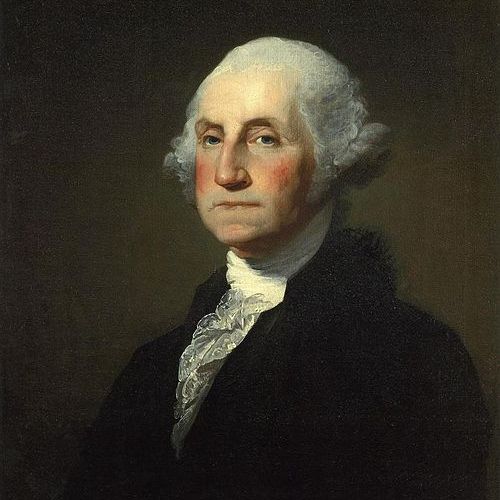
 In 1775, while looking for ways to fund the Revolutionary War, an idea was formed that would not come into fruition until September 2, 1789. I can’t say it was a “good” idea, but it served a purpose, I suppose. It was on that day, that the Continental Congress founded the United States Treasury Department. Their solution involved issuing cash that also served as redeemable “bills of credit” to raise enough capital for the revolution. Unfortunately, this plan resulted in the country’s first debt. The Continental Congress tried to stabilize the economy, even creating a pre-Constitutional version of the Treasury. However, neither this effort nor the signing of the Declaration of Independence, which allowed the United States to seek foreign loans, proved effective. The debt continued to grow, and war notes quickly lost value.
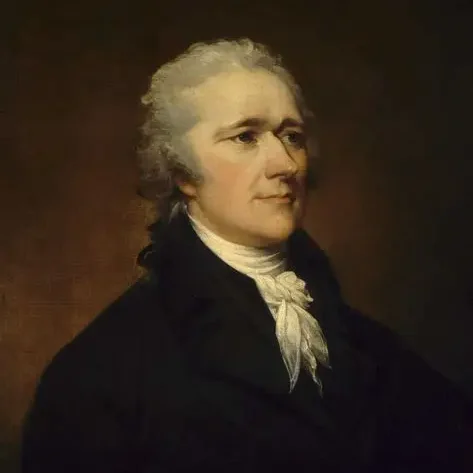
With the ratification of the Constitution in 1789, the American government established a permanent Treasury Department in hopes of controlling the nation’s debt. President George Washington named his former aide-de-camp, Alexander Hamilton, to head the new office. The former New York lawyer and staunch Federalist stepped in as Secretary of the Treasury on September 11. Hamilton soon outlined a practical plan for reviving the nation’s ailing economy. Basically, the government would pay back its $75 million war debt and thus repair its badly damaged public credit.
Hamilton was elected to the Continental Congress from New York in 1782. He became known for his strong advocacy of a more powerful national government and a near-reactionary political philosophy. Alongside James Madison and John Jay, he published the “Federalist Papers,” promoting the ratification of the United States Constitution. As the first secretary of the treasury, Hamilton created key centralized monetary institutions for the new nation, including the national bank, before stepping down in January 1795. He later returned to private life as a lawyer in New York City, but Hamilton continued to advise President Washington.
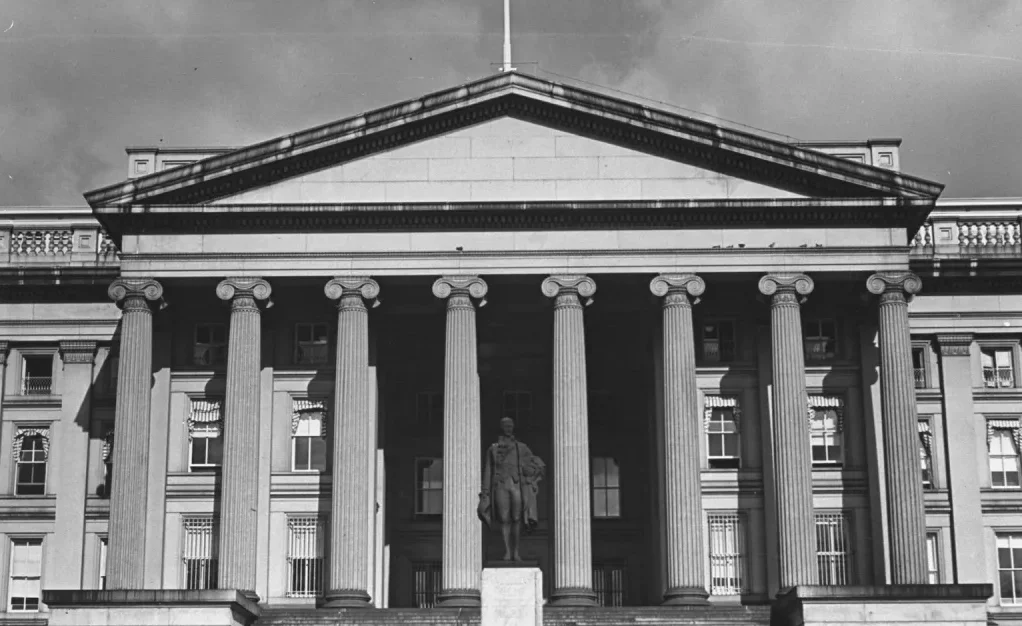
In 1800, Hamilton became embroiled in a bitter dispute when he threw his support behind President John Adams’ reelection campaign instead of presidential candidate Aaron Burr’s. After his defeat, Burr ran for governor of New York in 1804; Hamilton again opposed his candidacy. Humiliated, Burr challenged Hamilton to a duel on July 11, 1804, in Weehawken, New Jersey. Alexander Hamilton was shot in the duel and died of his wound the following day, July 12, in New York at the age of 49. While the treasury department, Hamilton had headed up, when on, his life ended that day in a field.
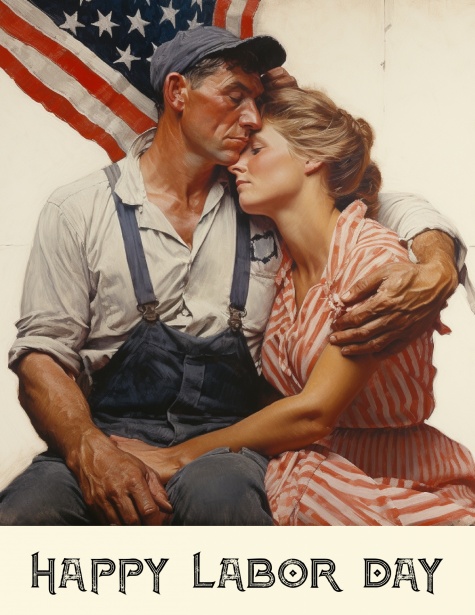 Holidays, especially the “Monday Holidays” are so often celebrated for the wrong reason. While we should be celebrating things like our veterans, military, or those lost in war, people tend to simply celebrate having the day off. The purpose for that day off is often lost in the shuffle to spend time with family and friends, enjoying good food and fun. Labor Day is the exception to that rule, because Labor Day is actually about the worker, and giving that worker a day off!! The best way to pay tribute to hard-working Americans is by giving them a play day…just to show how much we appreciate them and all their hard work.
When our nation was founded, there was very little here. Native Americans lived in teepees to stay mobile, following the buffalo as their main food source. Meanwhile, we came from countries with established houses, farms, and systems to provide for our needs. However, building a new nation required tremendous effort and hard physical labor. It also required educators to teach children and others, helping them become doctors, scientists, inventors, and other professionals necessary to transform this vast, empty land into a thriving nation capable of fulfilling the dreams that brought us here. 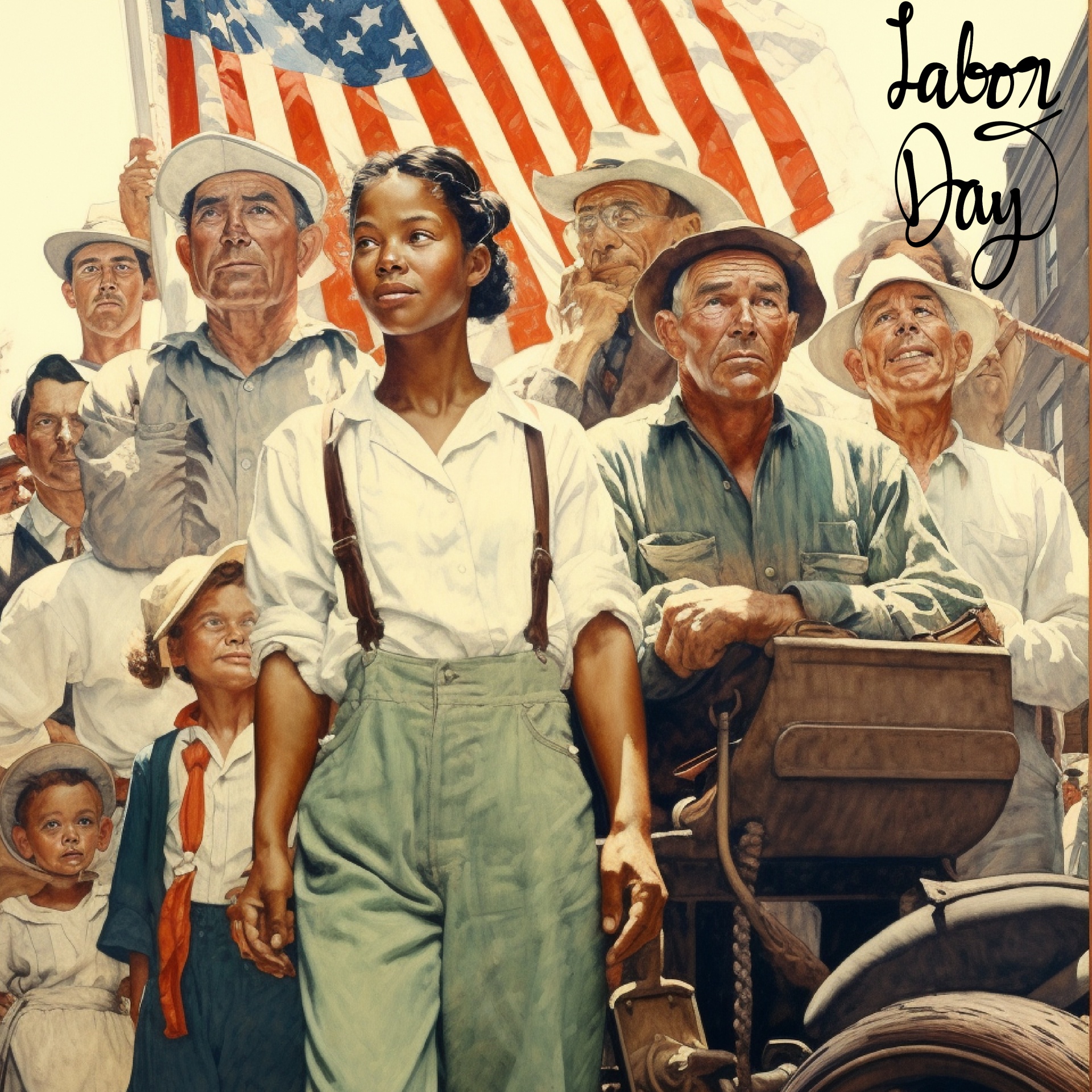
After years of hard work and growth, the nation began placing more importance on a Labor Day holiday. It was decided that workers deserved recognition for their contributions to building the country. The first bill was introduced in the New York legislature, but Oregon became the first state to pass a law on February 21, 1887. Later that year, Colorado, Massachusetts, New Jersey, and New York followed suit, establishing Labor Day holidays through legislation. By the end of the decade, Connecticut, Nebraska, and Pennsylvania had also joined in. By 1894, 23 more states had adopted the holiday, and on June 28 of that year, Congress passed an act declaring the first Monday of September a legal holiday in the District of Columbia and the territories. Finally, the whole nation was on the same page.
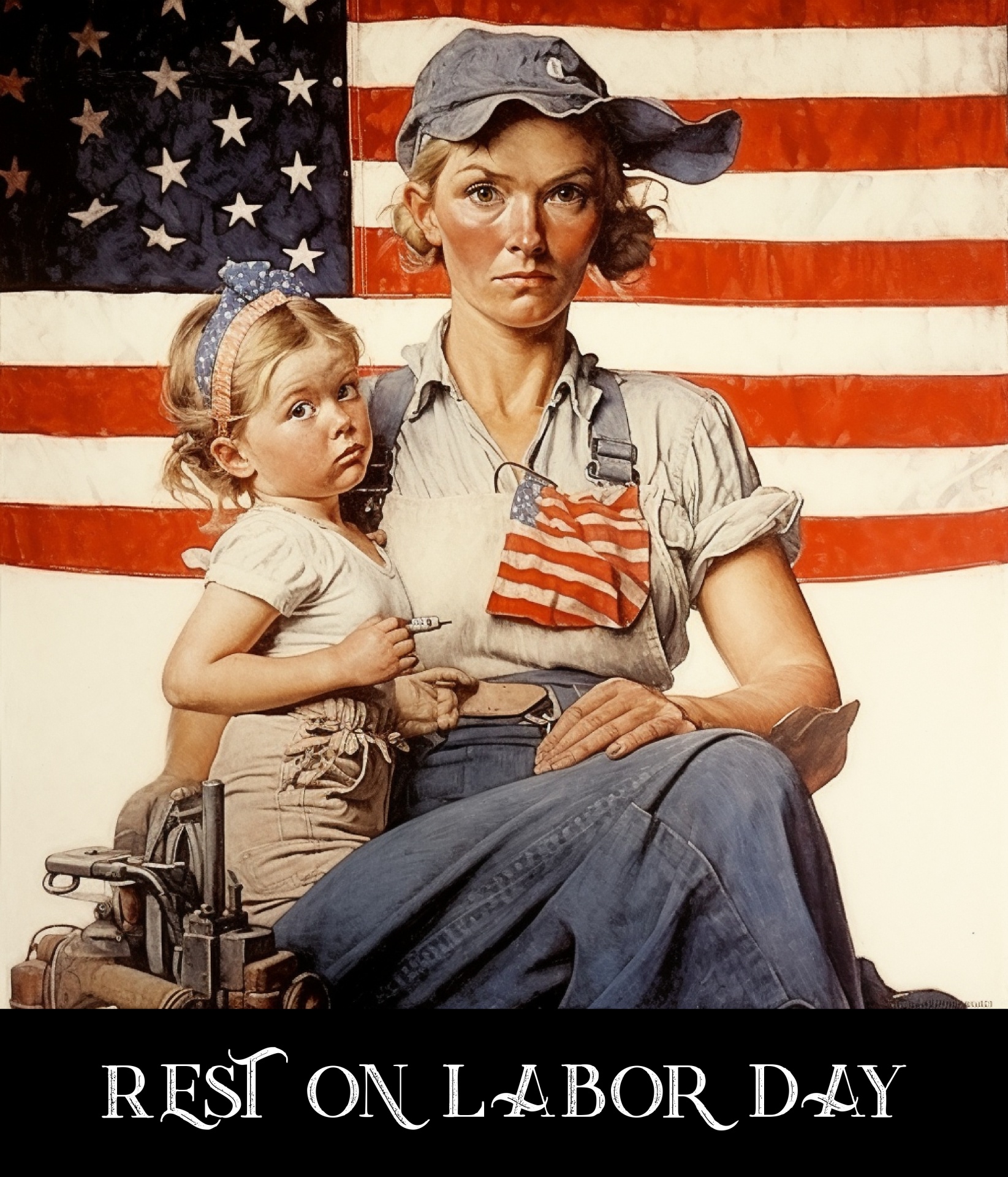
The first Labor Day holiday was celebrated on Tuesday, September 5, 1882, in New York City, organized by the Central Labor Union. The day kicked off with a parade and continued with plenty of festivities. The Central Labor Union held its second Labor Day just a year later, on September 5, 1883. Interestingly, the holiday didn’t become official until 1887, and even then, it wasn’t in New York City. Over time, like many holidays, it made more sense to move the celebration to the first Monday in September, giving workers a three-day weekend to enjoy. It’s a fitting tribute to laborers, though not every worker gets the day off, which would be nearly impossible for obvious reasons. Still, Labor Day is a day to honor and thank all workers for their contributions to this nation’s greatness, and hopefully every worker gets it off at some point in their working career. Happy Labor Day to workers everywhere!!
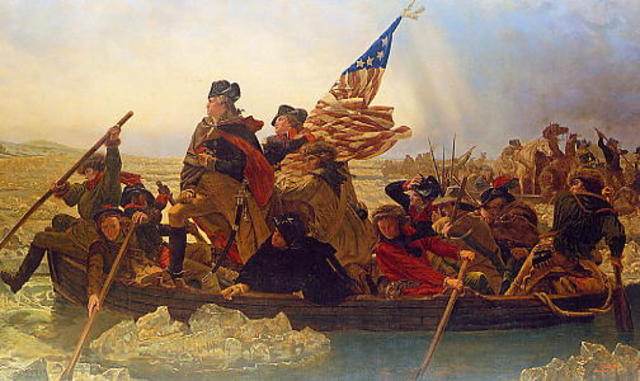 Not every battle is won by the “good guys,” and the Battle of Long Island was no exception. The Battle of Long Island was also known as the Battle of Brooklyn and the Battle of Brooklyn Heights. Although the British came out with the victory in that battle, the loss could have been much more disastrous if it weren’t for a brief period of weather that favored the Continental Army. After a week of battling the British in Long Island and Brooklyn, George Washington, as commander-in-chief, decided it was time to retreat across the East River to Manhattan. He began ferrying his troops out of the area at night. Unfortunately, by morning, a significant portion of the army was still stranded on the wrong side of the river. If the British had spotted them, they likely would have been captured or killed. Fortunately, a dense fog rolled in, providing cover and concealing the movement of Washington’s troops. By the time the fog lifted and the British advanced, the Continental Army had vanished. Losing those men could have drastically changed the outcome of the war. The fledgling nation could not afford to lose that many soldiers.
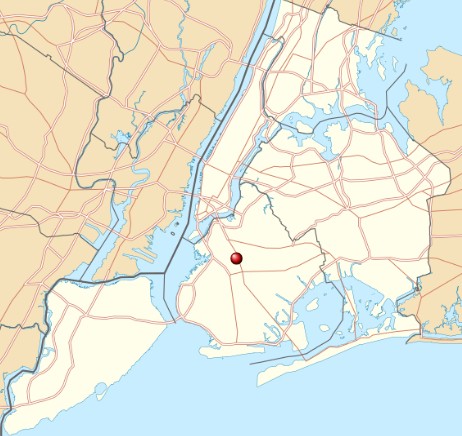
The British victory in the Battle of Long Island gave them control of the crucial Port of New York, which they held for the remainder of the war. This was the first major battle following the United States’ declaration of independence on July 4, 1776, in Philadelphia. It was also the largest battle of the Revolutionary War in terms of troop numbers and combat scale. On September 11th, delegates from the Continental Congress met Admiral Howe at the Staten Island Peace Conference, but the talks failed to end the conflict. Washington held a war council on September 12th, deciding to abandon New York City and Lower Manhattan Island and move north to Harlem and King’s Bridge. General Henry Clinton proposed landing British forces at King’s Bridge to cut off Washington’s escape, but General William Howe disagreed. On the morning of September 15th, British ships fired on the city to distract American forces. Around 11:00am, British troops landed at Kip’s Bay and encountered little resistance. Generals Washington and Putnam tried to defend the area, but many American troops panicked and fled, forcing a retreat. Putnam and his aide, Aaron Burr, managed to evacuate about 3,500 men from New York City to Harlem Heights.
Of course, we all know the outcome of the all-important Revolutionary War. Despite battles lost here and there, 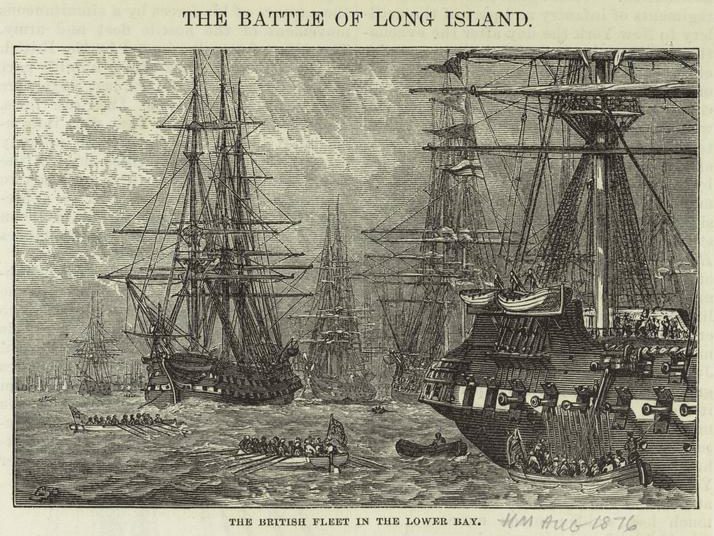
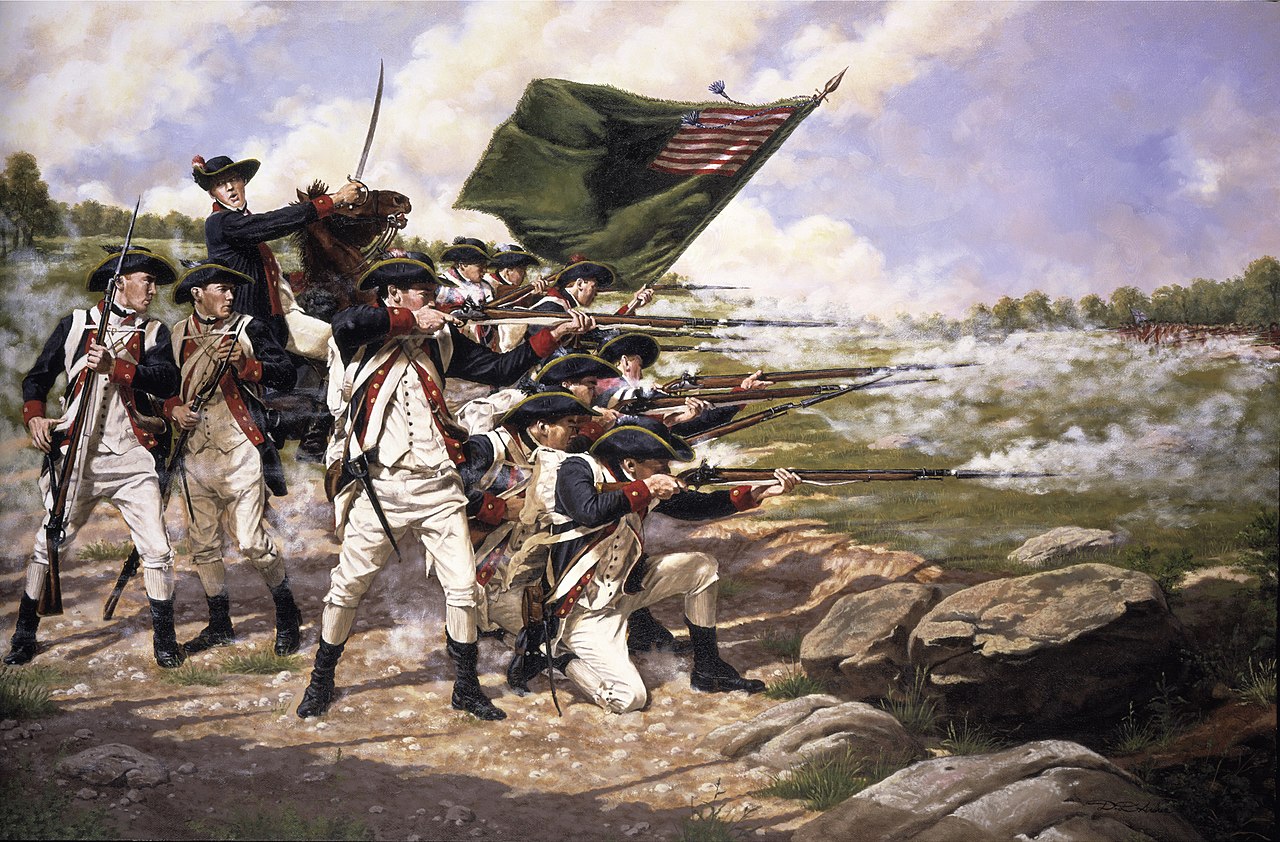 the United States would eventually win that war and solidify the freedom of the United States from British rule and treachery. General George Washington would go on to become the first President of this great nation they called the United States of America. It was a hard-earned and well-deserved position from the start to the end of his career. And many men owed him their lives that fateful night.

 Independence Day is always a special day for those of us who are patriots, but under some presidents, it is much better than under other presidents. This year, we have a wonderful president in charge. Yes, I’m a conservative, a patriot, and I’m a Trumper!! And…yes, I am unapologetic about it. I was in Keystone, South Dakota when President Trump came to Mount Rushmore, and I would have been inside, if I could have won the lottery on the tickets. That would have been a fantastic moment. Either way, the fireworks at Mount Rushmore that year were awesome. The reality is that Independence Day is a day for patriots…the ones who love this country and the conservative values the United States has always stood for. We will continue to fight for the United States, now and forever.

My husband, Bob and I love to spend the Independence Day week in the Black Hills, and almost always do. In fact, I can only think of one year that we haven’t in decades. The fireworks display in Custer, South Dakota is amazing. The whole show is very patriotic, and everyone has a great time. The event takes place on Pageant Hill, and people get there early. Music is played for a couple of hours while waiting for it to get dark enough for the main event…the fireworks display. Of course, the real meaning of the fireworks display is to remind us of the battles that took place to win our freedom for the British during the Revolutionary War. People think of Independence Day as one big party, there is a much deeper meaning to it.
Nevertheless, we can celebrate this day, because with the battles that took place to win our freedom, came the celebration when we won our freedom. That is a cause for celebration, and it is a reason to continue to fight 
 against those who are trying to change the United States from the dream our forefathers had in mind for this nation. We have to protect the values they set for us, the protections they put in place, and the Constitution we live by. These things are as worth fighting for as our freedom from British rule was in 1776. Happy birthday to the United States!! Happy Independence Day everyone!!

 Christopher Latham Sholes was an American inventor who invented the QWERTY keyboard, that most people are would recognize today. Also, along with Samuel W Soule, Carlos Glidden, and John Pratt, he is said to be one of the inventors of the first typewriter in the United States. In addition, Sholes was a newspaper publisher and Wisconsin politician. Sholes was born February 14, 1819, in Mooresburg, in Montour County, Pennsylvania, to Orrin and Catherine (Cook) Sholes. He later moved to nearby Danville and worked as an apprentice to a printer there. I rather don’t think he liked his first name, because over the course of his life, he went be a number of names, including, C. Latham Sholes, Latham Sholes, or C. L. Sholes, but never Christopher Sholes or Christopher L. Sholes.
In 1837, after completing his apprenticeship, Sholes moved to Milwaukee, Wisconsin, and later to Southport, Wisconsin (now named Kenosha). On February 4, 1841, in Green Bay, he married Mary Jane McKinney. Together they had ten children, Charles Latham Sholes born 1843, Clarence Gordon Sholes born 1845, Mary Katherine (Tyrrell) born 1847, Frederick Sholes born 1847, Louis C. Sholes born 1849, Elizabeth (Gilmore) born  1852, Lillian (Fortier) born 1856, George Orrin Sholes born 1859, Jessie Sholes born 1861, and Zalmon Gilbert Sholes born 1864.
He became newspaper publisher and politician, serving in the Wisconsin State Senate from 1848 to 1849 as a Democrat, in the Wisconsin State Assembly from 1852 to 1853 as a Free Soiler, and once more in the Senate as a Republican from 1856 to 1857. He played a pivotal role in the successful effort to abolish capital punishment in Wisconsin. His newspaper, The Kenosha Telegraph, covered the trial of John McCaffary in 1851. Then, in 1853 he spearheaded the campaign against capital punishment in the Wisconsin State Assembly. Equally significant was Sholes’ involvement in the massive railroad corruption scandal that engulfed the legislature 1856. He was one of the few decent legislators who rejected the bribe that was offered.
While Sholes did not invent the keyboard, itself, he integrated and innovated upon the work of prior inventors in this area. The QWERTY layout on the typewriter was designed to slow typing so as to prevent the jamming of typewriter keys from too-fast typing. What strikes me as funny is that this design has continued, despite the fact that jamming is no longer a problem for computer keyboards. Some have suggested alternative keyboards  would be more efficient…for instance, the Dvorak keyboard. While that keyboard might be more efficient, the time and work that would be involved in the changeover from QWERTY would be something akin to changing from inches to the metric system. Some people have embraced the metric system, but many, including myself, have not. I just can’t begin to imagine switching from QWERTY to Dvorak.
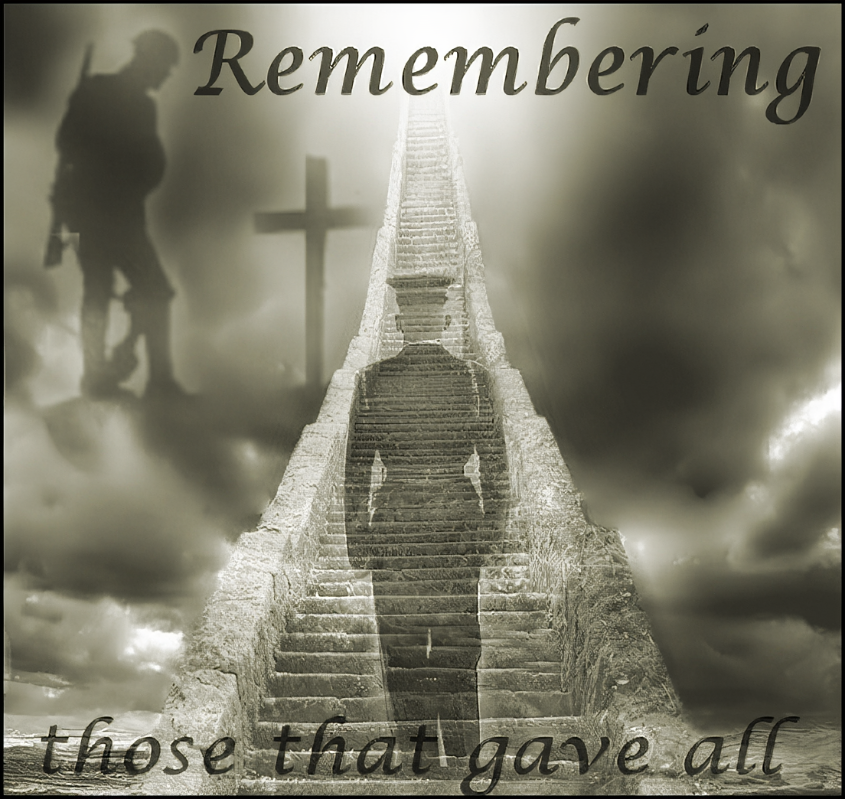
 Memorial Day is the day that we honor our fallen soldiers. Many people mistakenly think that it is a day to honor veterans and active-duty soldiers too, but it is not. This day is just for those soldiers who gave all…gave their lives for freedom. One that comes to my mind is my uncle, Jim Richards older brother, Daile Richards, who gave his life at Normandy, France. That operation was one of the most shocking attacks to me, because these men who “stormed the beaches of Normandy” were basically sitting ducks…or running ducks anyway. Their task was to leave the relative safety of the boats and swim to the beach. Then, they were to attack the strongholds there. The fatalities on that day numbered between 5,000 and 12,000. The discrepancy being those who were deemed missing. It was a horrible loss for the Allies, but it had to be done.
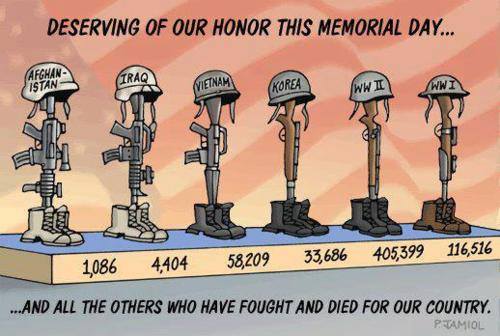
Those losses were in one battle alone. are just the tip of the iceberg, and the other losses are mind boggling to imagine. Nevertheless, every soldier that was lost in that battle or any other battle deserves our deep and abiding respect and appreciation for their sacrifice. They gave all…they gave their life, and if they hadn’t many more people would have been lost. We can never repay them or their families for their sacrifice, but we can forever remember what they did. Their sacrifice means everything in a war. Without that sacrifice, freedom is lost, and fear reigns. So, instead of saying Happy Memorial Day, I say thank you to the fallen soldiers and to their families.

