Family
 As unusual holidays go, I would say that “Cow Milked While Flying in an Airplane Day” is the most unusual I have ever heard of. Nevertheless, “Cow Milked While Flying in an Airplane Day” is a real thin. Observed on February 18th each year, this lighthearted holiday commemorates a unique moment in aviation and agricultural history when a cow named Elm Farm Ollie took to the skies. The event happened on February 18, 1930, when the Guernsey cow became the first of her kind to fly in a fixed-wing aircraft. During the 72-mile trip from Bismarck to Saint Louis, Missouri, she was also milked mid-flight, marking a second historical first for both animals and aviation. Why, you might ask, was this important. Well, it really wasn’t, except to show that it could be done.
As part of the International Air Exposition in Saint Louis, organizers chose Elm Farm Ollie, also known as Nellie Jay, for her calm nature and impressive milk production. She was loaded onto a Ford Trimotor, a sturdy aircraft nicknamed the “Tin Goose,” piloted by Claude Sterling. The flight aimed to promote the air show and showcase the stability and potential of modern planes for transporting livestock. I would hate to have been the poor maintenance guy who was given the unpleasant task of cleaning up after this crazy event.
Although the mission was largely a publicity stunt, it also had a quirky scientific angle. Researchers were  curious about how high altitudes and the vibrations of flight might impact a cow’s behavior and milk production. During the trip, Wisconsin dairyman Elsworth W Bunce did the milking, and Ollie yielded 24 quarts of milk. The milk was sealed in paper cartons, tied to tiny parachutes, and dropped from the plane to the crowd waiting below at the exposition. Of course, these days, such an event would be very unlikely, because the milk couldn’t be pasteurized or homogenized.
Nevertheless, this day celebrates the creativity and quirkiness that marked the early days of flight. In the 1930s, aviation was still new, and daring stunts like Ollie’s flight showed people that airplanes could be more than just risky machines…they could be reliable, adaptable tools. If a 1,000-pound cow could fly safely and calmly at high altitudes, then air travel was clearly dependable for almost any cargo or passenger. That success played a role in making air logistics a normal part of life.
The holiday is also a nod to the dairy industry and the resilience of farm animals. Elm Farm Ollie shot to national fame after her flight, earning the nickname “Sky Queen.” Thanks to the dedication of Wisconsin dairy fans, her story lives on, turning the anniversary into a day of celebration and historical appreciation. It’s a reminder that progress can stem from the most unusual experiments and that even the quirkiest ideas can change how people see the world. Elm Farm Ollie was a Guernsey cow known for producing rich, high-fat milk.

Famed aviator Charles Lindbergh was said to be among those who tasted the “air milk.” The Ford Trimotor used for the flight was considered one of the most dependable planes of its day. Ollie the cow lived another eight years on her farm after her brief brush with fame. To celebrate “Cow Milked While Flying in an Airplane Day,” one might enjoy a tall glass of milk or a milkshake in honor of the “Sky Queen.” Those near a dairy farm or aviation museum can take a more hands-on approach to the holiday, and some fans even throw small parties to share the tale of Ollie and her 24 quarts of milk dropped by parachute. For those who enjoy the creative side of the holiday, writing a poem or sketching a flying cow is a fun tradition. It’s a day for sharing laughs over one of history’s quirkiest milestones.

 Ahhh!! The aroma of freshly baked bread. It’s enough to make your mouth water. At least these days. Not so much in ancient Greece. Personally, I can’t imagine not enjoying the smell of baking bread, but in ancient Greece, I don’t suppose anyone took real notice of it. That’s because in those days, in Greece, bread slices were used only as napkins!! It seems incredulous, but due to the communal nature of their meals, where hands were used to eat that was exactly what bread was used for. The practice, called apomagdalia, involved tearing off small pieces of dough, rolling and kneading them at the table to clean fingers after a meal. Far from being wasteful, these used dough bits were often fed to dogs or tossed to the poor, who I’m sure were thankful, but…gross!! Nevertheless, the practice minimized waste and, it did feed the poor, so there is that. Eventually, someone decided to give the bread a try, I guess, because it later graduated to being eaten by the diners themselves, with added a sustainable layer to the dining ritual.
These days, we would think it rude to eat most foods with our hands, but back then it was uncommon to eat with utensils, and in fact there weren’t any utensils. Eating with your hand when it’s a hamburger or chicken wings seems normal to us, but to eat something like spaghetti or beef stew with your hands would be really messy. Nevertheless, if they wanted to eat, they made do. Later when the bread became a part of the meal, it was used to slop up any gravy or juice to clean up the plate. That practice has been seen in many a Western movie. I guess that as napkins go, bread was the tastiest, provided the cook knew how to make good bread.
Later, the Romans introduced cloth napkins, which eventually evolved into the modern version we use today. For a time, even before the napkin, the tablecloth was used as a communal napkin. That almost seems even 
 stranger to me. I love my tablecloths, and to think of people wiping their messy hands on them makes me cringe. Maybe I wasn’t alone in that thought. After all, the Romans decided on actual napkins and moved away from the tablecloth. In my opinion the best napkins are made of paper, then they don’t even require washing. And to bring the world bad to sanity, the bread is no longer used as a napkin, but rather as a food. Imagine getting up in the morning to bake bread, only to have people wipe their hands with it. That is a crazy idea.
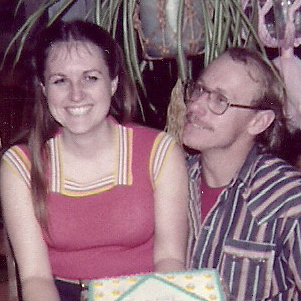
 Back in high school, I met the man who would become the love of my life. From that moment, I knew no one else could ever compare to him. Bob is my soulmate…the missing piece that makes me whole. I can’t imagine life without him. He’s the father of my children, my confidant, and, most importantly, my best friend.
Bob and I married young…I was almost 19, and he was 20. Many might say we were lucky, but honestly, it was hard work that helped us beat the odds. Marriage isn’t easy. When you’re young, it’s easy to believe it’s all hearts and flowers, but if you can’t handle the rough patches, those sweet moments won’t last. We’re both stubborn and hate to lose, and I think that determination carried us through the tough times. Eventually, it became second nature…we just knew our love would survive the hard days and endure through the years.
I can’t imagine how different life would be if we had never met, and I’m grateful I never had to find out. We’ve faced tough times, like the challenges of caregiving we’ve dealt with over the years, but I believe we’re exactly where we’re meant to be. If we weren’t together, I don’t know where those we care for would have been. You never really know how your spouse will step up to care for your parents until that moment arrives, and not everyone can manage that role for their own parents, let alone in-laws. I’m thankful Bob was there to grow old with me, and that I could be there for him through those hard moments.
So much has changed as we’ve grown from love-struck kids to parents and then grandparents. Looking back on 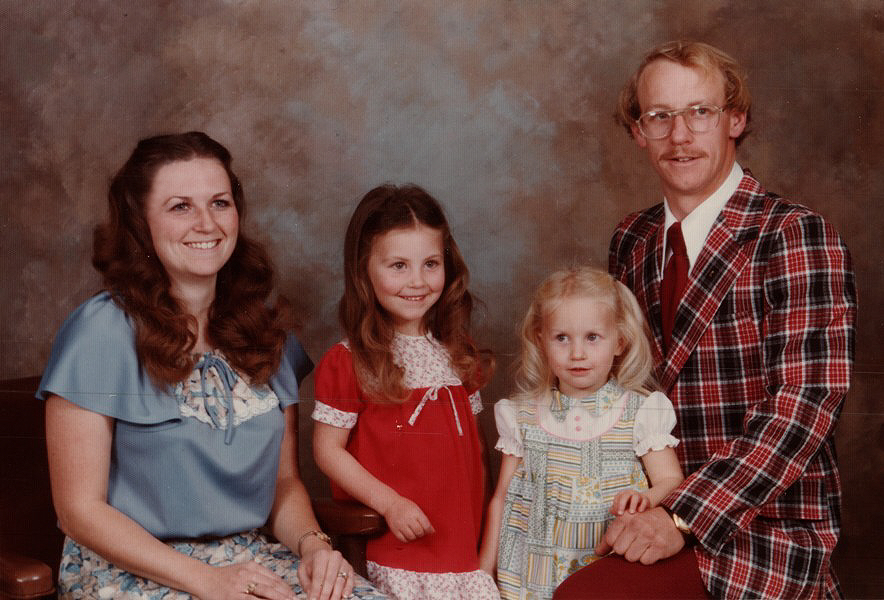
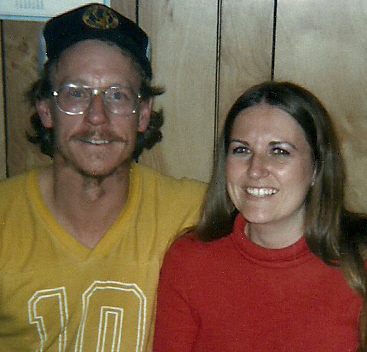 all we’ve shared, I realize that while there were challenges along the way, the richness of our life together far outweighs those brief, harder moments. I wouldn’t trade a single second for any other kind of life. I’ve taken this journey with the man I love, and I’m so thankful God brought us together. He knew what was best for us and that this would be the love of our lives. Happy Valentine’s Day, sweetheart!! Thank you for making my life’s journey so rich. I will always love you and thank God for you!!

 War is a terrible thing, but there are moments throughout history that show a side of war mixed with a bit of humanity…even when things are looking bleak. This happened with the Liechtenstein army. Liechtenstein is the fourth smallest country in Europe, and it is the sixth smallest country in the world. While the country would seem vulnerable, Liechtenstein has managed to stay neutral during many wars, even the two world wars. Interestingly, they didn’t even have an army when they banned the Nazi party from their country, having disbanded their army in 1868. It made sense, since their last deployment was in 1866. That task was to guard the Brenner Pass between Austria and Italy. That deployment was remarkable for many reasons, as they never lost a battle or suffered any casualties. While that was remarkable, even more remarkable was the fact that they left with a force of 80 men and returned with 81, having made a new friend while defending the pass. While it’s unclear who this person was, some say an Austrian liaison officer joined the group on the way back, while others claim it was an Italian farmer. It remains one of the most amusing historical tidbits ever.
The German Confederation dissolved in 1866, and due to its unpopularity and the rising costs of upkeep, Liechtenstein disbanded its 80-man army on February 12, 1868, declaring permanent neutrality. In 1893, former soldiers formed a veterans’ association, which had 141 members by 1896. The last surviving member, Andreas Kieber, passed away in 1939 at the age of 94.
Liechtenstein’s military history goes back to its earlier days as the County of Vaduz and the Lordship of Schellenberg. Once the country got rid of its army, it has never had one again. Still, the constitution requires citizens to defend the nation if there’s an external threat, and the army can be brought back if needed. What amazes me the most about this country without an army is that they stood up to the Nazis with no army. Far bigger nations fell to the Nazis, and they had an army too, but it didn’t matter. I suppose Hitler might have 
 decided that the tiny nation of Lichtenstein wasn’t worth conquering, but then again, it should have been easy to just incorporate it into his masterplan. Nevertheless, when the nation banned the Nazis, they left and that was the end of it. I don’t think it is often advisable for a nation to disband its army, but in this case, it has worked out fine.

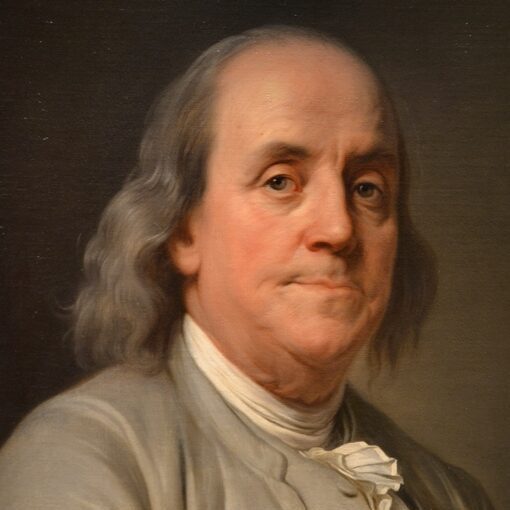 In this modern era, we take hospitals for granted, expecting to see at least one in every town of sustainable size. The first hospital in not only the Colonies, but in the Americas, is Pennsylvania Hospital, founded in 1751 by Dr Thomas Bond and Benjamin Franklin. Pennsylvania Hospital was founded to care for the sick, poor, and mentally ill who roamed the streets of Philadelphia. As the city grew rapidly, the need for organized medical care became urgent. Inspired by his time in European hospitals, Dr Thomas Bond imagined a place where anyone could receive medical help, no matter their financial means. In full agreement with Dr Bond, Benjamin Franklin, a well-known civic leader, played a key role in raising the funds to build the hospital.
The founding of Pennsylvania Hospital was a major milestone in the history of healthcare in the Americas. As the first institution devoted to caring for those in need, it set the stage for future medical facilities across the continent. Quickly becoming a beacon of hope, it offered everything from surgeries to mental health care and played a key role in shaping how healthcare was delivered in the United States. On May 11, 1751, the Pennsylvania legislature granted a charter to establish a hospital “to care for the sick, poor, and insane who wandered the streets of Philadelphia,” according to the history of Pennsylvania Hospital. Founded by Benjamin Franklin and Dr Thomas Bond, Pennsylvania Hospital has been the backdrop for many of the nation’s “firsts,” along with numerous other significant medical, historical, and cultural achievements. Chosen by Franklin and Bond, as the official seal was the story of the Good Samaritan. The seal reading, “Take Care of Him and I will repay Thee” ushers in a new attitude of social responsibility. In 1752, a temporary hospital is opened in a house on High (Market) Street and Elizabeth Gardner. A Quaker widow was appointed matron.
In 1755, Franklin wrote the inscription for the cornerstone of the East Wing, laid at the hospital’s current site at 8th and Pine on land the hospital purchased. Patients began being admitted the following year, in 1756. Over 
 the years, Pennsylvania Hospital has grown and adapted, staying true to its mission of offering accessible and fair healthcare. Its original values of compassion and innovation still shape the medical field today, highlighting the importance of caring for everyone in need. The Pennsylvania Hospital, founded in 1751, is known as the first hospital in the Americas, and it also set the stage for modern healthcare practices and institutions in the area.

 My sister, Allyn Hadlock is the youngest of my siblings, and very devoted to her family. Her kids can’t say enough complimentary things about their mom. Her daughter, Lindsay says, “Is she a great mom and grandma?! The best! We love her so much. She is always there for us-rain or shine! What a faithful example she is to us all. She loves the Lord and instilled that same love in us. That’s the greatest gift. One thing that she makes time for every weekday-is a morning phone call from Mackenzie. Mackenzie loves that special time to get to talk to her!” Allyn has spent time with Mackenzie in a “babysitting” capacity, although Mackenzie barely needs a babysitter anymore. Nevertheless, whenever Mackenzie’s parents, Lindsay and Shannon Moore have to go out of town, Allyn loads up her computer and makes the trip to Laramie, and they spend precious time together. Allyn’s ability to mover her virtual office to Lindsay’s house and to her daughter, Jessi Sawdon’s house in Cheyenne when the girls need a babysitter for their daughters Mackenzie and Adelaide had been a great blessing. Sometimes travel without the kids in needed, and having a caregiver available is wonderful.
Allyn’s daughter Kellie Thompson says, “She is the best mom in the world!! She is always taking care of 
 everyone and making sure we have what we need!! She spent so much time during the wedding (Kellie and husband Tim Thompson were married June 28, 2025) making sure that the flowers and decorations were perfect! She was always right there helping me pick everything out and making me feel so incredibly special! She wanted me to have EVERYTHING I wanted! She is hilarious and kind and generous 24:7 and that’s an understatement! She is so excited about baby girl Thompson (due June 8, 2026) and helping me and giving advice and being there for me every step of the way and I couldn’t ask for a better mom, role model and friend! She is so strong in her faith, and she has made sure that she is creating a legacy of faith our entire lives!” The planning of Kellie’s wedding, and the wedding of her other children was a special time in Allyn’s life. She has fully enjoyed every part of her children’s lives, with weddings and babies the highlights.
Allyn’s husband, Chris Hadlock decided to take Allyn on a wonderful birthday vacation to Marco Island, Florida, and they have had an awesome time. They stayed at a beautiful hotel on one of the upper floors, so they had an amazing view of the water. They took several walks along the beach, enjoying the abundance of seashells 
 that washed up with every tide and the sunsets in the evenings. They took an airboat ride through the Everglades, and saw lots of wildlife, birds and of course, alligators. Then they went through Fort Meyers and saw some of the remaining hurricane damage. That was sad. They took a shelling, birding dolphin boat tour and especially enjoyed the way the dolphins “played” with the boat. The hotel even had a Superbowl Party, which was fun…even though their teams weren’t playing. They even played some miniature golf. They enjoyed the trip immensely, and I’m sure they wish it could last a bit longer, but they head home tomorrow, after a great birthday week. Today is Allyn’s birthday. Happy birthday Allyn!! Have a great day!! We love you!!

 My grandnephew, Jake Harman has always been a “big kid at heart” as his wife Melanie told me…not that she had to tell me that. Anyone who knows Jake knows that about him. Jake loves playing with his babies, Alice, Izabella, and Jaxx, as well as his nephew, Nathaniel all the time! Jake can often be found tossing the children around, chasing them, and making them giggle and scream with happiness. Melanie tells me that he is an amazing dad and uncle, and “loves them all with his whole heart.” I think anyone who knows him knows that is true. Jake is the kind of “kid at heart” dad who doesn’t mind the fact that “peace and quiet” rarely prevail in his home.
Of her husband, Melanie says, “He is an amazing husband that  reminds me every day of how beautiful I am and how much he needs me and loves me. I couldn’t ask for anything better than this man that I have now in my life. I love his excitement with certain games he gets and plays or when he gets a new sword or an ax of some kind to add to his collection! His imagination is so amazing, and I love how he comes up with songs and stories that he loves to tell me! It’s truly amazing to be around him and watch him every day! And every day I do it with a smile in my heart!” I couldn’t have expressed her feelings anywhere near as perfectly as Melanie did, but then Melanie knows Jake better than anyone on Earth, and she loves him forever and always.


Jake always seems to be the face of positivity. No matter what things are going on in his life, he stays positive. When Jake and his sister, Siara Kirk were little kids, he was always there for her. They were the best of friends, and while they are both married now…to their best friends, they are also best friends with each other too. That is something that will never change. Jake was always protective of his little sister, and now he is the same way with his nephew. Jake is a very family-oriented guy, and the love he feels for his family runs deep. He has grown into a great man, and his family is very proud of him. Today is Jake’s birthday. Happy birthday Jake!! Have a great day!! We love you!!
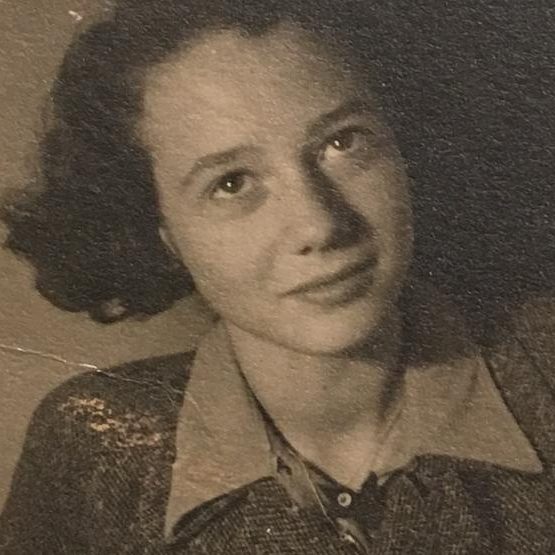 Imagine living in a place where owning or even borrowing a book could get you—and anyone who gave you one—killed. During the Holocaust, Jews and other nationalities or religious groups who didn’t fit the Nazi ideal of the Aryan race were considered “non-people” and therefore expendable. They weren’t allowed to live like others, and their lives were deemed unworthy of care. Friends and neighbors were often expected to turn them in to be deported to ghettos or even killed. They were frequently powerless to help themselves, yet many never lost hope. When the Nazis occupied Czechoslovakia in 1939, persecution of Jews began almost immediately. Life was hard for everyone, but children were often in greater danger than anyone else. Many were too young to work, making them even less “important” in the eyes of the Nazis. To make it worse, they were often separated from their parents, losing everything familiar to them.
In 1942, 13-year-old Dita Polachova and her parents were deported to the Theresienstadt Ghetto, where life became even harsher. Later, they were sent to Auschwitz, where Dita’s father died. She and her mother were forced into labor in Germany and eventually sent to the Bergen-Belsen concentration camp, where her mother also died. Despite enduring immense loss, Dita never gave up. She risked her life to protect eight books smuggled in by Auschwitz prisoners, hiding them in her smock and circulating them among the children in Block 31. Books were forbidden in the camps, as the Nazis sought to deny prisoners any knowledge of the outside world or access to educational materials. Believing the prisoners would not survive, the Nazis saw no need for them to have anything but work and death.
The prisoners had their own ideas. Inside the walls was a family camp called BIIb, where children could play and sing, though schooling was forbidden. Still, the Nazis couldn’t completely impose their will. Defying orders, Fredy Hirsch set up a small but impactful school to care for the children while their parents labored in the camp. The biggest challenge was finding materials—books had to be hidden from Nazi guards at all costs. In January 1944, Hirsch chose Dita, a courageous and independent young woman from Prague, to become the new Librarian of Auschwitz, a role she embraced with great dedication.
While her parents struggled to survive in Auschwitz, Dita fought her own battle to protect the books that brought joy to the camp’s children. These books offered a brief escape from the grim reality surrounding them. As the war went on, Dita continued to serve the teachers and children of Block 31 with dedication. Her situation worsened when her father died of pneumonia in the camp, leaving her alone with her aging, weakening mother. Realizing the camp was merely a front for Nazi propaganda, Dita battled despair and questioned the value of 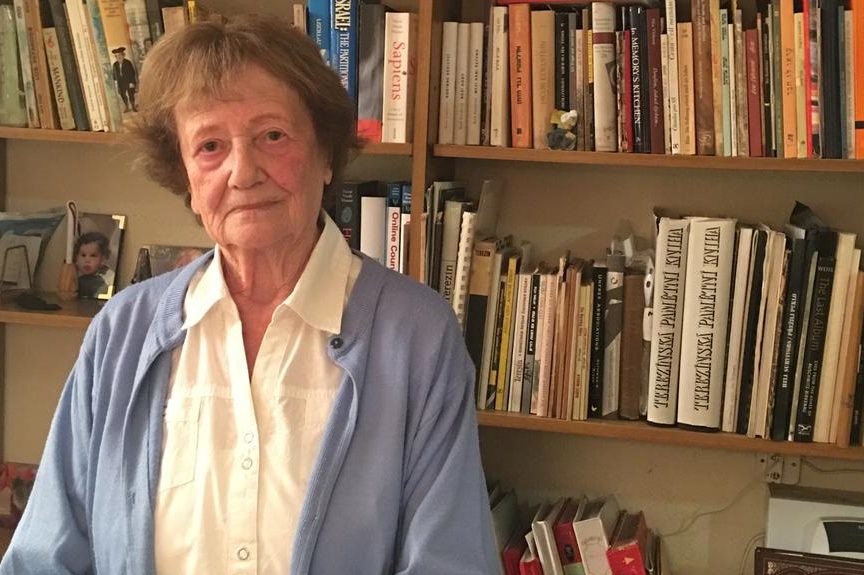 her life. By March 1944, hopelessness deepened when the Nazis announced that inmates from the previous September would be transferred—code for execution. The BIIb camp continued until news broke of its liquidation, with the healthy separated from the rest. Liesl, Dita’s frail mother, narrowly managed to sneak into the group deemed fit to work alongside her daughter, and they were sent to Bergen-Belsen. Just as Dita felt the end was near, Allied forces liberated the camp, but it was too late for her mother, who died shortly after the English arrived. Though free at last, Dita paid a heavy price—one most can hardly imagine. She later married author Otto Kraus, and together they settled in Israel as teachers.

 As the British found out, it’s never a good idea to antagonize the people of the United States of America…and while it’s a bad idea to antagonize us, it’s an even worse idea to underestimate us. On February 7, 1775, in London, Benjamin Franklin published “An Imaginary Speech” defending American courage. His piece aimed to respond to an unnamed officer’s remarks to Parliament, claiming the British had nothing to fear from the colonial rebels because “Americans are inferior to the people of this country [Britain] in devotion to women, in courage, and worst of all, they are religious.” Apparently, according to that officer, being religious was a “sign of weakness.” It was a statement he would come to regret. Benjamin Franklin was a Pennsylvania scientist and diplomat who went on to sign both the Declaration of Independence and the Constitution.
In anger, Franklin met the three-pronged critique with his trademark wit and sharp insight. Observing that the colonial population had grown while the British population had shrunk, he quipped that American men must be more “effectually devoted to the fair sex” than their counterparts across the Atlantic. When it came to American courage, Franklin told a story from the Seven Years’ War in which colonial militias heroically saved blundering British regulars from strategic mistakes and cowardice. With poetic flair, Franklin proclaimed, “Indiscriminate Accusations against the Absent are cowardly Calumnies.” In reality, these militias were often undisciplined and ineffective early in the war. New Englanders, unused to taking orders and unfamiliar with the basics of military life, made themselves sick by refusing to build latrines, falling ill from their own waste. During the American Revolution, Washington echoed many of the same frustrations voiced by British officers as he tried to shape American farmers into an effective fighting force.
Benjamin Franklin was not a religious man, but he set aside his own dislike for the devout things and reminded his readers that it was the “zealous Puritans who had rid Britain of the despised King Charles I.” He figured his 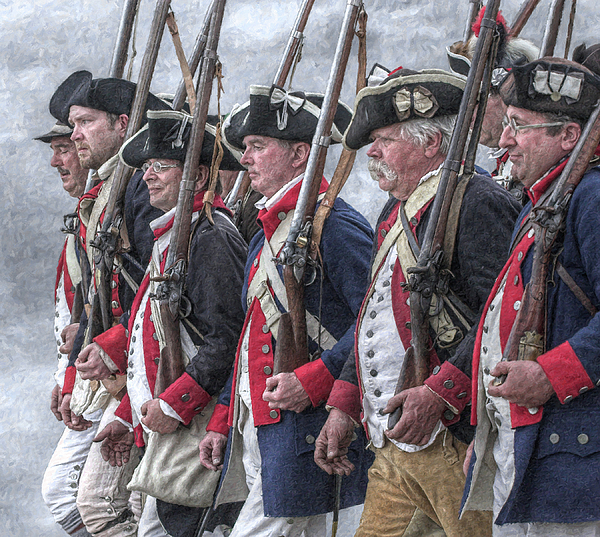
 critic was a Stuart sympathizer…meaning Catholic…and therefore not particularly fond of American Protestants, “who inherit from those ancestors not only the same religion, but also the same love of liberty and spirit.” While Franklin didn’t always agree with the American Protestants, he knew well the value of the American spirit that would never allow the British to continue to run roughshod over the colonies. The American people were done with Britain, and the Revolutionary War would prove that fact conclusively.

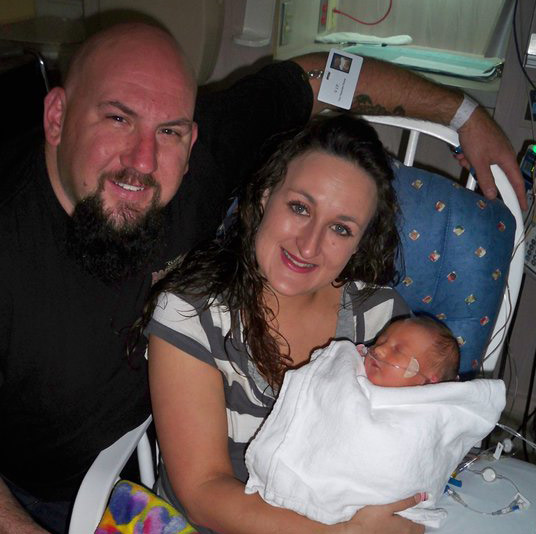 My niece, Jenny Spethman is a wonderful girl who has been through much in her life, and yet has come through it all, a little worse for wear, but stronger than ever. Of course, Jenny’s strength didn’t come just from herself. Mostly, it came from her devotion to God, who has taken her through the difficult loss of her older daughter, Laila from a heart defect just 22 days after her birth. Her devotion to God brought her husband, Steve Spethman, into her life. Steve was a gift from God, and she a gift from God to Steve. Theirs was a marriage made in Heaven. Together, Jenny and Steve sloshed their way through the loss of their daughter…and it was like sloshing through quicksand, but they hung onto each other and to God, and they came out the other side. No, they will never stop missing sweet Laila…until they are reunited in Heaven, that is, but they have been strong for each other and in their faith.
Jenny loves to get up very early in the morning. She watches the sunrise or looks at the pre-dawn sky, often catching great pictures of both and of the moon. But most of all, the early morning hours are her time with the Lord. Her study and worship time have yielded many scriptural revelations, that she has so graciously shared with her mom, Cheryl Masterson and her aunts Caryl Reed, Alena Stevens (before she went to Heaven earlier this year), Allyn Hadlock, and me. These have been blessings of the greatest kind and blessings we will cherish always. Jenny has such a sweet and kind spirit. It’s no wonder everyone loves Jenny. She is so loved, in fact, that when she is work as a runner in the law firm where she works, all her coworkers would love to have her stand and visit on her runs, but Jenny is also very ethical and responsible, 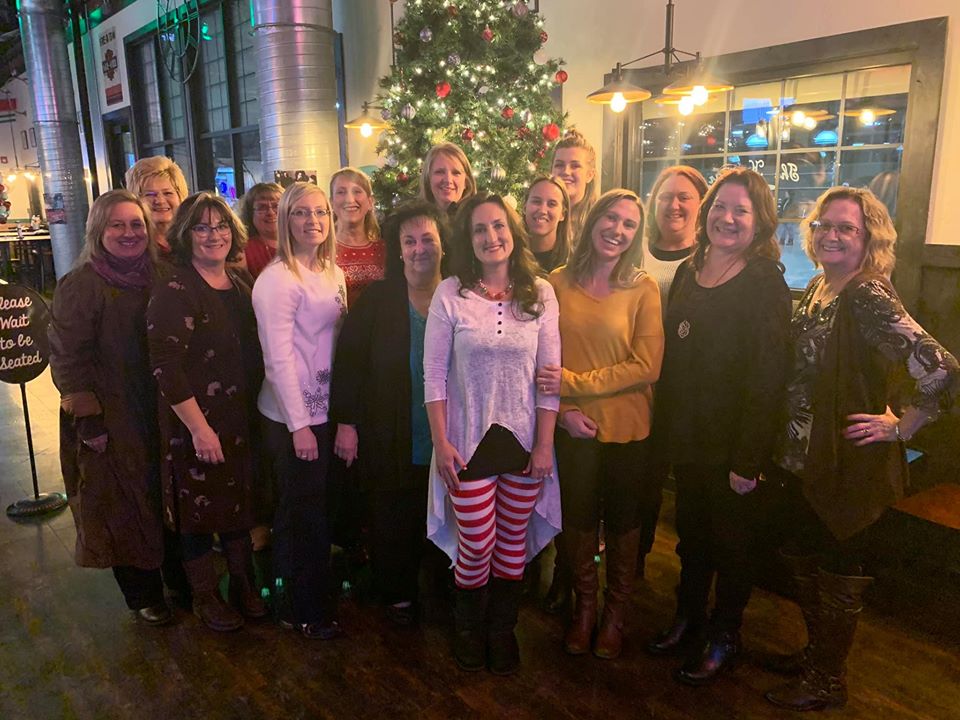 and she keeps the chatter to a bare minimum. They understand, of course, but they do enjoy visiting with her whenever they get a chance.
Jenny loves her job as a runner, because it gives her the chance to take a walk during working hours. How many people get to do that? She runs paperwork from the firm to the courthouse, and that is vital work. The attorneys don’t have time to deliver the documents to the courthouse, and some things must be original. Faxing is out of the question. Jenny’s work is a vital part of the day-to-day operation of the firm…and she loves it. Today is Jenny’s birthday. Happy birthday Jenny!! Have a great day!! We love you!!

