Family
 On February 26, 1938, the explosive situation that had been brewing finally blew up, resulting in the National Dollar Stores Strike in San Francisco’s Chinatown. The three-month strike delivered a win for workers and became the neighborhood’s first major organized labor dispute. The whole thing really started when the 1906 earthquake destroyed the city and plans to rebuild didn’t include a place for Chinese immigrants. Faced with the prospect of resettling to Oakland, Look Tin Eli employed white architects to create an even grander Chinatown.
In 1938, the garment industry represented the primary source of employment within San Francisco’s Chinatown. The majority of garment factories in this area were not unionized, due in part to longstanding tensions between American labor unions and Chinese workers. By the 1930s, however, organizations such as the International Ladies Garment Workers Union (ILGWU) began to recognize the significant benefits of organizing Chinese American workers. Employees in Chinatown’s garment factories typically received low wages and worked extended hours.
Sue Ko Lee, a buttonhole operator at National Dollar Stores earning 25 cents an hour, helped unionize her coworkers as part of ILGWU Local 341. After bilingual negotiations, Local 341 reached a preliminary deal with National Dollar Stores for better wages and shorter hours. Joe Shoong, who was the owner of National Dollar Stores and described by “Time” magazine as the top Chinese businessman in the US, sold his factory to his managers on February 8, 1938. Workers, including Sue Ko Lee, suspected this move was to sidestep previous agreements. This caused Local 341 began their strike on February 26th. 
The workers explained that the main concern during this strike was whether Chinatown workers would have jobs or lose their sources of income. A total of 159 women garment workers protested at three National Dollar Store locations in San Francisco, calling for better wages and improved working conditions. After fifteen months, the Chinese Ladies’ Garment Workers’ Union reached an agreement with their employer. They achieved important wins, such as a 5% pay increase, a 40-hour work week, and stronger enforcement of health and safety rules. The women simply couldn’t accept anything less. In the end, I think they would have had to choose full job loss over the way their workplace had been running prior. Their very lives depended on it.

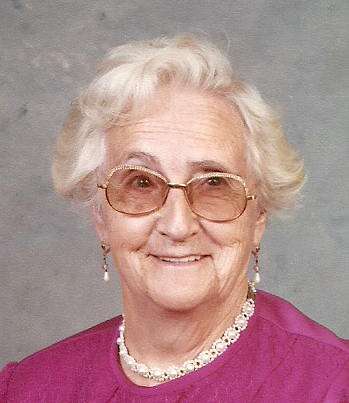
 My grandmother, Harriet “Hattie” Byer was a woman of small stature…she stood just 5 feet…in her “tall” days…more like 4 feet 10 inches or less in her later years. While she was definitely short, Grandma was, nevertheless, feisty!! Every one of her children knew that their mom could take them to the floor in one fail swoop if the crossed her. She was the family boss, and they needed to toe the mark. It wasn’t that Grandma was mean, because she was one of the most loving moms you could have ever known. Her children knew that she loved them unconditionally, but they also knew that she expected them to mind her and be well behaved.
That carried on to her grandchildren as well, which is where I came into the story. I was one of her many grandchildren. While some of her grandchildren…especially the boys, crossed her a number of times, I can only remember one spanking…and one was enough. I knew that I didn’t 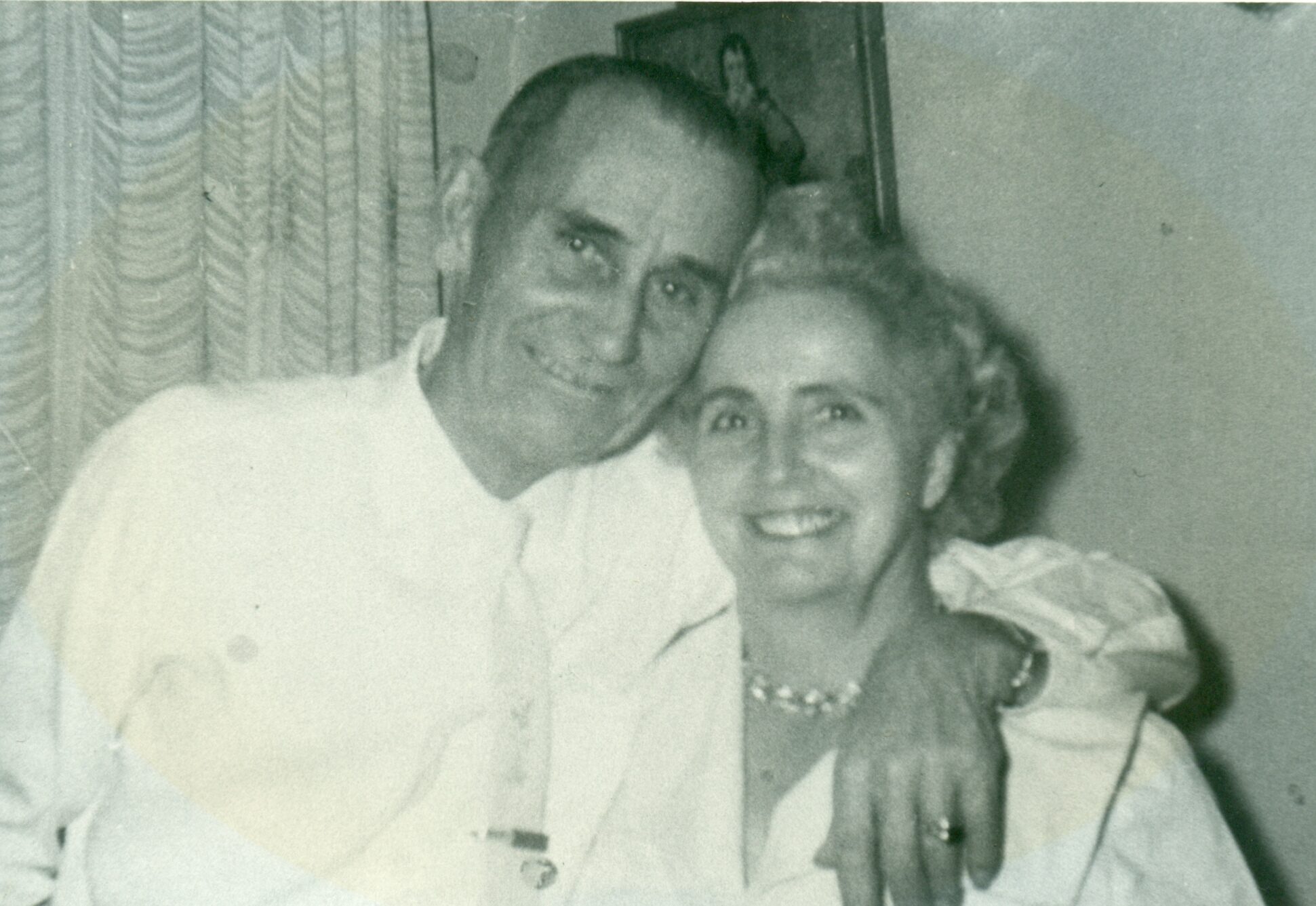 want to sass Grandma again. Some of the boys…I was the only girl in the group of four grandchildren who were around my age, so I got to hear about some of the antics of the boys and the repercussions of my grandmother. They told me about the broom that somehow reached around the corner and got you as you ran away. The way she could somehow see through the floor to the basement. The bar of soap conveniently placed in their mouths for saying “bad” words. While the antics of the boys made me feel like “amateur night” because I wouldn’t have dared to pull the things they would, I must say that I got a kick out of the stories they told. I couldn’t believe the nerve of them, but I guess that is boys. They pushed her buttons quite a bit further than I would have. These days, I think it’s just funny, but as a kid, and one of five daughters of my parents, the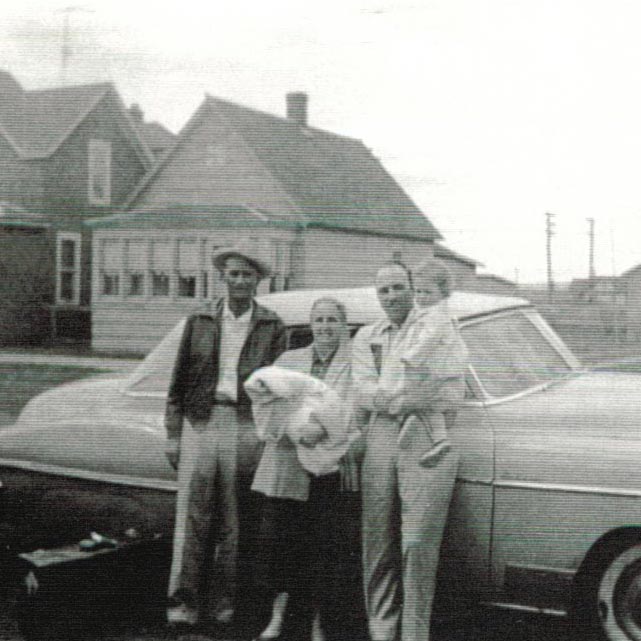
 antics of boys were not in my wheelhouse. These days as the grandmother and great grandmother of boys and only two girls, I understand boys much better than I used to. In fact, I can see my grandsons and even the great grandsons pulling some of the stunts my cousins used to. None of them were really “bad” boys, just mischievous boys. And these days, it makes me laugh to see the similarities to my cousins. They probably drove Grandma half crazy. Nevertheless, she loved each and every one of them. Today is the 117th anniversary of my grandmother’s birth. Happy birthday in Heaven, Grandma Byer!! We love and miss you very much!!

 Thomas Davenport was a Vermont blacksmith. He was born in Williamstown, Vermont on July 9, 1802, the eighth of 12 children, to Thomas Sr and Mary Davenport, who were poor farmers. At 14, he began a seven-year apprenticeship with a local blacksmith. In return for his work, Thomas learned the trade and was given six weeks each winter to attend school. He lived much of his life in Forest Dale, a small village in the town of Brandon.
Though he had humble beginnings, he went on to do great, but somehow long forgotten things. As early as 1834, he and his wife, Emily (nee Goss) Davenport developed a battery-powered electric motor. They used it to run a small model car on a short track, setting the stage for the later electrification of streetcars. It was the first attempt to apply electricity to locomotion. In 1833, Davenport visited the Penfield and Taft iron works in Crown Point, New York, where an electromagnet based on Joseph Henry’s design was in operation. Inspired by what he saw, he bought one from the factory and dismantled it to understand its workings. He then crafted a better iron core and rewired it, using strips of silk from his wife’s >wedding gown. Now, all I can say is that his wife must have really loved him, or she was as crazy as he must have been, because most women would not appreciate having their wedding gown cut up to be used as insulation for wiring. Nevertheless, she is listed as a contributor to the  project. I don’t know if that means scientifically, or if it was to appease her for allowing the dress to be cut up.
In 1837, Davenport, along with his wife Emily and colleague Orange Smalley, received the first American patent for an electric machine, US Patent Number 132. Just a few years later, in 1840, he published The Electro-Magnetic and Mechanics Intelligencer, the first magazine ever printed using electricity.
In 1849, Charles Grafton Page, the Washington scientist and inventor, commenced a project to build an electromagnetically powered locomotive, with substantial funds appropriated by the US Senate. Davenport challenged the expenditure of public funds, arguing for the motors he had already invented. Page defused that objection by publishing a statement about his unique device. In 1851, Page’s full sized electromagnetically operated locomotive was put to a technical test on the rail line between Washington and Baltimore. The project hit more snags. Low on funds, Page asked for more money. In the summer of 1850, Benton told the Senate that Page had achieved a force ten times greater than his early battery tests. Benton then pushed for funding to let Page build an electromagnetically powered warship. This request met strong resistance. Senator Henry Stuart Foote argued Page hadn’t shown real progress or benefits, while Senator Jefferson Finis Davis opposed giving government money to one inventor when others, like Thomas Davenport, got nothing. Both the Senate 
 and House denied further funding. To get the locomotive ready for its 1851 trial, Page went over $6,000 into debt. After the trial failed publicly, the press was harsh, and with no financial backing, Page was left in dire straits both financially and emotionally…leaving Thomas Davenport as the real sole inventor of the successful electromagnetically powered locomotive, and yet it is Page who is recognized for that invention.

 It was a place no one wanted to go…but no one who went there was given a choice. On February 24, 1864, when the first Union prisoners arrived at Andersonville prison, it was still under construction in southern Georgia. Before long, the prison went from brand new to infamous, as nearly a quarter of its inmates died while in captivity. No wonder it was a place no one wanted to go. The warden, Henry Wirz, was at the top of the “problem list.” Wirz was executed after the war for the brutality and mistreatment that occurred under his watch. His methods of abuse of prisoners were absolutely horrific.
Camp Sumter, better known as Andersonville, was built after the prisoner exchange system between the North and South broke down in 1863 over disputes about the treatment of Black soldiers. Thrown together quickly using slave labor, the stockade sat in the Georgia woods near a railroad but far from the fighting. Covering 16 acres, it was meant to have wooden barracks, but skyrocketing lumber prices stalled construction, leaving Union prisoners under the open sky in makeshift “shebangs” cobbled from wood scraps and blankets. A nearby stream started out as their water source, but within months it was fouled by human waste.
Andersonville was designed to hold 10,000 men…a shockingly large amount. Nevertheless, within just six months, over three times that number were crammed inside its walls. That was the least of the problems Andersonville Prison had. The prison soon became famous for its extreme overcrowding, lack of supplies, and staggering death toll. From February 1864 to May 1865, around 45,000 Union soldiers were confined there, and nearly 13,000 died from disease, malnutrition, and exposure. In fact, over 100 men died each day during the worst periods. By 1890, fewer than 1,000 survivors remained. Andersonville prison camp was one of the grimmest places of the American Civil War. Erosion along the creek banks created a swamp that took up much of the compound. Food rations were scarce, and at times, half the prisoners were sick. Some guards mistreated inmates, and there was frequent violence between different prisoner groups. The story of Andersonville is a 
 stark reminder of the human cost of war and the resilience of the human spirit in the face of some of the most overwhelming hardships. Andersonville stood out as the worst of the many grim Civil War prisons on both sides. Wirz ultimately faced the consequences for the cruelty there, being executed after the war ended.
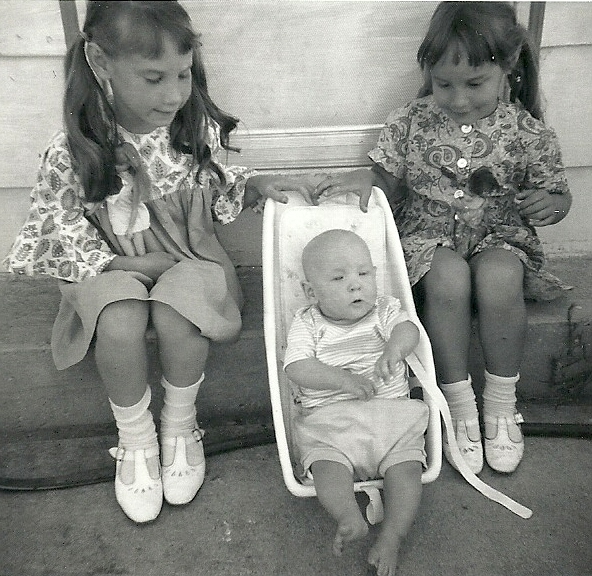
 Whenever two girls get a new baby brother, you end up with two little mothers in training. They want to be part of everything, even if they’re only five and seven years older than him. In fact, that age gap might make them even more eager to show off their “skills.” Younger sisters might not pay much attention to a baby brother, but once they start feeling grown-up, they want the world to notice. As for that little brother…well, he can count on years of being bossed around by those sweet, innocent-looking, bossy mommies in training. That’s exactly the world my brother-in-law, Ron Schulenberg, was born into. Those first couple of years were probably bliss, with his big sisters cuddling and doting on him, but once he hit the toddler stage and the terrible twos arrived, those loving big sisters became just as bossy as they could be.
I first met Ron when I started dating his older brother, Bob, and it was clear he had a knack for being in the  wrong place at the wrong time, doing the wrong thing…especially when it came to his older sisters, Jennifer and Brenda, with Marlyce and Debbie in full agreement. Boys will be boys, but their sisters were never amused. I lost count of how many times Jennifer and Brenda told him to “knock it off and behave.” He’d just be trying to show off for company, and those big sisters would embarrass him without hesitation! Still, there were good times too, when they’d include him in their activities and everything would be great again…otherwise, he might not have liked his sisters much at all.
It was lucky for Ron that he had a big brother among his four older sisters, one who didn’t mind hanging out with his little brother, even on a date. Bob had spent his whole life with two older sisters and quite a while with two younger ones, so he knew exactly what sisters were like. Naturally, he sided with his little brother…guys have to stick together, right? After all, it was four against two, and those were tough odds. And for Ron, there was the added insult of always being the baby brother, even at the grand old age of five. Four sisters and two macho brothers…you get the idea.

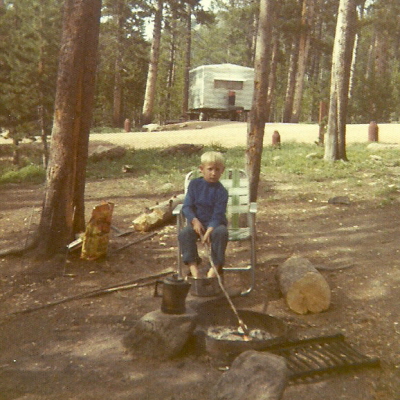
The good news is that Ron grew up, and like most siblings, age brought friendship. His sisters realized how handy he was to have around, especially when they needed a helping hand. Ron’s a talented mechanic and pretty skilled with carpentry tools too, so whenever something needs building, he’s the go-to guy. He’ll always be their baby brother, but we all agree he’s far from a baby now…in fact, the youngest is the tallest! Maybe that was for self-defense, who knows. Today is Ron’s birthday!! Happy birthday Ron!! We love you!!

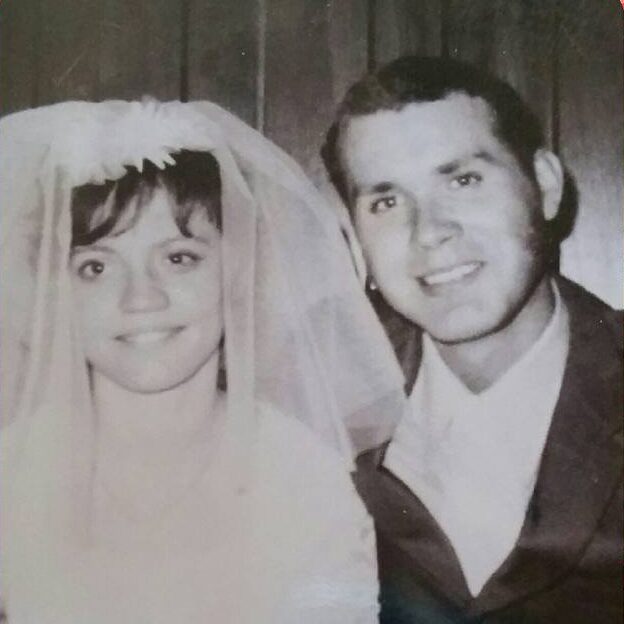 My sister-in-law, Debbie Cook, has been a part of my life since we met at work. We were both working at Kmart, and I had a display near the deli, where she worked. We started talking and before long became friends. Then I met her brother, who would become my future husband, and our friendship was sealed in a different way. We became sisters-in-law, as well as friends. We served as maid-of honor and matron-of honor in our weddings, and our lives have been intertwined ever since. Sometimes meeting a friend in your high school years, can make the friendship short-lived, or the friendship can later become an acquaintanceship instead of a friendship. And sometimes while the friends remain friends, time and distance can reduce the amount of time spent together. It’s not often that your kids become cousins and that you remain friends for life.
Nevertheless, that is what happened for Debbie and me. We don’t live in the same town anymore, and yes 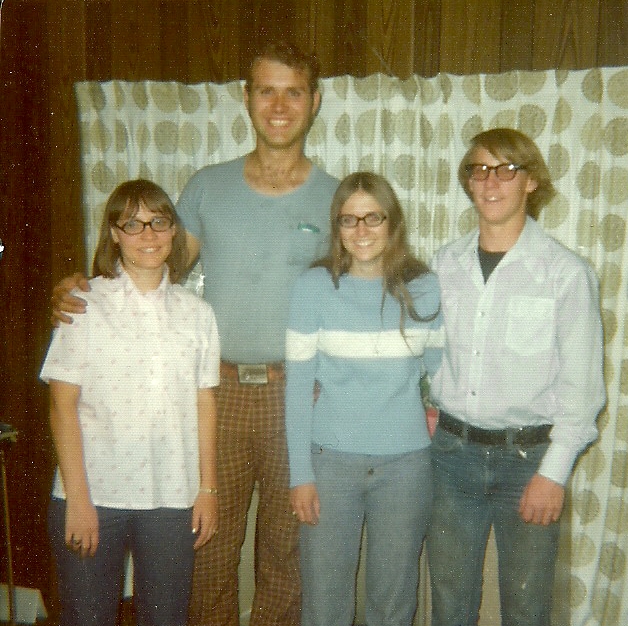
 there is some time and distance, but sisters-in-law have a different connection than friends, so we still share many things. We both had daughters, and while Debbie and her husband, LJ lost their middle daughter, we both raised two daughters to adulthood. Of course, there have been differences, but we have both been married just over 50 years. She and LJ celebrated their 51st on June 8, 2025, while Bob and I will celebrate our 51st on March 1, 2026. It has been a long and happy friendship/sistership.
Life has taken us in different directions and down different roads, but we are still sisters-in-law, and really sisters. You don’t spend more that 50 years as family, and not become sisters, even if not by birth. Through the 
 years we have shared the ups and downs of life in the same family. The loss of loved ones, the birth of new life, and the addition of new members through marriage. Every one of these life-events served to make us more than sisters-in-law. There will be other changes to come. Some of the changes are some we wish would not come, but they will come anyway. They are the kind of changes we don’t want to talk about or even think about. Through it all, we will remain not only sisters-in-law, but friends. Today is Debbie’s 73rd birthday. Happy birthday Debbie!! Have a great day!! We love you!!
mom
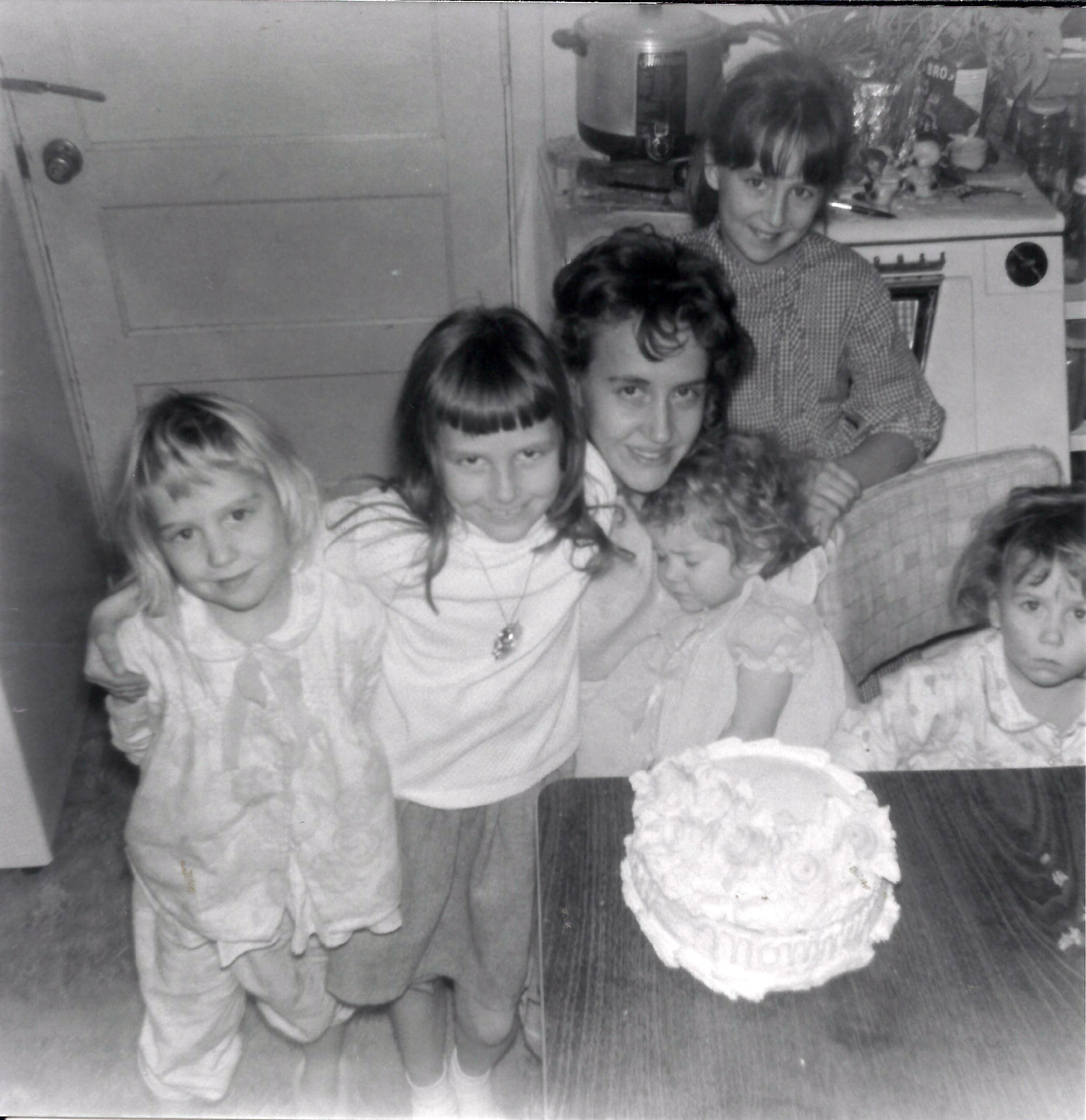 As another year passes, I find myself thinking a lot about my mom. It seems impossible that she has been living in Heaven for eleven years now. I know that, at some point. most people outlive their parents and go on to live the rest of their lives without them, but you are simply never ready for that day to arrive. You don’t want that day to arrive. And when it does, you are sure it must be a nightmare. Loving
  parents should be in your life well into your 70s anyway, but that was not to be.
Mom was a deeply devoted Christian who worked hard to learn and live by God’s ways and His Word. As I walk my own path with the Lord, I often think about all the people she inspired to give their lives to Him. My parents were strong spiritual leaders; they didn’t travel the world preaching, but they spoke to those around them, and their clean, upright lives spoke volumes. After Mom’s funeral, I was amazed by how many people shared how my parents had touched their lives. In their quiet, humble way, they drew many hearts to the Lord.
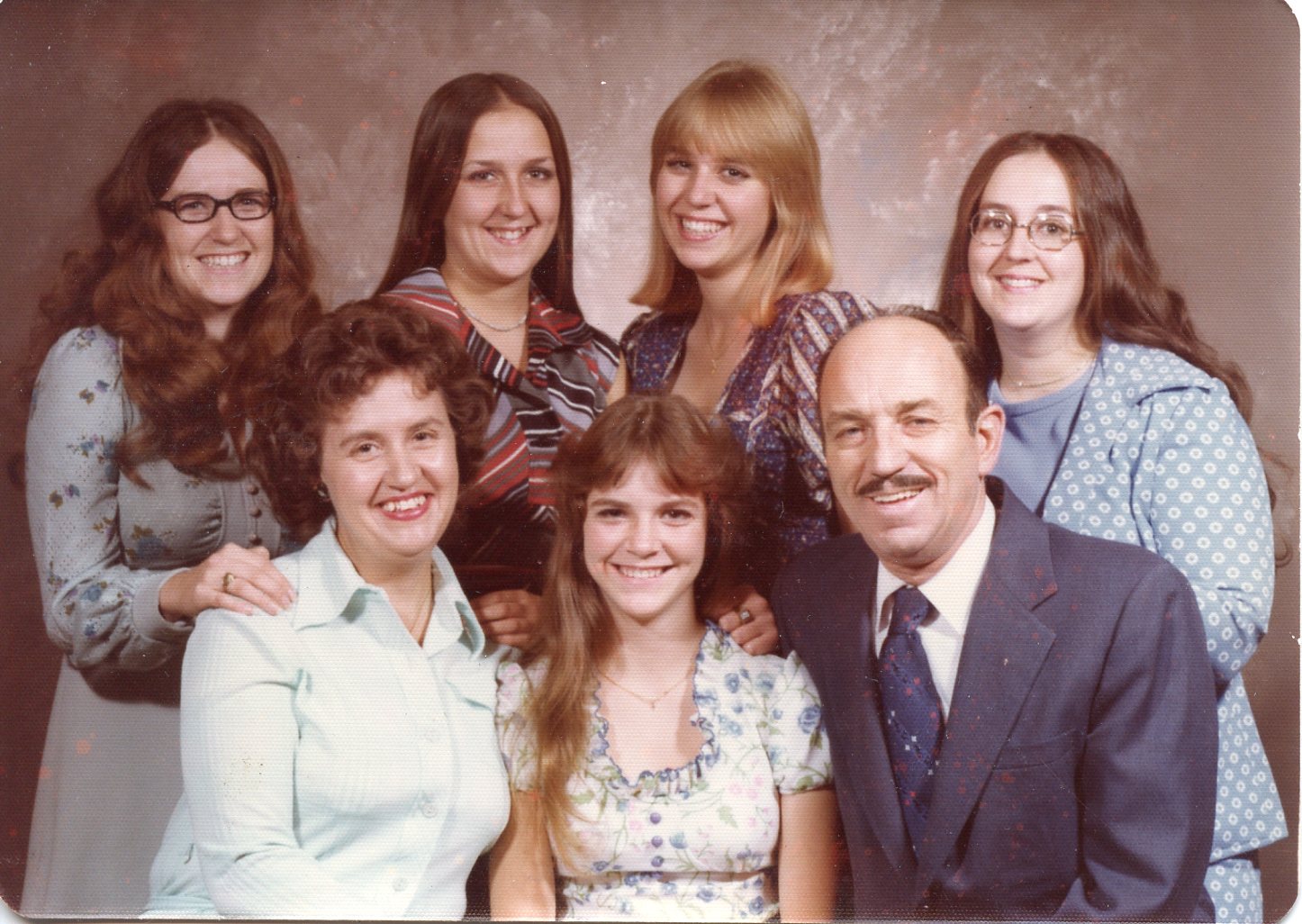
Mom was also a fun-loving and really goofy woman. She did her very best to make our lives happy and full of God’s joy. She sang to us, cheered us on, comforted us, and encouraged us. We never doubted her love for us. I miss my mom every day, and I know that I will see her again when I go to Heaven. Still, I can’t say that makes it any easier to think of eleven years without her. She will always be in my heart and on my mind. I love and miss you so much, Mom, and I’m thankful that you are in my future.

 On the morning of February 21, 1916, at 7:12am, a shell from a German Krupp 38-centimeter long-barreled gun, which was one of more than 1,200 weapons aimed at French forces along a 20-kilometer stretch of the Meuse River, hit a cathedral in Verdun, France. It is unknown if this was their target, but the destruction set off a chain reaction that marked the start of the longest battle of World War I. The Battle of Verdun was a grueling fight that would last 10 months. The war in France, in early 1916, stretching from the Swiss border to the English Channel, had turned into the treachery of trench warfare. While the conditions were harsh, Erich von Falkenhayn, the German army’s chief of staff, believed the path to victory wasn’t through battling Russia in the east, but by defeating the French in a decisive fight on the Western Front. So, they would just have to persevere in the trenches.
In December 1915, Falkenhayn persuaded the kaiser that despite opposition from other military leaders like Paul von Hindenburg, pairing unrestricted submarine warfare at sea with a major French defeat on land would drive the British, whom he considered the strongest of the Allies, out of the war. Falkenhayn’s planned offensive targeted the fortress city of Verdun, located on the Meuse River in France. Verdun was chosen not only for its symbolic value…it had been the last stronghold to fall in the Franco-Prussian War of 1870, but also because it could be attacked from three sides, making it a strategically appealing objective. In 1915, despite warnings about a possible German attack in the area, the French command began pulling heavy artillery from Verdun, a key element in defensive warfare. They chose instead to focus on an offensive strategy crafted by General Ferdinand Foch, head of the army’s prestigious War College, known as Plan XVII. As a result, when the Germans launched their attack on February 21, the French were caught largely unprepared.
Right from the start, the Battle of Verdun caused massive losses for both sides. Falkenhayn openly admitted that his goal wasn’t to seize the city quickly, but to wear down the French, even if it meant higher German casualties. Just four days into the bombardment along the Meuse, French front-line divisions had lost over 60 percent of their troops, with German losses nearly as severe. After some rapid German territorial advances, the battle ground to a halt, with heavy casualties piling up on both sides. The newly promoted French commander, Henri-Philippe Pétain, was set on dealing maximum damage to the German forces, famously vowing to his commander-in-chief, Joseph Joffre, “They shall not pass.”
By mid-1917, German forces were under intense strain, facing both a British-led push along the Somme and Russia’s Brusilov Offensive in the east. In July, the kaiser, frustrated with the situation at Verdun, replaced Falkenhayn, sending him to lead the 9th Army in Transylvania, while Paul von Hindenburg stepped into his role. Earlier in April, Petain had been succeeded by Robert Nivelle, who by early December had successfully led the 
 recapture of much of their previously lost ground. Between December 15 and 18, the French captured 11,000 German prisoners, and on December 18, Hindenburg finally halted the German attacks after ten exhausting months. With German losses at 143,000 dead (out of 337,000 total casualties) and French losses at 162,440 dead (out of 377,231), Verdun came to epitomize the relentless, bloody grind of warfare on the Western Front during World War I.
 If the United States were about to be hit by nuclear weapons, the hope would be that the government would issue a warning through the Emergency Broadcast System. The hope is that the warning would be followed by calm controlled adherence to the warning’s instructions. However, that system hasn’t always existed, and it hasn’t always been reliable. On February 20, 1971, a botched test caused over 40 minutes of widespread panic when people believed the country was under nuclear attack.
Since 1951, the United States has used TV and radio stations, and now, even cell phones, to broadcast emergency information. All of this began during the Cold War. It had been driven by fears of nuclear war. Tensions between the USSR and the United States grew, so defense officials developed a way not only to communicate with the public but also to confuse potential Soviet aircraft. Known as CONELRAD, it involved quickly shutting down most radio stations, then activating select ones to share civil defense updates, making it harder for enemy planes to use radio signals for navigation.
In 1963, the system was upgraded to the Emergency Broadcast System. It was designed for national emergencies and for sharing local updates about weather and natural disasters. In a nationwide crisis, an alert would go out from the National Warning Center inside NORAD, the aerospace defense hub buried deep in Cheyenne Mountain, Colorado Springs. Once triggered, the EBS was meant to let the president address the nation within 10 minutes…at least, that was the idea.
The system was tested every Saturday, but on one Saturday in 1971, a real message and not just a test came through the special teletype network in every radio and TV station. “Message authenticator: hatefulness, hatefulness,” it read. “This is an Emergency Action Notification (EAN) directed by the President. Normal broadcasting will stop immediately.”
The word “Hatefulness” matched the special daily code sent to broadcasters to confirm an emergency alert, and  that at this time it was no drill. Broadcasters jumped into action, cutting into regular programming to read a federally mandated script explaining the interruption was at the government’s request. While the voices calmly directed listeners to tune into a station carrying news and updates, behind the scenes the mood was anything but calm. Variety noted that parts of the broadcast industry, and the nation, were in disarray. Some stations aired the announcement and went off the air as required, leaving listeners confused. Others didn’t catch the warning until it had already been cancelled, and some shut down without even broadcasting it.
Outside radio stations, chaos reigned. As expected, panicked listeners jammed the phone lines, desperate for answers, while others huddled around TV sets, bracing for grim news. With the Vietnam War raging, many feared the U.S. fight against Communism had tipped into nuclear conflict. Confused officials scrambled for information as calls flooded the Pentagon. When the warning center discovered the error, employees frantically hunted for the code word to stop the broadcasts, but it was nowhere to be found. Six attempts to cancel the message were made, and every single one failed. At last, over 40 minutes after the initial transmission, the Office of Civil Defense sent out a cancellation message with the correct code word, “impish” to broadcasters. The first big test, and failure, of the Emergency Broadcast System had ended. Programming returned to normal, and Americans collectively breathed a sigh of relief.
In the end, the Office of Civil Defense said an operator at the Cheyenne Mountain Complex, W.S. Eberhardt, had accidentally loaded the wrong tape. Broadcasters were livid. “The whole darn system won’t work,” one station worker told UPI. “They could’ve been dropping H-bombs on us.” The public was upset as well, realizing the nation’s primary communications system wasn’t as reliable as believed. “Could similar ‘human error’ here or in the Soviet Union…trigger American or Soviet weapons?” asked The New York Times, criticizing “incompetence and unpreparedness at every link of this vital chain.”
The disastrous test caused officials to revise how tests were conducted. They updated the wording, although radio stations could, and sometimes did, deliver it however they pleased, even as a song!! In 1997, the system  received another upgrade, becoming the Emergency Alert System. On October 2, 2018, the government sent its first nationwide “Presidential Alert” to all cell phones.
Though the system has changed over time, one thing from the 1971 false alarm still lingers: the loud, screeching tones you hear during Emergency Alert System tests. Much like the sound of a modem sending data, these tones carry information to broadcasters, letting them know what’s going on and whether it’s a drill or a real emergency. Without the chaos of 1971, those safeguards might never have been put in place.
 If you think modern dating is hard, you might want to consider how things used to be. During the Regency Era, with its strict, high-pressure style of courtship, finding a match in early 19th-century Britain wasn’t just about liking someone…it was a tightly orchestrated affair with a list of rules to follow. There were eight common rules that the couple had to follow, and they might surprise you!!
Strangely, in those years, at least for Britain’s elite, dating, or courting as it was called, was seasonal. So imagine that you couldn’t date unless Parliament was in session. In some places that was the case. Others used the time when the elite returned to their country estates. Other than that, courting was out of the question, or at least the beginning of courting was. It was during these times that parties, balls, and other gatherings were held, and people could be introduced. Young people had to know that they were courting the “right” kind of person. Families couldn’t be “embarrassed” by a child dating the wrong kind of person. It was paramount.
In those days, marriage often involved the transfer of property or family wealth, so men and women from the elite class typically had to get the approval of family members and friends before courting a potential partner. Imagine asking your siblings, or even cousins and friends if it was ok to go out with someone. Not only that, if someone found reasons not to approve or even to disapprove later, you were out of luck, whether they liked each other or not.
In those days, courting couples were not allowed to be alone together. In order to go on a date, a female chaperone, usually a friend or relative had to go along on the dates. And the outings were always in public. I don’t suppose a dark movie theater would qualify. Dates usually meant strolling through town or a garden, walking to and from church, or visiting a mutual acquaintance’s home for tea. The only real exception was  sharing a meal at the woman’s family home, after which they might walk in the garden or stay up late talking, hoping for a stolen kiss. For those with less wealth, rules were looser, but the main concern either way was the risk of pregnancy.
In public, elite couples began by addressing each other with formal titles like Miss, Mr, Lord, or Lady. Using a first name was considered intimate, signaling a closer bond. In letters, couples often requested to move to more personal forms of address, progressing from “Miss X” to her given name and eventually to affectionate terms like “my dearest love.” Since in-person meetings weren’t always possible, many relied on letters. It was typically the man’s role to start a romantic correspondence, helping them learn more about one another and decide if they were suited for marriage. Letters were designed to exchange likes and dislikes, core values, and visions for a successful union. Letter-writing, however, was largely a privilege of the elite, as it was too costly for most ordinary people.
Engagement brought relaxed rules…a little. Once engaged, couples could exchange gifts to strengthen their bond. The gifts…romantic tokens…played a key role in deepening intimacy and moving the relationship toward marriage. Early in courtship, a man might give a woman sweet treats before progressing to more symbolic items like gloves, garters, or a ring. Some gifts, such as books with underlined passages, helped them learn about each other, while others…like flowers, snuffboxes, fine furs, or jeweled pieces…were more overtly romantic. If hoping for an invitation to dine at her family’s home, a man might send duck or pork. Women also gave tokens of affection, including handmade purses or waistcoats to show domestic skill, flowers like pressed violets symbolizing modesty and faithful love, or even locks of hair. Courtships usually lasted one to four years, with marriage following about a year after engagement. Strangely, they couples weren’t always exclusive, as both men and women might entertain multiple suitors. Length of the courtship mattered…too long and feelings might fade; too short and a couple risked being stuck for life with someone they couldn’t stand.
 While storybooks make it seem so, not every courtship led to marriage. A match could fall apart due to differences in age, class, or religion, or simply because someone changed their mind or found a better prospect. Family pressures from either side could also bring things to an end. While men usually initiated the courtship, either person could call it off. If the courtship was broken off, it was expected that any letters or romantic gifts be returned, or at the very least, be tossed into the fire…to mark the official end of the relationship. While dating in any era is hard, some of the rules of the past were much more stringent than they are today.

