Family
 The Old West was a rough place to settle for a man, much less for a single woman. When we think of women in the Old West, we think of families, schoolmarms (often daughters of families), the soiled dove, the rancher’s daughter, Indian guides, of a wild west gun show type, but rarely, if ever do we think of a female homesteader…out in the west…on her own place!! Nevertheless, they most certainly did exist, and some of them were very successful!! These were gutsy women who might have been seen as prim and proper back east, but in the West, they held their own and stood their ground!!
The subject of women on the homestead has been a subject of interest to many historians, who say that about 12 percent of the homesteaders in Colorado, Wyoming, Montana, the Dakotas, and Utah were single women. When I think about these women living out on a homestead all alone, I cringe!! Some of these women either felt like life and love had passed  them by, and others just wanted a new adventure. The homestead Act afforded them an avenue to realize their dreams. The Homestead Act of 1862, which let any 21-year-old head of a household claim federal land, gave these independent women the opportunity to travel across the country and to become landowners. By the early 1900s, a woman could pack her belongings, hop on a train, and make in days a trip that once took months. Upon arrival, a land-locator would take her by wagon or Model T to find her claim. To “sweeten the pot,” changes to the Homestead Act in 1909 and 1912 cut the time required to “prove up” and doubled the amount of land available to claim.
That was all the incentive Florence Blake Smith, a bookkeeper from Chicago, needed, after she learned about  homesteading from a friend just before he left for Wyoming. She thought, “If he can do it, so can I.” Working winters back in Chicago to save enough for the required seven months on her claim, she persevered until the land was officially hers. Her story was far from unique. As it turns out, research shows women homesteaders were just as likely to succeed as men. Still, these women homesteaders would have to have “grit” for sure. The West was no place for sissies. There was no law, as often as not, and women were often in more danger than they knew. Still, women like Florence Smith, Nellie Burgess, Helen Coburn, Alice Newbury, Geraldine Lucas, and Elinore Pruitt Stewart…perhaps the best known, because the letters she wrote to her former employer in Denver were published in the Atlantic Monthly and then in a book, Letters of a Woman Homesteader. Her story most likely added validity and notoriety to the subject of women homesteaders. Well known or not, these women were a vital part of the American West, and an amazing group of women for sure.
 We all know about the growing season of plants, but were you aware that children grow faster in the spring due too? That growth spurt is due to several factors, among them, increased Vitamin D. Vitamin D is essential for bone growth. Longer days and increased sunlight in spring boost vitamin D levels, which play that very key role in supporting a child’s bone growth. Another factor is that of hormonal regulation…increased daylight hours can lower melatonin levels, which may enhance growth hormone secretion, promoting faster growth. In addition, more time spent outdoors during spring allows children to engage in physical activities that stimulate growth. In the spring, fresh produce is easier to find, making it simpler to enjoy a balanced diet that encourages growth. Altogether, these factors make spring an ideal time for childhood growth.
It might seem surprising, but research shows that kids often grow faster in the spring, thanks largely to more sunlight and better nutrition. Several studies have found that the biggest growth spurts happen during these  months. For example, a 2015 study of 760 Danish students revealed peak growth in April and May, while a 2022 study of thousands of Texas children also reported strong growth rates in spring and early summer.
The second-best growing season is summer. One of the most significant factors driving summer growth spurts is the relationship between sleep patterns and growth hormone release. Of course, when the kids don’t have to get up early to get ready for school, many of them tend to sleep half of the morning away. Growth hormone secretion occurs predominantly during deep sleep, particularly during the first third of the night when deep, non-REM sleep is most abundant. During summer months, children typically enjoy more relaxed schedules, allowing for longer and higher-quality sleep. This extended rest period provides more opportunities for growth hormone release. The combination of less school stress, warmer weather, and longer days often leads to better sleep quality for children. Without early morning school schedules, kids can follow their natural sleep patterns more closely. CMC Pediatrics emphasizes the importance of maintaining good sleep hygiene year-round, but particularly during these crucial growth periods. Children experience a rush of growth hormones both when they fall asleep and when they wake up. Longer summer sleep periods allow these hormones to work more effectively, contributing to the dramatic height increases many parents observe in their children.

Of course, another big part of growth is good nutrition, and when your child suddenly seems hungry all the time, their body is likely preparing for or experiencing a growth spurt. Their increased caloric demands are very likely part of the need for extra energy as part of that growth spurt too. Growth happens all year round, but kids often experience a boost in spring. Longer days, better nutrition, more time spent being active, and improved sleep all play a role in this seasonal spurt. Parents can help by encouraging outdoor fun, offering balanced meals, and making sure their children get plenty of rest during these lively months. Oh, and plan on needing new clothes before school starts again, because that is just a part of the deal.

 Throughout time, the abilities of women were often underappreciated. It was thought that women couldn’t be successful in business, research, and especially medicine. Eventually, however, people began to realize that women were being sold short, because they could do many jobs as well or better than men. Within that area of women who were underappreciated, also fell women of other races than white. Nevertheless, very slowly that perception too began to change. On March 18, 1889, Dr Susan La Flesche Picotte made history as the first Native American woman to graduate from medical school, finishing at the top of her class at the Woman’s Medical College of Pennsylvania.
La Flesche Picotte began her love of medicine as an eight-year-old child on Nebraska’s Omaha Reservation. While living there, La Flesche Picotte experienced a formative moment…staying at the bedside of an elderly Omaha woman in agonizing pain, waiting all night for the white doctor to arrive. The woman died overnight and the doctor never appeared. For La Flesche Picotte there was more than devastation, there was anger at the absolutely unnecessary death, simply because the people on the reservation were considered expendable. “It was only an Indian and it [did] not matter,” she later recalled…that if the old woman had been white, the doctor would have rushed over at the very first notice.
La Flesche Picotte studied at the Women’s Medical College of Pennsylvania and, at just 24 years old, and a year ahead of schedule, she graduated at the top of her class. Although her colleagues urged her to stay and practice on the East Coast, she chose to return to Nebraska to serve her community. Soon after, she became the only doctor for more than 1,200 people in the Omaha and nearby Winnebago Tribes, covering over 400 miles. After marrying in 1894 and having two sons, she kept caring for patients across the reservation, often bringing her children along on house calls. In 1913, with the support of her husband and donations, she opened the first privately funded hospital on a reservation, determined to help anyone in need, whether white or Native. She chose to ignore the race of a person, after experiencing discrimination over race. She did not want to carry that forward into life. La Flesche Picotte was a dedicated advocate for temperance on the reservation. Alcohol, brought to the Omaha tribe by white fur traders, had deeply harmed the community…her own husband died from complications related to alcoholism. She campaigned to the state legislature, urging them to stop whiskey peddlers from selling on the reservation, and eventually convinced the Office of Indian Affairs to ban liquor sales in towns established there. It was one of her greatest contributions to her people.
La Flesche Picotte dealt with chronic illness herself for much of her life. While in medical school, she struggled with breathing problems, and after several years working on the reservation, she had to take a break in 1892 due to chronic pain in her neck, head, and ears. She recovered but fell ill again in 1893 after a horse-riding accident left her with serious internal injuries. Over time, her condition led to deafness. As she grew older, her health worsened, and by the time the new reservation hospital opened in Walthill in 1913, she was too frail to run it alone. In early March 1915, her suffering intensified, and she passed away from bone cancer on 
 September 18, 1915. The following day, services were held by the Presbyterian Church and the Amethyst Chapter of the Order of the Eastern Star. She was laid to rest in Bancroft Cemetery, Nebraska, near her family. Her sons went on to lead full lives…Caryl served in the US Army during World War II and later settled in El Cajon, California, while Pierre spent most of his life in Walthill raising three children. Over her career, La Flesche Picotte cared for more than 1,300 patients across a 450-square-mile area.

 Saint Patrick’s Day is all about taking time to celebrate being Irish. For me, it’s always felt like a bit of a borrowed holiday, probably because I don’t live in Ireland. Still, I am part Irish…4% to be exact…apparently from the Donegal area. Given the Irish roots and Irish names in my family, I expected that number to be higher, but families have migrated all over the world, and even if they’ve lived somewhere for centuries, it doesn’t mean they started there. I’ve had, and still have, family in Ireland…not that I know them, but I figure that’s enough to claim the day as mine too. It’s also a day to honor the patron saint of Ireland, Saint Patrick, a missionary who helped shift the country from paganism to Christianity in the fifth century, starting in his 40s. The holiday is marked on March 17, the date believed to be the anniversary of his death.
Wearing green on Saint Patrick’s Day is a long-standing tradition, but the reason is tied to legend. The story goes that leprechauns, the mischievous Irish fairy-like creatures, can’t see you if you’re wearing green…and if they can’t see you, they can’t pinch you. Interestingly, before the holiday became popular, leprechauns were 
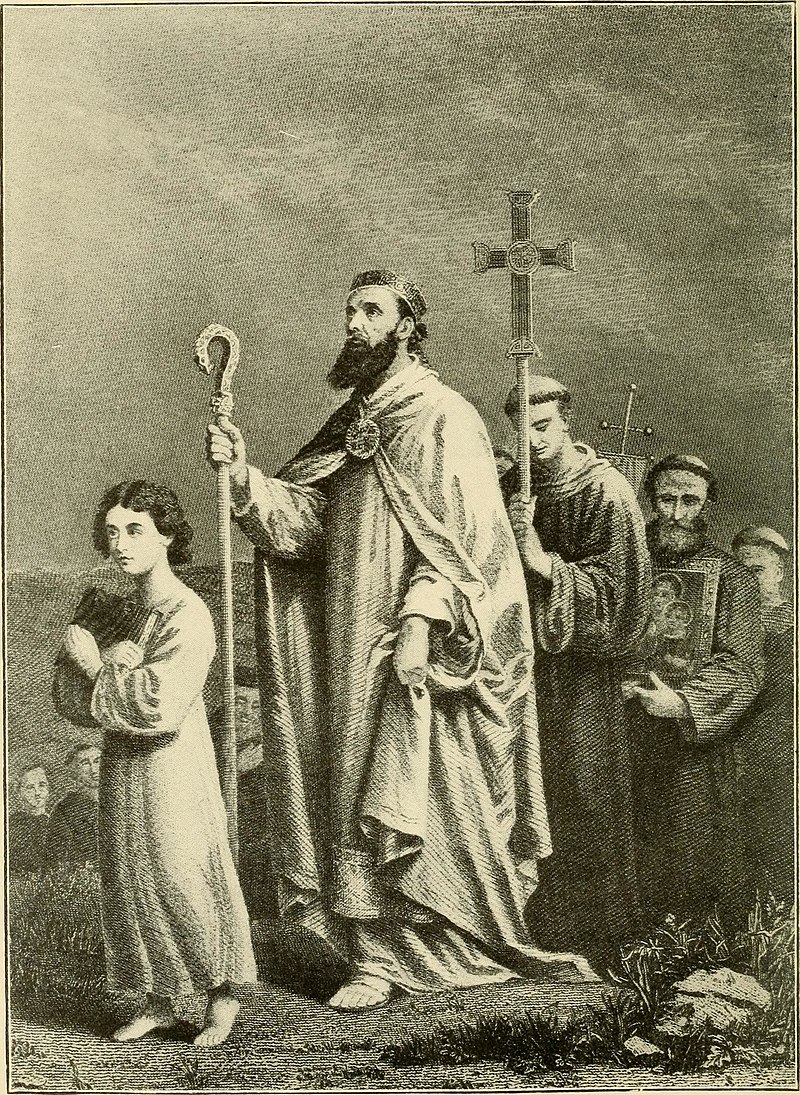 said to wear red, not green. My, how things change. Nowadays, the pinching tradition has spread far beyond leprechauns themselves. Green also appears in the Irish flag, symbolizing Irish Catholics, with orange representing Protestants and white standing for peace between them. The shade is known as “shamrock green,” inspired by one of Ireland’s national symbols. Saint Patrick famously used the three-leaf clover to explain the Holy Trinity…Father, Son, and Holy Spirit…while the rare four-leaf clover is simply seen as a sign of good luck. Personally, I prefer real blessings over luck.
In America, the day is celebrated with silliness and the “wearin’ of the green,” but the holiday is much different in Ireland. In Ireland, Saint Patrick’s Day truly celebrates Saint Patrick, the country’s patron saint. Though he lived there in the late fourth and early fifth centuries, he wasn’t Irish. In reality, he was a Romano-Briton captured by Irish raiders and enslaved. Making the best of his situation, he set his sights on first, escape, but later on returning as a missionary in Ireland. He is credited with bringing Christianity to the country. This 
 makes the holiday a religious one, much like Christmas or Easter. Today, parades, shamrocks, and pints of green Guinness can be found in Ireland, but those are mostly for tourists who see that as the way to celebrate. For most Irish people, it’s not like that, and until 1970, pubs were even required by law to close on Saint Patrick’s Day…a big contrast to how it’s marked in the United States, where it carries a very different meaning. Here it’s all about fun and silliness. We remember the man and celebrate the silliness.

 There are areas of vulnerability along any nation’s borders, especially the ports, but some ports are a more high-profile target and therefore need more effective guarding. The Golden Gate Bridge is one of those high-profile targets. Guarding the Golden Gate involved both military defense of the strategic strait and public health measures through the US Quarantine Station on Angel Island. Due to the strategic importance of San Francisco Bay, the US military worked hard to secure the coastal lands around the Golden Gate. This effort started right after the Gold Rush and lasted until the late 1970s. Stretching 25 miles on each side of the Bay’s entrance, the most commanding headlands were armed with big guns, mine casemates, and later, missiles with nuclear warheads. These were housed in solid, well-built structures that still stand today.
The development and spread of these coastal defense batteries mirrored the political, economic, technological, and psychological landscape of the rising American empire. Starting around 1883, as the US transitioned from a defensive stance to an offensive presence on the global stage, a new wave of homeland defense reached the Pacific Coast. Massive guns, positioned farther north and south of the Golden Gate, were built to rival those on enemy battleships. These defenses aimed to free US battleships…many of which were constructed in Bay Area shipyards…to patrol the Pacific and beyond. 
The Golden Gate Strait, which is the gateway to San Francisco Bay, has long been a vital hub for trade, immigration, and military activity. Starting in 1776, Spanish, Mexican, and later American forces guarded it for more than two centuries, very much aware of its strategic value. From the Gold Rush through World War II, the area was reinforced with stronger defenses to secure the passage from potential dangers. This narrow, well-protected channel saw troop ships, commercial goods, and immigrants pass through, making it a key focus for national security.
Along with its military defense, the Golden Gate was also protected against infectious diseases. As a busy seaport, San Francisco often faced outbreaks brought in by arriving ships. In 1882, a steamer from Hong Kong carrying more than 800 passengers, one of them infected with smallpox, was quarantined for weeks on Angel Island. This incident underscored the need for a dedicated quarantine station to stop contagious diseases from spreading into the United States and other ports. The US Quarantine Station remained on the small, windswept island north of the Bay until it closed in 1949. Life there was tough for both the staff and immigrants, reflecting the public health challenges of the time.
Today, Angel Island serves as a California state park, while the Presidio area features historical markers 
 honoring the military and public health efforts that once guarded the Golden Gate. The Batteries located at the Golden Gate are Battery Lancaster, Battery Townsley, Battery East Vista, Battery Wallace, and Battery Spencer. Together, these sites highlight the Golden Gate’s dual role as a strategic military location and an important public health checkpoint, showcasing the intersection of national security and disease prevention in US history.

 My niece, Kellie Thompson has had a year of great blessing…and many blessings. Since her last birthday, Kellie was married to her husband, Tim Thompson on June 28, 2025; became a mom to Tim’s sweet daughter, Jolene; took a honeymoon cruise to the Caribbean; and found out that Kellie is pregnant with a daughter due in June. It has been a wonderful year of great blessing. Their wedding was a wonderful affair, held in a meadow at the top of a hill overlooking Casper Mountain. It was everything Kellie had dreamed of and everything she wanted it to be, complete with the lack of rain…a miracle in itself for June in Wyoming. It was followed by a beautiful reception and dance held on the viewing terrace of Natrona County International Airport. There were even a few take-off and landings…much to the delight of the little kinds in attendance. Then, they enjoyed the summer with their daughter, Jolene before she had to go back home and back to school.
They took their honeymoon cruise from December 12th to December 21st, 2025. They had a wonderful time 
 and very much enjoyed spending part of the winter months in a warm climate. They swam, relaxed, and did a lot of sightseeing. While Kellie had been on a cruise before, it was the first time for Tim. The cool thing was that Kellie knew all to cool things to do, so they had an amazing time. And…as we all know, the food on a cruise ship is absolutely amazing. You should never take a cruise while on a diet, hahaha!! Needless to say, Kellie and Tim had no such restrictions. They enjoyed everything their hearts desired. I’m so happy for them. It was a dream honeymoon.
Kellie is one of the lead singers in our church choir. It is a dream position for her, as singing has always been one of the basic necessities of life!! Kellie sings all the time…at home, in the car, taking a walk, in the shower, and of course, in church. Her little baby very much enjoys all this singing. In fact, Kellie’s little daughter jumps and dances in the womb whenever her mommy is singing. With all the singing Kellie does, that makes for a very active baby. She just loves her “front row seat” to the “Mommy Concert” that she is treated to all day!!


Now, with “Baby Girl Thompson’s” due date coming up fast, Kellie and Tim are busily preparing the nursery for her arrival. They have been painting and putting in new lighting, deciding on the theme, and getting furniture ready. Before long, their home will be filled with the little giggles that always accompany babies!! Their daughter, Jolene can’t wait either. She wanted a little sister. I’m so happy for all of them. Today is Kellie’s birthday. Happy birthday Kellie!! Have a great day!! We love you!!

 On March 11, 2026, at 5:57pm, my newest great grandson, Graham Theodore Petersen made his entrance into the world. He weighed 7 pounds 15 ounces, and he was 19½ inches long. Graham joins his three brothers, Justin, Axel, and Cristian, the sons of parents, Josh and Athena Petersen. He has already been dubbed with the nickname, Graham Cracker, which is a sweet nickname indeed. A sweet nickname for a sweet baby boy. Graham was born with a pretty good head of hair, of multiple colors. He has bits of blonde, brown, and even a bit of red. That red isn’t so unusual, since his uncle, Andrew Salazar has red hair too.
Right now, Graham is a novelty to his brothers, and they know that they have to be very careful with him, but before long, Graham will have to learn to deal with his “rough and tumble” big brothers, because along with the normal 
 fighting kids do, the Petersen boys have regular “dog piles” in their play. Bumped heads and a few scratches here and there, as well as the inevitable bruises are just par for the course. Nevertheless, the Petersen boys love each other very much…most of the time. When one of them is taking toys away or pushing them around, any one of them will defend himself, and one of those “brother battles” will ensue. Those things are a little way down the road for Graham, so he will have a bit of a reprieve. Nevertheless, his brother, Cristian, who is just 13½ months older than Graham, already knows how to defend himself.
While the middle brothers know that they have a new baby brother, they aren’t quite as interested as the oldest 
 Petersen brother, Justin. At three years old, Justin is very interested in his baby brother. He wants to hold him as much as he can, and he is happiest when he gets to hold his sweet brother. Graham is a good baby and doesn’t cry much. That could change, of course, but for now, his parents are enjoying the relatively quiet little baby he is. He is a handsome little boy who reminds us all of his older brother, Cristian, with a little bit of Axel mixed in. It’s hard to say what he will look like as he gets older. Each child had their own looks, and they change as they get older. Nevertheless, he will always be a handsome little boy, because he comes from good stock. We are so happy to have our little Graham here finally. The wait seemed like forever. Welcome to the world Graham. We love you so much.

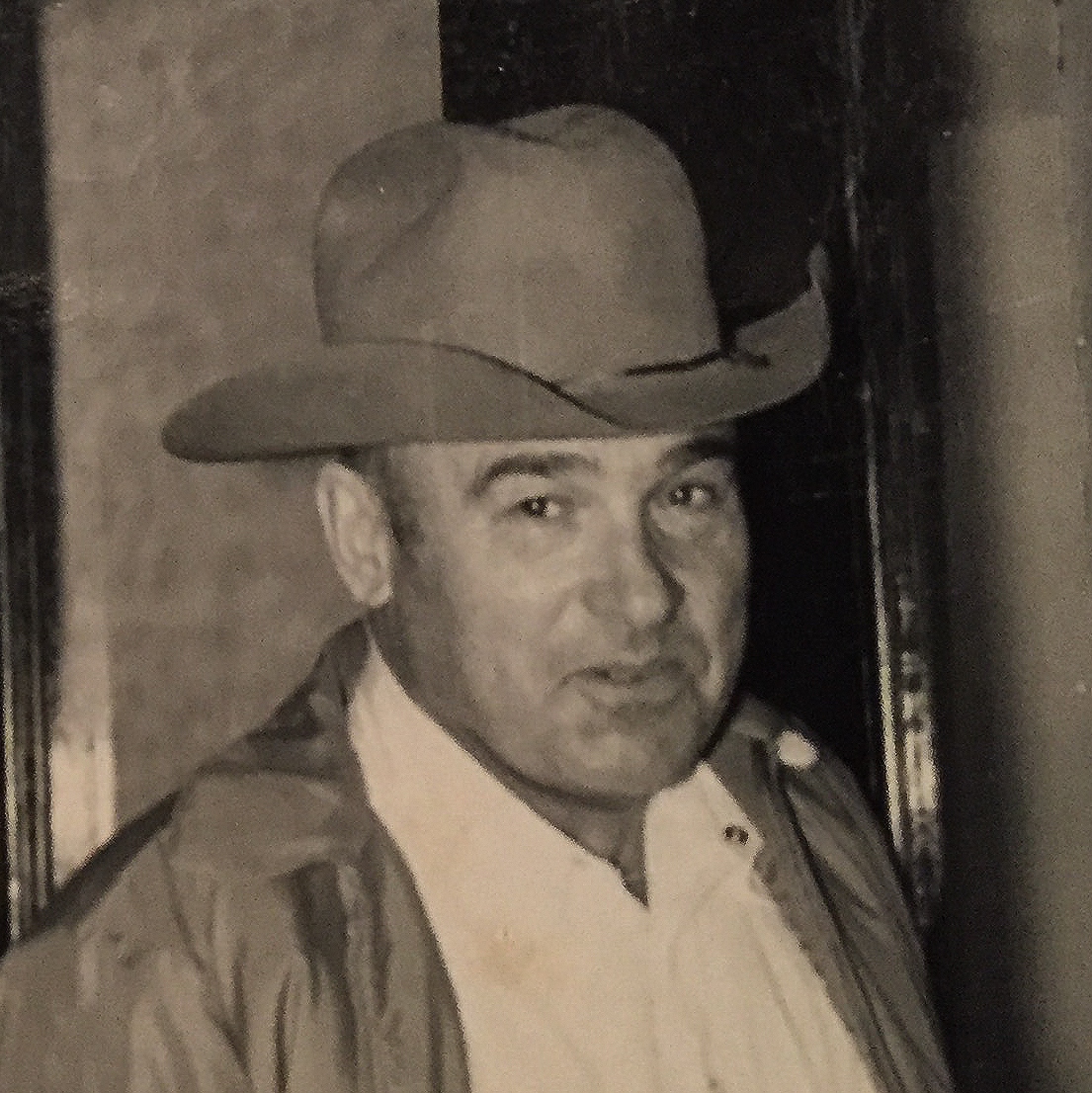 When my husband Bob’s grandfather, Andy Schulenberg, was 14 years old, he was involved in a hunting accident that severely injured his leg. Things were different back then, and medicine wasn’t as advanced as it is today. While 1920 wasn’t exactly the dark ages, doctors have learned much more about saving limbs since then. Maybe it wouldn’t have made a difference, but maybe the years could have changed things. Unfortunately, Grandpa’s leg didn’t recover, and after battling multiple infections, likely gangrene, it became clear that to save his life, they would have to amputate the leg.
After the accident and subsequent amputation, Grandpa spent 14 months in the hospital. That’s a long time for anyone, but for a 14-year-old boy, it must have felt like forever. He missed a year of school, and all the fun  things kids his age were doing. He also missed helping his parents with chores, which is something that might not seem like a loss, but when boredom sets in, you would definitely rather work on the farm than lie in bed…for hours!! Television was still in its infancy, far from perfected, so his entertainment came from visitors and books. Not exactly thrilling, especially since many boys aren’t keen on reading. Thankfully, his family rallied around him, sending postcard letters that he eagerly awaited. Mail delivery became a highlight, and he devoured every word, even if the writers didn’t always choose them perfectly. It was his lifeline to the outside world.
Grandpa was fitted with a wooden peg leg, and it was going to be a long journey learning to walk again. I never knew exactly how high the leg went, but I think it was probably mid-thigh. During this time, he showed incredible determination. He could have stayed in bed, giving up and letting others care for him, but he refused. Instead, he got up and worked tirelessly to regain his mobility. He knew life would never be quite the same, but he had things he wanted to do and was determined not to let this sideline him.
He eventually became the Sheriff of Rosebud County. You’d think he’d want nothing to do with guns after his accident and all that followed, but while he didn’t see much need for them in his law enforcement role, he could 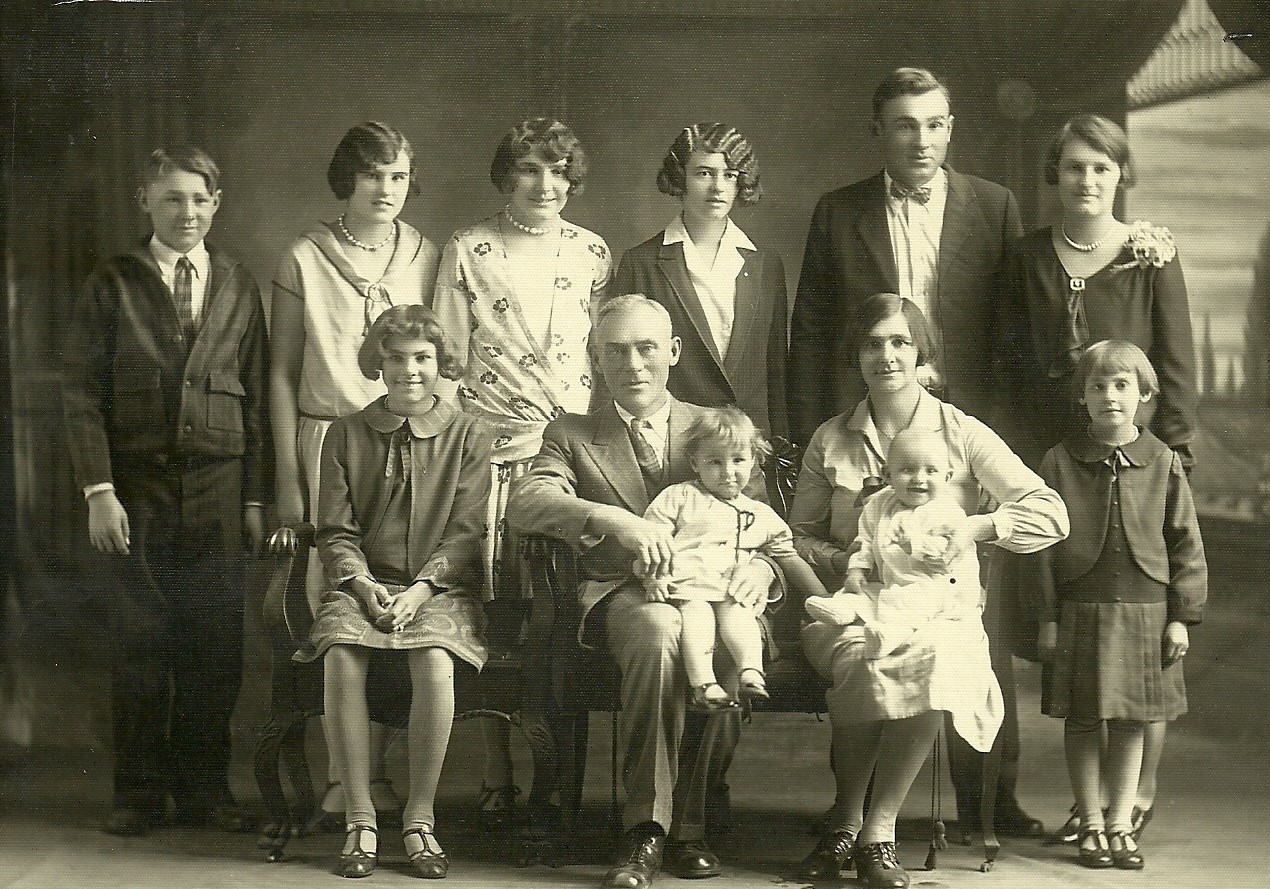
 still handle one just fine. Serving from 1955 to 1972, he earned the nickname “the sheriff without a gun.” It’s hard to picture a sheriff pulling off the job, arrests and all, without carrying a firearm, but that’s exactly what he did. Whether guns bothered him or not I can’t say, but if they did, he never let it show. He was no quitter. He was a great sheriff, and an amazing person Today is the 120th anniversary of Grandpa’s birth. Happy birthday in Heaven, Grandpa Schulenberg!! We love and miss you very much.

 When 600 to 740 Polish orphan children were freed from the Soviet labor camps and were loaded on ships bound for…no one really knew, their situation looked bleak. The 1941 Sikorski-Mayski agreement between the Soviet Union and Poland resulted in the release of tens of thousands of Polish prisoners of war held in the Gulag and other Soviet camps. included in that number were thousands of displaced children, many of whom were orphans. Sadly, no one wanted these children. They were just another mouth to feed, and times were hard. The children couldn’t return to Nazi-occupied Poland, and the Soviet Union didn’t want them. It was a time of much distrust, and many of the nations who might have been a good destination, refused the ships entrance into their ports.
After escaping from Siberia, the group of children traveled by ship across the Arabian Sea. In those days, with food often scarce, and medical attention almost nonexistent, the possibility of dying on a ship was very real. Nevertheless, even knowing that this was a shipload of children, nation after nation turned their back and a blind eye to the situation. Amazingly, one man was different. Maharaja Jam Sahib Digvijaysinhji defied British hesitation to harbor the refugees. Known as the good Maharaja, Digvijaysinhji of Nawanagar welcomed them, creating the Balachadi camp (or “Little Poland”). He famously told the children, “You are no longer orphans. You are Nawanagaris now”. The children, aged 2 to 17, were housed in Balachadi, near his palace. They were provided with education, food, and a safe environment until 1946.
Digvijaysinhji had been educated at Malvern College in England and was part of Winston Churchill’s Imperial  War Cabinet. “He was an extraordinary man, and to the Polish people, he became a national hero … an Indian Oskar Schindler,” former Malvern College teacher and housemaster Andrew Murtagh wrote of Digvijaysinhji. Father Piotr Wisniowski, chaplain of EWTN Poland. He told EWTN News, “The Good Maharaja, Jam Sahib Digvijaysinhji, wrote himself into history through extraordinary humanity. When he welcomed Polish orphans to Balachadi, he said, ‘You are no longer refugees. From today, you are the children of Nawanagar, and I am your Bapu — your father.’ These words were not a public-relations gesture but a pledge to take responsibility for the most vulnerable. After 1941, when Polish refugees were freed from Soviet captivity, Poland was a nation devastated by war, unable to care even for its own children,” Wisniowski told EWTN News. “The maharaja understood that tragedy and said, ‘If God has sent me these children, it is my duty to care for them.’ That is why Poland remains grateful to him — for lives saved, dignity restored, and for the witness that mercy knows no borders of nations or cultures.”
When the children first arrived, it was obvious that they were frightened. At first, foster homes were suggested to house the children, but the Polish government was opposed to separating the already traumatized children. Other options, such as schools and convents, proved unworkable. The viceroy of India set up The Polish Children’s Fund, supported by the archbishop of Delhi and the mother superior of the Convent of Jesus and Mary. Private donors including the Tata family largely funded the project.
At the end of the war, many children were afraid of living under communist rule, having suffered deportation to Siberia from the Soviet regime. Many were terrified of going back to Poland. It was decided that only those children who wanted to return to Poland would be sent back. Eighty-one children were relocated to the United States to build new lives there with the help of Catholic missionaries. Twelve Jewish children were relocated to Haifa in 1943.
When Communism fell in Poland in 1989, the kindness and generosity of Digvijaysinhji was formally recognized 
 by the Polish government. In 2012, a park in Warsaw was named the “Square of the Good Maharaja” and a monument was erected. He was also posthumously given the Commander’s Cross of the Order of Merit of the Republic of Poland. Digvijaysinhji died in Bombay on February 3, 1966, at the age of 70.

 My grandniece, Manuela Ortiz joined our family when she married my grandnephew, James Renville on July 18, 2021. Manuela, who goes by Manu, is a sweet, bubbly girl who has put the sparkle in James’ life. They are opposites in personality, but then, opposites attract, so…there you have it. I think we have all enjoyed the “sparkle” that came with Manuela. She originally came to the United States from Columbia on a work visa with the intent of improving her English so she would be an asset to her company in Columbia, but in the end, she knew that her place was in the United States. She began working toward becoming a citizen. Then in 2019, she met the man who would be her husband. She and James, both knew it from the start.


Manuela and James both love to travel. They have visited many places including Chicago, Columbia (to see Manuela’s family), Yellowstone, and Saratoga, to name a few. Since they both love to travel, I’m sure there will be many more trips in their future. They also love many different activities, like hiking, skiing, and dancing. James didn’t used to dance much, but Manuela is a great dancer, and she has taught his many dances. They had a wonderful time dancing at their wedding, and I for one was quite impressed with both of them. Manuela is so good at the traditional Columbian dances, that she even taught a class at Casper College a few years ago. The taught the Salsa and the Bachata. I’m sure her students had a great time.
Manuela works as a Counseling Manager at the Wyoming Housing Network. While she had intended to learn from them, they saw in her a great asset to their company, and they wanted to make sure she was happy. They 
 succeeded!! Manuela has been making her department a better place for the counseling of first-time home buyers, and they are very happy with her work. She is a great manager and an easy person to work with. In May, she completed a year of leadership training. It was a wonderful experience for her and she learn a lot. Manuela is smart, energetic, and very willing to apply herself. Those qualities make her a great leader. I know that her future is just getting brighter and brighter. Today is Manuela’s 30th birthday. Happy birthday Manuela!! Have a great day!! We love you!!

