
 Saint Patrick’s Day is all about taking time to celebrate being Irish. For me, it’s always felt like a bit of a borrowed holiday, probably because I don’t live in Ireland. Still, I am part Irish…4% to be exact…apparently from the Donegal area. Given the Irish roots and Irish names in my family, I expected that number to be higher, but families have migrated all over the world, and even if they’ve lived somewhere for centuries, it doesn’t mean they started there. I’ve had, and still have, family in Ireland…not that I know them, but I figure that’s enough to claim the day as mine too. It’s also a day to honor the patron saint of Ireland, Saint Patrick, a missionary who helped shift the country from paganism to Christianity in the fifth century, starting in his 40s. The holiday is marked on March 17, the date believed to be the anniversary of his death.
Wearing green on Saint Patrick’s Day is a long-standing tradition, but the reason is tied to legend. The story goes that leprechauns, the mischievous Irish fairy-like creatures, can’t see you if you’re wearing green…and if they can’t see you, they can’t pinch you. Interestingly, before the holiday became popular, leprechauns were 
 said to wear red, not green. My, how things change. Nowadays, the pinching tradition has spread far beyond leprechauns themselves. Green also appears in the Irish flag, symbolizing Irish Catholics, with orange representing Protestants and white standing for peace between them. The shade is known as “shamrock green,” inspired by one of Ireland’s national symbols. Saint Patrick famously used the three-leaf clover to explain the Holy Trinity…Father, Son, and Holy Spirit…while the rare four-leaf clover is simply seen as a sign of good luck. Personally, I prefer real blessings over luck.
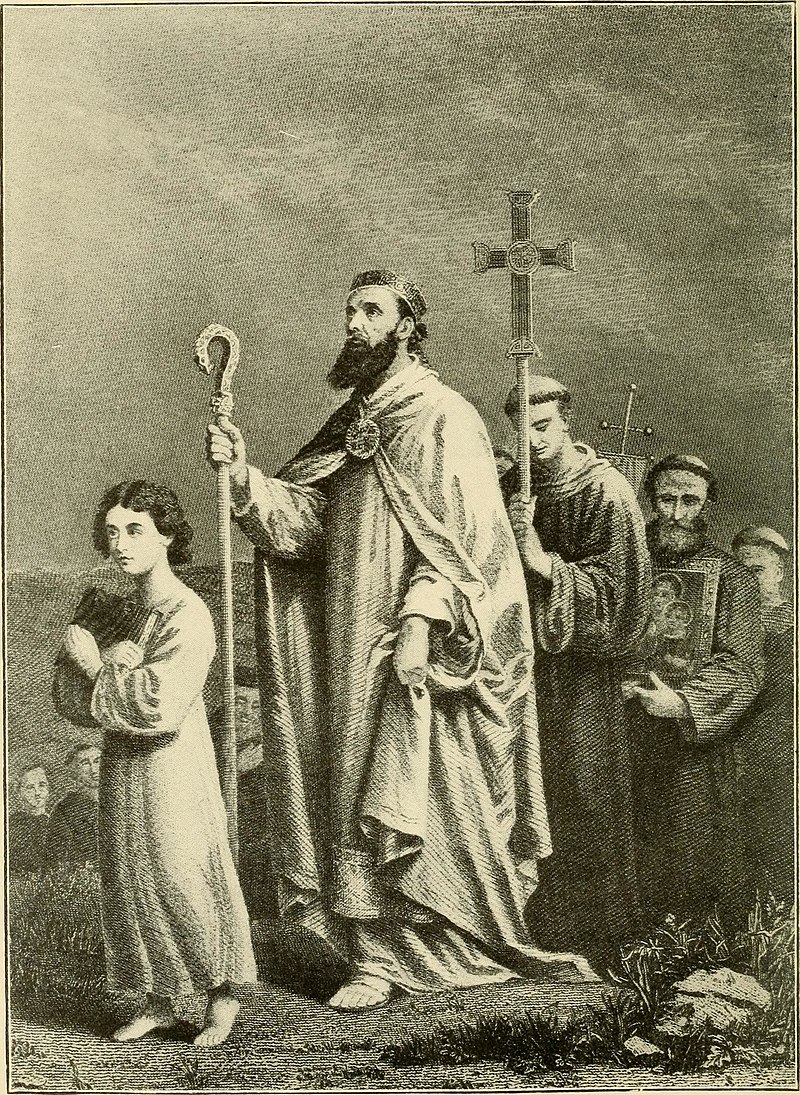
In America, the day is celebrated with silliness and the “wearin’ of the green,” but the holiday is much different in Ireland. In Ireland, Saint Patrick’s Day truly celebrates Saint Patrick, the country’s patron saint. Though he lived there in the late fourth and early fifth centuries, he wasn’t Irish. In reality, he was a Romano-Briton captured by Irish raiders and enslaved. Making the best of his situation, he set his sights on first, escape, but later on returning as a missionary in Ireland. He is credited with bringing Christianity to the country. This 
 makes the holiday a religious one, much like Christmas or Easter. Today, parades, shamrocks, and pints of green Guinness can be found in Ireland, but those are mostly for tourists who see that as the way to celebrate. For most Irish people, it’s not like that, and until 1970, pubs were even required by law to close on Saint Patrick’s Day…a big contrast to how it’s marked in the United States, where it carries a very different meaning. Here it’s all about fun and silliness. We remember the man and celebrate the silliness.


Leave a Reply