
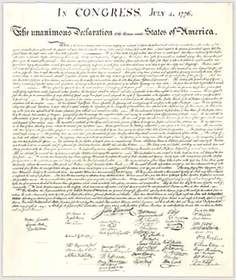
 As the British found out, it’s never a good idea to antagonize the people of the United States of America…and while it’s a bad idea to antagonize us, it’s an even worse idea to underestimate us. On February 7, 1775, in London, Benjamin Franklin published “An Imaginary Speech” defending American courage. His piece aimed to respond to an unnamed officer’s remarks to Parliament, claiming the British had nothing to fear from the colonial rebels because “Americans are inferior to the people of this country [Britain] in devotion to women, in courage, and worst of all, they are religious.” Apparently, according to that officer, being religious was a “sign of weakness.” It was a statement he would come to regret. Benjamin Franklin was a Pennsylvania scientist and diplomat who went on to sign both the Declaration of Independence and the Constitution.
In anger, Franklin met the three-pronged critique with his trademark wit and sharp insight. Observing that the colonial population had grown while the British population had shrunk, he quipped that American men must be more “effectually devoted to the fair sex” than their counterparts across the Atlantic. When it came to American courage, Franklin told a story from the Seven Years’ War in which colonial militias heroically saved blundering British regulars from strategic mistakes and cowardice. With poetic flair, Franklin proclaimed, “Indiscriminate Accusations against the Absent are cowardly Calumnies.” In reality, these militias were often undisciplined and ineffective early in the war. New Englanders, unused to taking orders and unfamiliar with the basics of military life, made themselves sick by refusing to build latrines, falling ill from their own waste. During the American Revolution, Washington echoed many of the same frustrations voiced by British officers as he tried to shape American farmers into an effective fighting force.
Benjamin Franklin was not a religious man, but he set aside his own dislike for the devout things and reminded his readers that it was the “zealous Puritans who had rid Britain of the despised King Charles I.” He figured his 
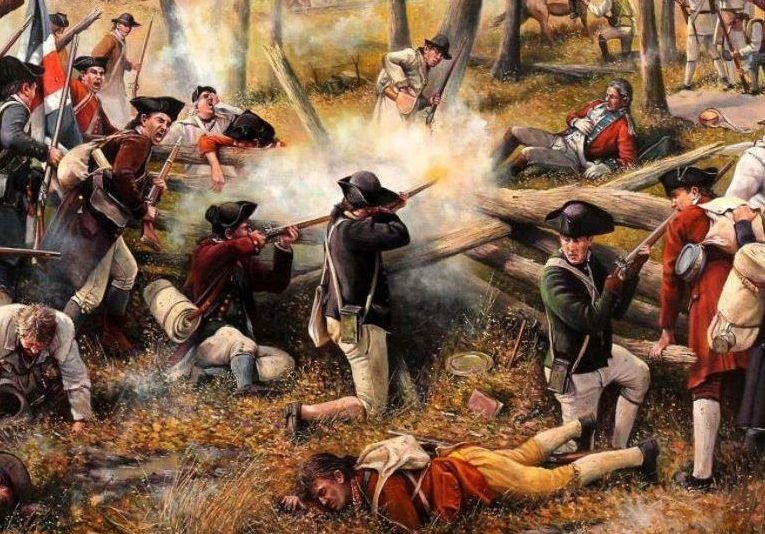 critic was a Stuart sympathizer…meaning Catholic…and therefore not particularly fond of American Protestants, “who inherit from those ancestors not only the same religion, but also the same love of liberty and spirit.” While Franklin didn’t always agree with the American Protestants, he knew well the value of the American spirit that would never allow the British to continue to run roughshod over the colonies. The American people were done with Britain, and the Revolutionary War would prove that fact conclusively.


Leave a Reply