
Caryn


 For my niece, Chantel Balcerzak, life is always busy. She is the grandmother to seven sweet grandchildren!! That is something that would keep any grandmother busy. One of those little ones keeps her especially busy, because she babysits little Nathaniel, who often goes by Nathan or Nate. Nathaniel and his parents, Siara Kirk and her husband Chris live in the house next door to Chantel and her husband, Dave Balcerzak, so he is with his grandparents a lot and that suits him just fine!! It has been a great arrangement for everyone. Siara and Chris know that when they are working, their baby boy is having a great time with his grandma, and that makes going to work much easier for them. Leaving your baby with a sitter isn’t always easy, but it’s a whole lot easier when the sitter is Grandma. She enjoys spending time with each and every one of her grandchildren.
As it turns out, Chantel and Dave live right next door to their best friends, Siara, Chris, and Nathaniel, and they love spending time together. They often go to concerts and football games whenever they can. While Chantel isn’t as into sports as her husband and kids, she really enjoys the trips they’ve taken to the games. She loves traveling and will happily go whenever the chance comes up. Concerts, though, are definitely one of her favorite things to do with her family.
Since she was a little girl, Chantel has always had a flair for the artistic—whether it’s art, makeup, or fashion. Always a diva, she knew exactly how to pose to make any photograph of her look amazing. She loves to paint and has completed several murals, my favorite being the one she created on the backyard wall of her sister Toni and her husband Dave Chase’s house. They love it too, as it transforms their yard into a beautiful mountain scene that makes you feel like you’re truly in the mountains.
Chantel, being an artist, is also incredibly talented at interior design. Her home is stunning, something I’ve always admired and wished I could replicate, even though I’m neither an artist nor a designer. Her house has a 
 distinctly feminine flair, but that doesn’t bother her husband Dave in the slightest…in fact, I think he loves it. It makes him feel cared for and appreciated, and I believe most men enjoy feeling “taken care of” in their own homes. Dave feels very blessed. Chantel’s gift for design truly brings that warmth. Today is Chantel’s birthday! Happy birthday, Chantel! Have a great day! We love you!

 When I think of Easter, I’m reminded of my Christian faith, the miracle of salvation, and the willing sacrifice of our Lord and Savior, Jesus Christ. Humanity was in deep trouble. Because sin had entered the world, we were left doomed to eternal damnation in Hell. There was no escape, for the wages of sin is death, and all have sinned. But God created this world so He could have a family. He loved His children, and so he provided a solution: innocent blood had to be shed to pay the price for everyone who had sinned. There was no other way to break the curse that sin had brought into the world. God knew it, and Jesus accepted the decision.
The death of Jesus on Good Friday was incredibly brutal. Humans can inflict terrible pain and suffering on one another, and Jesus, both man and God, felt every lash and endured every humiliation. He faced it all knowing it was essential…the most important mission in the history of Earth, past, present, and future. No other act could compare, as his death on the cross was a “once for all” sacrifice. It changed the course of history, restoring to humanity what the devil had taken.
When Jesus rose from the dead three days later, our justification was complete. For us that is unfathomable. rapping our heads around forgiveness…without the need for some sort of penance is almost impossible, but that is exactly what grace is. We could enter Heaven simply by believing in His sacrifice and accepting Him as our  Lord and Savior. It’s such a simple way to receive eternal life, yet many refuse because they think they’ll have to give up their fun. Little do they realize what they’re actually giving up. This life is just a fleeting moment, but Heaven is forever. The contrast is striking. Like it or not, this life will soon be gone, but the next will never end, and we get to choose where we spend it, so we must choose wisely.
Many people celebrate Easter with a big dinner and plenty of candy, and that’s wonderful, but we should never forget the true reason for the holiday…the resurrection of Jesus, our Lord and Savior. Jesus is risen! He is alive! Happy Easter to all!
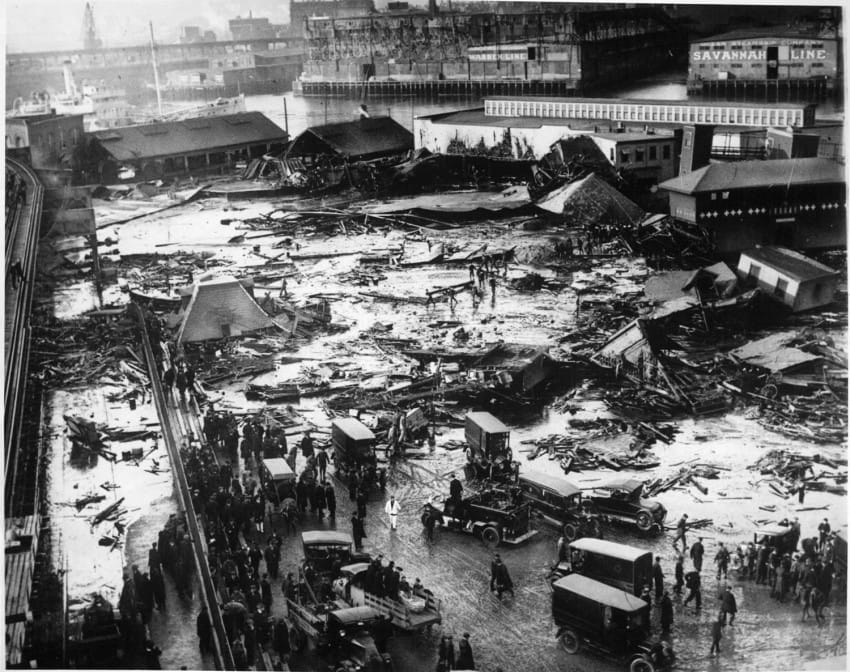 These days, most tsunamis come with some warning, at least since the 1946 wave that struck Alaska and Hawaii. Still, there are devastating waves that can’t be predicted and can be just as deadly as those the Pacific Tsunami Warning System alerts people about. One I’d never heard of until my sister, Cheryl Masterson, mentioned it a few days ago happened in Boston, Massachusetts on January 15, 1919. While it was a completely different kind of tsunami, it was still deadly. In fact, it was so unusual that many might doubt it’s a true story…but it really did happen.
At around 12:40pm on January 15, 1919, a tank holding 2.3 million gallons of molasses burst at the Purity Distilling Co. in Boston’s North End, sending waves of sticky syrup racing through the streets at nearly 35 miles per hour. Most people wouldn’t think of molasses as dangerous, but a 25-foot-high wave moving that fast can be as deadly as getting hit by a car. There was no warning, and honestly, there couldn’t have been. The molasses had 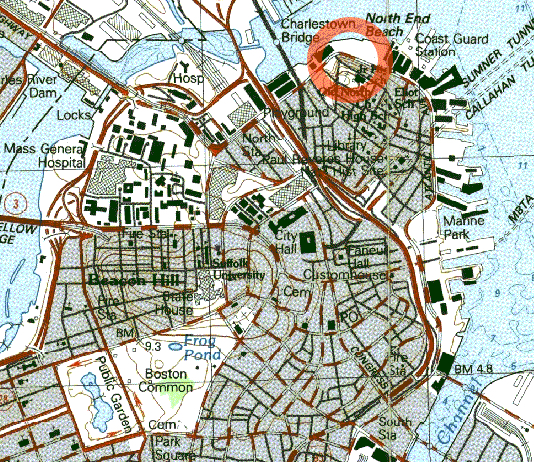 been stored in the tank awaiting transfer to another plant, and with temperatures climbing rapidly, a bizarre and tragic chain of events unfolded. Witnesses said the ground shook like a tornado or a freight train was barreling down the street.
The Boston Globe reported that people were swept up by a rush of air and thrown several feet, while a truck was lifted by the powerful wave and hurled into Boston Harbor. The force was so intense it nearly knocked a railroad car off the city’s elevated tracks. The Boston Post painted a vivid, grim picture: molasses, waist-deep, flooded the streets, swirling around wreckage. Shapes struggled in the sticky mess. It was impossible to tell if they were human or animal. Horses perished like flies trapped on paper, sinking deeper the more they fought, and men and women endured the same fate.
The final death toll reached 21, with 150 injured. Victims were either crushed by debris-laden molasses or 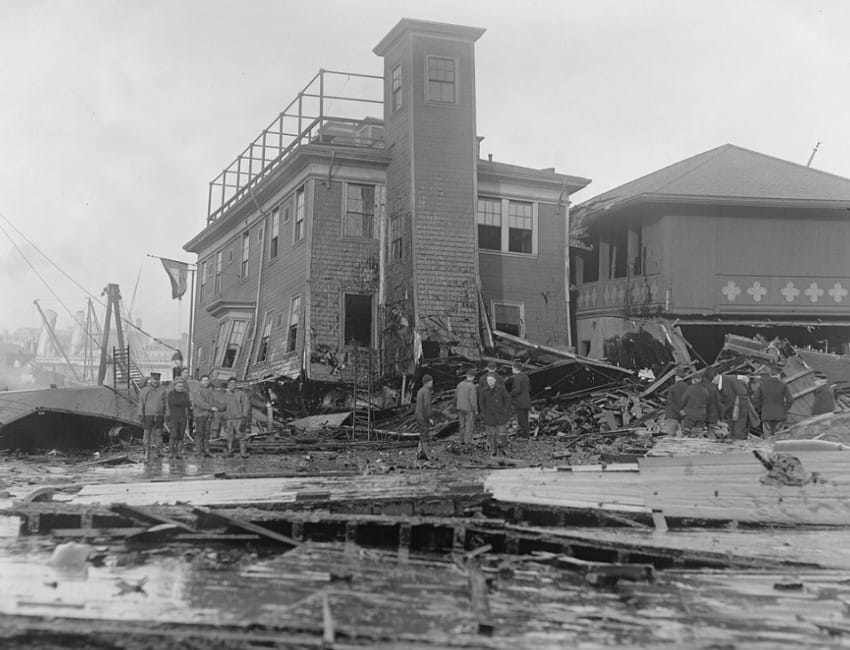 drowned in it. People and animals struggled, some beyond rescue. The cleanup was immense…fire trucks hosed down streets, and welders cut apart the tank. The harbor stayed brown until summer, and molasses seeped into every crack. It’s said that on hot days, the smell lingered for decades, though perhaps memory played a part. Public outrage led to a class-action lawsuit against the United States Industrial Alcohol Company, which had recently acquired the Purity Distilling Company. After three years of hearings, the company was found guilty of negligence and ordered to pay $600,000…nearly $10 million today…in settlements. The wave was as deadly as a tsunami, but no warning could have prevented the tragedy.
 .
.

 April Fools’ Day has been around for centuries. In 1700, English pranksters made it popular to play practical jokes on each other. Some believe it began in 1582 when France switched from the Julian to the Gregorian calendar, following the Council of Trent’s 1563 mandate. Those who didn’t adopt the change and still celebrated the new year from late March to April 1 were mocked and teased for being gullible.
When I was a kid, my sisters and I loved trying to fool each other. We pulled all kinds of tricks, from claiming there was a spider in someone’s hair to swapping the salt and sugar in their containers. Most of the time, no one fell for it, but every now and then we’d get a completely shocked reaction, or even a scream. Historians have mentioned pranks like dressing in disguises, and even the weather seemed to join in the fun with its unpredictable seasonal changes. I think most of us have been fooled by that one—bundling up in the morning only to be too hot later, or the other way around. And of course, the weather never plays along for just one day.

As we get older, we have to be much more creative with our antics, because, let’s face it, adults aren’t going to fall for the old spider-in-the-hair trick. They know exactly what day it is. April Fools’ Day pranks need careful planning and should be harmless, because that’s what the day is really about. Of course, there’s always the chance of some unexpected hiccup when trying to undo a prank, which could backfire, but hopefully the people you prank are good sports who understand it could just as easily have happened to them.
Some of the best pranks these days are tech-based, with endless ways to make someone think their computer has gone haywire. A bit of tape over the mouse sensor can make it seem frozen, or you could change the language settings…though from personal experience, that’s tricky to undo if you pick one you can’t read…like Russian or Japanese! My favorite is flipping the screen so everything’s upside down…it’s easy to reverse, so no harm done. There are plenty of low-tech options too, like wrapping the entire office in newspaper or filling the room with balloons so you have to pop your way in. Office pranks are a great way to take your prank game to 
 the next level, and they’re especially fun when your target is left completely stunned.
Some people are naturally gullible, while others have a knack for dreaming up outrageous ideas. If you fall into the first group, get ready for a day full of pranks, as pranksters love to exploit that gullibility. And if you’re one of those pranksters, this is your moment to shine. Happy April Fools’ Day! Let the fun begin and let the gullible beware!


 My niece, Elizabeth, is one of the busiest people I know. As a teacher who loves her job, by this time of year, she is also looking forward to the end of the year! She has more free time then, to do the many other things she loves to do! Even though it’s only March, she has already begun raking the yard to prepare it for the spring. Elizabeth has a real eye for what will look nice in the yard, and she enjoys shopping for flowers and plants that will create that atmosphere.
Elizabeth also loves to travel and has the opportunity to do a lot of that during the summer. She and her sister, Jenny, and her niece, Aleesia, drove to Colorado to attend a Christian concert earlier this month to see a group of bands they all enjoy listening to. They had a great time and cannot wait to go to the next one! Elizabeth loves concerts and attends many during the year. Especially during the spring and summer. She almost always goes to Nashville or somewhere else to see her favorite singer, Carrie Underwood, at least once a year. She jokingly calls Carrie, her “BFF!”
This year, Carrie will be in Montana. Elizabeth and two of her good friends, Lacey and Jamie, will be attending 

 that concert, and spending a few days with Jamie’s family in Montana. They all like a good road trip but haven’t been able to get together to travel for a long time so they plan to take good advantage of this opportunity to do both things.
Elizabeth is also a huge sports fan. Her top three favorites are football (Denver Broncos), baseball (New York Yankees) and basketball (Denver Nuggets), in that order! She and her lifelong friend, Kristina, who lives in Colorado with her family, traveled to Denver last September to see the Denver Bronco’s play, and last week they went to Denver to see the Denver Nuggets play. Elizabeth has even traveled to New York to watch the Yankees play more than once! She is such a sports fan, that her little dog, Holiday has to be dressed up in a jersey for each team whenever she watches a game on television! Her other pup, Gracie, would have to wear a 
 jersey, too, except that Gracie has ripped hers off, and shredded them in disgust the few times Elizabeth tried to put them on her! She has been known to dress her other dog, Scout, in jerseys, too, but Scout has escaped lately, since Holiday tolerates it so well, or at least most of the time!
Elizabeth is very close with all her siblings and with her cousins. They all get together during the year for concerts, games, and downtown events. This girl is very rarely not busy. Probably only when she is asleep!
I would have to say Elizabeth is a person of many, many interests and never lives a dull moment! Happy birthday, Elizabeth!! Have a great day!! We love you!!

 Astrid Lindgren had always loved words and stories, and while she may not have known it at first, she also possessed the ability to tell a good story. As a child, Lindgren devoured every book she could get her hands on, from the adventures of Robinson Crusoe to the spirited tales of Anne of Green Gables. She penned several creative essays that impressed her teacher, and one was even published in the local newspaper. That story, unfortunately, and the attention that followed, led to teasing from her classmates, and she vowed never to write again. How sad that even in those days, children could be so cruel.
Astrid Anna Emilia Ericsson, later known as Lindgren, was born on November 14, 1907, in a red wooden house in the small town of Vimmerby, Småland, Sweden. She was the second of four children of Hanna Jonsson and Samuel August Ericsson. The family lived on a farm called Näs, which had stood for 500 years and had been rented by the Ericssons for three generations. Her childhood was happy and carefree—after finishing her chores, she roamed the fields and nearby woods freely. With her siblings, she spent time climbing trees, swimming in the river, and playing in the barns. This sense of childhood freedom is reflected in her stories, especially in the beloved Pippi Longstocking books.
Lindgren fell in love with the magic of words at just five years old, when a farmhand’s daughter read her a story. Her first book, Snow White, came from a teacher, and she was thrilled each time she got a new one. In her biography Astrid Lindgren, author Eva-Maria Metcalf shared a quote from Lindgren about her passion for books: “I can still remember how these books smelled when they arrived fresh from the printer. Yes, I started by smelling them, and there was no lovelier scent in all the world. It was full of foretaste and anticipation.”
Lindgren’s life wasn’t easy, even after she escaped the cruelty of her schoolmates. In 1924, she started working for the local paper, the Wimmerby Tidningen. She stirred up the town when she cut her hair into a bob, embracing the “flapper” style of the 1920s liberated women who wore short hair and defied social norms. At 19, pregnant and facing judgment from the Vimmerby villagers, she moved to Stockholm. Her son, Lars, was born in 1926, but she had to place him in foster care because she couldn’t afford to support him. It was the hardest thing she ever did.
While in Stockholm, Lindgren studied stenography and found a job as a secretary, though the pay barely covered food, rent, and train trips to Copenhagen to see Lars. She later worked at the Royal Swedish Automobile Club, writing tour guides for drivers, where she met Sture Lindgren. They married on April 4, 1931, after which she happily gained custody of Lars. Their daughter, Karin, was born in 1934. For a number of years, she set aside her natural ability to write…until Karin rekindled it, that is. In fact, it wasn’t until the 1940s that she began to reconsider her childhood decision. Pippi Longstocking was created in 1941 when seven-year-old Karin, bored and stuck in bed with pneumonia, asked her mother for a story about “Pippi Långstrump” (Longstocking). Karin had made up the name, and it instantly sparked Lindgren’s imagination, leading her to dream up tales about the wiry, spirited, freckle-faced Pippi, whose braids jutted out to either side. Pippi quickly became a favorite with Karin and her friends. Lively little Pippi would go on to make Astrid Lindgren among the most widely translated authors ever, after she shot to fame in the 1940s with her creation of the beloved 
 storybook character. Throughout her life, she penned over 40 children’s books, selling around 145 million copies across the globe. Lindgren passed away at her home in central Stockholm on January 28, 2002, at the age of 94. Her funeral was held at Storkyrkan in Gamla stan, attended by King Carl XVI Gustaf, Queen Silvia, other members of the royal family, and Prime Minister Göran Persson. Dagens Nyheter described the ceremony as “the closest you can get to a state funeral.” It was a fitting tribute to a beloved author.

 My niece, Amanda Reed has spent most of her adult life working in the banking industry. She worked her way up through the system, and last year she was promoted to Vice President of Operations at Rawlins National Bank. We are all so proud of her accomplishments. Not many people ever achieve such a great status, but Amanda is a very hard-working person, and she is driven to succeed at everything she does. Amanda is a very motivated person. She is a dedicated and loyal worker, and that is, of course, what the Rawlins National Bank saw in her from the beginning. They knew she was the right person for advancing through the company. I wouldn’t be a bit surprised to see he in the position of President of the bank someday. She is, after all, highly motivated.
Amanda and her partner, Sean Mortensen owned a cabin in the Snowy Mountains. His parents also owned a cabin there too, and a while back they sold their cabin to Amanda and Sean. His parents’ cabin was a better fit 
 for Amanda and Sean, so when they decided to sell it, Amanda and Sean bought it. Now, they have sold their cabin, and they couldn’t be happier. They love spending time at the cabin, and they can go there year-round, so it makes the cabin a great purchase. Amanda and Sean love the quietness of the cabin, and the wild animals that sometimes almost seem like pets, because they really aren’t afraid of Amanda and Sean. They have been able to see animals most of us never can, like fox, moose, coyote, and more.
Amanda, Sean, and their daughter, Jadyn and her boyfriend, Marcus are all very outdoorsy people. They love boating, hiking, skiing, snowmobiling, 4 wheeling, motorcycling, and just about any other sport you can imagine. They also love hunting and fishing. In fact, right now Amanda and Sean are in Louisianna doing some 
 bow fishing and enjoying the area. They are two of the most active people I know. They and a large group of friends get together often to enjoy so many activities that it would make most of us tired just thinking about it. Nevertheless, this family takes that as everyday activities. It is one way to stay young, and they are quite good at it all. Today is Amanda’s birthday. Happy birthday Amanda. Hope your vacation is fabulous. Have a great day!! We love you!!

 Buffalo Gap, South Dakota, is a semi-ghost town in Custer County just outside the eastern edge of the Black Hills. Strange that it is called a semi-ghost town, but that’s what it is. It would seem that either it is or it isn’t, but I suppose the fact that the current population of the town is about 125 people, could have something to do with it. This small community began as a stage stop on the Sidney-Deadwood Trail for the Northwestern Stage Company during the Black Hills gold rush of 1875-1876. It was named for a gap west of town that once provided shelter for buffalo herds.
Due to its location at the junction of several trails, Buffalo Gap became an important way station and supply depot. As a result, George Boland, the station manager and distributing postmaster for all mail coming into the Black Hills, built a roadhouse that provided food and overnight accommodations for passengers and freighters. By 1880, the gold rush was winding down, but the Black Hills, opened to settlement in 1876, continued to draw newcomers, something I can understand, since my husband and I visit the area every year. In 1885, the Fremont, Elkhorn, and Missouri Valley Railroad came through, marking the end of the stagecoach era. That same year, a railroad station was built along Beaver Creek, and the town of Buffalo Gap was officially laid out, serving as a stopover for travelers and a hub linking wagon roads to the Black Hills and Hot Springs.
The arrival of the railroad ended the long, exhausting cattle drives of the past. With large cattle ranches spreading across the Black Hills and Cheyenne River ranges, Buffalo Gap thrived, becoming one of the nation’s busiest cattle shipping hubs. Before long, around 1,200 people called the town home, and it boasted about 140 businesses, including 17 hotels and restaurants, four general stores, a hardware store, a clothing shop, two drugstores, a furniture store, a bank, four Chinese laundries, and 23 saloons.
As with any Old West cattle and gold town, Buffalo Gap saw its share of transients, rowdy cowboys, and outlaws. Doubting the sheriff’s ability to keep order, some local businessmen decided a town marshal was needed. They turned to Arch Wilder Riordan, a former cattle drover who had settled in Buffalo Gap and run a combination drugstore and saloon. Standing six feet tall and weighing about 240 pounds, Riordan had an easygoing manner and was well respected. He took the job for $75 a month and proved effective enough that the town’s rougher crowd hired a Wyoming gunfighter named Charlie Fugit to get rid of him. Their plan was to start a bar fight, and when Riordan arrived, Charlie would shoot him. But when the moment came, Charlie was fatally surprised to find the marshal was quicker and more accurate with his gun. Riordan survived, as he did in several other dangerous encounters, always drawing his weapon only when necessary. Years later, he was appointed a US Marshal.
As often happens in a boom-bust town, things had slowed down by 1885…beef prices dropped, and the open range became overgrazed. The hot summer and drought of 1886 made matters worse, with brush fires destroying much of the rangeland and water sources drying up. Then came the brutal winter of 1886–1887, which brought blizzards sweeping across the West and temperatures plunging to -30° in some areas. Known as the “big die-out,” the cold snap wiped out up to 75% of the northern cattle herds. Afterward, most large cattle operations left the area, and ranching became a local affair. Homesteaders moved in to farm the land, but more years of drought drove many of them away as well.
By the early 1890s, Buffalo Gap’s population had dwindled, leaving its streets much quieter. In 1895, a resident’s cow knocked over a lantern, sparking a fire that burned the town to the ground, much like the Great Chicago Fire and other similar disasters. The town never fully bounced back and was never restored to its former glory. The fire wiped out most of the central business district, and only a few buildings or businesses were ever rebuilt. By 1910, the town’s population had fallen from its heyday of 1,200 to just 280. The drought dragged on for years, and more farmers left. Still, the ranchers gradually returned. During this time, the town auditorium, fairgrounds, community building, and fraternal lodge halls continued to be used for various community activities, from fairs to dances to traveling shows.
While the town was virtually a ghost town by then, it continued to hang on. The auditorium was built to showcase agricultural exhibits for the Buffalo Gap Fair, which was one of the area’s most notable events for years. This annual fair, featuring a rodeo, stock show, and crop displays, brought together local farmers, ranchers, and tourists eager to see the participating Lakota Indians. The Lakota from the Pine Ridge Reservation joined various rodeo contests and camped on the edge of town. Many were celebrated bronc riders, but one of the crowd favorites was the “Tepee-Setting Race,” where two women would drive a wagon around the track and set up their tepees in front of the grandstand. The winning team earned a prize of five dollars.
As was common in the life of any town, the needs changed, and in 1923, a high school was built. In 1926, the Nolan grain elevator was built to support the shift toward grain farming. The horse-breeding industry was thriving, and the town still served as a cattle hub. Then, as cars became common and machines took over farm and ranch work, Buffalo Gap began to shrink. A new state highway routed through Hot Springs and Custer State Park pulled traffic away from town. The Great Depression and the Dust Bowl in the 1930s further cut down the local population.
The beginning of the end came in 1938, when the railroad discontinued its spur line to Hot Springs and stopped shipping cattle from Buffalo Gap in about 1953. By 1960 most of the town’s businesses were closed for good. 
 The old Citizens Bank building served as a First Western Bank branch for many years before it finally closed. Today, the town’s main hub is the grain elevator and feed store. The church still holds regular services, and the post office remains open. Most of the residents are gone now…and only a semi-ghost town remains.

