Monthly Archives: September 2025

 The morning of September 20, 2002, dawned as any other day in the North Ossetia area of Russia, but by the end of the day, things would definitely not be the same, and more than a hundred people would lose their lives. In June 2002, North Ossetia faced severe flooding, which, combined with an unusually early and hot summer, foreshadowed a major disaster in September. The town of Vladikavkaz lies below large glaciers, and the higher-than-average temperatures that year caused increased water runoff, proving that the glaciers were starting to melt and weaken, but the little town had no idea what further disaster was headed their way.
On the fateful afternoon of September 20, a massive 490-foot-thick chunk of the Kolka Glacier and tumbled  down the mountain. The avalanche gained speed as it went, reaching nearly 100 miles per hour down the Karmadon Gorge and Koban Valley, and traveled an incredible 20 miles, leaving destruction in its wake. The village of Karmadon was completely buried under tons of ice and rocks. Rescue operations began right away and continued for weeks. Twenty-seven people were rescued alive, but recovering the remains of those who died, proved far more challenging. Even weeks later, fewer than half of the 150 missing people had been found. The main deposit settled 11 miles from the face of Dzhimarai-Khokh. The outflow of mud and debris measured 660 foot wide and 33 to 328 feet thick. Two villages along the gorge were under surveillance as flood waters backed up along the choked rivers. The avalanche finally came to rest in the village of Nizhniy Karmadon, burying most of the village in ice, snow, and debris. It was a devastating event.


On September 25, a first round of explosives intended to break up the avalanche flow was unsuccessful in reducing flood waters lapping through the village of Gornaya Saniba. The avalanche had two distinct flows. In total, the avalanche caused $20 million in damages. Had it traveled just a few miles further and hit Vladikavkaz, the death and damage toll would have been far worse. In the end, the avalanche and mudflow killed more than 120 people, including a film crew of 27 people, among them Russian actor and director Sergei Bodrov Jr.

 Panic!! It can be a sure-fire death sentence, especially in a crowd. On September 19, 1902, panic triggered a horrific stampede at the Shiloh Baptist Church in Birmingham, Alabama, killing 115 people. Around 3,000 attendees had gathered to hear Booker T Washington speak at the National Convention of Negro Baptists. After his speech ended, someone shouted “There’s a fight!” Unfortunately, the word “fight” was mistaken for the word “fire” and the church erupted in chaos as the crowd rushed to the exits, part of the reason children are now schooled in fire drills today. Many of the people were trapped between the brick walls of a stairwell leading to the street, resulting in numerous fatalities, most of them women. Doctors reported that many victims had simply fainted and suffocated.
The Shiloh Baptist Church, also known as the Shiloh Negro Baptist Church, located at the corner of 7th Avenue and 19th Street, was at the time the largest black church in Birmingham. The church was crowded with approximately 3,000 people to hear Booker T Washington address the National Convention of Negro Baptists. Apparently, a convention delegate from Baltimore proceeded to engage in a dispute with the choir leader concerning an unoccupied seat. Apparently, someone’s toes got stepped on and he proceeded to act like he was going to pull a gun on the offending person. It was then that a woman in the choir screamed and yelled that fateful word, “fight!!” One of the ministers hurried to the rostrum and pleaded for silence. He repeated the word “quiet” several times, gesturing for the congregation to sit down. However, the anxious crowd misinterpreted “quiet” as another fire alarm and surged toward the exits. In their panic, they could no longer fully understand what was being said. Men and women scrambled over benches and pushed through the aisles, trampling those who had fallen. The screams of women and children heightened the chaos. Overwhelmed by fear, many fainted, and those who collapsed were tragically crushed in the panic.
The church floor stands about 15 feet above ground level, with long steps leading from the lobby to the sidewalk just outside the main auditorium. Brick walls, extending six or seven feet on either side of these steps, became a death trap. People at the top of the steps were violently pushed forward, causing many to fall. Before they could get up, others fell on top of them, and within moments, bodies were piled up to a height of ten feet as they struggled desperately to free themselves. This human barrier blocked the entrance, and the weight of 1,500 people inside the church pressed against it. Tragically, more than twenty individuals trapped beneath the pile on the steps died from suffocation.
Two men at the back of the church during the rush realizing the gravity of the situation, turned in a fire alarm after they had escaped. The Fire Department responded promptly, and the arrival of the wagons dispersed the crowd gathered at the church’s front. A squad of police also rushed to the scene, and together with the firefighters, managed to free the victims trapped at the entrance. The bodies of the deceased were swiftly removed, and the crowd inside, finding an exit, flooded out. Many lost their footing in the chaos, tumbling down the long steps to the pavement, resulting in broken bones and internal injuries. Within an hour, the church was almost emptied. Along the aisles and beside the pews lay the lifeless bodies of men and women, with many injured still scattered among them. The task of removing the bodies of the deceased began immediately.


The church where the convention took place was situated on the edge of South Highlands, a once-fashionable residential area in Birmingham. Physicians from the neighborhood rushed to assist the injured. Tragically, at least fifteen of those rescued died before they could be moved from the site. Most of the victims were women, and doctors noted that many fainted and succumbed to suffocation. There was little to no blood visible on the victims, as they were either crushed or suffocated. the loss was devastating. You don’t just walk away from something like that without being emotionally affected for years after. Your mind keeps going back to the tragedy over and over, just wishing time could be turned back…especially the person who screamed, starting it all.

 My great grandson, Axel Petersen is sweet little boy with a loving heart. The kindness in that boy shows on his sweet face…even when he is having one of his mischievous 2-year-old moments. And believe me when I say that he does have those moments, you know the kind when he pretends he has no idea what you are talking about, as he “innocently” continues doing the very thing you are telling him to stop. He even walks up to the thing he isn’t supposed to do, turns and looks at me, grins and does it anyway!! That pest!! Still, at other times, he is a perfect little angel without so much as a hint of a mischievous side. He just sweetly brings you a gift of a flower, a block, or other toy that he thinks you might like. Or he asks you to sing him a song, as he sleepily rolls over and drifts off to sleep, in need of a nap after all that play. It’s a sweet memory of an average day with Axel and his brothers, Justin and Cristian.
Axel is the middle of my grandson, Josh Petersen and his wife, Athena’s three boys, although soon he will have 
 another brother. Like his grandma, my daughter, Corrie Petersen and her sister, Amy Royce, Axel and his older brother, Justin will always be the same age for about a month, before Justin’s birthday. They are “Irish Twins” just like their grandma and aunt…something they will always share. Nevertheless, Axel will soon become one of the big brothers, with two little brothers to help out with or to get into mischief with, whichever they seem to be into at the moment. The bigger boys love their little brother, Cristian, especially making him laugh and holding him, even though Cristian isn’t too sure about that part.
Axel loves books, especially when the book has some special parts, like flaps to open, rubber tires to touch, or dinosaur pictures that growl. He loves dinosaurs and loves pretending to be one to see if he can scare me. He stomps his feet menacingly toward me, and when he gets close, he says loudly, “Rrrraaaaar!!” It’s my job to act 
 scared, or sometimes roar back at him, to which he scampers away, pretending to be afraid, and then comes back at me for another attack. Having had daughters myself, this “new world” I’m a part of filled with mostly boys (plus one granddaughter and one great granddaughter) has been a bit of a learning curve and a “culture shock” too, but I love all those boys very much, and I know that I have been truly blessed to see the other side of grandparenthood and great grandparenthood. A side where bugs and worms aren’t disgusting, but rather they are interesting, and a “must see” item…a side where wrestling around on the floor being tackled by two “monsters” is just an average day in the life of a little boy!! Today is Axel’s 2nd birthday. Happy birthday Axel!! Have a great day!! We love you!!
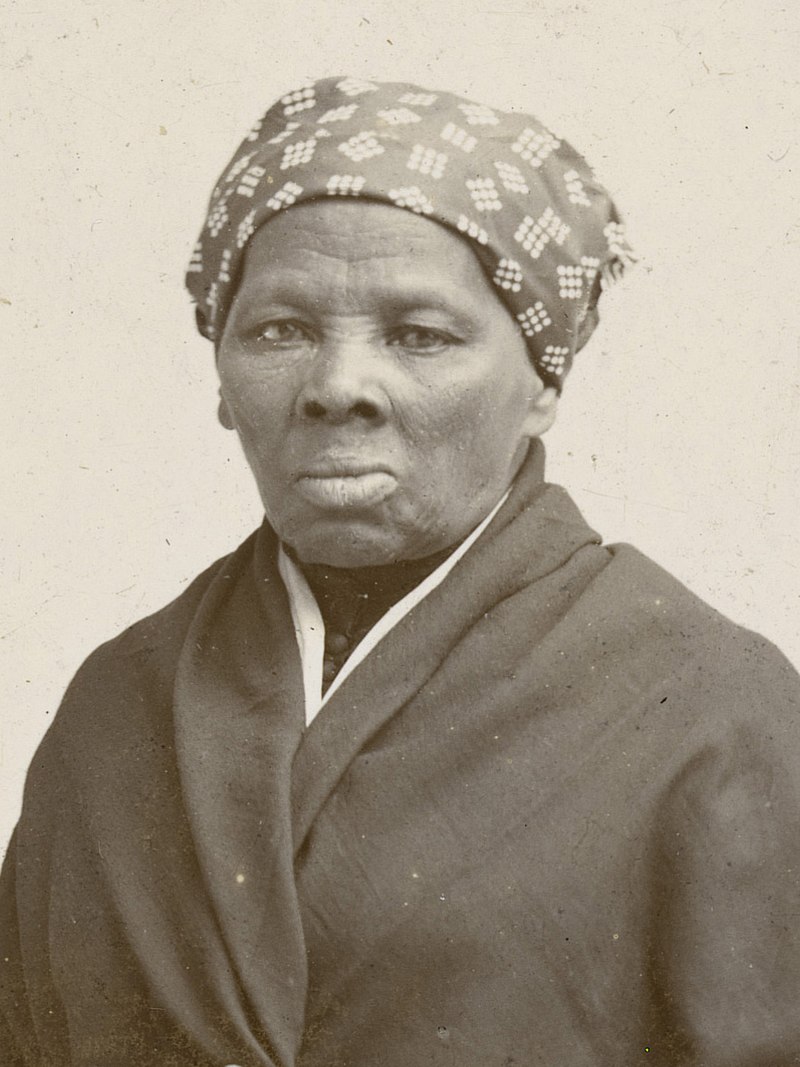
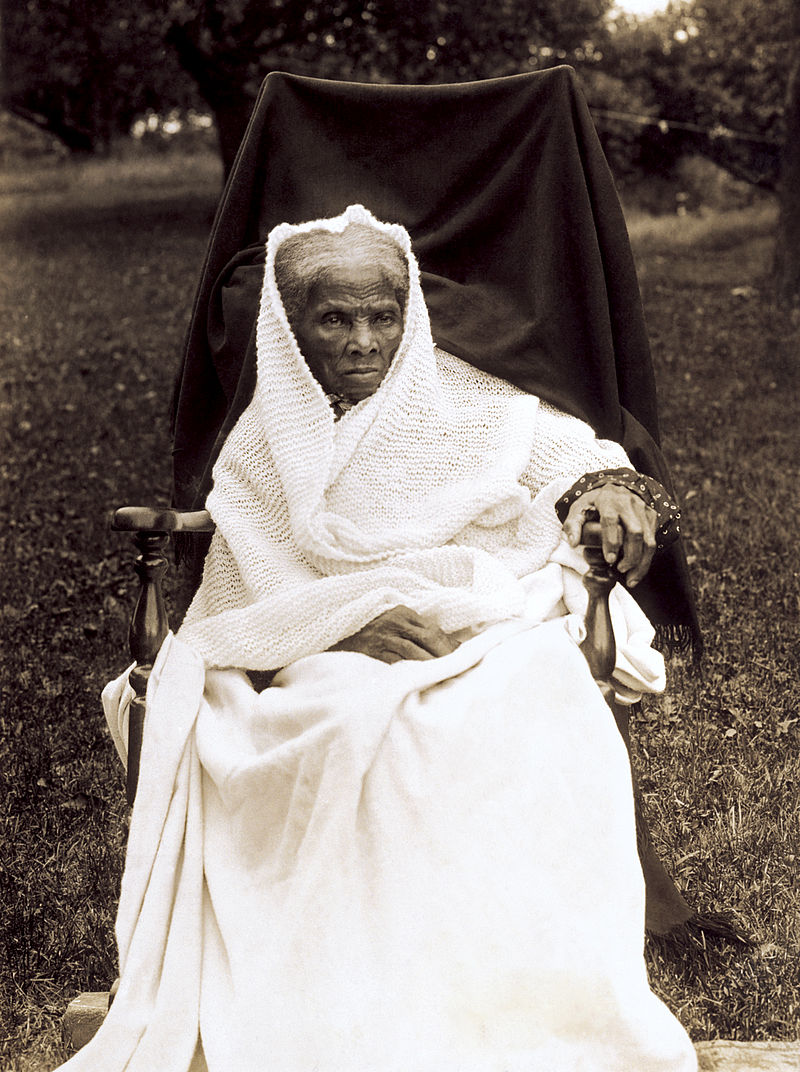 Those of us who remember the history of slavery in this country, will probably remember a runaway slave named Harriet Tubman, who was actually born Araminta Ross. We remember that she escaped from the Poplar Neck Plantation in Maryland and later became active in the process of leading runaway slaves from the South to freedom in the North. But the story really wasn’t totally complete. On September 17, 1849, Tubman and her brothers, Ben and Henry, escaped from slavery. Tubman had been working for Anthony Thompson, the son of her father’s former owner, who owned a large plantation in Poplar Neck, Caroline County. Her brothers likely worked there too. Since they were hired out, Eliza Brodess probably didn’t realize they were escaping right away. Two weeks later, she placed a runaway notice in the Cambridge Democrat, offering a reward of up to $100 each (about $3,780 in 2024) for their capture. However, Tubman’s brothers had second thoughts. Ben might have regretted leaving his wife and kids, so both men returned, forcing Tubman to go back with them.
In October or November, Tubman escaped again, this time without her brothers. Before leaving, she sang a farewell song to hint at her plans, hoping Mary, a trusted fellow slave, would understand: “I’ll meet you in the morning,” she sang, “I’m bound for the promised land.” While her exact route is unclear, Tubman relied on the Underground Railroad, a network of free and enslaved Black people, white abolitionists, and other activists. Prominent among these in Maryland were Quakers, members of the Religious Society of Friends. The Preston area near Poplar Neck, home to a significant Quaker community, was likely her first stop. From there, she probably followed a common route for escaping slavery…heading northeast along the Choptank River, through Delaware, and into Pennsylvania. Traveling nearly 90 miles on foot would have taken her between five days and three weeks. For Harriet Tubman, the rest is history…a history we all know well.
While her brothers gave up their dreams, Harriet had moxie…which is defined as courageous spirit and determination, perseverance. Thanks to Harriet’s moxie, her brothers didn’t remain in slavery either. On December 25, 1854, Harriet Tubman helped Henry and his brothers, Robert and Ben, escape slavery just before their owner, Eliza Brodess, planned to sell them. The brothers adopted new names for their free lives…Henry 
 became William Henry Stewart, Robert became John Stewart, and Ben became James Stewart. They eventually made their way to Saint Catharine’s in Ontario, Canada. In early 1855, Harriet Tubman assisted William’s wife and children in joining him there. The family lived in Saint Catharine’s and the nearby township of Grantham until at least the 1880s. They had families and lived in freedom because of Harriet Tubman’s moxie!! She never gave up!!

 It’s hard for me to imagine that my younger daughter, Amy Royce and her husband Travis have been married for 30 years today. It just doesn’t seem like she should be old enough to have been married that long, but do kids ever really grow up in our minds? Of course, today, Amy is a seasoned insurance agent, and not the teenaged girl in my mind, just learning to drive a car. She and Travis are parents of two adult kids now. They are gloriously happy together and have created a beautiful life together these past 30 plus years. I never expected my girl to choose to live in the country, since she hated it as a child, but times change, and they have built a beautiful sanctuary in their own back yard. It is totally peaceful and serene there, and a place where all their friends love to hang out.
The truth is that Travis has made my girl extremely happy over the years, and that is all I need to know. The 
 Pacific Northwest suits them, although I wish they had liked it here better. Nevertheless, I can’t imagine them living in frigid Wyoming winters again. Amy and Travis always hated the winters here…especially the wind. And the beauty of the area in which they live is a definite draw. The rainforest and all the flowers that grow there make my daughter so very happy. Her garden and back yard is a wonderful source of joy to her. She could spend hours out there watering, planting, enjoying, and yes, even weeding her gardens. And Travis love yard work. He dutifully builds anything she wants…from ponds to a covered patio. The yardwork, specifically mowing is Travis’ peaceful place.
In all, I could never have wished for a better life and marriage for my girl. Travis is perfect for her. They are perfect for each other. That, of course, is the very reason why they have been married for thirty years today. 
 They love each other so much. It is a beautiful thing to see. They are comfortable together…their love is always obvious. It is their priority always. They are each other’s priority. Their love was strong in the beginning, and it has only blossomed in the Pacific Northwest. Who could ask for anything more of the marriage of their children. Today is Amy and Travis’ 30th wedding anniversary. Happy anniversary Amy and Travis. Have a wonderful day and a great year. We love you both very much!!

 Who would have ever thought a hat could cause a riot. Nevertheless, through the years, fashion has played a big part in the lives of people, especially those in the higher social circles. Enter the straw hat craze. Straw hats first emerged in the 19th century as popular summertime wear, often associated with activities like boating, which gave rise to the term “boater.” That in itself meant that it was going to be for the wealthier social class. Soft Panama hats, inspired by tropical attire, also became informal summer wear. That’s were things began to get hinky. Initially, it was considered improper for men to wear these hats in big cities during summer, although women’s hats followed different trends. Then as the early 20th century arrived, straw boaters were deemed suitable daytime attire in North American cities during summer, even for businessmen. However, an unwritten rule dictated that straw hats should not be worn past September 15, a date known as “Felt Hat Day.”
The date was initially set as September 1st, but it later shifted to mid-month. When a stockbroker made the mistake of wearing the straw hat beyond the September 15th date, other stockbrokers could destroy each other’s hats because they were considered “companions,” but this behavior wasn’t acceptable among strangers. Any man wearing a straw hat risked ridicule, as it became a tradition for youths to knock straw hats off wearers’ heads and stomp on them. The custom grew so popular that newspapers often warned about the fifteenth’s approach, when men had to switch to felt or silk hats. Although hat bashing was only socially acceptable after September 15, there were several incidents beforehand where police had to step in to stop teenagers, who seemed to think they could “jump the gun” so to speak.
The “Straw Hat Riot” of 1922 began on September 13, 1922, two days before the supposed unspoken date, when a group of youths decided to get an early jump on the tradition. This group started in Manhattan’s old “Mulberry Bend” area by snatching and stomping on the hats of factory workers in the neighborhood. What began as harmless mischief escalated into a fight when they targeted a group of dock workers, who fought back. The scuffle grew so intense that it disrupted traffic on the Manhattan Bridge before police intervened, making several arrests. Although the initial fight was dispersed by police, the violence escalated the following evening. Groups of teenagers roamed the streets armed with large sticks, some with nails at the top for grabbing hats, targeting pedestrians wearing straw hats and attacking those who resisted. One man reported that his hat was taken, and the group who stole it joined a mob of around 1,000 people snatching hats along Amsterdam Avenue.
Several men ended up hospitalized from the beatings they suffered after resisting attempts to have their hats taken. Numerous arrests followed. Police were slow to respond to the riots, though several off-duty officers got caught in the chaos when rioters tried to snatch their hats. A few boys were confronted by pedestrians accusing them of smashing their straw hats, leading to their arrest. Many of those brought to court over the hat-snatching frenzy chose to pay fines instead of serving jail time. The longest jail sentence recorded was three days, served by a teen named A Silverman, who was sentenced by Magistrate Peter Hatting during night court.
In one incident, a group of boys armed with sticks attacked people near 109th Street. Seven youths, all under 15, were taken to the East 104th Street police station but not arrested. Instead, their parents were summoned to administer corporal punishment. After handling the initial riot, all stations were alerted to watch for hat-snatching teenagers. EC Jones reported seeing nearly 1,000 teenagers in a mob on Amsterdam Avenue. One 
 victim, Harry Gerber, was beaten so severely he had to be hospitalized. The decline of such activity likely coincided with the fading tradition of switching from straw to felt hats seasonally. While Panama hats remained popular in the 1930s, the straw boater fell out of fashion. By the 1950s, the classic straw boater was nearly extinct, except for specific uses like uniforms for English public schools or university sportswear. Amazing what a simple straw hat can cause!!
 As psychiatric disorders go, few are stranger to me than “Glass Delusion,” which is when the sufferer honestly thinks they are made of glass, meaning that any kind of rough treatment, could cause them to break, thereby bringing about their demise. Glass delusion was a psychiatric condition observed in Europe during the late Middle Ages and early modern period (15th to 17th centuries).
During the 16th and 17th centuries in Europe, glass became a highly prized material, seen as both magical and alchemical, the medieval forerunner of chemistry. Its association with fragility and luxury shaped how noblemen viewed their privileged roles in society. This fascination with a new material played a part in the rise of a unique delusion. Edward Shorter, a psychiatry historian from the University of Toronto, suggests that this delusion in 17th-century Europe was tied to the novelty of glass, noting that “throughout history, the inventive unconscious mind has pegged its delusions on to new materials and the technological advances of the age.” To most of us that seems strange and far-fetched, but delusions of the mind rarely make sense.
Glass delusion was mostly concentration among the wealthy and educated classes, which allowed modern  scholars to associate it with a wider and better described disorder of melancholy. Of course, like many other delusions, it was based of fear, and usually a fear of death. Fear is never a good thing, but when the fear is completely unfounded, it quickly escalates, and for the wealthy, maybe the things to fear are more profound that the rest of us. Nevertheless, the mind has to be susceptible to psychosis in order to have the delusion take hold.
Apparently, King Charles VI of France was one sufferer of glass delusion. He believed he was made of glass. On a scorching August day in 1392, King Charles VI traveled through a forest near Le Mans in northwest France, accompanied by a group of knights and retainers, heading on a mission to Brittany. Eager to confront the enemy, the 23-year-old monarch was known for his intense energy, which would likely be considered somewhere between bi-polar and psychotic today. On that day, his overwhelming energy reached its peak, and when a page boy accidentally dropped a lance, the loud clang drove the Gallic ruler into a wild frenzy. Swinging his sword aimlessly, he accidentally killed five of his own knights before being pulled from his horse and restrained. This event, recorded as Charles’s first psychotic episode, was described by the Religieux de Saint-Denis as resulting from fear of persecution, delusion, and uncontrollable violence. From that point on he was dubbed ‘Charles the Mad’ and at times reportedly failed to recognize his wife and children and would dash madly around the palace. In November 1405, Charles who after refusing to wash for five months was covered in infected sores and lice was forcibly bathed at the behest of the king’s physician.

People affected by the glass delusion normally believed that parts of their body, like their head, arms, or buttocks, were made of glass. It was believed that King Charles VI as possibly the first known case of someone believing their entire body was composed of glass. The future Pope Pius II described Charles VI’s condition: “His illness worsened daily until he lost his mind entirely. At times, he believed he was made of glass and avoided being touched. He even had iron rods sewn into his clothes and took various precautions to prevent himself from falling and shattering.” It was likely the strangest psychotic break known to man.

 Sweet Mackenzie Rose…it sounds like the title of a book, but as far as I know, it isn’t, at least not yet. Who knows what the future may hold. Nevertheless, the title fits my grandniece, Mackenzie Rose Moore quite well. Her aunt, Jessi Sawdon says it so well, “Mackenzie is so kindhearted and sweet, and so fun!” Her grandma, Allyn Hadlock says, “Mackenzie is a sweet little girl who loves the Lord! She loves to sing along to Christian music, and she’s a witness to others at school who are having problems or just need cheering up.” Her mom, Lindsay Moore agrees, adding, “My baby!! She’s 8! We are so blessed! God has a special call and purpose for Mackenzie’s life and has made her unique. She is kind, sweet, loving, smart, talented and FUNNY! She is a delight.”
Mackenzie is, nevertheless, her parents’ daughter, and like her dad, Shannon Moore and her mom, Lindsay, Mackenzie also has a competitive streak which makes her talent in any sport really shine through. She is good at everything she does…a natural at learning new things. She loves gymnastics and has been attending classes for a few years now. She likes to jump and do tricks on the trampoline, and frequently, you will find her daddy 
 out there jumping and doing tricks right along with her!
Her athletic prowess aside, she is, nevertheless, a very girly girl who likes to be pretty and do pretty things, dressing just so and doing her hair just so! She has a style all her own and loves to get ready from fixing her hair, to choosing her jewelry, all the way to shoes and accessories. While Mackenzie is girly, she doesn’t like to be super fancy, and often as not, athletic gear works just fine, and she can always dress them up too. She is graceful and humble and always takes time to include others and make sure they are comfortable. The reality is that pretty is, as pretty does, and Mackenzie is pretty, inside and out.
Mackenzie’s Aunt Jessi says, “We love that we get so much time with her and I’m so thankful for her friendship with Addie (Jessi and her husband Jason’s daughter). What a fun childhood they have together!” Mackenzie 
 excels in school and has gotten many awards for different things. She also loves doing things with our family and gets together with her cousins every chance she gets. Her cousins, Ethan and Aurora Hadlock are quite a bit older than the younger cousins, but they play with the “little girls” as much as they can. The “little girls” includes Addie Sawdon, Mackenzie, and Jolene Thompson, and they are best friends. All close in age, they have like interests and play very well together.
Mackenzie’s mom, Lindsay says, “Shannon and I get such a kick out of the funny things she says and does! We are so thankful for her!” As are we all!! Today is Mackenzie’s 8th birthday. Happy birthday Mackenzie!! Have a great day!! We love you!!
 Bombs dropping on the United States are basically unheard of. Of course, Pearl Harbor might come to mind for many people, but Hawaii only became a state on August 2, 1959, and the bombing of Pearl Harbor was December 7, 1941, meaning that while the base belonged to the United States, the state didn’t yet. Nevertheless, there was a bomb dropped on US soil…once. It happened on September 9, 1942, when the I-25 B1 type Japanese submarine cruised eastward, it occasionally raised its periscope while approaching the United States coastline. The B1 type was the most common class of Japanese submarines, known for their speed, long range, and the unique feature of carrying a seaplane behind watertight doors, which could be launched using a forward catapult. It was so unique for the era, nevertheless, a seaplane on a submarine, under the water, yet completely dry, existed. Less than a year after Japan’s attack on Pearl Harbor, the submarine’s captain was aware that Americans were closely monitoring their coastline for potential threats from ships or aircraft.
As dawn broke on that fateful day, the first rays of sunlight glinted off the periscope lens. The mission was clear…to attack the West Coast of the United States with incendiary bombs to ignite a destructive forest fire. The idea was that success in this test run could pave the way for Japan to deploy its vast submarine fleet to strike the eastern end of the Panama Canal, disrupting shipping between the Atlantic and Pacific. The Japanese Navy had numerous I-400 submarines under construction, each capable of carrying three aircraft. Chief Warrant Officer Nobuo Fujita and Petty Officer Shoji Okuda meticulously checked their charts, ensuring they aligned with the submarine navigator’s. Meanwhile, Nebraska forestry student Keith V Johnson was stationed atop a fire lookout tower between Gold Beach and Brookings, Oregon. Of a necessity, Johnson had memorized the silhouettes of Japanese long-range bombers and American aircraft, and now he was confident in his ability to identify friend or foe instantly. The September morning was cold and silent along the coast. Most residents were still asleep or gearing up for work. Lumber was a major industry in Brookings, which was located just north of the California-Oregon border.
Aboard the submarine, the captain’s voice echoed over the PA system, “Prepare to surface, aircrew report to your stations, wait for the open hatch signal.” During training, several subs were lost when hangar doors were opened too soon, allowing seawater to flood the hangars and sink the vessels with all hands. The sound shifted as the bow of the I-25 emerged from the depths, leveling out for its surface run. A loud bell signaled the “All Clear.” The crew assigned to the single-engine Yokosuka E14Y floatplane sprang into action. They rolled the plane out of its hangar beside the conning tower. The wings and tail were unfolded, and two 168-pound incendiary bombs were attached under the wings. This small, two-passenger floatplane featured a nine-cylinder, 340-horsepower radial engine.
In broad daylight, the captain ordered the aircraft onto the catapult, not even worrying about being seen.  Warrant Officer Fujita started the engine, letting it warm up while checking the magnetos and oil pressure. That day, a light breeze blew across calm seas…ideal conditions for an attack on the United States. Once the gauges were in the green, the pilot signaled, and the catapult launched the plane. After a brief climb, the pilot turned toward the Oregon coast. At his post, Johnson was scanning the horizon. He was seeing nothing, so he returned to his duties as a forestry agent, searching for signs of a forest fire. Ever watchful, he periodically scanned low, medium, and high, as the morning progressed, but nothing caught his eye. Meanwhile, the small Japanese floatplane climbed to several thousand feet higher for better visibility and to rise above the coastal fog. The pilot calculated landfall in a few minutes. Then, right on schedule, he spotted the breakers flashing white against the Oregon shores.
Johnson was scanning the horizon again and was just about to lower his binoculars when something reflected sunlight above the fog bank. It was unusual because all previous air traffic had flown along the coast, not inland. The pilot, after checking his course and instructed his observer to watch for a fire tower at the edge of the wooded area where they were to drop their bombs. These planes carried minimal fuel, so flights were quick and quick out missions. When the plane reached the shoreline, the pilot adjusted the course 20 degrees to the north. The towering trees were easy to spot and made obvious targets for the bombs. The fog, however, had burned off and was now, thin and wispy.
Johnson watched in amazement, unable to believe his eyes, as a small floatplane with a red meatball emblem on its wings flew overhead. He knew it wasn’t a bomber, and he couldn’t fathom how it had crossed the Pacific. He tracked the plane as it moved inland. The pilot, meanwhile, prepared the bomb release mechanism. His orders were clear…fly at 500 feet, drop the bombs into the forest, circle back to check for fires, and return to the submarine. As a stunned Johnson watched, he noticed the two bombs under the plane’s wings and realized they were about to be released. Quickly grabbing his radio, he called Forest Fire Headquarters to report what he was witnessing. He was in shock.
The bombs fell from the seaplane and hit the forest, igniting small fires at the impact site. The pilot circled once, confirmed the fires, and then turned back toward the submarine. The skies were clear, with no other  aircraft in sight. The floatplane aligned with the surfaced submarine, landed smoothly on the water, and taxied to the vessel. A boom extended from the sub’s stern, and a crew member secured a cable to the plane. The aircraft was hoisted onto the deck, its wings and tail folded, and it was stored in a watertight hangar. The I-25 submarine submerged and began its journey back to Japan, thinking that the mission had successfully started a large fire. The Japanese had not accounted for the coastal fog, mist, and heavy rain that left the forests too damp to sustain fires. This incident, which caused no significant damage, was the only time during World War II that an enemy plane dropped bombs on the US mainland.
 My youngest grandchild, Josh Petersen is a husband and daddy these days. Josh has known his wife, Athena since they were in middle school together. They have three young sons, Justin, Axel, and Cristian now, and another baby due in early March. Josh and Athena love kids. They talked about having five, but it sounds like they may have settled on four. No matter how many they have, they are loving parents and enjoy their kids very much. The love to take them to the park and to go hiking on easier trails that the boys can handle. And like many parents of younger kids, the splash pad at David Street Station is always a favorite destination. I think Josh and Athena have as much fun at these places as the kids do. They are truly young at heart.
Josh has spent a number of years working at All Out Fire as a fire extinguisher service tech. He really like his job. He had considered becoming a fire fighter, but knee issues prevented him from continuing that pursuit. He 
 is really good with customers and has learned a lot about the business. Probably because of his work and prior firefighting studies, Josh is a very safety conscious person. He knows his fire extinguishers and smoke alarms well, and he tries to make sure that everyone he knows takes safety very seriously too. It is such an important subject, and Josh is very good at stressing the importance to everyone he knows…never annoying, just informative. You can always tell that he cares about people.
Josh is a hard worker and is always willing to help people if he can. He takes good care of his family and loves spending time with both sides of his family. He has become good friends with Athena’s siblings, Larissa, Jillan, Jacob, and Andrew, and enjoys being part of their family, as well as his own family. They love going to Edness Kimball Wilkins Park to go swimming in the summer, and they like winter activities too. They love the holidays 
 and making sure that the kids get to do as many holiday activities as possible…especially all the holiday decorations around town. For Josh, it’s all about his family and making sure they have everything they need to be happy. Josh and Athena love doing the same things, and similar interests, and a good focus on God and family. They attend church regularly, and I am very proud of their devotion to God. Today is Josh’s birthday. Happy birthday Josh!! Have a great day!! We love you!!

