Monthly Archives: September 2025
 Valentina Vladimirovna Tereshkova was the first woman in space. That was just one of her many accomplishments. She was a Russian engineer, member of the State Duma, as well as being a former Soviet cosmonaut. She flew a solo mission on Vostok 6 on June 16, 1963. During her flight, she orbited the Earth 48 times and spent almost three days in space. She is still the only woman to have been on a solo space mission and is the last surviving Vostok program cosmonaut. At the time of her solo mission, she was just 26 years old. To this day, she remains the youngest woman to have flown in space under the international definition of 100 km altitude, and the youngest woman to fly in Earth orbit. Her flight was an amazing feat, but there was one little hiccup on the mission. It was a small detail really, but seriously, it was a problem…at least for most people. She forgot her toothbrush!!
So, the first woman in space went without a toothbrush during her three days aboard the Vostok-6 spacecraft in 1963. What woman would go on a trip without her toothbrush, especially when there isn’t a store to go buy one. To be fair, it wasn’t her fault, because mission control was actually in charge of packing the essentials, because the pioneering cosmonaut had other, presumably more scientific, things to focus on. So, how could mission control forget such  an essential. Well, I suppose they weren’t that used to the things the cosmonauts needed in space. The program was in the early stages, after all. I’m sure that when she went to get ready for the day and realized that she had no toothbrush, it was a real bummer. Still, I guess there could be more important things that could have been forgotten…things that might have been much more crucial, and their omission might have been a serious detriment to the mission.
Before her selection for the Soviet space program, Tereshkova, who was born on March 6, 1937, was a textile factory worker and an amateur skydiver. She joined the Air Force as part of the Cosmonaut Corps and became an officer after completing her training. When the first group of female cosmonauts disbanded in 1969, Tereshkova stayed in the space program as a cosmonaut instructor. She later graduated from the Zhukovsky Air Force Engineering Academy, re-qualified for  spaceflight, but never returned to space. She retired from the Air Force in 1997 with the rank of major general.
Valentina married cosmonaut Andriyan Nikolayev on November 3, 1963, at the Moscow Wedding Palace, with Khrushchev attending the wedding party alongside top government and space program leaders. The Soviet space authorities encouraged the marriage as a “fairy-tale message to the country,” and General Kamanin, head of the space program, described it as “probably useful for politics and science.” On June 8, 1964, almost a year after her space flight, she gave birth to their daughter Elena Andrianovna Nikolaeva-Tereshkova, the first person whose parents had both been to space. Over time, the couple grew distant and avoided standing together in photographs. Their marriage ended in 1977, and they divorced in 1982. She later married Yuli Shaposhnikov, a surgeon she met during medical examinations to re-qualify as a cosmonaut, and they remained together until his death in 1999.
 What is now a ghost town, Arena, North Dakota, lies in Burleigh County, just about 35 miles northeast of Bismarck. The town was established in 1906 by the Patterson Land Company of Minnesota, which had purchased over one million acres of railroad land between Bismarck and Jamestown in 1905. Lots of planned little towns sprung up along the railroads, but not all of them survived. On January 23, 1906, a rural post office was set up at what became Arena, with Harry A Mutchler serving as the first postmaster. Mutchler named the town Arena due to its location, surrounded by hills and nestled in a natural basin. It reminded him of a natural horse arena, and so he felt that the name fit perfectly. Shortly after the post office was established, Mutchler began working as a promoter for the Patterson Land Company.
In 1910, the Northern Pacific Railroad constructed the Pingree-Wilton line. That line passed right through the settlement of Arena. The town, when it was at its peak, featured a one-room schoolhouse, a train depot, Saint John’s Lutheran Church, twin grain elevators, two general stores, a hardware store, five creameries, a butcher shop, a pool hall, a bank, a sale barn, a livery, a telephone pay station, and several homes. Back then, Arena also had its own baseball team. They often competed against teams from nearby communities like Wing, North Dakota. The town was thriving, and life was good there. 
In its early days, nearly half of the town’s population were German immigrants or their descendants, alongside a few Jewish merchants, while the rest were considered “American.” The community was primarily agricultural, focusing on corn and livestock as the main sources of income, though crops like hay, grain, wheat, oats, and flax were also grown. Many Arena residents became known for their innovative farming techniques and use of advanced agricultural equipment. Also, a group of Mennonites from Marion, South Dakota, settled about four miles south of Arena, in 1904. By 1920, Arena’s population peaked at 150 people. In 1925, the wooden school building in Arena was sold and relocated to the Mennonite community to serve as a church. It may have been around this time that the large, two-story brick school building was constructed on the hill in Arena.
By 1930, like much of the nation, the tiny town of Arena was struggling through the Great Depression. The Dust Bowl of that decade made things even worse, forcing farmers to leave and businesses to shut down. By  1935, the population had dwindled to just 35 residents. The school closed in 1961, and students were bussed to Wing, North Dakota. Left vacant, the school became a hazard and was demolished in the 1990s. Arena’s post office permanently shut its doors on March 23, 1996. Today, only remnants of Arena remain, including the former Saint John’s Lutheran Church, grain elevators, an old wooden building, and a few houses. The small yellow house was the last occupied structure. Some resident surnames included Leno, Rice, Wetzel, Barkman, Eide, Deehr, Boelter, Wutzke, and others. Saint John’s Cemetery lies 0.7 miles northeast of Arena on 392nd Street NE, while the Mennonite Zion Cemetery is 3.8 miles south of Arena on the same road.

 Not everyone was in favor if the Nazi-imposed orders that every Jewish person wear a bright yellow star with “Jude” on it to show that they were Jewish. Of course, in reality, many if not most people were against it, but they had no choice in the matter. There were a number of people who defied the orders, in various ways. One woman, a teacher named Andrée Geulen, defied the order in a rather unusual way. Teaching in Brussels in 1942, and living under the suffocating grip of Nazi occupation, the young schoolteacher made a choice that would ripple through history. When she saw some of her students being forced to wear yellow stars, which marked them not as kids but as targets, it shattered her heart. So, she devised a plan. The following day, she discreetly instructed every child in her class, both Jewish and non-Jewish, to wear matching aprons, dissolving the Nazi-enforced separations and restoring their identity as simply children. It was an ingenious plan, and it worked for a while.
That small act of defiance was just the beginning. Geulen joined the resistance, working with the Comité de  Défense des Juifs to hide Jewish children in safe homes. The mission required immense courage, convincing terrified parents to send their children into hiding alone, knowing they might never reunite. She sheltered a dozen children in her own school, teaching and smiling as if life were normal. Then, in May 1943, the Gestapo raided the school. Soldiers stormed through, dragging children from their beds and interrogating Geulen. When a Nazi officer sneered, “Aren’t you ashamed of teaching Jewish children?” she shot back, “And you? Aren’t you ashamed of making war on them?” Andrée Geulen went on to save over a thousand children, never seeking recognition, simply choosing every day to stand for humanity. She lived to be 100 years old. Her life demonstrated extraordinary courage, fierce compassion, and her legacy included an apron that stood silently against an empire of terror.
After the war, Geulen stayed connected with the Jewish community in Belgium and maintained relationships with the children she had helped. She worked to reunite hidden children with surviving family members and became actively involved with the Aid for Israelite Victims of the War (Aide aux Israélites Victimes de la Guerre, AIVG), an organization supporting Jewish survivors of Nazi concentration camps in Belgium. She also engaged in activism for pacifist and anti-racist causes. In 1948, she married Charles Herscovici, a Jewish concentration camp survivor of Roma origin.
Geulen was honored as Righteous Among the Nations in 1989 and received honorary Israeli citizenship at a Yad 
 Vashem ceremony in 2007 during the “Children Hidden in Belgium during the Shoah” International Conference. Accepting the award, Geulen-Herscovici stated, “What I did was merely my duty. Disobeying the laws of the time was just the normal thing to do.” She was also granted honorary citizenship of Ixelles. Her 100th birthday on September 6, 2021, was widely covered in Belgian media, and that year, a creche in Brussels was renamed in her honor. She passed away on May 31, 2022, in Ixelles.

 Our aunt, Pearl Hein has lived her life in the small town of Forsyth, Montana. She was born there, and when she married my husband’s uncle, Eddie Hein, she joined the family. She has always been a sweetheart and a hard worker. She is an asset to the family. Eddie and Pearl were very happy together, until his passing on October 16, 2019. It was a sad day for all of us. Pearl lost her son, Larry just a little over three months later, on January 30, 2020. Those were heartbreaking months for Pearl and her daughter, Kim Arani, but they are moving forward and facing this new reality with grace. Pearl has made a number of trips to visit Kim and her husband, Michael in Texas, and has really enjoyed the warmth and sunshine, as well as the time with family. It wouldn’t surprise me if Pearl decided to move to Texas someday.
Pearl has been a beloved member of the town of Forsyth for many years. She was a fixture at the IGA for a 
 long time, and they surely would have gone under in those years without Pearl’s organizational skills. She could barely take a day off, because they were always calling her on the phone to solve a problem of some sort. Whenever we got to town for a visit, we knew that we could go to the IGA, and not only would Pearl be there, but everyone knew her and cold direct us to her location in the store. It was so strange when she finally retired for there. I’m sure there were many panicked people working at that store in the days
 following Pearl’s retirement. It was like a whole new world there, and I don’t think they have ever really been the same since. Still, Pearl was done, and it was her time to slow down and enjoy life, and I hope she is doing just that. Eddie and Larry would want her to for sure.
Pearl loved to make people happy, and she was very good at it. You never visited her house that you didn’t feel her sense of hospitality!! It was in her very blood. She just always made her guests feel welcome and comfortable, and her home always felt cozy. I enjoyed visiting there from the very first visit. Pearl has always been a kind and loving person, and I feel very blessed to call her my aunt. Today is Pearl’s 76th birthday. Happy birthday Pearl!! Have a great day!! We love you!!

 When the Federal Government passed the Indian Removal Act in 1830, Native American tribes began to be forced from their homelands. As European immigrants continued to arrive in the United States, the government decided more space was necessary for them, forcing Native Americans onto unpopulated lands west of the Mississippi River. The Indian Removal Act was specifically passed to relocate the Five Civilized Tribes from the southeast. Over time, it resulted in several treaties with other tribes located east of the Mississippi River, but not everyone agreed to “go peacefully” away. In 1832, negotiations started with various Potawatomi bands to relocate them from their homelands in Indiana to Kansas. Over the following years, many reluctantly agreed, but Chief Menominee and his band at Twin Lakes, Indiana, stood firm and refused to sign the treaties.
By August 1838, most of the Potawatomi bands had peacefully relocated to their new lands in Kansas, but Chief Menominee’s band stubbornly remained at their Twin Lakes village. Hundreds of others who refused to leave their homeland joined Menominee’s group, which expanded from four wigwams in 1821 to 100 by 1838. Consequently, Indiana Governor David Wallace ordered General John Tipton to deploy the state militia to forcibly remove the tribe. On August 30th, General Tipton and 100 soldiers arrived at Twin Lakes Village to round up the tribe. To prevent the Indians from returning to their homes, the soldiers burned their crops and homes. By September 4th, the march began with over 859 Native Americans and a caravan of 26 wagons carrying their belongings. Chief Menominee and two other chiefs, No-taw-kah and Pee-pin-oh-waw, were confined in a horse-drawn jail wagon while the rest of the tribe followed on foot or horseback. Each day, the journey started at 8:00am and continued until 4:00pm. It was only when they stopped to rest, that the Indians finally received their single meal for the day.
Those 859 Potawatomi Indians were forced from their homeland near Plymouth, Indiana, and made to march 660 miles to present-day Osawatomie, Kansas at gunpoint. Over a two-month journey, 42 members of the tribe, mostly children, died from typhoid fever and the stress of forced removal, while around the same number managed to escape. By the time they reached Osawatomie, Kansas, in November, only 756 remained. A young priest, Father Benjamin M. Petit, traveled with them, providing spiritual, emotional, and physical care, especially for the sick. That fall, a severe drought left them with stagnant water, likely causing more cases of typhoid. As their numbers dwindled, Father Petit baptized dying children, blessed graves, and held daily Mass, even after he began to feel ill himself during the journey.
On October 13, 1838, while traveling along the Osage River in Missouri, Father Petit wrote a letter describing the march to Bishop Simon Brute, Vincennes, Indiana. “The order of march was as follows: The United States flag, carried by a dragoon; then one of the principal officers, next the staff baggage carts, then the carriage, which during the whole trip was kept for the use of the Indian chiefs, then one or two chiefs on horseback led a line of 250 to 300 horses ridden by men, women, children in single file, after the manner of savages.
On the flanks of the line at equal distance from each other were the dragoons and volunteers, hastening the stragglers, often with severe gestures and bitter words. After this cavalry came a file of forty baggage wagons filled with luggage and Indians. The sick were lying in them, rudely jolted, under a canvas which, far from protecting them from the dust and heat, only deprived them of air, for they were as if buried under this burning canopy – several died.”
They marched across the vast prairies of Illinois, crossed the Mississippi River at Quincy, Missouri, followed the rivers through Missouri, and entered Kansas Territory just south of Independence, Missouri. When they arrived at what is now Osawatomie, Kansas, on November 4, 1838, 42 of the 859 Potawatomi had passed away. Despite the government’s promises, with winter approaching there were no houses waiting for them. The Potawatomi were distressed, and Father Petit, who by then was gravely ill, stayed with them for a few weeks. He coordinated with Jesuit Father Christian Hoecken, who ran Saint Mary’s Sugar Creek Mission, to have the Potawatomi move to that location. About 20 miles south of Osawatomie, near present-day Centerville, Kansas, the mission had been established the previous year for another group of Potawatomi, including Chiefs Kee-wau-nay and Nas-waw-kay, who had relocated voluntarily.
A few weeks later, on January 2, 1839, Father Petit began his journey to Indiana, accompanied by Abram “Nan-wesh-mah” Burnett. At that time, Burnett had to support Petit on his horse because the priest was covered in sores and too ill to ride unaided. By the time they reached Jefferson City, Missouri, Petit was so unwell that he had to switch to traveling in a wagon. The two arrived at the Jesuit seminary in Saint Louis, Missouri, on January 15th, but Petit’s condition had worsened, leaving him unable to continue his travels. He passed away at the seminary on February 10, 1839, at just 27 years old. Initially buried in the Jesuit Cemetery in Saint Louis, his remains were moved in 1856 to Notre Dame in South Bend, Indiana. Today, many Potawatomi consider Father Petit a saint.
The Saint Mary’s Sugar Creek Mission marked the end of the Potawatomi Trail of Death. Since no homes were provided for them, they sought refuge along the creek bank’s steep, rocky walls, where blankets and campfires provided warmth. They endured their first Kansas winter this way. Over time, they constructed wigwams and log cabins, while calling the mission home for the next decade. In 1841, three years after their arrival, Mother Rose Philippine Duchesne joined the mission. She was 72 years old. Despite failing health, she taught young tribal members and established the first Indian girls’ school west of the Mississippi. Devoted to prayer, she earned the name Quah-kah-ka-num-ad, “Woman-Who-Prays-Always.” In 1988, she was canonized as the first female saint west of the Mississippi River.
The Potawatomi of the Woods Mission Band stayed in eastern Kansas for ten years before moving further west to Saint Mary’s, Kansas, in 1848, near the Prairie Band Potawatomi Reservation at Mayetta, Kansas. During their time at the mission, over 600 Potawatomi died, many shortly after arriving. Chief Alexis Menominee passed away on April 15, 1841, at the age of 50, and all are buried at the site. In 1861, a new treaty offered the Potawatomi land in Oklahoma. Those who signed it became the Citizen Band Potawatomi and were granted US citizenship. Today, their headquarters are in Shawnee, Oklahoma. Unfortunately, the mission no longer 
 exists, but the site honors the Potawatomi’s struggles at the Saint Philippine Duchesne Memorial Park. In the 1980s, the Eastern Kansas Diocese purchased 450 acres where the original Sugar Creek Mission stood. The park, dedicated in 1988, features a large circular altar, a 30-foot-tall metal cross, seven wooden crosses with metal plaques honoring those who died there, and interpretive signs sharing information about the Potawatomi and the original mission buildings.

 My son-in-law, Kevin Petersen has been a part of our family since he married our daughter, Corrie Petersen in 1993, but he was really part of our family for three years before that, because he began dating Corrie when she was 15 years old. It was truly love at first sight for these special people. Not many people find their one and only when they are 15 and 19 years old, but they did, and they have lived happily ever after for 32 years of marriage.
These days, Kevin and Corrie have new titles…that of Papa and Grandma. Their marriage was not only blessed with two sons, but now they have two daughters-in-law, a granddaughter, and five grandsons, with one baby on the way. They love being 
 grandparents, and with all those boys, Kevin spends a lot of time on the floor wrestling. I’m not sure he ever expected to be on the floor being attacked by little boys, but he truly loves playing with the kids. The kids really love Kevin, and when he is around, they know it’s going to be a great time. Kevin is always up for playing, no matter how he is feeling at the time. Grandbabies are the next generation of blessings that come from having kids, and Kevin is very blessed with all of his grandbabies.
Kevin and Corrie have been doing some camping this summer and have really enjoyed their time on Casper Mountain. They have always loved camping up there, but during the years when Corrie was in nursing school, it was very difficult to get away for that necessary R and R. Now that nursing school is 
 over, they get to do the things they love again. They have also got to take a trip to Washington to visit my daughter, Amy Royce and her family and attend a Seattle Seahawks game…Kevin’s all-time favorite football team. As for Kevin’s free time, well that is spent working on his project car, a Chevy Monte Carlo. When he gets done, it will be just beautiful. Kevin does excellent work restoring cars. He has been restoring cars for as long as I have known him. He does everything from engine work to paint jobs, but I really think the paint jobs are his favorite part. He loves adding details like pinstriping and such, and it always looks great. Being an artist, Kevin is a natural. Today is Kevin’s birthday. Happy birthday Kevin!! Have a great day!! We love you!!
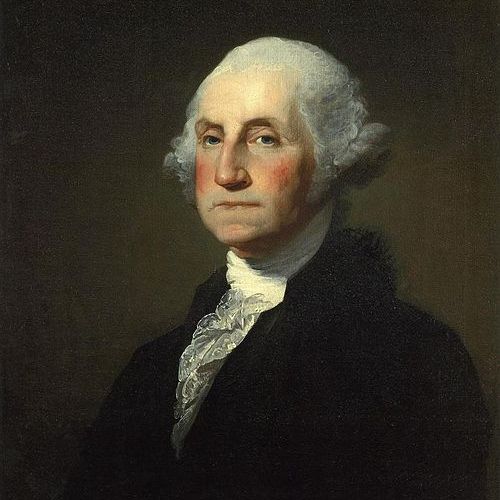
 In 1775, while looking for ways to fund the Revolutionary War, an idea was formed that would not come into fruition until September 2, 1789. I can’t say it was a “good” idea, but it served a purpose, I suppose. It was on that day, that the Continental Congress founded the United States Treasury Department. Their solution involved issuing cash that also served as redeemable “bills of credit” to raise enough capital for the revolution. Unfortunately, this plan resulted in the country’s first debt. The Continental Congress tried to stabilize the economy, even creating a pre-Constitutional version of the Treasury. However, neither this effort nor the signing of the Declaration of Independence, which allowed the United States to seek foreign loans, proved effective. The debt continued to grow, and war notes quickly lost value.
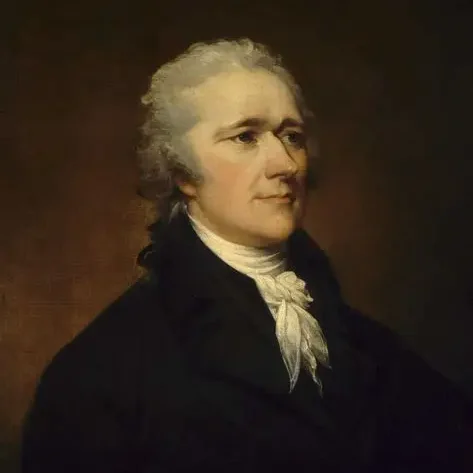
With the ratification of the Constitution in 1789, the American government established a permanent Treasury Department in hopes of controlling the nation’s debt. President George Washington named his former aide-de-camp, Alexander Hamilton, to head the new office. The former New York lawyer and staunch Federalist stepped in as Secretary of the Treasury on September 11. Hamilton soon outlined a practical plan for reviving the nation’s ailing economy. Basically, the government would pay back its $75 million war debt and thus repair its badly damaged public credit.
Hamilton was elected to the Continental Congress from New York in 1782. He became known for his strong advocacy of a more powerful national government and a near-reactionary political philosophy. Alongside James Madison and John Jay, he published the “Federalist Papers,” promoting the ratification of the United States Constitution. As the first secretary of the treasury, Hamilton created key centralized monetary institutions for the new nation, including the national bank, before stepping down in January 1795. He later returned to private life as a lawyer in New York City, but Hamilton continued to advise President Washington.

In 1800, Hamilton became embroiled in a bitter dispute when he threw his support behind President John Adams’ reelection campaign instead of presidential candidate Aaron Burr’s. After his defeat, Burr ran for governor of New York in 1804; Hamilton again opposed his candidacy. Humiliated, Burr challenged Hamilton to a duel on July 11, 1804, in Weehawken, New Jersey. Alexander Hamilton was shot in the duel and died of his wound the following day, July 12, in New York at the age of 49. While the treasury department, Hamilton had headed up, when on, his life ended that day in a field.
 Holidays, especially the “Monday Holidays” are so often celebrated for the wrong reason. While we should be celebrating things like our veterans, military, or those lost in war, people tend to simply celebrate having the day off. The purpose for that day off is often lost in the shuffle to spend time with family and friends, enjoying good food and fun. Labor Day is the exception to that rule, because Labor Day is actually about the worker, and giving that worker a day off!! The best way to pay tribute to hard-working Americans is by giving them a play day…just to show how much we appreciate them and all their hard work.
When our nation was founded, there was very little here. Native Americans lived in teepees to stay mobile, following the buffalo as their main food source. Meanwhile, we came from countries with established houses, farms, and systems to provide for our needs. However, building a new nation required tremendous effort and hard physical labor. It also required educators to teach children and others, helping them become doctors, scientists, inventors, and other professionals necessary to transform this vast, empty land into a thriving nation capable of fulfilling the dreams that brought us here. 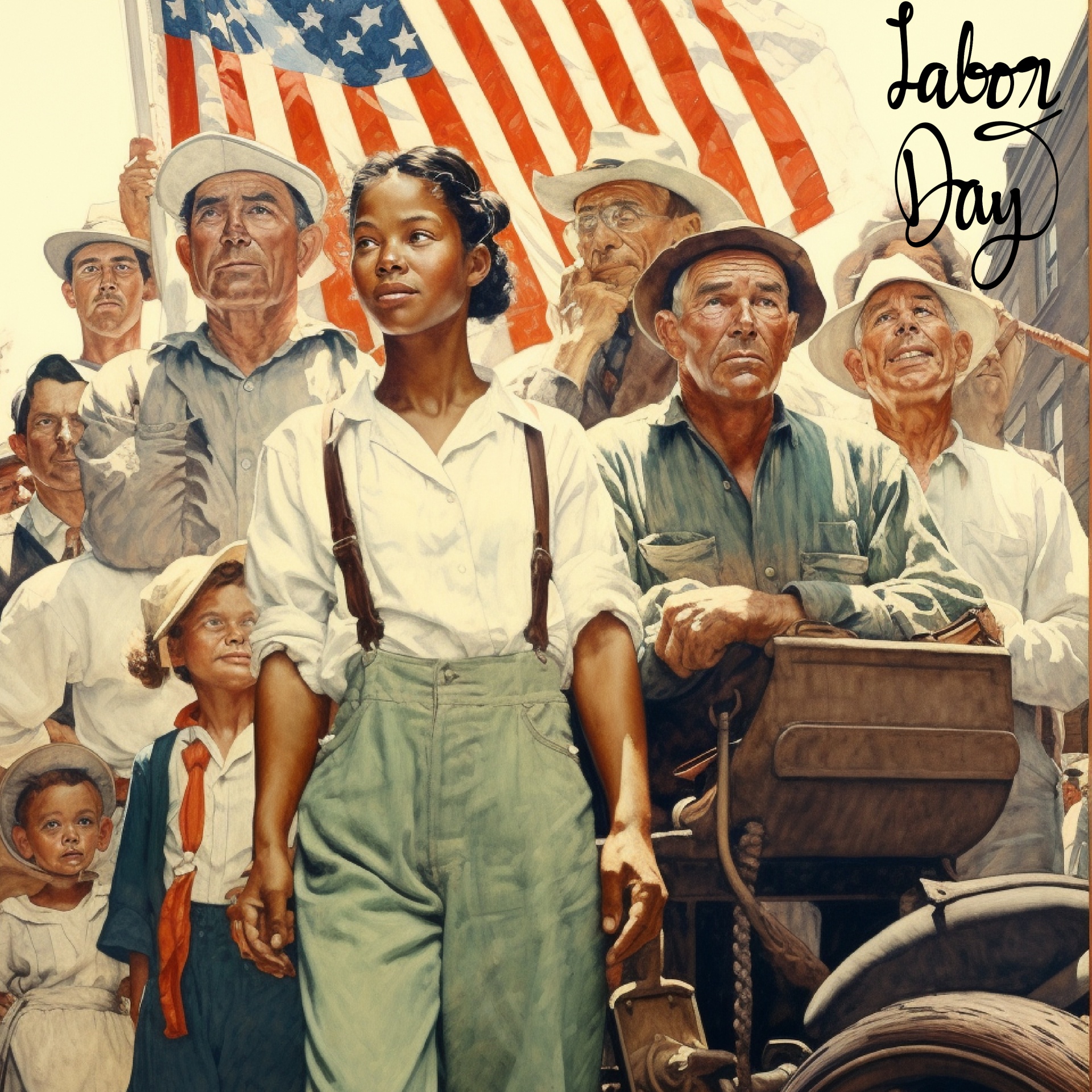
After years of hard work and growth, the nation began placing more importance on a Labor Day holiday. It was decided that workers deserved recognition for their contributions to building the country. The first bill was introduced in the New York legislature, but Oregon became the first state to pass a law on February 21, 1887. Later that year, Colorado, Massachusetts, New Jersey, and New York followed suit, establishing Labor Day holidays through legislation. By the end of the decade, Connecticut, Nebraska, and Pennsylvania had also joined in. By 1894, 23 more states had adopted the holiday, and on June 28 of that year, Congress passed an act declaring the first Monday of September a legal holiday in the District of Columbia and the territories. Finally, the whole nation was on the same page.
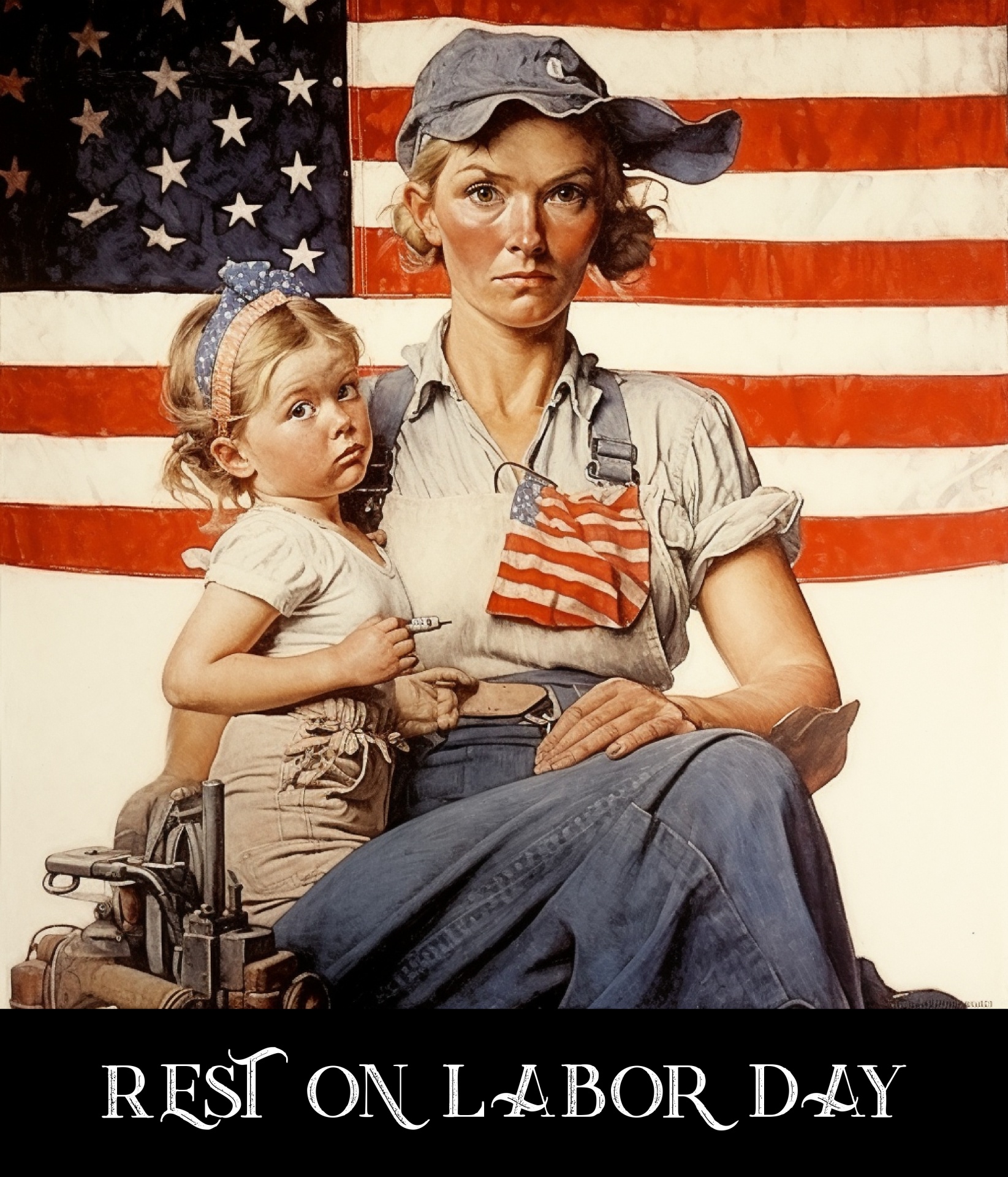
The first Labor Day holiday was celebrated on Tuesday, September 5, 1882, in New York City, organized by the Central Labor Union. The day kicked off with a parade and continued with plenty of festivities. The Central Labor Union held its second Labor Day just a year later, on September 5, 1883. Interestingly, the holiday didn’t become official until 1887, and even then, it wasn’t in New York City. Over time, like many holidays, it made more sense to move the celebration to the first Monday in September, giving workers a three-day weekend to enjoy. It’s a fitting tribute to laborers, though not every worker gets the day off, which would be nearly impossible for obvious reasons. Still, Labor Day is a day to honor and thank all workers for their contributions to this nation’s greatness, and hopefully every worker gets it off at some point in their working career. Happy Labor Day to workers everywhere!!

