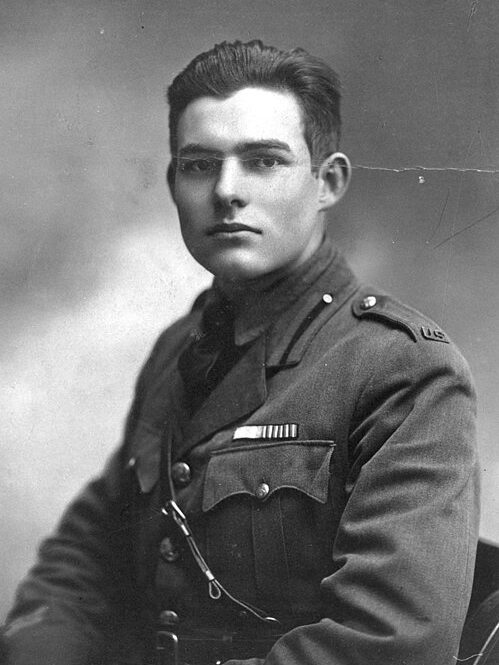
 Sometimes, life events can alter the future of the people involved. That was the case with 18-year-old Ernest Hemingway, who was serving as an ambulance driver for the American Red Cross during World War I. Hemmingway was wounded by a mortar shell on the Italian front along the Piave delta during his duties there. Born in Oak Park, Illinois, Hemingway, who had always liked writing, had been a reporter for the Kansas City Star when the war began in 1914. He volunteered for the Red Cross in France before the United States entered the war in April 1917 and was later sent to the Italian front, where he witnessed a series of Italian victories in early July 1918 that saw 3,000 Austrians taken prisoner.
Hemingway’s life would forever change on the night of July 8, 1918. There on Italian soil, Hemingway was hit by an Austrian mortar shell while passing out chocolate to  Italian soldiers in a dugout. The blast knocked him out cold and buried him under dirt, with shell fragments injuring his right foot, knee, thighs, scalp, and hand. While Hemingway survived his injuries, two Italian soldiers standing between him and the point of impact weren’t as fortunate. One of the men died instantly, and the other lost both legs and passed away shortly after. As with most men, Hemingway must have wondered why his life had been spared, when others lost theirs.
Hemingway’s friend Ted Brumbach visited him in the hospital and wrote to his parents about the incident, saying, “A third Italian soldier was badly wounded, and 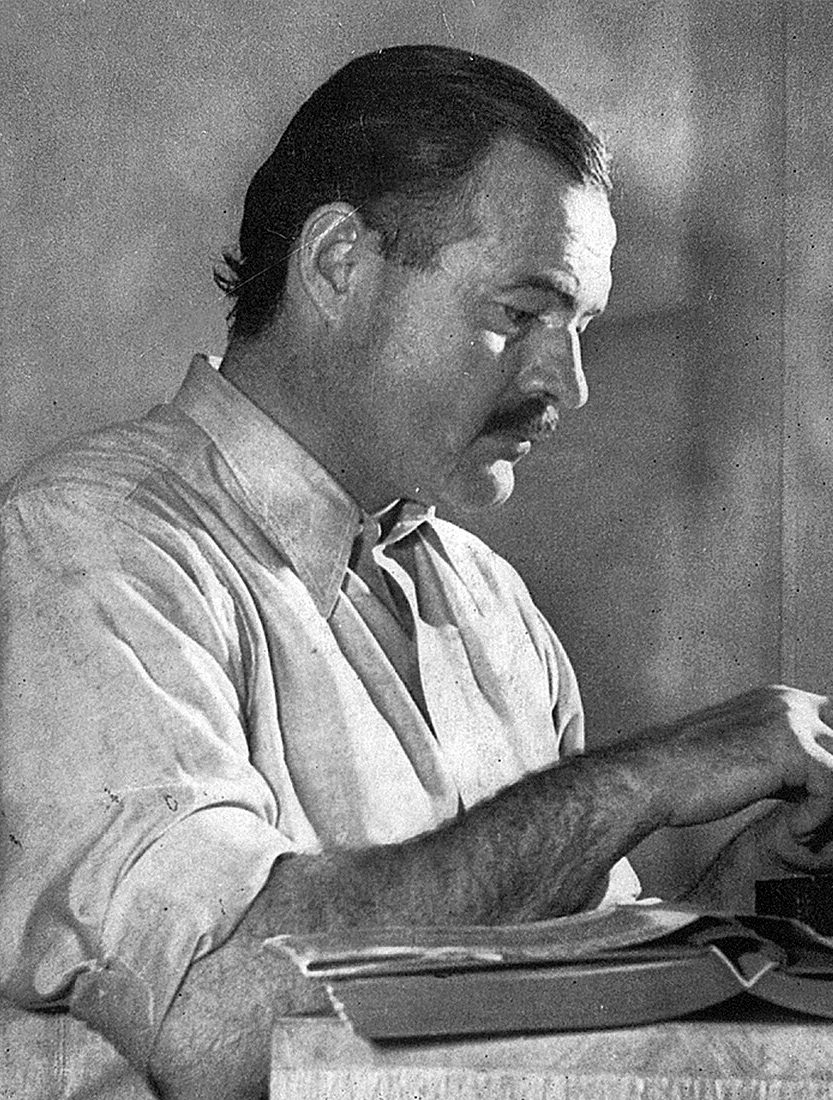 Ernest, after regaining consciousness, carried him on his back to the first aid dugout.” Hemingway didn’t remember how he got there or that he carried the man…until an Italian officer told him the next day, adding that it had been decided to award him a medal for valor. As Brumbach noted, Hemingway received the Croce de Guerra for his service. In his own letter home afterward, Hemingway wrote, “Everything is fine, I’m very comfortable, and one of the best surgeons in Milan is taking care of my wounds.”
As is often the case after a traumatic event, Hemingway’s time in Italy during World War I became a defining part of his “larger-than-life persona” and inspired one of his most beloved novels, A Farewell to Arms. The story follows the romance between a young American ambulance driver and a beautiful English nurse on the Italian front during the Great War. While the novel is fictional, Hemingway wove in elements from his own experiences.


Leave a Reply