 Jemima Warner was a camp follower with the Continental Army in the early days of the American Revolutionary War. According to the Women’s Memorial in Washington, DC, she’s considered the first American “military woman killed in action” and quite likely the first woman to die in combat during US wars. A teenage wife to Private James Warner of the Pennsylvania Rifle Battalion, she joined him on the campaign trail, determined to be by his side in case he fell ill or was injured. Little is known about Jemima’s early years, but she likely lived in Lancaster County, Pennsylvania before enlisting in the Continental Army at the age of 17.
In late 1775, after the battles of Lexington and Concord, the Continental Army laid siege to the British in Boston and seized several of their military bases. Fearing a British counterattack from Canada to reclaim the forts and push down the Hudson River to New York City, the army launched an invasion of Quebec. As they marched north, supplies ran low and smallpox spread. In Maine, a sick James Warner fell behind, and Jemima stayed with him. When he passed away, she covered his body 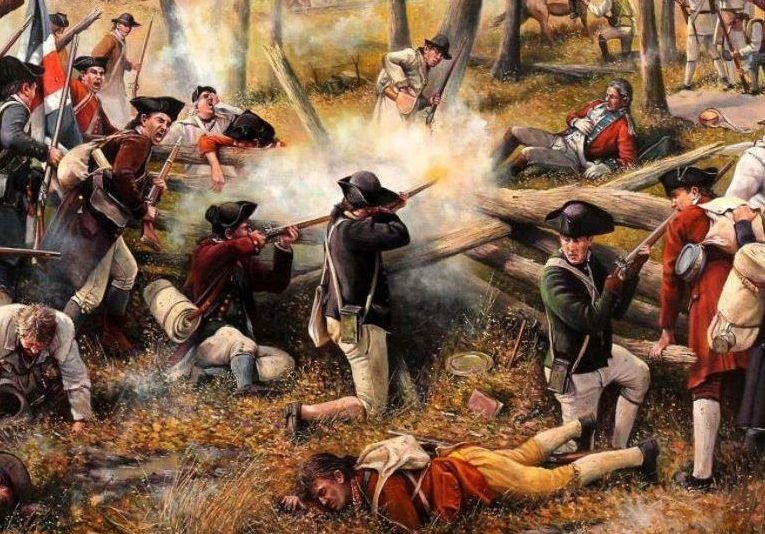 with leaves, grabbed his rifle and powder, and ran 20 miles to rejoin the battalion. Many soldiers were stunned when she emerged from the wilderness days, or even weeks, later, carrying her husband’s rifle.
Once she was back with her husband’s battalion, Jemima Warner served as a cook for the troops, the company tried to approach Quebec under a white flag to negotiate with the enemy, but British cannons forced them back. During the invasion of Quebec, General Richard Montgomery switched tactics and commissioned Jemima Warner to deliver a letter containing his conditions of surrender to Governor Guy Carleton. She accepted the mission and trudged through about 800 yards of deep snow to deliver a proposal to the British, but when she arrived, she was refused admittance into the city. On her second attempt, however, she dressed in a borrowed formal gown and was allowed in. Nevertheless, Governor Carleton tore up the letter, imprisoned her. The Five 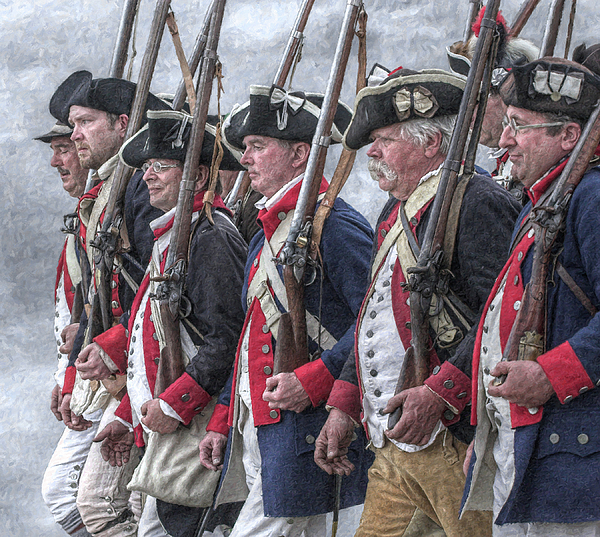 days later, she was released and rejoined the battalion. Not long after, during the Siege of Quebec on December 11, 1775, she was killed by British gunfire. Although Jemima Warner and Susannah Grier (wife of Sergeant Joseph Grier of Captain William Hendrick’s company) are named in John Joseph Henry’s journal of the expedition through the Maine wilderness, neither is mentioned by name in soldiers’ journals from the invasion of Quebec. Accounts note four women on the American side killed during the siege: one by grapeshot in December 1775, one by burning that same month, one accidentally shot by an American soldier in April 1776, and one struck by lightning in June 1776. It’s often believed that Warner was the woman killed by grapeshot while standing with American soldiers in December 1775.


Leave a Reply