
 Everyone these days knows what a powerline is, and most of us would consider them to be a serious eyesore, but on June 3, 1889, when the first powerline was placed, it signified a wonderful new accomplishment…the transportation of electricity from one place to another. America’s first electric power line carried energy 14 miles from Willamette Falls to Portland, Oregon, which served to pioneer modern electrical transmission. At that time, few, if any, homes had any electrical wiring, and as with most innovation, it can be slow in coming to the masses.
The Industrial Revolution marked the beginning of widespread human-generated electricity. Many people credit Benjamin Franklin with discovering electricity in 1752, when he realized that sparks from lightning could produce power. However, the development of electricity on power lines wasn’t the work of just one inventor, but the result of collective engineering efforts and fierce competition in the late 19th century, with several key figures influencing its design and implementation. Before dedicated power lines, cities relied on mechanical systems such as water pipes, air pressure, and moving cables to transmit power. By the 1880s, electric arc lighting and incandescent lighting systems started using wires, but these were short-range and often operated separately for different voltages.
In 1882, Thomas Edison’s Pearl Street Station in New York City became the first centralized power plant, 
 delivering electricity through underground wires to customers within about a mile. It used direct current (DC) at low voltages, which limited its range and required separate lines for different devices. The real gamechanger came with Nikola Tesla’s alternating current (AC) system, promoted by George Westinghouse. Tesla’s patents for polyphase AC motors and transformers made it possible to efficiently change voltage levels, sending electricity over long distances at high voltage and then stepping it down for safe use. This laid the groundwork for today’s overhead and underground transmission systems.
Tesla and Westinghouse may have pioneered AC technology, but the practical setup of overhead power lines…wires strung along towers or poles as we see today…came from engineers and utility companies in the early 1900s. They focused on making them safe, well-insulated, cool enough to operate, and tough against the weather, eventually adapting the designs to carry everything from low-voltage distribution (under 1 kV) to ultra-high-voltage transmission above 800 kV.
Nikola Tesla and George Westinghouse developed the AC system that made long-distance power transmission 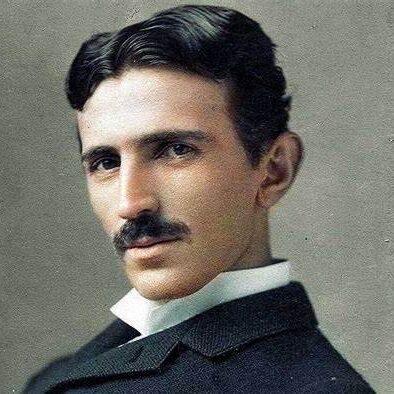
 possible, while Thomas Edison created the first centralized power plant and early distribution networks. In the early 20th century, engineers designed the overhead line structures and safety systems that are still used today. Although no one “designed electricity on power lines” in a single moment, Tesla’s AC system and Westinghouse’s efforts to commercialize it were the key breakthroughs that enabled modern overhead power lines, building on the earlier innovations of Edison and others. The need is there, but all of the overhead powerlines are an eyesore…especially when taking pictures.


Leave a Reply