Monthly Archives: April 2026
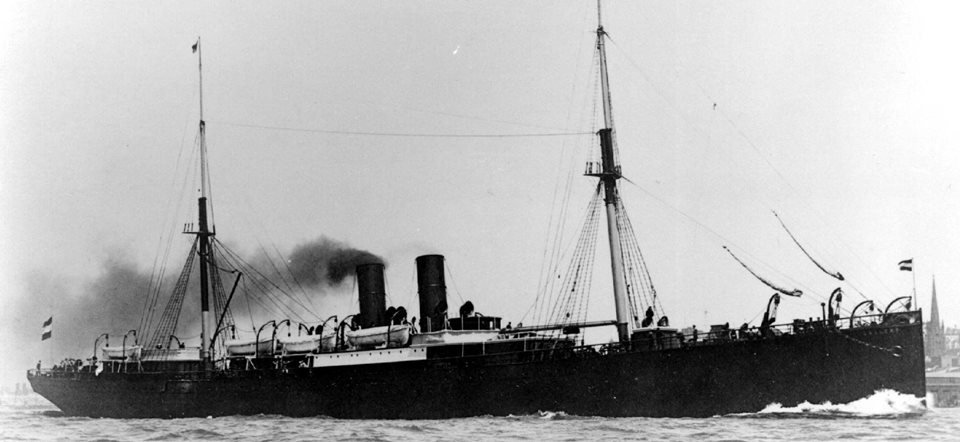
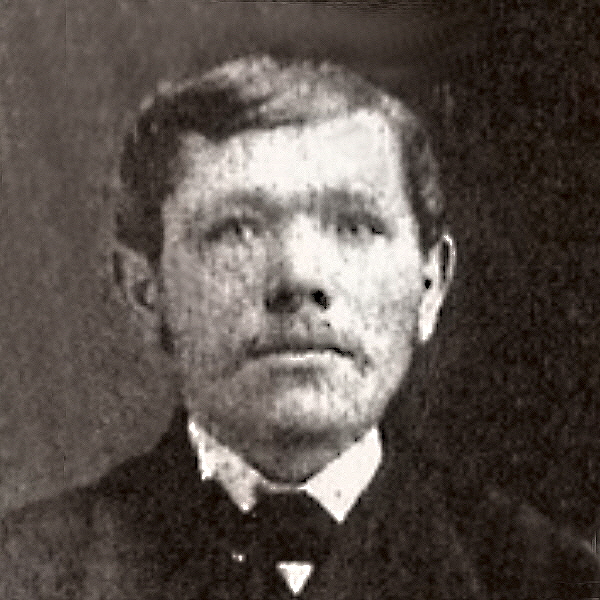 Today marks the 142nd anniversary of the day my great-grandfather, Carl Ludwig Theodor Schumacher, arrived in the United States. What must he have been thinking as he first looked on this new land that was to be his home? Grandpa was just 25 years old when he made the tough decision to leave his homeland and board the SS Gellert in Hamburg, Germany, on April 6, 1884, bound for a new life far from his parents and family. Since the age of 18, he’d been reading letters from his uncle and cousins raving about America, especially Minnesota. So, he decided to go. For seven years, he worked hard caring for the horses of a wealthy landowner to save the $50 needed for his fare. He knew the Atlantic crossing could be dangerous and that he’d miss his family deeply, but he was determined. He also understood it would take years of hard work to achieve the American Dream he envisioned, but he wanted this new life. He would go on to succeed, but today my thoughts are less about his dreams and more about the emotions he must have felt making such a life-changing decision. It could be years before he could go home again.
 At 25, a young man isn’t necessarily so grown up that moving halfway around the world doesn’t feel overwhelming. Such a move would be daunting for anyone, no matter how self-assured they are. Arriving at a place like Ellis Island—or in my grandfather’s case, Castle Garden, since Ellis Island wasn’t built until 1892—meant not knowing exactly what you’d face before being allowed into the United States. Many newcomers were required to Americanize their names to make it easier to fit in, forever changing their identity. That’s what happened to my great-grandfather, whose name was changed from Schuhmacher to Schumacher. Still, for most immigrants, this felt like a small price to pay for the promise of the American Dream, and many even saw it as a rite of passage into this great country.
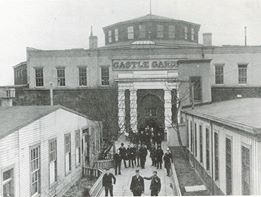 I can’t help but think my grandfather must have felt some sadness over the change of his name, even though he would later use it again when he married. Still, census and other records list it as Schumacher, making genealogy a bit tricky. I doubt that was on my great grandfather’s mind as he waited for his turn at Castle Garden on April 21, 1884, but looking back on that day, so important to my own life, the thought crosses my mind. He had endured so much to reach this new land of opportunity, and I’m sure the massive changes left him weary. Yet, once he arrived in Minnesota and began building his dream, I imagine the uncertainties of the journey faded into a distant memory. He was home…his American dream.

 At its peak in 1910, the coal mining industry in Colorado employed 15,864 people. That number accounted for 10% of the state’s jobs. The industry was dominated by just a few operators, with Colorado Fuel and Iron being the largest in the West and one of the most powerful corporations in the country. The large and powerful corporations cand cause more than a few problems. At one point, Colorado Fuel and Iron employed 7,050 people and controlled 71,837 acres of coal land. John D Rockefeller bought a controlling stake in the company in 1902, and nine years later handed over that stake to his son, John D Rockefeller Jr, who ran the business from his offices at 26 Broadway in New York.
Mining was tough and risky work. In Colorado, the miners faced constant dangers like explosions, suffocation, and collapsing walls. Back in 1912, the death rate in the state’s mines was 7.06 per 1,000 workers. That was more than double the national average of 3.15. Safety concerns were a big part of the reason for the strike. Suffering attempts to suppress union activity, the United Mine Workers of America secretly continued its unionization efforts in the years leading up to 1913. Eventually, the union presented a list of seven demands: 1. Recognition of the union as bargaining agent. 2. Compensation for digging coal at a ton rate based on 2,000 pounds (previous ton rates were of long tons of 2,200 pounds). 3. Enforcement of the eight-hour work-day law. 4. Payment for “dead work” (laying track, timbering, handling impurities, etc.). 5. Weight checkmen elected by the workers (to keep company weightmen honest). 6. Right to use any store, and to choose their boarding houses and doctors. 7. Strict enforcement of Colorado’s laws (such as mine safety rules, abolition of scrip), and an end to the company guard system.
The major coal companies turned down the demands, and in September 1913, the United Mine Workers of America called a strike. Striking workers were forced out of their company homes and relocated to tent villages set up by the union. These tents, built on wooden platforms and equipped with cast-iron stoves, stood on land the union had leased in anticipation of the strike. Ending the strike which had become quite bitter took a terrible turn. Colorado militiamen attacked a tent colony of striking workers, killing dozens of men, women, and children. After eviction attempts failed to end the strike, the Rockefeller interests hired private detectives who assaulted the colonies with rifles and Gatling guns. The miners fought back, and several were killed. When it became clear the strikers wouldn’t give up, the Rockefellers turned to the governor of Colorado, who authorized the deployment of the National Guard, with the Rockefellers agreeing to cover their wages.
At first, the strikers believed the National Guard had come to protect them, but they quickly realized that wasn’t the case. The militia was there to crush the strike…one way or the other. On April 20, 1914, two companies of guardsmen attacked the largest tent colony near Ludlow, home to about 1,000 men, women, and children. The assault began in the morning with a barrage of bullets into the tents, prompting miners to fire back with pistols and rifles. When a strike leader was killed while trying to negotiate a truce, fears grew that the attack would escalate. Women and children hid in pits beneath the tents to avoid gunfire. By dusk, guardsmen descended from the hills, setting the colony ablaze with torches and shooting at families as they fled. The full horror emerged the next day, when a telephone linesman found a pit under one tent containing the burned remains of 11 children and two women.
The “Ludlow Massacre” sparked outrage across the country, but it brought little relief to the struggling Colorado 
 miners and their families. Federal troops were sent in to break the coal miners’ strike, and the workers ended up with no union recognition or meaningful gains in pay or working conditions. Over the course of the strike, 66 men, women, and children lost their lives, yet not one militiaman or private detective faced criminal charges.
 Sometimes we think of the news media as being overly dramatic, and indeed, they can be, but what of April 18, 1930. On that particular day, during the BBC radio station’s 8:45pm broadcast, the announcer in London came on the air and said simply, “Good evening. Today is Good Friday. There is no news.” Really, that, in itself, was news, or at least newsworthy. Nevertheless, after making the odd announcement, the station proceeded to play 15 minutes of piano music before its next program began. I suppose it makes sense that the day could have been fairly uneventful…even uncommonly so, but it seems like there must have been some kind of news to report. The wireless service then switched back to broadcasting from the Queen’s Hall in Langham Place, London, where Wagner’s opera “Parsifal” was underway.
In reality, there is no such thing as a day without news, and April 18, 1930, was no exception. On that day, there were at least three significant events, including the Chittagong Armory Raid in India, a tragic church fire in Romania, and a powerful typhoon in the Philippines. Now, I suppose the announcer might not have heard of these events as of the broadcast time, but since the BBC is an international station, that shouldn’t have been the case. Besides that, it was 8:45 in the evening, so the news of the day had already happened. They should have known, but 87 years ago, on April 18, 1930, the BBC’s news announcer had nothing to report. The 8:45pm bulletin simply stated, “There is no news,” before piano music filled the remainder of the 15-minute segment. It really was ludicrous.
This unusual broadcast reflected the BBC’s early mission to provide morally uplifting content. In addition, its editorial judgment that nothing occurring that day was significant enough for the public played a part in the broadcast. In reality, events such as the nationalist activities in India were happening, as were the other newsworthy events mentioned, but communication limitations prevented the BBC from reporting them. The April 18, 1930, event has come to represent a simpler time in journalism, standing in stark contrast to today’s nonstop news cycle, where information flows endlessly through radio, television, and social media. Nevertheless, these days, we would call the event” suppressing the news” rather than “protecting the public” from what the government could consider potentially hurtful news. These days, newsrooms almost never see a  “slow news” day, as stories are constantly emerging and even the smallest events get reported to keep audiences hooked.
The “Day Without News Day” did provide a chance to think about how we consume media, step back from the endless news cycle, and reflect on how journalism has evolved. It was also a lighthearted reminder that editorial choices define what counts as news, showing the differences between past and present reporting styles. The moment invited people to slow down, notice the constant flow of information, and appreciate the rare quiet in a world that’s always updating.
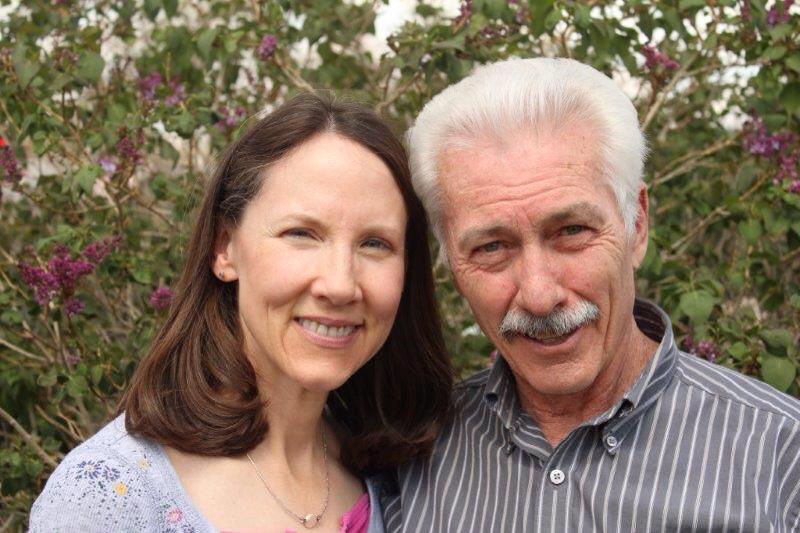
 When my sister-in-law, Jennifer Parmely, met her partner, Brian Cratty, I remember thinking that he was a quiet man, and wondering if he would be able to “survive” being pushed into the middle of this big family. Now, by “survive” I don’t mean physically survive, but rather if he would have the feeling of being “eaten alive” by being planted in the middle of a large group of people. I needn’t have worried, because Brian was quite capable of standing on his own two feet in a crowd. It’s not really surprising for someone to be a bit reserved when meeting a big family like ours for the first time. It takes courage to walk into that kind of situation…I know because I’ve been there. So, when Jennifer introduced Brian to the family, I couldn’t help but feel a little sorry for him. It’s kind of like standing in front of hundreds of people to give your first public speech at 13 years old. But once you get to know Brian, you see the gentle, kind man Jennifer fell in love with. You also see the confident man who has “made a few speeches” in his life. He was fine and felt no fear. In fact, it was likely my own shyness that made me feel uneasy for him.
Brian and Jennifer are soulmates. They have the same interests and are going in the same direction. Nevertheless, they do have differences and interests of their own. They love spending time in the mountains, no matter the season. For them, summer is just as enjoyable as winter. I’m not a fan of winter anywhere, but I do love the mountains in summer when I can hike. Brian and Jennifer, along with most of their family, are big ski enthusiasts, so winter on the mountain is perfect for them. Still, Brian has some interests that are slightly different than Jennifers. One of his favorite pastimes is mountain biking. He’ll hop on his bike and ride the trails around their cabin, sometimes disappearing for an hour or more at a time, lost in his own world…his favorite place to be…without equal. 

Brian has been such a wonderful addition to Jennifer’s family and to ours as well. The little ones adore him, and he’s so good with them. He fits right in with all of us, and though he is a quiet man in a crowd, he can hold a great conversation with anyone. We all love having him around, and he’s a fantastic partner to Jennifer and a loving grandpa to the babies. Today is Brian’s birthday. Happy birthday Brian!! Have a great day!! We love you!
 In 1907, France saw one of its most unusual strikes. In fact, this strike would seem unusual anywhere in the world. While better wages and working conditions were on the table as usual, this protest had an unexpected twist. The strikers were fighting for the right to grow a mustache. That is something in most cases would be a personal choice, not something that would be a factor in the workplace. Through the years, hairstyles, and yes even facial hair, or the lack thereof have been a factor is society, status, and even manhood. In 1907, mustaches were all the rage in Europe and strangely, even mandatory for policemen. The idea was that a mustache projected military-style masculinity and authority. At the same time, restaurant servers, were required to stay clean-shaven, a nod to their “lower class” status. This, of course, infuriated the restaurant workers, who did not like being relegated to a “lower class” status. So, behind the scenes, trade unions rallied for workers’ freedom to choose their own facial hair, along with demands for one day off each week and a fair share of tips,
  often their only real income. Surveys went out to unions to settle on dates and times, and once compiled, strike instructions were sent to members.
On April 17, 1907, at exactly 6:30pm, waiters staged a walkout. While the exact number of participants remains uncertain, The New York Times estimated about 500 were striking by late April. Despite some criticism, the waitstaff gained support from prominent figures, including members of Parliament. Socialist Deputy Antide Boyer…who had previously proposed a bill to outlaw mustache bans…called the rule “grotesque and humiliating.” Although his bill never passed, the strike ended swiftly. After 16 days,  the waiters returned to work without securing a weekly day off, but with a fairer pay system, and most importantly, their mustaches intact. In many ways that was considered more important than anything else.
In a way, it all began in 1860, when mustaches became a requirement in the British Army, with regulations stating, “The chin and the under-lip will be shaved, but not the upper lip.” Prior to that time facial hair had actually been banned, but during the Crimean War (1853–1856), soldiers let their beards grow to protect against the harsh Eastern European cold. When they returned, their bearded look was seen as a mark of heroism, even catching Queen Victoria’s attention. She noted in her journal how the men had long beards and heavy knapsacks, giving a vivid picture of their life in service. From then on, beards became a popular fashion throughout Victorian England. That comment set the stage for the strike that was to come.

 Cornelia Arnolda Johanna “Corrie” ten Boom was a Dutch watchmaker who later became a Christian writer and public speaker. She worked alongside her father, Casper; her sister, Betsie; and other family members to help many Jewish people escape the Nazis during World War II by hiding them in their home, even altering the house to create a secret room to hide people in. Unfortunately, they were eventually discovered. Corrie, her father, and her sister were arrested and placed in a concentration camp. Corrie and Betsie were sent to the Ravensbrück concentration camp. Her best-known book, “The Hiding Place,” tells the story of her family’s bravery and how she found and shared hope in God while imprisoned. Corrie was prisoner number 66730 belonged to Corrie ten Boom, and she would later become the only one of her family members to survive the camps. She endured the horrors of the Ravensbrück concentration camp alongside her sister Betsie, surviving the brutal conditions until her unexpected release due to a clerical error…or rather, an act of God!!
Corrie’s life lasted exactly 91 years, which is unusual. She was born on April 15, 1892, and passed away on April 15, 1983. On February 28, 1944, Dutch informant Jan Vogel tipped off the Nazis about the Ten Booms’ activities. Around 12:30pm that day, the entire Ten Boom family was arrested and sent to Scheveningen Prison after Resistance materials and extra ration cards were found in their home. The six people they were hiding…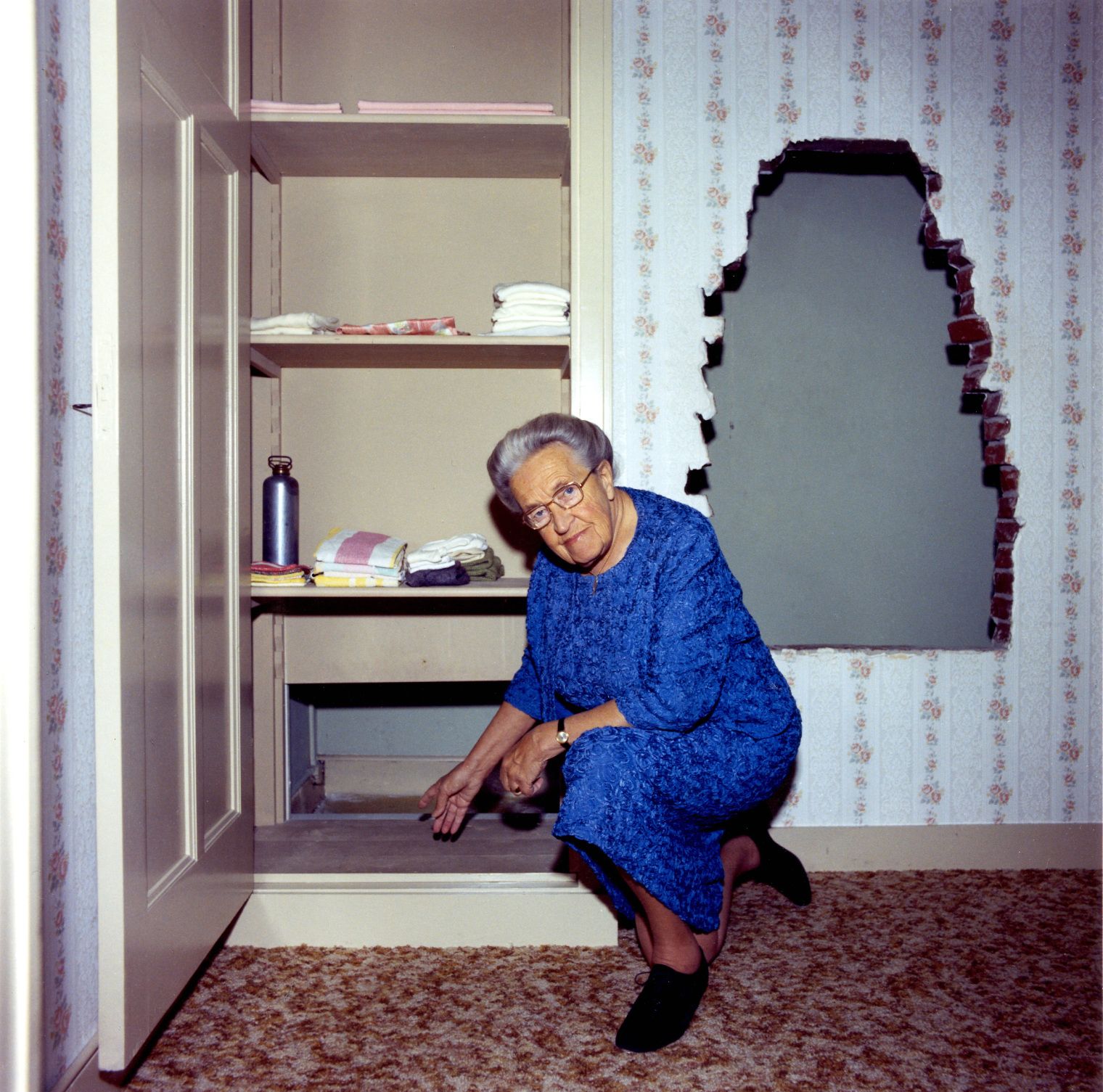 both Jews and resistance members…remained undiscovered. Even under constant surveillance after the arrest, because police officers who were part of the resistance helped coordinate the refugees’ escape. While in prison, Corrie received a letter saying, “All the watches in your cabinet are safe,” a coded message that the refugees had escaped unharmed. Three days after the raid, resistance workers moved them to new locations. In total, the Gestapo arrested more than 30 people at the Ten Boom home that day. Although the Gestapo released most of the 30 people they arrested that day, Corrie, Betsie, and their father, Casper remained in prison. Casper died ten days later. Corrie was kept in solitary confinement at first, and after three months, she faced her first hearing. During the trial, she spoke about her work with people with mental disabilities, prompting a Nazi lieutenant to scoff, as the Nazis had long been killing such individuals under their eugenics policies. Corrie defended her work, saying that in God’s eyes, a person with a mental disability might be more valuable “than a watchmaker. Or a lieutenant.”
Corrie ten Boom was 51 years old at the time of her arrest. She would spend the next 10 months in prison. While imprisoned at Ravensbrück, Betsie and her sister talked about starting a place of healing after the war. Unfortunately, Betsie’s health deteriorated, she passed away on December 16, 1944, at the age of 59. Before her death, she told Corrie, “There is no pit so deep that He [God] is not deeper still.” Twelve days later, Corrie was released, only to later learn it was due to a clerical error. A week after her release, all the women in her 
 age group were sent to the gas chambers. While the Nazis meant to kill her, God had other plans. Overall, Corrie ten Boom and her family bravely helped save about 800 Jews and resistance members by hiding them in that secret room in their home in Haarlem, Netherlands. After the war, she recounted her story of faith, forgiveness, and perseverance in her book “The Hiding Place” and went on to become a renowned international speaker…something I’m sure she never expected.

 The article had appeared in the newspapers, announcing that General Ulysses S Grant and his wife Julia would join the President and Mrs Lincoln at Ford’s Theater later that evening. For John Wilkes Booth, the news was “amazing” because he would now have a perfect second assassination target. For the rest of the audience, the news meant they were in for a double treat…seeing not only the President but also the Hero of Appomattox. Little did they know of the sinister plans that were in the making.
Julia Grant wasn’t interested in going, because she didn’t care much for Mary Lincoln. Her husband agreed, understanding that his usually easygoing wife felt uneasy around the high-strung First Lady. In addition, the Grants were eager to get back to their rented house in Burlington, New Jersey, to see their children, whom they hadn’t seen in weeks. To make it easier they said they had business to attend to in Burlington, and they must be on their way.
Around noon, a scruffy-looking man showed up at Julia’s door with what he claimed was a message from Mrs Lincoln. It said the Lincolns would pick up the Grants at exactly 8:00 that evening. Mrs Grant picked up on a bossy tone she didn’t appreciate and told the man to inform Mrs Lincoln they wouldn’t be joining them. In reality, Mrs Lincoln had never sent any message and knew nothing about it. It’s possible that the two women might have been friends were it not for other people, but that’s just my opinion.
Whatever the case may be, the Grants did not end up accompanying the Lincolns that night and quite likely, that saved Ulysses Grant’s life. Had he been there, he would have most likely not survived the evening. In all, 13 other people declined the invitation Mr and Mrs Edwin Stanton, Thomas Eckert, Schuyler Colfax, George Ashmun, Richard J Oglesby, Richard Yates, General Isham N Haynie, William A Howard, Mr and Mrs William H Wallace, Noah Brooks, and even Robert Lincoln, the president’s son. The others had various reasons for declining, but Robert said that He said that as his parents were departing for Ford’s, his dad said, “We’re going 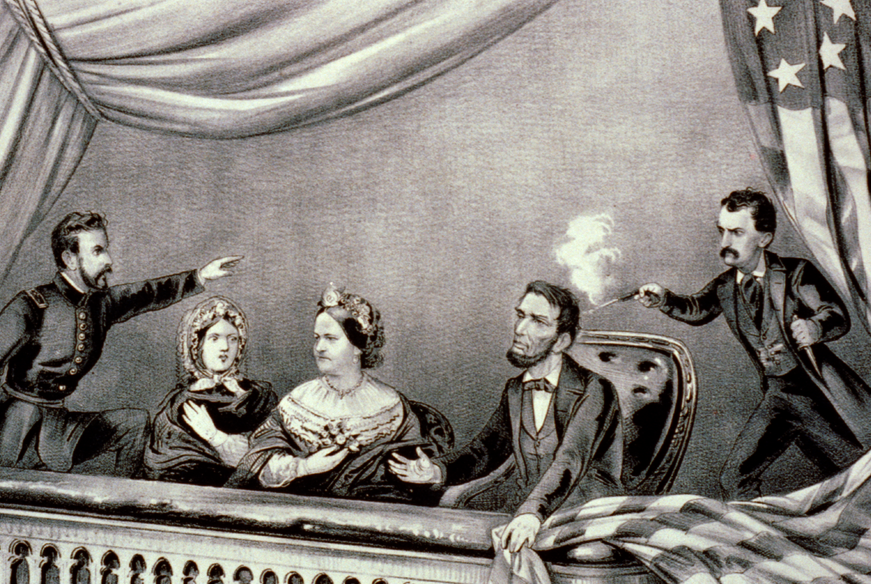 to the theater, Bob, don’t you want to go?” Captain Lincoln, recently back from his tour of duty with General Grant, wanted to turn in early that night. Twelve-year-old Tad Lincoln remarked that no one had invited him to go along. Instead, he went to see “Aladdin or The Wonderful Lamp” at Grover’s Theatre, just a few blocks from Ford’s. Tad was still at Grover’s when his father was shot at Ford’s, after which he was brought to the White House and put to bed. A number of those who declined could have also been a target, but we will never know. In the end, it was Major Henry Rathbone, and Clara Harris who accompanied President and Mrs Lincoln, although, I’m sure they wished they had not in the end. I’m sure that was a night they could never forget…no matter how much they tried.

 The Metropolitan Museum of Art commonly known as the Met, is an encyclopedic art museum that was officially incorporated in New York City on April 13, 1870. By floor area, it is the fourth-largest museum in the world and the largest art museum in the Americas. The museum had a record 5,727,258 visitors in fiscal year 2025. It was the most-visited museum in the United States and the fourth-most visited art museum in the world. Conceived by American expatriates in Paris along with several wealthy New Yorkers, the Met didn’t host its first exhibition until 1872, but it soon grew into one of the world’s leading collections of fine art, a status it still enjoys today.
Back in 1866, a group of American socialites living in Paris, including lawyer John Jay, decided they wanted to create “a national institution and gallery of art.” They reached out to the Union League Club of New York, which pulled together the influence and funding needed to make it happen. On this day in 1870, the city approved  their Act of Incorporation, requiring that the collection be open to the public year-round and free of charge. Year-round is not unexpected, but to be free of charge is definitely something unusual.
Back in 2000, The Met’s permanent collection boasted over two million works, but now it lists about 1.5 million. The collection is spread across 17 curatorial departments. The main building at 1000 Fifth Avenue, located along Museum Mile on the east side of Central Park in Manhattan’s Upper East Side, is one of the largest art museums in the world by area. The first part of the roughly 2-million-square-foot structure was built in 1880. A smaller second location, The Cloisters in Fort Tryon Park, Upper Manhattan, houses an impressive collection of art, architecture, and artifacts from medieval Europe.
The Met got its first piece, a Roman sarcophagus, in November of its founding year. In 1876, it completed the purchase of the Cesnola Collection of Cypriot Art, cementing its status as North America’s top spot for artifacts and artwork from Antiquity. Taking advantage of the Franco-Prussian War, Jay acquired an impressive 174 works by Dutch Old Masters in 1871, giving the museum a strong collection before it even opened its first location in 1872. By 1880, a decade after its founding, the Met had moved to its current home on Fifth Avenue 
 at 82nd Street. Today, it showcases some of the largest collections of European and Antique art, along with pieces from every continent and in nearly every medium. It’s not just a leading cultural hub in New York, but also one of the world’s most famous and visited museums, welcoming around 7 million visitors each year.

 My sister-in-law, Jennifer Parmely knew her calling with the birth of her first son, Barry Schulenberg. From the moment he arrived, Jennifer began working toward her nursing degree, and within two years she was a labor and delivery nurse. Jennifer also drove herself to the hospital when her second pregnancy turned into a bit of an emergency. Nevertheless, her son JD Parmely was born healthy and well, as was her third son, Erik Parmely. As to her career, there is no way to say exactly how many babies Jennifer assisted in their entry into the world, but I know that four of them were my grandchildren, Chris Petersen, Shai Royce, Caalab Royce, and Josh Petersen. Jennifer’s nursing career was long and exciting and finally came to an end when Jennifer retired on February 28, 2023. She had been in healthcare since she was 17 years old…first as a candy striper, then as a CNA (as required by the nursing school at that time), and then as a labor and delivery nurse.
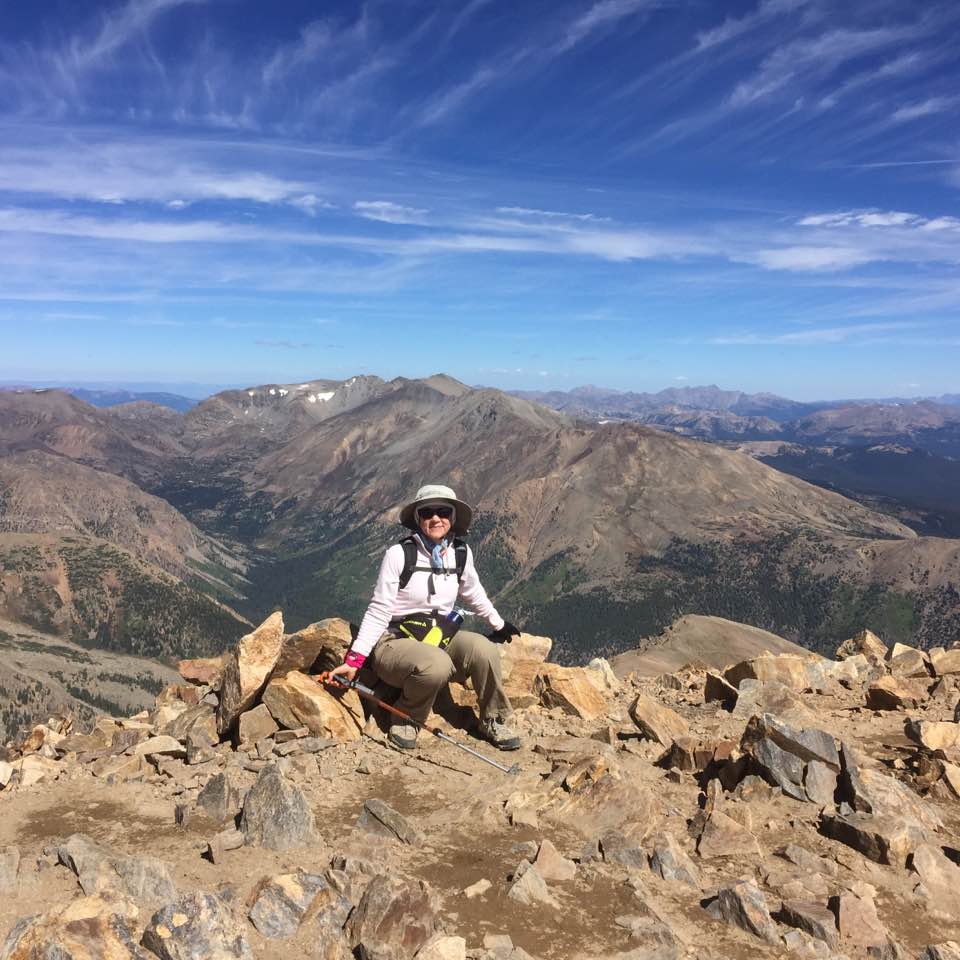

Since her retirement, she still spends time with children quite a bit. She has three granddaughters and a grandson, all of whom love to spend time with their Oma, especially if they can spend the night. Jennifer especially loves to spend time one-on-one with the kids, so they can each do things that they are specifically interested in. The kids are 13, 11, 8, and 6, so their interests vary greatly, and sometimes it’s just nice to get away from siblings. I know that Jennifer is a blessing to her son, Eric and his wife too. She sometimes picks the kids up from school when their parents are working and keeps them until they get off work. It takes a load off of working parents and pleases Jennifer and the kids too.
Of course, not all of Jennifer’s time is spent with children. She and her partner, Brian Cratty own a cabin on  Casper Mountain, and they love spending time up there throughout the year. They love hiking, skiing, and just relaxing at the cabin. The kids all love to go up to for picnics, holidays, hiking, skiing and whatever everyone comes up with. Prior to her retirement, Jennifer’s time on the mountain was more limited. Now, she is free to go up as often as she wants, and since their house in town isn’t that far from the base of the mountain, it’s just a quick trip up there. Jennifer is very much enjoying her retirement. Today is Jennifer’s birthday. Happy 65th birthday Jennifer!! Have a great day!! We love you!!
 With the many volcanic eruptions we hear about every day, I find it hard to fathom a statement like “the most powerful volcanic eruption in human history,” but on April 10, 1815, an eruption began in earnest in Indonesia, involving the Tambora volcano. The eruption sent ash 20 miles into the atmosphere and boiling liquified rock streaming down its slopes. The “cacophony of explosions” echoed for hundreds of miles, and within hours, nearby villages vanished, forests were reduced to ash, and massive rivers of lava surged into the sea, reshaping the island’s coastline.
Tambora, located on Sumbawa Island at the eastern edge of the Indonesian archipelago, had shown no volcanic activity for thousands of years before its massive 1815 eruption. Beginning to rumble on April 5, the volcano erupted with such force that it directly killed nearly 100,000 people and indirectly caused tens of millions more deaths worldwide. It was the largest eruption ever recorded, darkening the skies for days as ash blocked out the sun, causing massive local destruction and triggering the global “Year Without a Summer.” The eruption reached its climax on April 10,  1815, producing a Volcanic Explosivity Index (VEI) of 7, ejecting 37–45 km³ of dense-rock equivalent material into the atmosphere. In 1816, the massive amount of ash was characterized by unusually cold temperatures, frosts, and snow during summer months in the Northern Hemisphere. Europe experienced crop failures, food shortages, and famine, while North America saw persistent “dry fog,” frost, and poor harvests. Asia, including China and India, suffered disrupted monsoons, flooding, and famine. The global temperature drop is estimated at 0.7–1 °F on average. Flaming debris hitting the surrounding ocean created steam explosions, and the force of the blast triggered a moderate tsunami. So much rock and ash were expelled that Tambora collapsed into itself, reducing its height from 14,000 feet to 9,000 feet. After the eruption ended, a caldera spanning some 3.7 miles across remained.
The massive explosions were heard hundreds of miles away, prompting rulers to dispatch their armies,  convinced a military invasion was imminent. Tambora’s eruptions had a global impact, spewing enough ash into the atmosphere to lower temperatures for the next year and create stunningly colorful sunsets around the world. The eruption was blamed for snow and frost in New England during June and July of that summer. About ten thousand people died directly from the eruptions, most on Sumbawa Island, while in the following months over 80,000 more perished in the surrounding regions from starvation caused by crop failures and disease. A widespread cholera outbreak linked to the eruption claimed countless additional lives.

