
 Cornelia Arnolda Johanna “Corrie” ten Boom was a Dutch watchmaker who later became a Christian writer and public speaker. She worked alongside her father, Casper; her sister, Betsie; and other family members to help many Jewish people escape the Nazis during World War II by hiding them in their home, even altering the house to create a secret room to hide people in. Unfortunately, they were eventually discovered. Corrie, her father, and her sister were arrested and placed in a concentration camp. Corrie and Betsie were sent to the Ravensbrück concentration camp. Her best-known book, “The Hiding Place,” tells the story of her family’s bravery and how she found and shared hope in God while imprisoned. Corrie was prisoner number 66730 belonged to Corrie ten Boom, and she would later become the only one of her family members to survive the camps. She endured the horrors of the Ravensbrück concentration camp alongside her sister Betsie, surviving the brutal conditions until her unexpected release due to a clerical error…or rather, an act of God!!
Corrie’s life lasted exactly 91 years, which is unusual. She was born on April 15, 1892, and passed away on April 15, 1983. On February 28, 1944, Dutch informant Jan Vogel tipped off the Nazis about the Ten Booms’ activities. Around 12:30pm that day, the entire Ten Boom family was arrested and sent to Scheveningen Prison after Resistance materials and extra ration cards were found in their home. The six people they were hiding…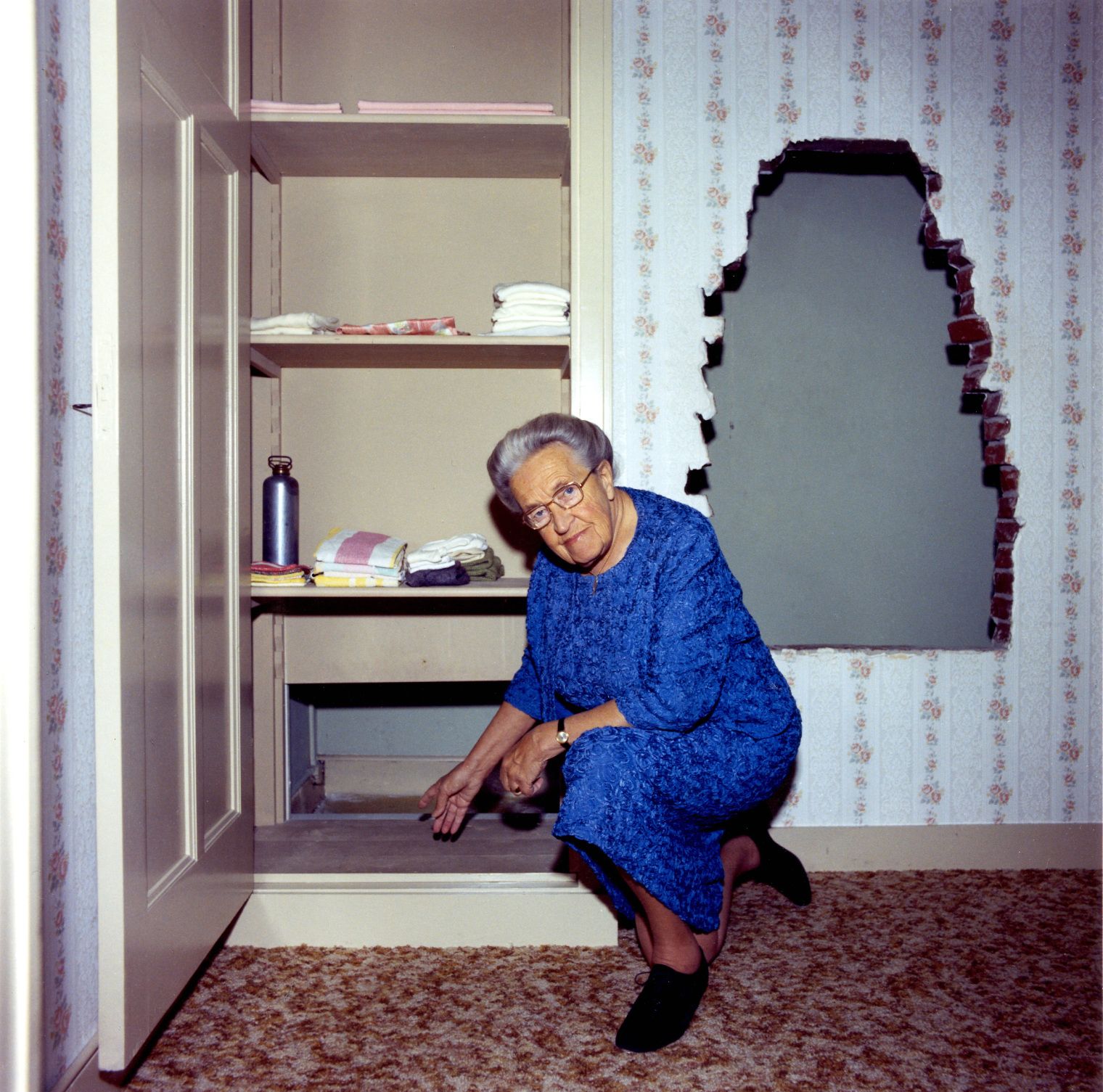 both Jews and resistance members…remained undiscovered. Even under constant surveillance after the arrest, because police officers who were part of the resistance helped coordinate the refugees’ escape. While in prison, Corrie received a letter saying, “All the watches in your cabinet are safe,” a coded message that the refugees had escaped unharmed. Three days after the raid, resistance workers moved them to new locations. In total, the Gestapo arrested more than 30 people at the Ten Boom home that day. Although the Gestapo released most of the 30 people they arrested that day, Corrie, Betsie, and their father, Casper remained in prison. Casper died ten days later. Corrie was kept in solitary confinement at first, and after three months, she faced her first hearing. During the trial, she spoke about her work with people with mental disabilities, prompting a Nazi lieutenant to scoff, as the Nazis had long been killing such individuals under their eugenics policies. Corrie defended her work, saying that in God’s eyes, a person with a mental disability might be more valuable “than a watchmaker. Or a lieutenant.”
Corrie ten Boom was 51 years old at the time of her arrest. She would spend the next 10 months in prison. While imprisoned at Ravensbrück, Betsie and her sister talked about starting a place of healing after the war. Unfortunately, Betsie’s health deteriorated, she passed away on December 16, 1944, at the age of 59. Before her death, she told Corrie, “There is no pit so deep that He [God] is not deeper still.” Twelve days later, Corrie was released, only to later learn it was due to a clerical error. A week after her release, all the women in her 
 age group were sent to the gas chambers. While the Nazis meant to kill her, God had other plans. Overall, Corrie ten Boom and her family bravely helped save about 800 Jews and resistance members by hiding them in that secret room in their home in Haarlem, Netherlands. After the war, she recounted her story of faith, forgiveness, and perseverance in her book “The Hiding Place” and went on to become a renowned international speaker…something I’m sure she never expected.


Leave a Reply