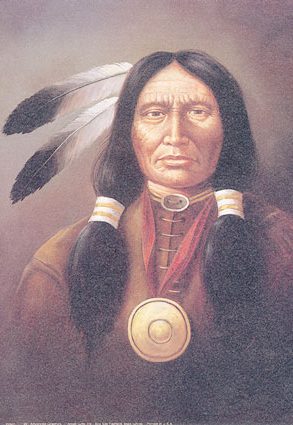
 On January 22, 1879, American soldiers chased Cheyenne Chief Dull Knife and his people as they made a desperate run for freedom. The clash ended in a devastating defeat for Dull Knife and his band, as the soldiers brought the so-called Dull Knife Outbreak to a crushing end.
Dull Knife, also known as Morning Star, was a prominent chief of the Northern Cheyenne tribe. He had long advocated for peace with the powerful Anglo-Americans moving into his homeland in the Powder River region of present-day Wyoming and Montana. But the 1864 Sand Creek massacre, where Colorado militiamen killed over 200 peaceful Cheyenne, made him doubt they could ever be trusted. Reluctantly, he led his people into a war he feared they couldn’t win. In 1876, many of his people fought alongside Crazy Horse and Sitting Bull in their victory at the Battle of Little Bighorn, though Dull Knife himself did not take part.
In the winter after Little Bighorn, Dull Knife and his people camped near the headwaters of the Powder River in Wyoming, only to be caught in the army’s winter campaign for revenge. In November, General Ranald Mackenzie’s forces found the village and attacked, costing Dull Knife many lives. Along with other Native leaders, he reluctantly surrendered the following spring. By 1877, the military had moved Dull Knife and his followers far from their Wyoming homeland to Indian Territory 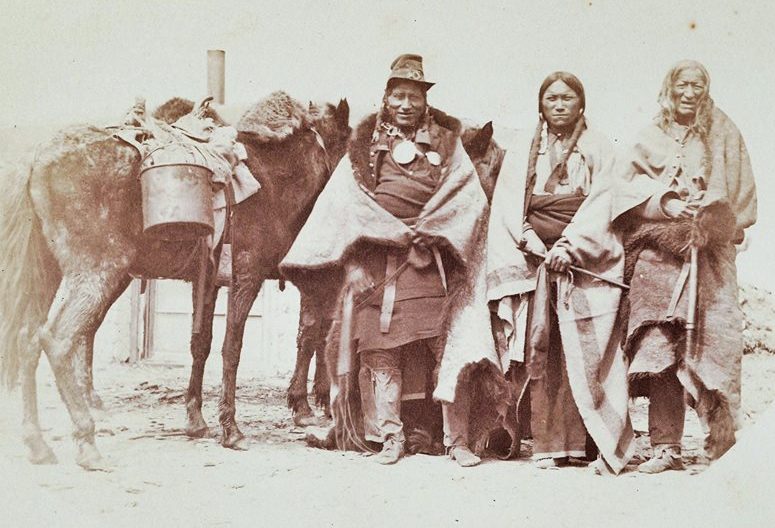 on the southern plains, in what is now Kansas and Oklahoma. Unable to hunt traditionally and reliant on scarce government rations, they suffered from hunger, homesickness, and disease. After a year, they rebelled, and in September 1878 joined another band in an epic journey back to Wyoming. Though Dull Knife declared peaceful intentions, the government saw them as renegades, and soldiers from across the Plains pursued them without success. Still, running for your life can take its toll.
When Dull Knife and his people reached Fort Robinson, Nebraska, near their Wyoming homeland, they surrendered to the government, hoping to be allowed to remain in the area. Instead, officials threatened to keep them captive at the fort unless they agreed to return south to the Indian Territory. Refusing to give up when his goal was so close, Dull Knife led about 100 of his people in a final desperate bid for freedom in early January. Soldiers from the fort pursued the already weak and starving group of men, women, and children, and on January 22, attacked and killed at least 30, including several members of Dull Knife’s immediate family.
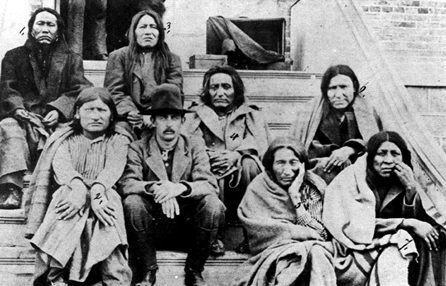
Wounded and weary, most of the survivors returned to Fort Robinson and resigned themselves to their fate. Dull Knife escaped and eventually found refuge with Chief Red Cloud on the Sioux reservation in Nebraska. Allowed to stay there, he died four years later, filled with bitterness toward the White Man he had once hoped to live alongside in peace. That same year, the government finally granted the Northern Cheyenne a permanent reservation on the Tongue River in Montana, close to their ancestral homeland. At last, Dull Knife’s people had returned home, though their great chief did not live to see it.


Leave a Reply