Monthly Archives: October 2025
 When the show, “Grizzly Adams” first came out, I assumed it was fiction, but it was not. John “Grizzly” Adams was a professional hunter of grizzly bears. He became well-known after his involvement in P.T. Barnum’s Circus.
John Boyden Adams, born on October 12, 1812, in Medway, Massachusetts, was the son of Eleazer and Sybil Adams. It is thought that he might be related to the notable Adams family of Massachusetts, including President John Adams and patriot Samuel Adams. He received a decent education for that era, but by the age of 14, he was already working as an apprentice in the footwear manufacturing trade.
Adams knew that a conventional job was not for him, so at 21, he left his job and became a hunter in New England’s forests. He joined a group of showmen as a  zoological collector, hunting and capturing live wild animals across Maine, Vermont, and New Hampshire. He even went so far as to work training a Bengal tiger for his employers, until he suffered severe back and spine injuries, which ended his hunting career. After about a year of recovery, he returned to work as a cobbler in Boston, Massachusetts. In 1836, John married Cylena Drury, and they eventually had three children.
During the California Gold Rush, Adams decided to try his luck with thousands of other people, arriving at the gold fields in late 1849. When  gold eluded him, he needed a new line of work, so he began hunting game to sell to miners, trading, ranching, and farming. By late 1852, he lost his ranch near French Camp, California, to creditors and moved to the Sierra Nevada mountains to trap for a living. Around this time, he adopted the name James Capen Adams. With help from local Miwok Indians, Adams built a cabin and stable near present-day Pinecrest, California. Along with trapping and hunting, he crafted buckskin clothing, moccasins, harnesses, pack saddles, and snowshoes. At 40, he was described as having long gray hair, a snowy white beard, an average height but muscular and wiry build, and wearing full buckskin attire. From his Sierra camp, Adams undertook several expeditions. In 1853, he traveled to Washington Territory, capturing a year-old female grizzly cub he named Lady Washington. He trained her to follow him, carry a pack, pull a sled, and eventually allowed her to be ridden. In 1854, Adams and some hunting companions journeyed to the Rocky Mountains, reaching Fort Bridger, Wyoming, where they sold meat, hides, and live animals. With everything he undertook, it would be Lady Washington that would make him famous.

 My nephew, Riley Birky has come a long way in his life. When I first met Riley, he was 10 years old. His mom, Rachel had just married my brother-in-law, Ron, making Riley my nephew. We lost Rachel in 2021, and it was a devastating time for all of us, but especially for her kids, Cassie, Riley, and Tucker. When kids lose their mom, they suddenly feel lost, and it’s a long hard road to come back. Nevertheless, these kids have all made a good comeback, even though it has been one of the hardest things they will ever do. I know that as they go through their lives, they will all think of their mom often and strive to make her proud of all they do.
Last Easter, April 20, 2025, Riley married the love of his life, Sierah Martin. They had a son, Ryder Birky together and upon their marriage, Riley officially became stepdaddy to her son, Jace Swan, even though he had really been daddy to him for a long time. They are such  a close family, and it is a beautiful thing to see. Riley and Sierah are two of the sweetest people you will ever know. They love their boys and each other, and they are working hard to build a great life for themselves and their boys. Riley fell in love with Sierah from the moment he first saw her, and that will never change. They are soulmates of the forever kind.
Riley has been through some rough times, including a car fire that put him, his brother, and two friends in the 
 hospital for quite a while. Always a fighter, Riley worked hard to come back to his family. He knew he was needed at home. His family was depending on him to not only survive, but thrive. Riley is a great husband and daddy, and these things are all he wants to be. That is part of what makes me so proud of the man he had become, and it’s that part that his mother would be very proud of too. Today is Riley’s birthday. Happy birthday Riley!! Have a great day!! We love you!!
 Many modern-day solutions to problems came about from extreme circumstances that actually forced the people to do something about the huge problem. One such situation happened in London in 1858 and was caused by raw sewage that polluted the River Thames. That summer was so hot, that it was absolutely sweltering. The people of London were beyond miserable, but after several days of the horrible heat, there began to be another side effect of the heat. A retched smell began to overtake the city. Before long, the smell was found to be coming from the River Thames, which was polluted with raw sewage. Upon hearing of this situation, my first thought was, “Oh my gosh!! I hope no one swam in there!!” That thought still remains on my mind. Did they know of the pollution before the sweltering heat?
Whatever the case may be, London’s sweltering that summer of 1858 caused a truly putrid problem. The River Thames totally reeked of the raw sewage. The foul smell became known as “The Great Stink.” The overpowering odor even disrupted the British Parliament, as members struggled to endure the stench wafting into their chambers from the polluted  waters. I’m sure more than one of the members lost their lunch in the ordeal. So many diseases can come from raw sewage that is able to come in contact with humans. The people’s imaginations very likely went wild.
Fears of cholera outbreaks arose, which prompted engineer Joseph Bazalgette to propose an ambitious plan to build an intricate sewer network. It was most definitely a long overdue plan, but unfortunately, all too often, solutions to a problem don’t come about until things get out of hand. Thankfully, in this instance, the solution came before the deaths of any of the citizens. The system designed by Bazalgette successfully diverted the waste away from the Thames, thereby saving the city and its citizens from complete and total disaster and possible death.

Work began on the system on January 31, 1859. In 1866 there was a further cholera outbreak in London that claimed 5,596 lives, although it was confined to an area of the East End between Aldgate and Bow. The problems continued to occur until the 1950s when the River Thames was declared Biologically dead” and then when the system was replaced, it began to make a comeback. The River Thames has made an impressive comeback the 1950s, but it still faces serious pollution issues from sewage, microplastics, agricultural runoff, and pharmaceutical residues. These challenges continue to impact its ecosystem and the communities relying on it. The river’s health is a mixed bag, with moments of improvement often disrupted by concerning pollution events and ecological stress.

 In a time before computers and internet, a time when our nation was struggling with the Great Depression and its aftermath, the ability for people to get access to things like books was very limited…especially things like books. Due to the Great Depression and budget constraints, the American Library Association estimated in May 1936 that about a third of Americans no longer had adequate access to public library materials. That was when the government came up with a plan. The project was a Works Progress Administration (WPA) program. It was called the Pack Horse Library Project. The idea was to deliver books to remote regions in the Appalachian Mountains, and it ran between 1935 and 1943. Women played a key role in a project that established 30 libraries serving 100,000 people. Packhorse librarians were often called “book women,” “book ladies,” or “packsaddle librarians.” This initiative provided jobs for about 200 people and brought books to roughly 100,000 residents in rural Kentucky.
Eastern rural Kentucky, a geographically isolated region, was largely cut off from the rest of the country. Before the Pack Horse Library Project, many residents in Appalachian Kentucky had no access to books, with an illiteracy rate of around 31%. The people in these remote areas knew that an education was a way out of poverty, but with no access, their situation seemed impossible to escape. What might have been a way out, was made nearly impossible because, while traveling libraries were established by the Kentucky Federation of Women’s Clubs in 1896, the lack of roads and population centers in eastern Kentucky made public library services scarce. In Kentucky, 63 counties had no library services at all during the early 1930s. The traveling libraries were completely discontinued in 1943.
The first Pack Horse Library was established in Paintsville in 1913 by May F Stafford, with financial support from local coal baron John C C Mayo. Unfortunately, that program ended in 1914 due to a lack of funding after Mayo’s death. Then, Elizabeth Fullerton, working with the WPA’s women’s and professional projects, revived Stafford’s idea in 1934. A Presbyterian minister in Leslie County offered his library to the WPA, proposing they fund workers to deliver books to people with limited access to library materials. His generosity led to the first pack horse library, initially run by the Federal Emergency Relief Administration (FERA) until the WPA took over in 1935. By 1936, eight pack horse libraries were operating.
Books were rotated between locations, selected to match the preferences of library patrons. The libraries’ collections mainly focused on children’s books. Maggie Mae Smith, a supervisor at the Whitley County Pack Horse Library, shared how children would eagerly run to meet the book women, exclaiming, “Bring me a book to read.” The books didn’t just go to children either. For adults, the collection highlighted topics like current events, history, religion, and biographies. The Bible was a top request, along with “instructive literature.” Other 
 favorites included Robinson Crusoe and works by Mark Twain. The women enjoyed illustrated home magazines and books on health and parenting. A unique feature of the collection was the recipe and quilting pattern books women compiled by jotting down their favorites into binders and shared across the community. While the pack horse librarians and their program weren’t the complete solution to the problems, they went a long way toward making a difference in a time when it was needed.

 Pirates are well known for attacking ships to steal the valuables they are carrying. During the Golden Age of Piracy (1650s-1730s), the high seas were dominated by notorious pirate captains and their powerful ships. These vessels, usually stolen and enhanced for speed and firepower, played a crucial role in countless infamous pirate activity. Part of the draw for pirates was the adventure and thrill of the attack as well. Often, they chose their prey by the look of the vessel. A rich looking ship was more likely to bring a rich haul. Killing the passengers on the vessels was not a top priority. If they could make the haul without violence they would, if not, so be it. They were a ruthless bunch, and they did what they had to do to get what they wanted.
The funny thing about pirates is that they didn’t always target a ship for valuables. In fact, not every ship targeted by pirates was carrying high-value goods at all. Just as often as not, ransacking a vessel was just a means to “run errands” like picking up rum, food, or other supplies. It wasn’t like they could just zip into the store and buy what they needed. They were “wanted men” after all. So, when they needed supplies, they just boarded the nearest ship and got what they could there. If they didn’t get everything they needed, they went on to the next ship…until they got the supplies they needed. It was like a shopping trip for the pirates…going to several “stores” until their list was filled.
On one occasion, Captain Benjamin Hornigold’s crew had a pretty short shopping list when they boarded a 
 sloop off the coast of Honduras. One of the sloop’s passengers recalled, “They did us no further injury than the taking most of our hats from us.” The crew had gotten very drunk the previous night and thrown their hats overboard and simply needed replacements. Since the passengers of the sloop were cooperative, they got off light. The pirates simply took the hats they needed and left them to be on their way.
 One should never stay in a place for too long, because the gracious host can begin to feel put upon, and wish the visitor would never return. Of course, sometimes things happen, but it is really up to the guest to make sure that the length of time they said they would stay is truly the length of time they stay. Friendships can be destroyed when one friend violates the rule to “Never overstay your welcome.”
Hans Christian Andersen, the famous Danish author known for his fairy tales translated into over a hundred languages, traveled to London in 1847 to expand his audience beyond Denmark. Already a well-known writer in his home country, Andersen sought translators to help share his work internationally. At the time, Charles Dickens had several published books, and Andersen, a devoted admirer who called Dickens “the greatest writer of our time,” seized the chance to meet him at a party they both attended.
Andersen was thrilled to meet his literary idol and even shared his excitement in a letter to his friends in Denmark after meeting Dickens. It seemed that Dickens enjoyed the encounter as well, as he left Andersen a package containing copies of his books and a note. Andersen soon returned to Denmark, and over the years, the two exchanged letters, although Andersen appeared more eager to maintain the friendship than Dickens. Nine years later, Dickens extended an invitation for Andersen to stay at his home if he visited England again, though it was likely more out of politeness than genuine friendship.
Andersen finally visited Dickens in March 1857, planning to stay for two weeks but extending his stay to five. It was a tense time at the Dickens household, with the author preoccupied with a play and considering divorcing his wife. Andersen’s presence only added to the strain. From the moment he arrived, things were awkward,  especially when he requested one of Dickens’ sons to shave him daily. As bizarre as that sounds, it was a common courtesy for male guests in Denmark. Finding the request odd, Dickens arranged for Andersen to be shaved at a barbershop each day instead.
Andersen was known for being emotional, once crying loudly while watching Dickens perform in a play. He even broke down on Dickens’ front lawn after receiving a harsh review for one of his works. Dickens was just not a fan of Andersen. Dickens couldn’t wait for Andersen to leave. After five weeks, the Dickens family was relieved when their guest finally left. Dickens was so angry, that he wrote on the guest room mirror, “Hans Andersen slept in this room for five weeks — which seemed to the family AGES!” Any friendship that might have existed between the men was now over. The moral of the story is…never overstay your welcome.
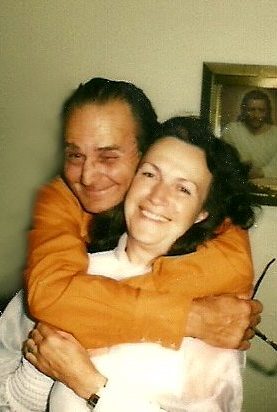
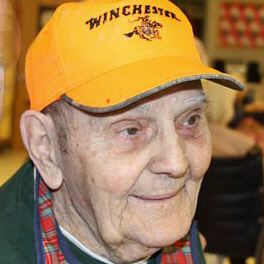 My uncle, Lester “Jim” Wolfe was a wonderful uncle. He was married to my dad, Al Spencer’s sister, Ruth. He was a funny man who loved to chase us around the room and tickle us. Uncle Jim was an old hand at tickling. Tickling us was his way of “getting back at us” whenever we pestered him…which, of course, meant we always pestered him. Once we knew he was coming after us, we would scamper off, trying to escape, though we never really did. I don’t know what there is about tickling kids, but they always seem to come back for more. My great grandsons, Justin, Axel, and even Cristian (the littlest one) want me to tickle them. They will come to me and say, “Tickle me!!” It reminds me of how we were with Uncle Jim.
Uncle Jim was a favorite uncle to my sisters, Cheryl Masterson, Caryl Reed, Alena Stevens, Allyn Hadlock, and  me. He had a wonderful sense of humor and a deep love for family. He adored kids and treated all of them with kindness. In fact, Uncle Jim was kind to everyone. He truly was the best kind of person, with a soft heart. Whenever we were with him, if he had any say in it, we could have or do whatever we wanted! I’m not sure how my parents, Al and Collene Spencer, felt about all that “spoiling,” but I’m certain they didn’t mind too much since it was just temporary. Uncle Jim simply loved making us happy.
Uncle Jim was the kind of person who would help anyone in need, if it was within his power…neighbors, friends, or even complete strangers. He was generous and always willing to lend a hand. He was fiercely loyal to his family, and no one dared harm his wife or kids. He defended them with both words and actions and remained faithful to them in every way. When he bought land in Washington to build his forever home, he made sure to purchase enough so that each of his kids could have a place nearby. He wanted to ensure they always had a home, and he liked the idea of a family compound. The land he chose was atop a mountain, offering breathtaking views along the way up. Uncle Jim did everything he could for his family, and I don’t know anyone who didn’t love him. Even in his later years, when Alzheimer’s 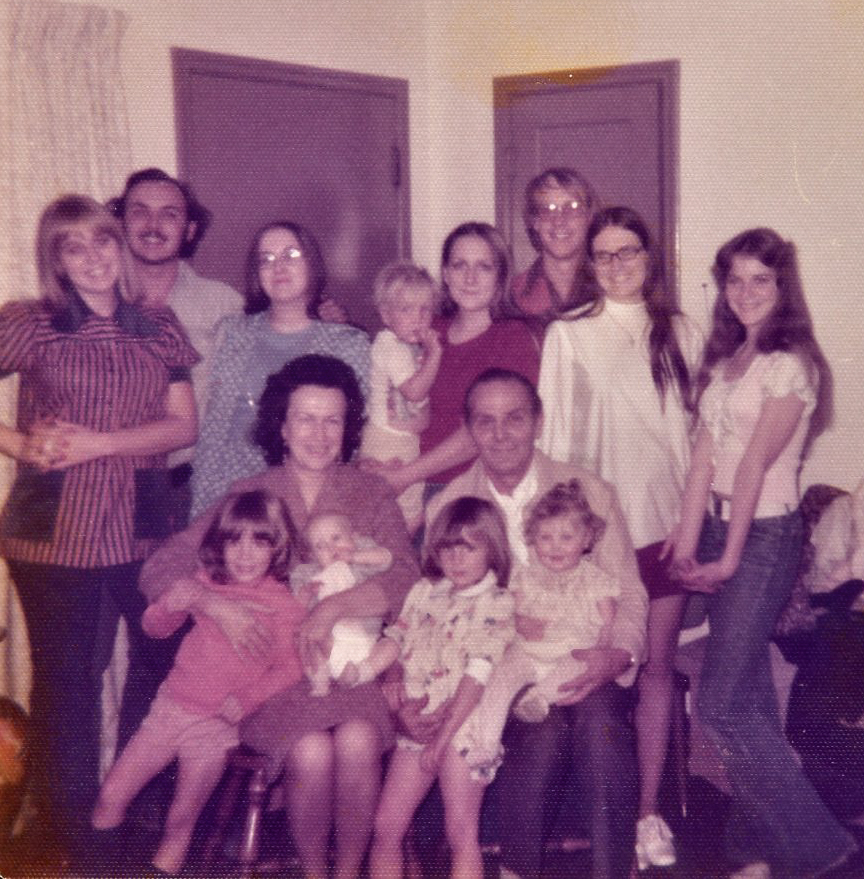
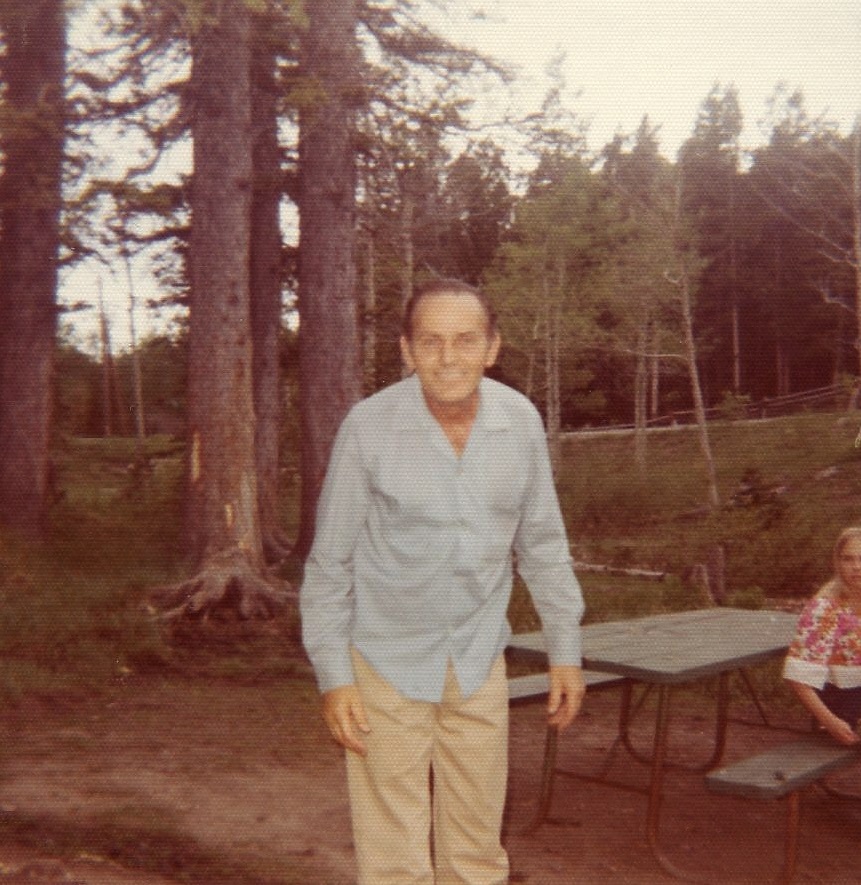 Disease required him to move into a nursing home, his character remained the same. He loved making the nursing staff smile and brightening the days of visitors. He was often found getting into harmless “mischief” behind the nurses’ station desk, just “visiting,” of course. My sisters and I still love him dearly!! I miss those good times so much. Uncle Jim went to Heaven in 2013 to reunite with his wife, Aunt Ruth, and other family members who passed before him. Today is the 104th anniversary of Uncle Jim’s birth. Happy birthday in Heaven, Uncle Jim. We love and miss you very much.
 Statistically, flying is a far safer mode of travel than driving. The reason people think don’t know that is that when there is an air accident, it is big news, and many automobile accidents go virtually unnoticed. Nevertheless, there is always an investigation into the cause of these accidents…no matter what mode of transportation was involved. Sometimes the cause can be carelessness, sometimes deliberate, and sometimes it’s simply a faulty part. Such was the case when a cargo plane crashed into an apartment building near an airport in Amsterdam, Holland, on October 4, 1992. Sadly, four people aboard the plane and approximately 100 more in the apartment building lost their lives in the disaster.
The plane, an El-Al Boeing 747 cargo jet was set to transport 114 tons of computers, machinery, textiles, and other materials from Amsterdam to Tel Aviv, Israel, on that October 4th. That Sunday evening at 6:30pm,  Captain Isaac Fuchs took off from Schiphol Airport in good weather, accompanied by two other pilots, and one passenger. Just minutes after takeoff, fires erupted in the plane’s third and fourth engines, causing them to completely detach from the wing.
Like most pilots, Fuchs didn’t panic at first, but rather, did his best to troubleshoot the problem and work toward a safe landing. He attempted to dump the plane’s fuel into a lake and return to the airport, but the aircraft lacked sufficient power to make it back. The plane was just six miles from the airport, when Fuchs radioed, “Going down,” right before the plane crashed directly into an apartment building in Amsterdam’s Bijimermeer neighborhood. The crash caused a massive fireball that engulfed the building. Firefighters responded swiftly, but by the time they managed to control the blaze, around 100 people had lost their lives.  Determining the exact death toll was challenging due to the explosion’s intensity and the fact that the building primarily housed illegal aliens from Suriname and Aruba.
The accident closely resembled one that occurred in Taiwan less than a year earlier, where a China Airlines jet crashed after losing its two right engines. Sadly, the similarity, while not pinpointed the year before, became clear now. The issue stemmed from a fuse pin, a component that connects the engines to the wings. Both crashes were likely caused by fatigue and failure of this one little part.
 It had started out bad, but the end of the season had the makings of a miraculously banner season. The New York Giants had made a come-from-behind run of wins that moved them from a position of oblivion to a spot in the pennant race. The Giants were 13 1/2 games behind the legendary Dodgers by the middle of August, and everyone thought they were finished. But then they won 16 games in a row. By October, they had won 37 of their last 44 games and had tied the Brooklyn Dodgers for the lead…just in time for a playoff.
New York took the first game, but the Dodgers dominated the second with a 10-0 blowout. The third game, played on October 3, 1951, in front of 34,320 fans at the Polo Grounds in Washington Heights, was the shocker. By the ninth inning, it seemed hopeless, with the Dodgers leading 4-1. Fans were already packing up and heading to the subway, because after all, they “knew” the outcome. Then, against all odds, the Giants sparked a comeback. Al Dark and Don Mueller hit solid singles to right field, and after Monte Irvin popped out, Whitey Lockman doubled to left, bringing Dark home. The score was now 4-2,  with runners on second and third. The turning point came when third baseman Bobby Thomson hit a one-out, three-run home run in the bottom of the ninth inning to secure the National League pennant for the New York Giants. Thomson’s famous homer capped off an incredible comeback for the Giants and eliminated their inter-borough rivals, the Brooklyn Dodgers, from the World Series. They had achieved the impossible. Although the Giants ultimately lost the World Series to the Yankees, Thomson’s legendary homer remains one of the most iconic moments in sports history.
As Bobby Thomson stepped up to bat, the Dodgers brought in relief pitcher Ralph Branca. Thomson, known for his steady hitting, faced a situation with first base open and rookie Willie Mays on deck. Many expected Branca to issue an intentional walk, but he didn’t. The first pitch was a called strike, and Thomson sent the second pitch soaring into the left-field stands. The crowd went wild. I’ve always wondered how those “give up early” fans felt in situations like that.
The radio announcer couldn’t contain himself, shouting, “The Giants win the pennant! The Giants win the  pennant! The Giants win the pennant!” He went on screaming until his voice gave out. At the Polo Grounds, chaos erupted. Fans stormed the field. Thomson took multiple curtain calls. In Manhattan and Brooklyn, so many calls were made after Thomson’s homer that New York Telephone almost lost service in both boroughs.
The next day, the Giants continued their momentum, defeating the Yankees 5-1 in the opening game of the World Series. However, the Yankees bounced back, winning the next three games and taking the series. In 1954, the underdog Giants made history by sweeping the World Series in four straight games. One of those games included Willie Mays’ famous over-the-shoulder catch (known as “The Catch”) in center field during the first game. By the late 1950s, though, both the Giants and the Dodgers had relocated to California, marking the end of an unforgettable chapter in New York baseball history.
 Like it or not, being the President of the United States is hard on a man (or woman, if we ever have one). Some men fare better than others, and I suppose their age might have something to do with it, but it seems the president always leaves office with a lot more gray hairs that they entered with. President Woodrow Wilson took office on March 4, 1913, and left office on March 4, 1921. Born on December 28, 1856, he entered office when he was 56 years old. His wife, Ellen’s health declined after he became president, and in July 1914, she was diagnosed with Bright’s disease. She passed away on August 6, 1914, leaving President Wilson devastated and battling depression. On March 18, 1915, Wilson met Edith Bolling Galt, a Southern widow and jeweler, at a White House tea. After several meetings, Wilson fell in love and proposed to her in May 1915. Initially, Edith declined, but Wilson persisted in courting her. Over time, Edith grew fond of him, and they got engaged in September 1915. They married on December 18, 1915, Wilson then one of three presidents, along with John Tyler and Grover Cleveland, to marry while in office.
Wilson served during World War I. War likely ages a president even more. After signing the Treaty of Versailles on June 28, 1919, President Woodrow Wilson quickly embarked on a national speaking tour in September 1919 to promote the League of Nations. However, the decision was ill-advised for a man already drained from negotiating the end of World War I. His exhaustion and recurring illnesses eventually led to a series of mini strokes by the month’s end. After the mini strokes, Wilson canceled the rest of the tour and returned home. BY then things were already too far gone, and on October 2nd, he suffered a full-blown stroke. Wilson’s entire left side became paralyzed, he became blind in one eye, and he experienced further symptoms that even affected his mental faculties., boding the question, was he fit for office.
You might think that something like this would mean the end of his presidency, but all of this was kept from the press, and even from the bulk of Wilson’s own government. First Lady Edith Wilson stepped in as her husband’s  steward and began running what was described as a bedside government. She went as far as to hide Wilson’s symptoms from members of Congress and continued to run his affairs in secret for the remainder of his term, technically becoming America’s first woman president, although now legally. I suppose the whole thing could be considered scandalous, and I’m not sure why it wasn’t. He did recover enough to do somethings, but he was not really the president in the same way he was before.
Wilson was still so sick by the time Warren Harding became the 29th President of the United States, and so he was unable to attend the inauguration. After the end of his second term in 1921, Wilson and his wife moved from the White House to a townhouse in the Kalorama section of Washington, DC. Wilson’s health did not markedly improve after leaving office and began to decline rapidly in January 1924. He died on February 3, 1924, at the age of 67.

