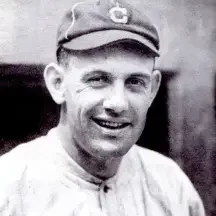
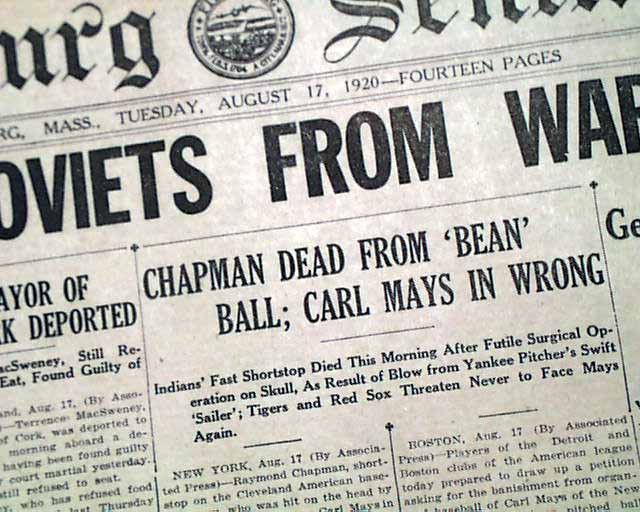
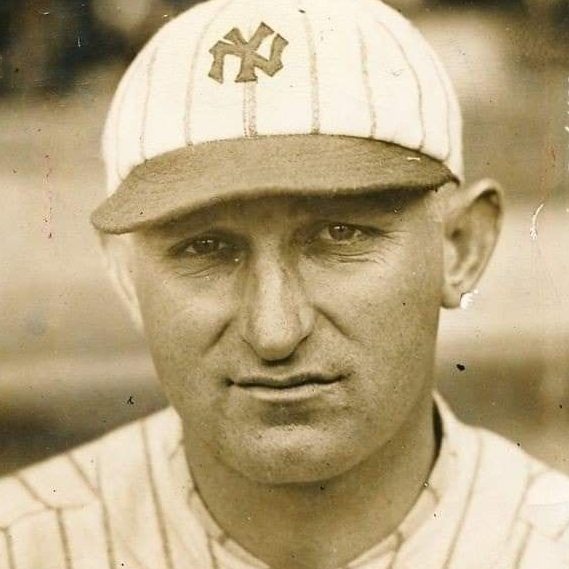
 These days, every sport is all about safety first, winning second. It’s not that winning isn’t important, because it is, but over the years, we have learned that a sport is only fun if everyone goes home when the game is over. That wasn’t always the case. Many sports adopted an “it can’t happen to me” attitude when is can’t to the safety of the athletes. Sadly, it often took a serious injury or even a death to change how we view safety. One such incident happened on August 16, 1920. It was a gloomy day at the Polo Grounds, which was home to the New York Yankees, Cleveland Indians shortstop Ray “Chappie” Chapman. On that day, “Chappie” step into the batter’s box to lead off the top of the fifth inning. As it turned out, the first pitch from the Yankees pitcher, Carl Mays struck the un-helmeted Chapman in the temple, and he crumpled to the ground. It all seemed to be ok when “Chappie” made his way off the field a short time later, but he collapsed again and was rushed to the hospital. Unfortunately, “Chappie” passed away early the next morning as a direct result of being hit by a pitch. He was the first and only Major League Baseball (MLB) player to lose his life in that way.
Baseball, especially batting, was far more dangerous in 1920 than it is now. Even after Chapman’s tragic death, things didn’t change immediately. It took another two decades for any team to require players to wear helmets, and MLB didn’t mandate them until 1971. In addition to that, pitchers back then used a variety of techniques, many of which are now banned, to make hitting even harder. They would rub spit, dirt, or shaving cream on the ball, cut it, and manipulate it so much that by the later innings, balls were often unrecognizable. Mays, in particular, was known for his nasty spitball and frequent “beaning” of batters. Despite these challenges, Chapman thrived as a hitter and base runner. A master at bunting, he led the American League in runs and walks in 1918, and his 52 stolen bases in 1917 remained a team record until 1980.
As with any accident, everyone remembers certain details. When that ball hit Chapman’s skull, the sound was so loud that Mays initially thought it had struck the bat. Mays retrieved the ball and threw it to first, but Chapman’s legs buckled as he attempted to walk, much less run, and he collapsed to the ground, blood seeping from his ear. The umpire called for a doctor, and while Chapman briefly stood back up, he soon collapsed again. Before losing consciousness, he was said to have remarked, in what was most likely his last words, “Tell Mays not to worry.”
The New York Times honored Chapman the following day, describing him as “a true sportsman, a skillful player, and one of the most popular men in the major leagues.” Tributes and condolences flooded in from across the league and the nation. Some fans and players demanded that Mays be banned from baseball or even face prosecution, but no charges were filed. Mays called Chapman’s death “the most regrettable incident of my baseball career,” saying, “I would give anything to undo what has happened. Chapman was a game, splendid fellow.” After the tragedy, Mays stepped away from baseball for 10 days and did not join his team on their next road trip to Cleveland. I’m sure he really wondered if he was going to be able to go on in the sport.
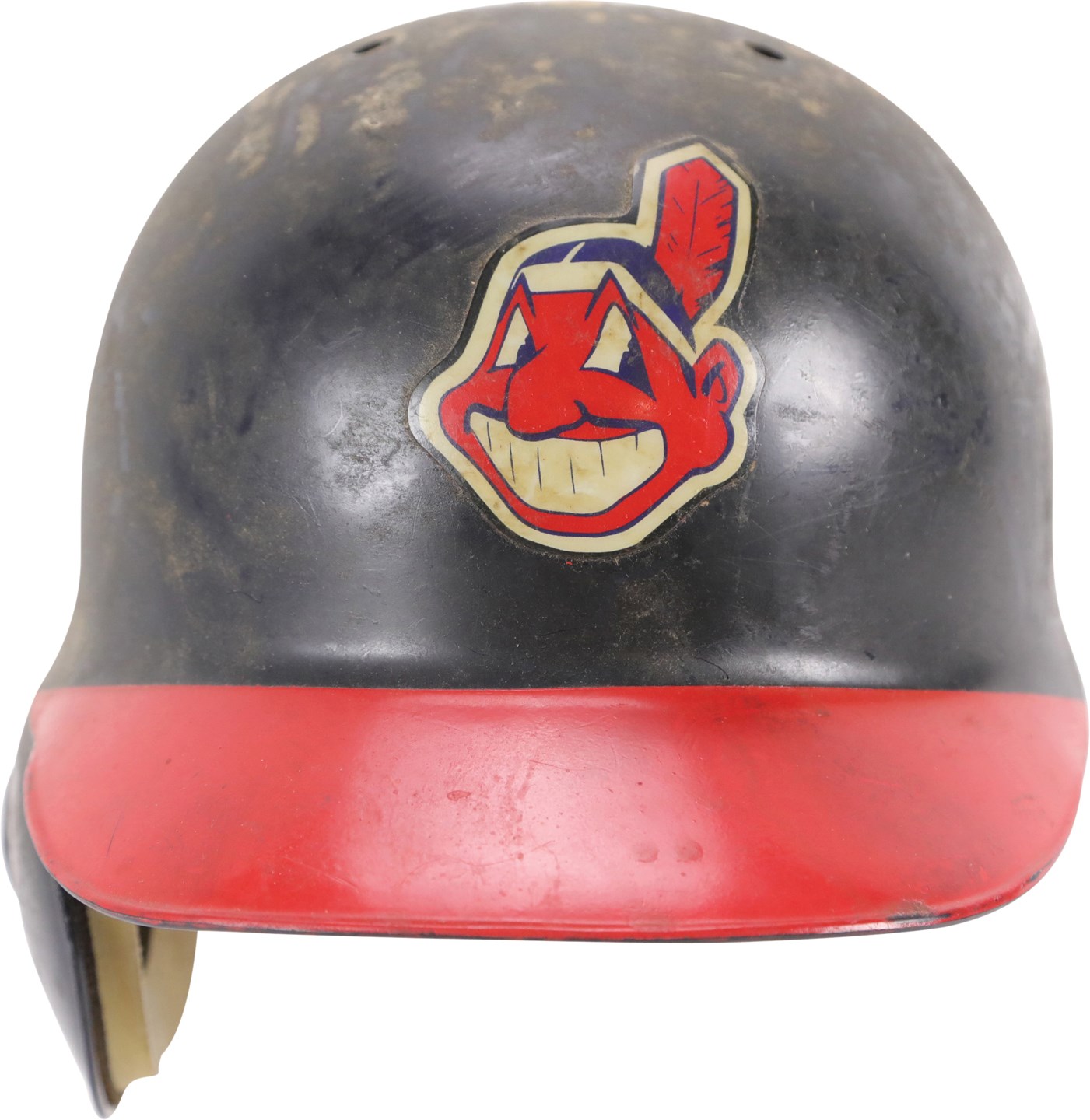
Chapman’s funeral in Cleveland was attended by thousands of mourners, his family and pregnant wife among them, and more than 20,000 people donated money for a plaque in his honor at Cleveland’s ballpark. Even with all of that, it would still be decades before helmets became common in the major leagues, but MLB banned spitballs and similar pitches following the 1920 season. To me, it is just unthinkably irresponsible to neglect to put in place something that could have saved a life if it had already been in place. This is not about the “macho man-woman.” It’s about safety!!


Leave a Reply