Health
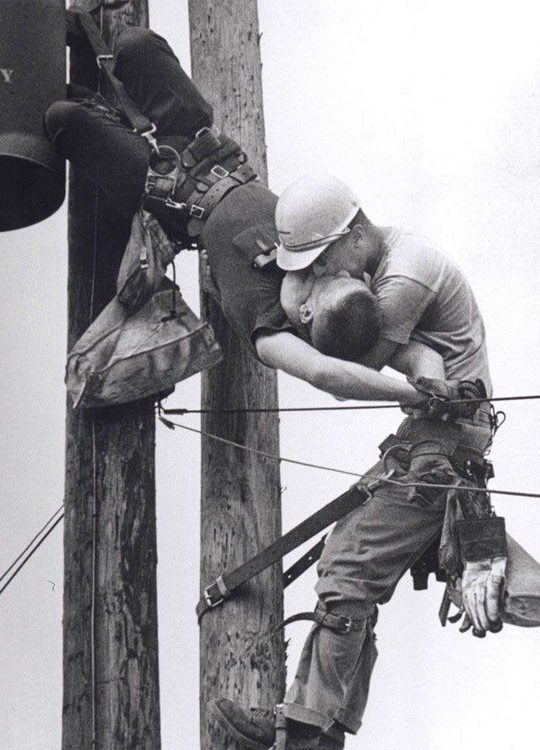 It’s every workers nightmare…being faced with a life or death situation involving a co-worker, and you are the only thing standing between the co-worker and certain death. On a hot July day in Florida in 1967, a nightmare emergency situation would unfold making linemen history, and journalistic history at the same time.
Rocco Morabito was a journalist with the Jacksonville Journal. His day began as he was headed to a local news event. He paused to watch as linemen worked above him, before heading on to his job for the day, covering a railroad strike. H snapped a few images and then headed back to the office, but as he passed the linemen, he heard screaming. Looking up, he saw Randall G. Champion, unconscious, his body hanging limp but still in his safety harness. Fellow lineman, J. D. Thompson was an apprentice lineman, but in a nightmare emergency moment, he sprang into action with lightening speed, racing to the pole and quickly climbing up to Champion. The position of Champion’s body made it impossible to administer CPR, so Thompson cradled his head in his arm and began giving mouth-to-mouth resuscitation, working to breath life back into his fellow lineman. His quick thinking and actions, made Thompson a hero that day.
Being a photojournalist, Rocco instinctively snapped an image and then ran to his car, to use the radio to have the paper call an ambulance. In reality, Champion would owe his life to both men, because they both reacted quickly and did what needed to get done to get Champion the help he needed. Unable to further assist with the rescue, Rocco grabbed his camera. He backed up and continued to walk backward until he backed into a house. With no where else to go, he clicked “THE historic image.” As he snapped that last photo, Thompson yelled out, “He’s Breathing!”
After Rocco ‘got the shot’, he returned to his car and again radioed the newspaper dispatch, this time, telling them, ”You might want to wait for this. I think I’ve got a pretty good one.” The paper waited, and the wait was indeed worth it. Rocco Morabito won the 1968 Pulitzer Prize for Spot Photography…the first of its kind. Bob Pate, the copy editor of the Jacksonville Journal is credited with the ‘slug that stuck’, ”The Kiss of Life.” From safety classes to anthologies, and even a documentary in 2008 on the 40th anniversary of that fateful event, the photo has maintained a life of its own. When I saw it, I was as moved by it as anyone else who has ever seen it and been told what it was. You just don’t walk away from that without having a sense of awe about the events of that day. And the training value of it would be phenomenal!!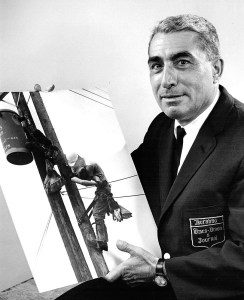
Champion and Thompson both continued to work as linemen until retirement. Champion retired in 1991, but sadly passed away in 2002 at the age of 64, as a result of heart failure. Thompson retired around 1995 having received several awards for his heroism and quick thinking. He is noted as having said that, “he was acting on his training and was thankful he could revive his downed co-worker.” He was just “doing his job.” What?? I don’t think so!! This was not just doing his job. This was heroic. That is typical of most heroes. They were “just doing their job.” Rocco worked for the newspaper for a total of 42 years. For 33 of those years, he worked as a photographer. He retired in 1982, and passed away at the age of 88 on April 5, 2009. His work, including “The Kiss of Life”, will continue to live on, illustrating the harrowing work that our linemen men and women perform every day, and sometimes just how heroic they really are.
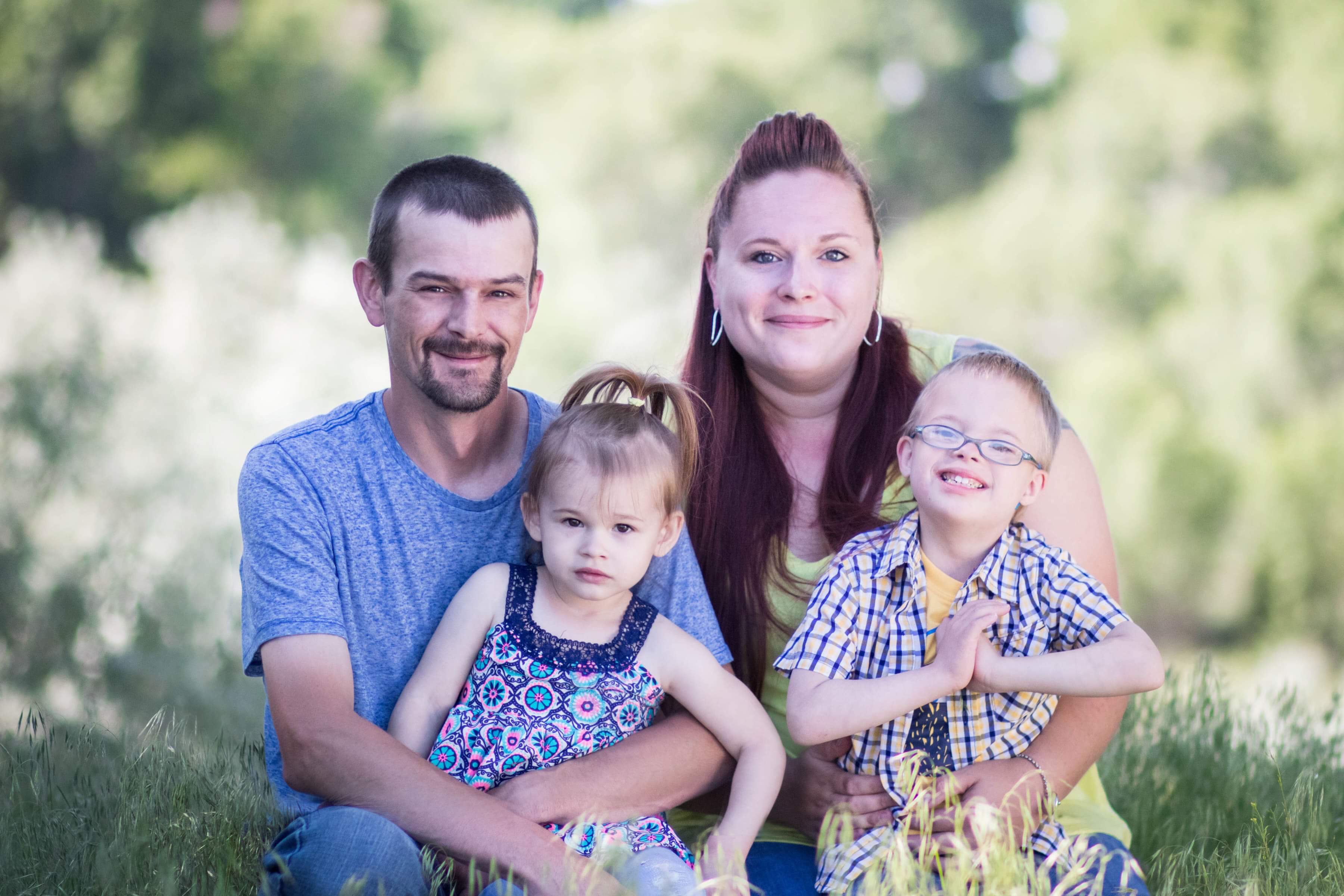
 As with all children, it’s hard to believe that my grand-nephew, Lucas Iverson is 7 years old today. With Lucas, it might be a little harder to believe than most kids, in fact. Lucas was born with Down Syndrome, but that has been the least of his problems. Lucas has been plagued with a number of health problems that have required multiple surgeries. In fact, according to his mom, Cassie Iverson, Lucas has had more surgeries than he has had years. I’m sure there are those who have had more surgeries, but no matter how you look at it, that is a lot of surgeries for a little guy. Since Lucas’ last birthday, he has had to make trips to Children’s Hospital in Aurora, Colorado, every two weeks, with intestinal and immune system issues, typical of Down Syndrome. Now that he has had multiple surgeries, he is better, and they can breathe a little easier where his health is concerned.
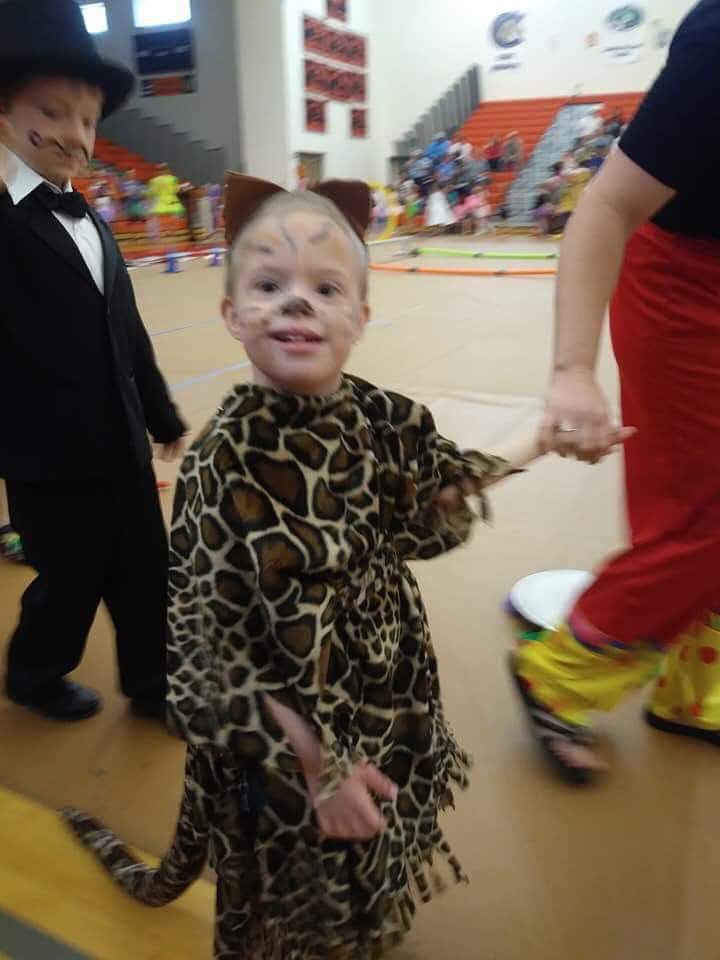
Lucas was in Kindergarten this last year, and in their Kindergarten Circus, Lucas got to be a wild cat. I’m not sure how wild is, but I prefer to think of him as a lion, because he is brave and strong…and a fighter. To me that is exactly what Lucas is…a fighter…strong, brave, and fierce. Lucas likes school, with his special needs, he has his own personal teacher. That is really a good thing, and maybe a little unusual in a small town like Powell, Wyoming. Lucas’ parents have considered moving to Colorado or Tennessee, because of so many good opportunities and closer healthcare for Lucas, but the thought of them moving has been a very difficult one for their families, so for now, they will stay in Powell. Of course, the hope is that Lucas will not need any more surgeries in the future. He has really been through enough, if you ask me.
Down Syndrome children often have poor muscle tone, and they have to work very hard to learn to do the things we all take for granted. Right now, in his physical therapy,Lucas is working on jumping. He also loves 
 rolling on the big ball as he phases off with his feet. I think Lucas has one other ace in the hole…his little sister, Zoey, who dearly loves her big brother, and has been instrumental in many of his abilities. She is patient and encouraging, and doesn’t leave him behind, just because he is slower. Zoey is Lucas’ best friend. They love to go camping with their parents, Chris and Cassie. They gt out is the outdoors where they can get some brain boosting and immune system boosting dirt in their hands. Today is Lucas’ 7th birthday. Happy birthday Lucas!! Have a great day!! We love you!!
 Since I was a caregiver for 13 years before the passing of the last of my parents and in-laws early in January of this year, I can tell you that being a caregiver, or a CNA is a big job that often gets very little recognition. Many people don’t really have any desire to do such a job, but because they remain in caregiving positions, Career Nursing Assistants provide predictability and stability to care, which in turn enhances the feeling of security for our aging, frail, or chronically challenged population. CNAs also bring wisdom, patience, humor, and a general attitude of caring to the daily lives of the residents in their care.
Today is National Career Nursing Assistants Day. It is a day founded by the National Network of Career Nursing Assistants to promote recognition, education, research, advocacy and peer support development for nursing assistants in nursing homes and other long-term care settings. This is especially close to my heart for a number of reasons, such as the care given to my parents and in-law, but 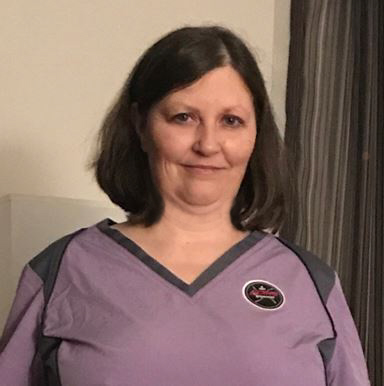 most recently because my daughter, Corrie Petersen is now a CNA working toward her degree as a nurse. She currently works at Elkhorn Rehabilitation Hospital in Casper, Wyoming, and we couldn’t be more proud of her. Having been a caregiver, I can tell you that the work that CNAs do is vital to the well-being of their patients, whether in a nursing home facility, a physical therapy facility (which is where my daughter works), at the patient’s home, or in hospice facilities.
According to the National Network of Career Nursing Assistants, “Nursing Assistants are the best thing about ‘caring.'” Nursing Assistants “Brighten Lives” according to Dawn Silva, CNA, New Hampshire, and member “Safe Patient Handling” committee. As more and more people are living longer, caring for the elderly has become more and more vital. With that care comes an increased focus on the people who care for the elderly…largely  nurses and CNAs. It’s a noble occupation. While the work is hard, and what some might consider demeaning, the sense of peace it gives the patients makes being a CNA worth it.
Every CNA is a blessing to those they care for and the nursing staff they work with. They support the facility they work in and the patients they care for. They bring a smile to the faces of their patients, and the patients are grateful for the help they receive. I don’t know of a facility out there that could run effectively without its CNAs, and I know how hard it is when a facility is shorthanded on CNAs. It makes everything harder for everyone working there, and especially harder on the patients who depend on them every day. Today is National Career Nursing Assistants Day. I am very proud of my daughter, Corrie Petersen, and of all the other CNAs I know. Thank you all for the work you do. Have a wonderful day, each and every one of you!! Happy National Career Nursing Assistants Day!!
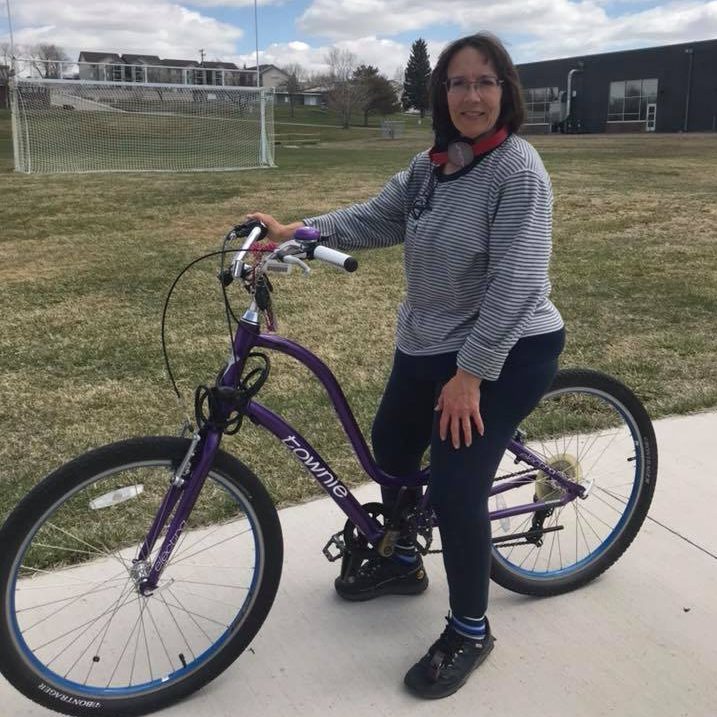 My sister-in-law, Brenda Schulenberg became quite ill a number of years ago, and finally had to face the fact that her weight was slowly killing her. I suppose some people might think that statement is harsh, but they don’t know my sister-in-law. Those were fighting words for her, or at least a call to action. When she found out that her weight had caused sleep apnea and congestive heart failure, she decided that she was not going to let her weight win. From that day forward, the world would see a new Brenda…a determined Brenda.
The road was long, and filled with hard work. Brenda doggedly walked in the cold early morning hours, rain or shine, and even in snow. She bought a bicycle, and fought hard  to master that skill again, even with knees that had to be retrained to bent enough to work the pedals. In fact, when she started, Brenda had to take the pedals off and strider the bike (basically run while seated on a bicycle). It was work, but she wanted to ride a bicycle again, and determination goes a long way toward success. These days Brenda can be found riding her bicycle most days at some point in the day. She loves the Platte River Trail, and often rides its entire length.
Not only has Brenda continued to follow her own health and fitness plan, but she has chosen to mentor others. She has made several trips to attend meetings in other towns to talk to their weight loss groups, even if they are not on Weight Watchers, like 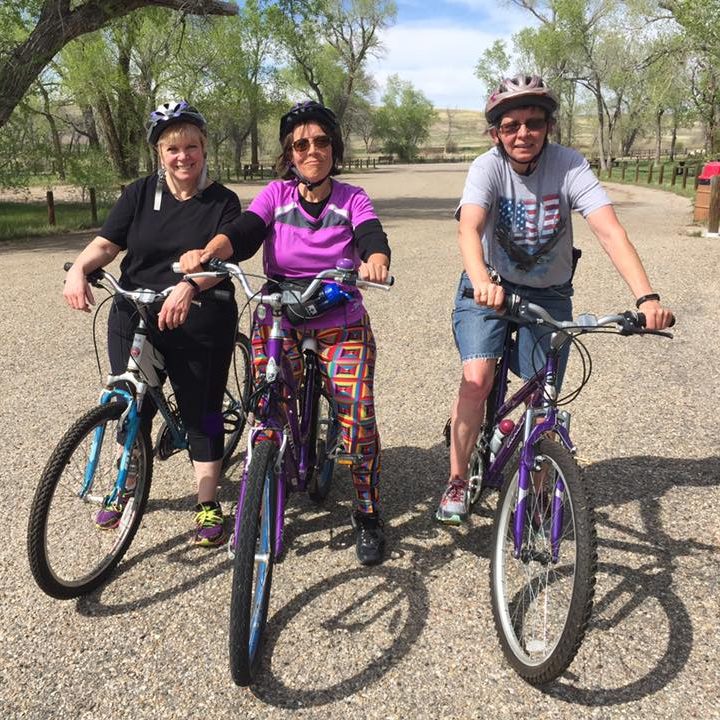 she is. She has put her name out there as someone who will buddy up with people who are struggling to lose weight to see if she can be on any encouragement or assistance. She is willing to go out and walk with them or ride bicycles with them too. She is so adamant about health, that she doesn’t want anyone to struggle with their health. I guess that since she has been on the unhealthy side of life, and the healthy side of life, and has chosen the healthy side of life, she wants others to be able to experience just how great it feels to be healthy…and she wants to help them to achieve their own health and fitness goals that have seemed so impossible to them. It is a noble calling. Today is Brenda’s birthday. Happy birthday Brenda!! Have a great day!! We love you!!
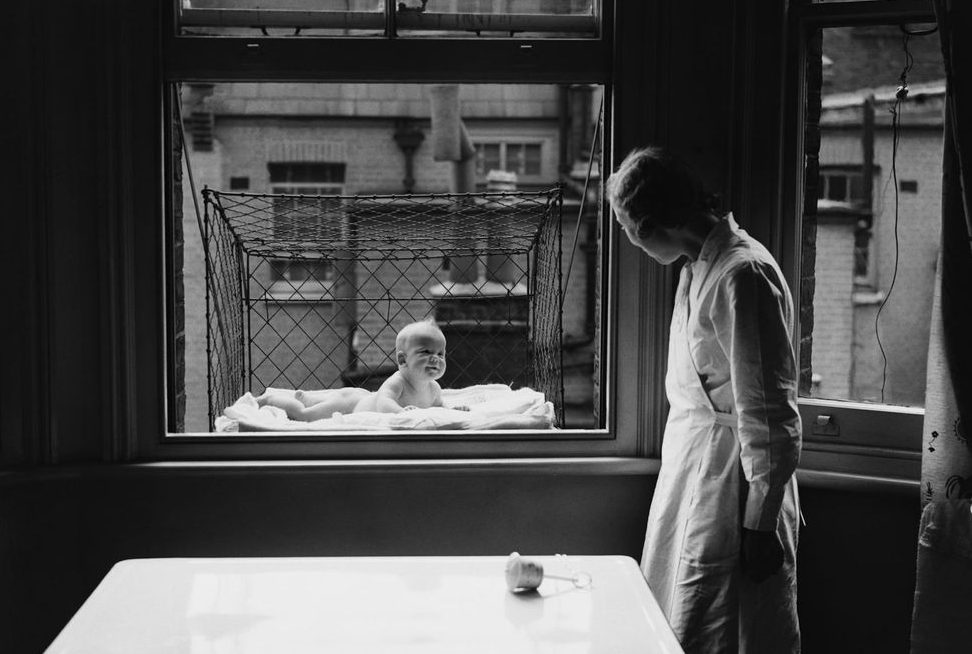 For a long time, people in the 19th century, living in urban apartments, didn’t regularly take their children outside so they could get some fresh air. Then, the doctors started to recommend that these children really needed to get outside for fresh air. Now that doesn’t necessarily mean that the parents were real excited about the idea of loading up their child and taking them for a walk…just to get the recommended amount of fresh air. Nevertheless, it was important, as the doctors told them that it would strengthen their immune system, and with the number of pandemics that had gone around, the parents really tried to do whatever they could to make this happen.
While physicians such as Dr. Luther Emmett Holt advised simply placing an infant’s basket near an open window, some parents took it a step further. Enter the Baby Cage. The baby cage was just what it sounded like. It was a platform, with chicken wire all around it to keep the baby in. This whole contraption was then suspended outside the window…even if the window was on the sixth floor or something. 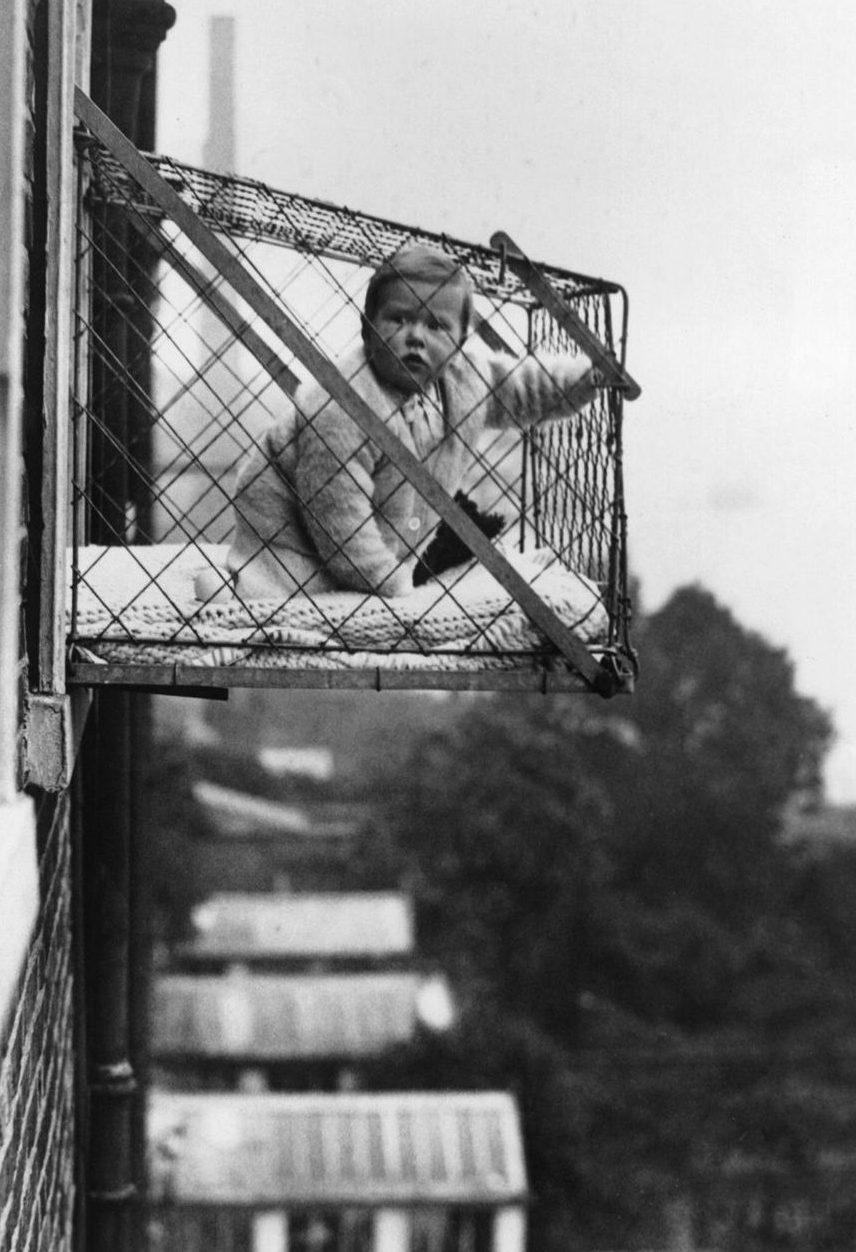 Personally, I can’t imagine hanging my baby outside my window for a dose of fresh air, but it was an actual thing in those days.
Eleanor Roosevelt, who by her own admission “knew absolutely nothing about handling or feeding a baby,” bought a chicken-wire cage after the birth of her daughter, Anna. She hung it out the window of her New York City apartment and placed Anna inside for her naps…until a concerned neighbor threatened to report her to the authorities. I would think so. If the brackets that suspended the cage to the window came loose…so long baby. I couldn’t find any incidence of such a thing happening, however. The first commercial patent for a baby cage was filed in 1922 by Emma Read of Spokane, Washington. The cages became popular in London in the 1930s among apartment dwellers without access to backyards. Ultimately, their popularity declined. It is possible that this was connected to safety concerns. As I said, I can imagine. I would have nightmares about that if it were my child.
 Whenever we make a trip to the emergency room, most of us find ourselves waiting impatiently for the myriad of tests to be returned from the lab to find out what is going on. And, most of us find that annoying, but when you think about how things used to be diagnosed, you might just find yourself rethinking those tests. Imagine a time when something like Pneumonia, Bronchitis, or Tuberculosis might have been “diagnosed” by having you doctor place his ear to your chest to see what you sound like. While I’m no expert, I have a pretty good idea that those three lung diseases would sound fairly similar. So if you had Tuberculosis and your doctor treated you for Bronchitis, how good would you expect your prognosis to be. Not very good, but this was all the doctor could do at that time.
Enter René Théophile Hyacinthe Laennec (February 17, 1781 – August 13, 1826), a young man who’s mother died of tuberculosis when he was five years old. Laennec went to live with his great uncle the Abbé Laennec, who was a priest. As a child, Laennec became ill with Lassitude and repeated instances of Pyrexia. Laennec was also thought to have Asthma. At the age of twelve, he proceeded to Nantes, where his uncle, Guillaime-François Laennec, worked in the faculty of medicine at the university. Laennec was a gifted student. He learned English and German and began his medical studies under his uncle’s direction. Laennec knew first hand that 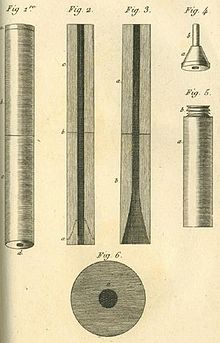 things like Tuberculosis can kill…he lived that nightmare with his mom. I am fairly certain that there were probably issues with her diagnosis too. After studying medicine, Laennec became a doctor. He also became a lecturer at the Collège de France in 1822 and professor of medicine in 1823. His final appointments were that of head of the medical clinic at the Hôpital de la Charité and professor at the Collège de France.
Laennec’s father was a lawyer, and he thought that being a doctor was a waste of René’s talents. With his father’s discouragement, René had a period of time during which he took long walks in the country, danced, studied Greek and wrote poetry. However, in 1799 he returned to study. Laennec studied medicine at the University of Paris under several famous physicians, including Dupuytren and Jean-Nicolas Corvisart-Desmarets. There he was trained to use sound as a diagnostic aid. Corvisart advocated the re-introduction of percussion during the French Revolution. In 1816, he was consulted by a young woman laboring under general symptoms of diseased heart, and in whose case percussion and the application of the hand were of little avail on account of the great degree of fatness. “The other method just mentioned [direct auscultation] being rendered inadmissible by the age and sex of the patient, I happened to recollect a simple and well-known fact, in acoustics…the great distinctness with which we hear the scratch of a pin at one end of a piece of wood on 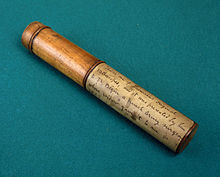 applying our ear to the other. Immediately, on this suggestion, I rolled a quire of paper into a kind of cylinder and applied one end of it to the region of the heart and the other to my ear, and was not a little surprised and pleased to find that I could thereby perceive the action of the heart in a manner much more clear and distinct than I had ever been able to do by the immediate application of my ear.” This situation started Laennec’s mind whirling, and before long, he had developed a simplistic version of what we now are all very familiar…the stethoscope. Ironically, like his mother, Laennec died of Tuberculosis on August 13, 1826. While I’m sure medicine had vastly improved during his lifetime, there was still no significant help for Tuberculosis.
 For my nephew, Chris Iverson and my niece, Cassie Iverson, life has not always been easy. The birth of their oldest child, Lucas, born with Down’s Syndrome brought the beginning of a host of future medical bills, but anyone who knows Lucas can tell you that he is just the sweetest boy. His parents and family wouldn’t trade him for the world. Nor would his little sister, Zoey, who loves him to pieces, and inspires him to progress. Chris homeschools the kids, and lately he has been trying to incorporate some extra work with Lucas, because he is, of course behind other children his age, but he has the added handicap of ongoing medical treatments that have plagued him for a while now. Zoey is two and a half now, so she is at just the right age for starting pre-school, so Chris is starting with her ABCs now.
In his spare time…when he can’t go fishing much…Chris is into video games, especially the online gaming. The  competition makes it much more fun than just going against the computer. Right now he is into Horizon Zero Dawn. Now, I can’t begin to tell you what these games are all about, but I would assume some kind of fighting game. Chris has also been training the family dogs, He wants to get them well behaved before too much longer, since they are already no longer puppies. Life for the Iverson family has had its ups, and its downs, but now there is a light at the end of the tunnel. Unfortunately, it too will come with its share of sadness.
Chris and Cassie are currently planning a move to Tennessee. It’s not that they don’t love Powell, Wyoming, because they do. Powell has been their home for many years, if not all their lives, but with the medical needs of their son, and the opportunity for both of them to get an education and improve their lifestyle, they need to be in a more populated area that has  more to offer their special needs son. They have looked elsewhere, but there is nothing out there that is in Wyoming or even the surrounding states, so the move was inevitable. I know that their whole family will really miss them. It is always sad when your kids move away, but if it is the best thing for them, you have to simply let them go. I know that with Facebook, Skype, texting, and phone calls, they can stay close, and visits to Tennessee wouldn’t be the worst thing either. As for education, Chris plans to go to trade school to become a Plumber, and Cassie is planning to become a Real Estate agent…both occupations that will pay well, and provide for their family. While we will miss them, we also wish them the very best. Today is Chris’ birthday. Happy birthday Chris!! Have a great day!! We love you!!
 Unfortunately, these days, school shootings, while shocking every time, are not totally uncommon in this country. The reasons for the shootings vary, but are often blamed on bullying, loneliness, or anger for perceived wrongs. They never solve anything, least of all for the shooter, who is usually dead, or in prison after the heinous deed is done. The rest of the world is left wondering why, and how we can fix this. Of course, there are always the anti-gun advocates who say that the only solution is to take the guns out of the hands of the citizens, but as most sensible people know, guns don’t kill people, people kill people.
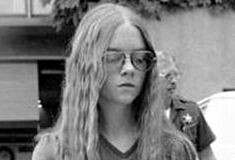
In 1979, I was a busy, young mother, when the first school shooting took place. The date was January 29, 1979. The place was Grover Cleveland Elementary School in San Diego, California. The shooter was 16 year old Brenda Spencer. I have to assume that she is some relation to me, as researchers have claimed that all the Spencers in the United States are related. That thought in itself makes me sad. People have the potential to become such great things, and there are so many wonderful things that a person could be the first to accomplish. So, why on that day, did young Brenda Spencer decide to take the lives of to men and wound nine children at the school across the street from her home. Her stated reasons were several…”I like red jackets,” “It livens up the day,” “I had no reason for it, and it was just fun,” “It was like shooting ducks in a pond,” “The children looked like a herd of cows standing around,” “It was really easy pickings,” And the one that stuck with the crime forever, “I just don’t like Mondays.” There is no good reason to decide to go out and kill people, but that last one stuck in my head. She didn’t like Mondays, so she ruined her own life, killed 2 men and wounded 9 children!!
Of course, I doubt if Mondays, red jackets, boredom, or animals had anything to do with it. In my opinion, the cause is mental illness. I’m not excusing her actions, because murder is a heinous crime. Brenda did not just wake up that day and decide to shoot up the school. She was a problem child, who was widely known as a drug abuser with a violent streak, such as repeatedly shooting BBs at the windows of the school. Still, her father gave her a .22 semi-automatic rifle and ammunition as a Christmas gift at the end of 1978. I’m sure he thought that her BB shooting was a harmless prank, but with the drugs and anger simmering inside her, he was wrong. She had started telling her classmates that she was going to do something “to get on TV.”
That January morning, as the children were entering the school, Brenda Spencer blazed away with rifle shots  from her home directly across the street from the school. After 20 minutes of shooting, police surrounded Spencer’s home for six hours before she surrendered. Brenda Spencer had become the first person to commit a school shooting. Asked for some explanation for the attack, she simply said, “I just don’t like Mondays. I did this because it’s a way to cheer up the day. Nobody likes Mondays.” Spencer’s hatred for the first day of the school week was later memorialized by Bob Geldof, the leader of the rock group The Boomtown Rats, in the song, “I Don’t Like Mondays.” Spencer, who pled guilty to two counts of murder and assault with a deadly weapon, is currently serving a term of 25 years to life at the California Institution for Women in Corona, California, and she was denied parole four times, most recently in 2005.

 My niece, Toni Chase has become a world traveler since her marriage to Dave. She and Dave love going places. Whether it’s Hawaii, or the Caribbean, they spend as much time traveling as they can. They decided to get a time share, and while most people who have a time share, end up selling it because they don’t really use it, that is not the case with Toni and Dave. They love theirs and they use it often. They just pick a date, and look and the available sites, and register for their dates. If a person thinks they like to travel, but really isn’t sure, time shares are probably not the best thing to have, but for Toni and Dave, it was perfect, and they use it a lot. in fact, they went to Mexico in June.
For Toni, family comes first. Her boys are the most important part of her life. She had a son, James Renville from her first marriage, and while Dave loves James, and is a big part of his life, he would never try to replace James’ real dad. I think it is the respect shown on both sides of that split, that has made it a very good relationship for all of them. Of course, a good relationship between blended families is only possible if everyone works together, and for this group the respect, cooperation, and a genuine love for James. And isn’t that really what good parents do…the best thing for the kids.
This has been an interesting year for Toni. Dave has spent much of his time playing softball and basketball, and 
 apparently that’s a little hard on Toni. I don’t know if it was heavy duty cheering, or what, but Toni ended up having hernia surgery. During the surgery, they found that the appendix was caught in the hernia, and it had to be removed too. It wasn’t Dave’s sports that caused Toni’s need for surgery, but Toni is a great cheerleader when it come to the sports and activities of her boys. I think she pretty much likes anything they are doing. Of course when it comes to what Toni is doing, Dave like most husbands, Dave couldn’t tell you what she has been up to. Toni has recently become interested in Wyoming history. Maybe she is a chip off of her Aunt Caryn’s block. She says that it’s very addictive. I agree. Today is Toni’s birthday. Happy birthday Toni!! Have a great day!! We love you!!
 The Vietnam war was many things, but I don’t think anyone really expected Operation Ranch Hand…at least not the general public. Who would have expected such a heinous act to be carried out by the government. Operation Ranch Hand was a United States military operation during the Vietnam War, lasting from 1962 until 1971. The operation was largely inspired by the British use of 2,4,5-T and 2,4-D (Agent Orange) during the Malayan Emergency in the 1950s. It was part of the overall program during the war called “Operation Trail Dust.” Ranch Hand involved spraying an estimated 20 million United States gallons of defoliants and herbicides over rural areas of South Vietnam in an attempt to deprive the Viet Cong of food and vegetation cover. Nearly 20,000 sorties were flown between 1961 and 1971.
It’s hard to say if the government knew the consequences of the chemicals that were used. It’s possible that the chemicals were thought to just kill vegetation, and not to hurt people. The people involved were known as 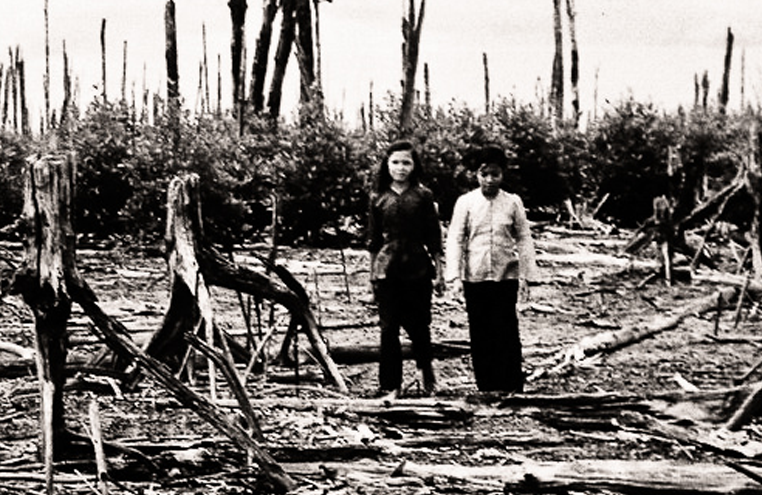 Ranch Handers. I seriously doubt that at some point they didn’t wonder if what they were doing could possibly be harmful to the people they were spraying it on or near. Nevertheless, the “Ranch Handers” had a motto, “Only you can prevent a forest.” It was a take on the popular United States Forest Service poster slogan of Smokey Bear. During the ten years of spraying, over 5 million acres of forest and 500,000 acres of crops were heavily damaged or destroyed. Around 20% of the forests of South Vietnam were sprayed at least once.
The herbicides were sprayed by the United States Air Force flying C-123s using the call sign “Hades.” The planes were fitted with specially developed spray tanks with a capacity of 1,000 United States gallons of herbicides. A plane sprayed a swath of land that was ½ mile wide and 10 miles long in about 4½ minutes, at a rate of about 3 United States gallons per acre. Sorties usually consisted of three to five airplanes flying side by 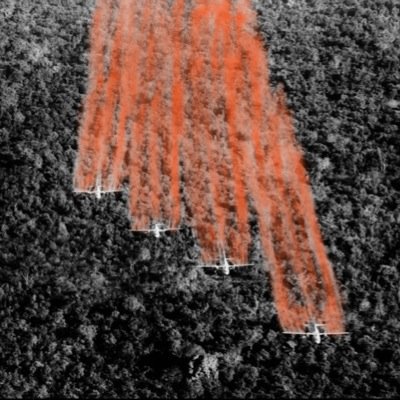 side, and 95% of the herbicides and defoliants used in the war were sprayed by the United States Air Force as part of Operation Ranch Hand. The remaining 5% were sprayed by the United States Chemical Corps, other military branches, and the Republic of Vietnam using hand sprayers, spray trucks, helicopters and boats, primarily around United States military installations…meaning that the majority of the chemicals were exposed to the Untied States Military. Many of the Vietnam veterans have felt betrayed by their own government. Many have felt that the government was well aware of the dangers of the chemicals they were spraying. I don’t know if they knew or not, but it seems like they should have suspected something. Years later, the effects of Agent Orange are well known and it was vicious.

