 In 1775, while looking for ways to fund the Revolutionary War, an idea was formed that would not come into fruition until September 2, 1789. I can’t say it was a “good” idea, but it served a purpose, I suppose. It was on that day, that the Continental Congress founded the United States Treasury Department. Their solution involved issuing cash that also served as redeemable “bills of credit” to raise enough capital for the revolution. Unfortunately, this plan resulted in the country’s first debt. The Continental Congress tried to stabilize the economy, even creating a pre-Constitutional version of the Treasury. However, neither this effort nor the signing of the Declaration of Independence, which allowed the United States to seek foreign loans, proved effective. The debt continued to grow, and war notes quickly lost value.
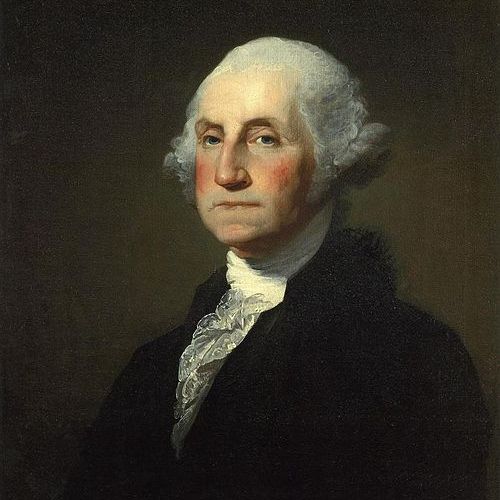
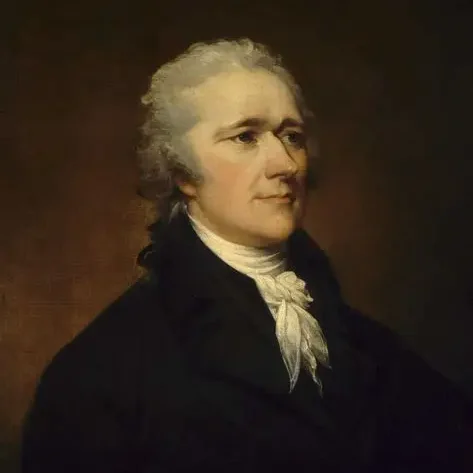
With the ratification of the Constitution in 1789, the American government established a permanent Treasury Department in hopes of controlling the nation’s debt. President George Washington named his former aide-de-camp, Alexander Hamilton, to head the new office. The former New York lawyer and staunch Federalist stepped in as Secretary of the Treasury on September 11. Hamilton soon outlined a practical plan for reviving the nation’s ailing economy. Basically, the government would pay back its $75 million war debt and thus repair its badly damaged public credit.
Hamilton was elected to the Continental Congress from New York in 1782. He became known for his strong advocacy of a more powerful national government and a near-reactionary political philosophy. Alongside James Madison and John Jay, he published the “Federalist Papers,” promoting the ratification of the United States Constitution. As the first secretary of the treasury, Hamilton created key centralized monetary institutions for the new nation, including the national bank, before stepping down in January 1795. He later returned to private life as a lawyer in New York City, but Hamilton continued to advise President Washington.
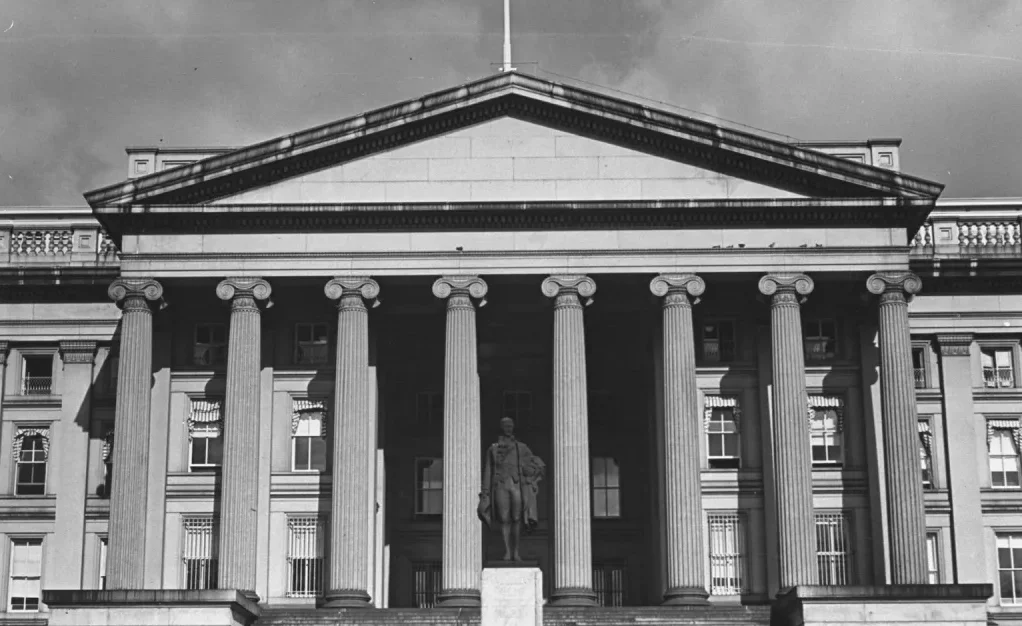
In 1800, Hamilton became embroiled in a bitter dispute when he threw his support behind President John Adams’ reelection campaign instead of presidential candidate Aaron Burr’s. After his defeat, Burr ran for governor of New York in 1804; Hamilton again opposed his candidacy. Humiliated, Burr challenged Hamilton to a duel on July 11, 1804, in Weehawken, New Jersey. Alexander Hamilton was shot in the duel and died of his wound the following day, July 12, in New York at the age of 49. While the treasury department, Hamilton had headed up, when on, his life ended that day in a field.


Leave a Reply