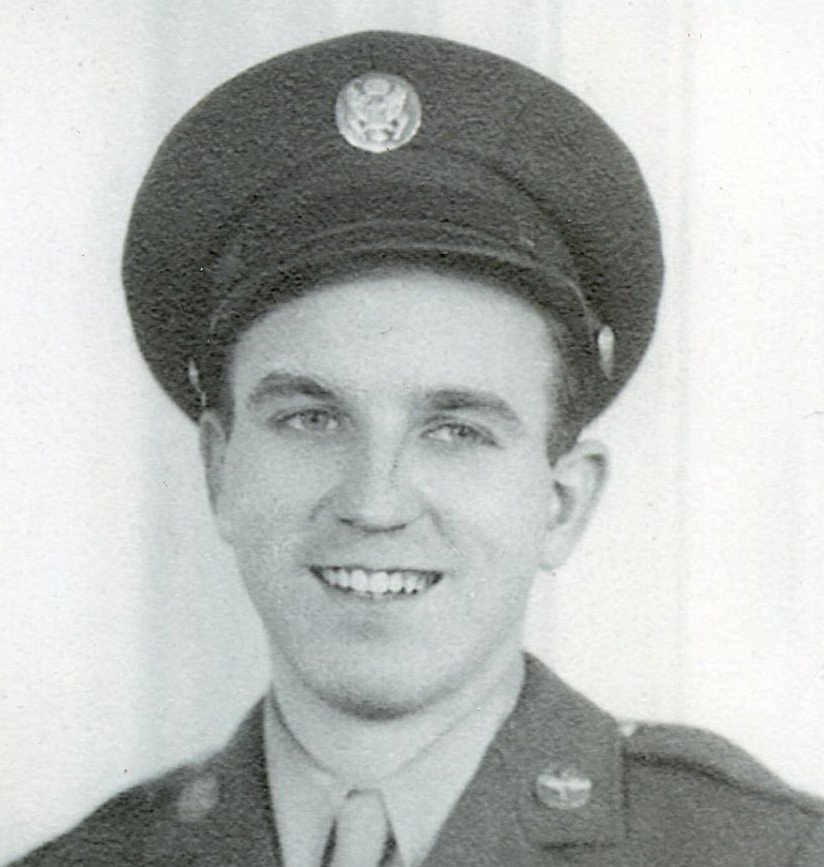
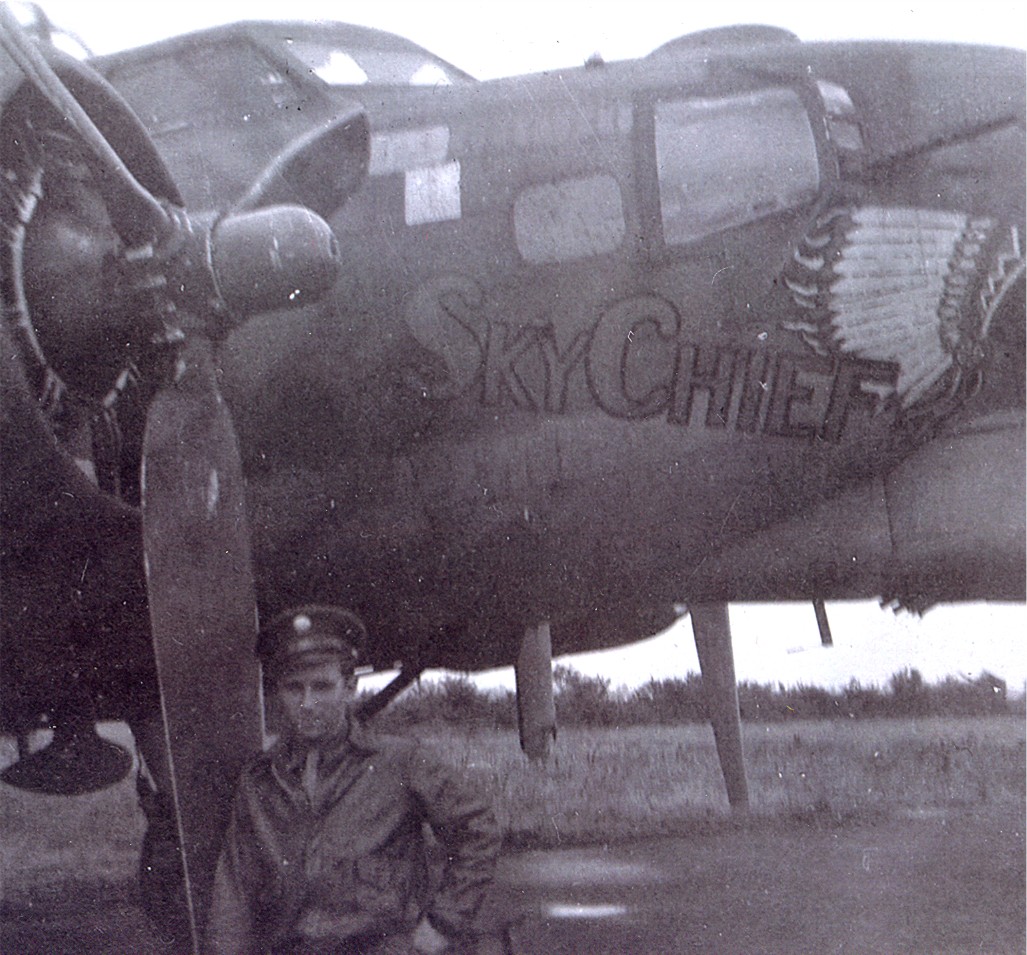
 During World War II, my dad, Staff Sergeant Allen L Spencer, was stationed at Great Ashfield, Suffolk, England with the 385th Bomb Group as the Flight Engineer and top turret gunner. While his B-17G Bomber was never given a name, it was customary for the men to fly in different bombers on missions. They were used where they were needed. I don’t know if my dad was ever a crew member on the B-17 Flying Fortress nicknamed Sky Chief (serial 42-39912) or not, but he did have his picture taken by that plane. “Sky Chief” was a B-17G-5-VE bomber with the 385th Bomb Group, 548th Bomb Squadron at RAF Great Ashfield, known as the B-17 Bomber Flying Fortress – The Queen of the Skies. It was delivered to the United States in May 1943, it was ferried to the United Kingdom in October, modified for operational use, and then sent back to the United States for ferrying in November 1943.
When these planes went out on missions, the challenges were often brutal. Flak was notorious for tearing planes apart. Nevertheless, the B-17 wasn’t called the Flying Fortress for nothing. Many times, these planes returned to base practically in pieces, and yet…they quite often returned. On July 16, 1944, “Sky Chief” was returning from just such a mission and attempted to land at RAF Woodbridge (ELG) in Suffolk, England. With engines number 2 and number 4 completely missing, the aircraft faced serious handling challenges. As it neared the runway, it lost control and crash-landed in Capel Saint Andrew, a small village in the English countryside, marking a tragic moment for the B-17 Bomber. The crash was severe, with the B-17 Bomber breaking apart on impact and instantly killing two crew members. The rest of the crew, including pilot Charles R Johnston, co-pilot Frank Bullen, navigator Hubert Bevins, bombardier Charles Wynn, and other gunners, survived but sustained injuries. The aircraft was a total loss, and the survivors were evacuated.
Though considered a total loss, “Sky Chief” was officially salvaged on July 19, 1944. The event served as a 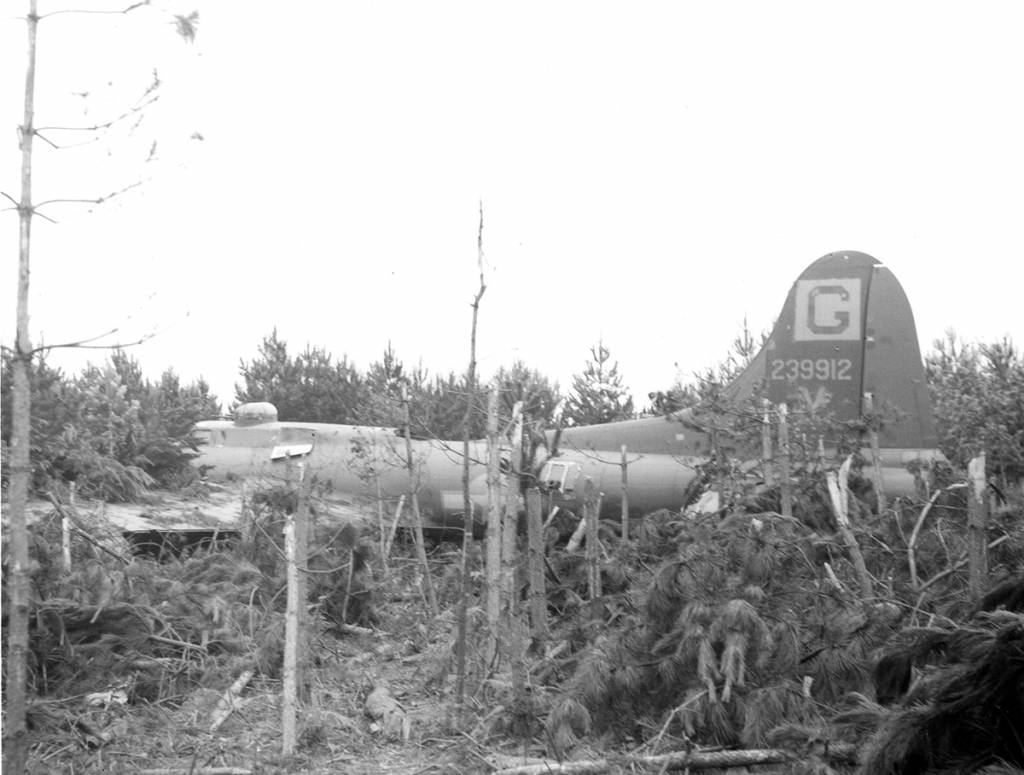 stark reminder of the risks posed by engine failures and poor landing conditions during World War II bombing missions. Its story lives on in aviation history archives, with the nickname “Sky Chief” honoring its service as a veteran bomber in the Eighth Air Force. The 1944 crash happened during the intense preparations for the Battle of the Bulge, as Allied air forces carried out heavy daylight bombing runs over Germany. Incidents like the loss of Sky Chief were all too common, with B-17s battling intense flak, mechanical issues, and the difficulties of night landings at unfamiliar airfields. The story of “Sky Chief” is woven into the larger tale of the B-17’s service and the sacrifices made by its crews. It lives on in my memory because of the pictures with my dad standing next to a plane that I know later crashed. That feels so strange to me.


Leave a Reply