 Since Congress passed the Homestead Act in 1862, land ownership was destined to change drastically. Around 1869, with the Durbin brothers’ sheep ranch near Cheyenne, homesteaders began moving to Wyoming, hoping—like many others in the West, to claim government land for little or nothing and make a living from it. Between 1862 and 1916, seven new laws or changes to the original laws were enacted. Most of the people looking to take advantage of the possibility of owning land were men, because the reality is that homesteading was a tough undertaking, and that meant that it was mostly men that took on the task. Yes, most of them brought their families, but when it came to homesteading alone, men were generally the rule.
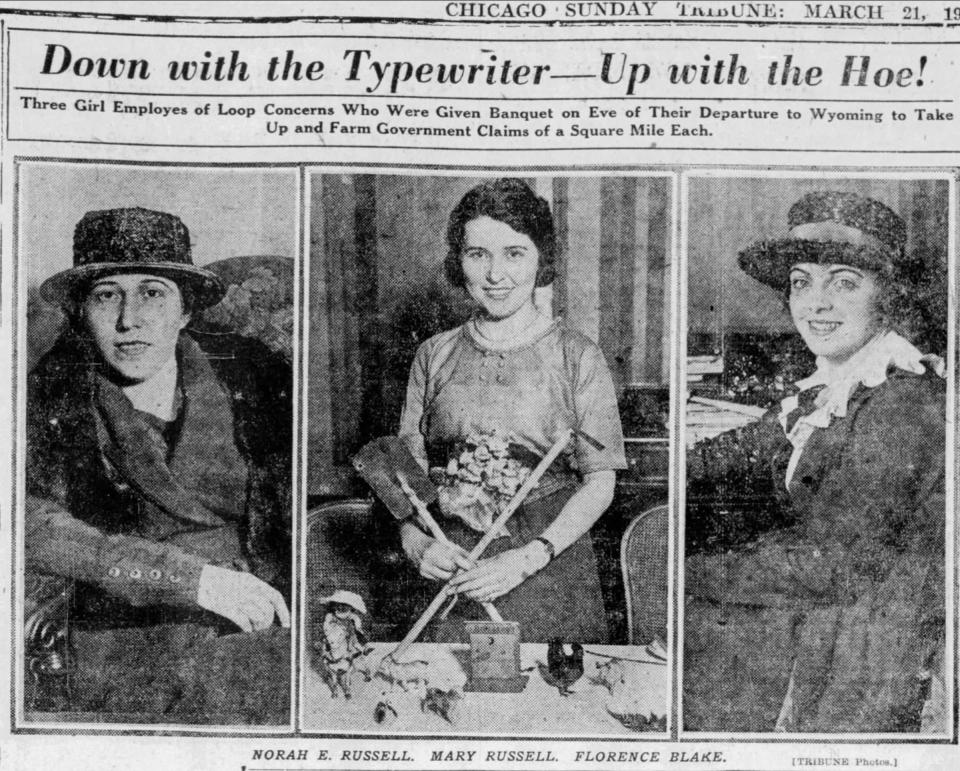
However, there were a few women who decided that the mold of men and homesteading, did not necessarily suit them. One early fall day in downtown Chicago, a woman named Florence Blake met a young male acquaintance who shared his story about claiming land in Wyoming. Blake was instantly inspired to follow suit. Through that conversation, Florence Blake learned about homesteading, and her life would never be the same again. Thanks to a 1912 law that didn’t require year-round residence in order to claim a homestead, she could spend the coldest five months in Chicago, working to fund her venture, and then return to her homestead the rest of the year. Blake decided that if her friend could homestead, so could she. She decided that she was a strong and as tough as he was. It wasn’t really a feminist thing, but rather a determination that if one person was capable, the other could be too. So, Blake worked winters back in Chicago to earn enough to support her claim, which was quickly becoming her passion. Blake worked hard and never gave up until the land was hers.
Strangely, her success was typical. I would have thought that most women who tried homesteading alone, would fail, but research shows that women homesteaders were as likely to succeed as men. Blake’s story soon caught the eye of the Chicago Tribune, and on March 21, 1920, the paper reported that sisters Mary and Norah Russell had also claimed Wyoming homesteads and traveled on the same train as Blake. Blake mentioned them too, though not by name. They reached Gillette during an April snowstorm, and poor road conditions kept Blake in town for about a month, during which she took on various jobs. When the roads cleared, she hired two trucks—one for her portable house and another for a stove and lumber for cupboards, a floor, and an outhouse. The Chicago man who sold her the portable garage-turned-house claimed it “could easily be assembled by a woman,” but in reality, it still took three strong men an entire day to put together the house, a lean-to, and an outhouse. The outhouse had no door but offered a clear view of the nearby Pumpkin Buttes.
Within a few weeks, Blake had settled into her routine. Tending the garden, hauling water from a nearby spring, and trying out various cooking experiments kept her busy. Each evening, she went for a walk: “I’d sit cross-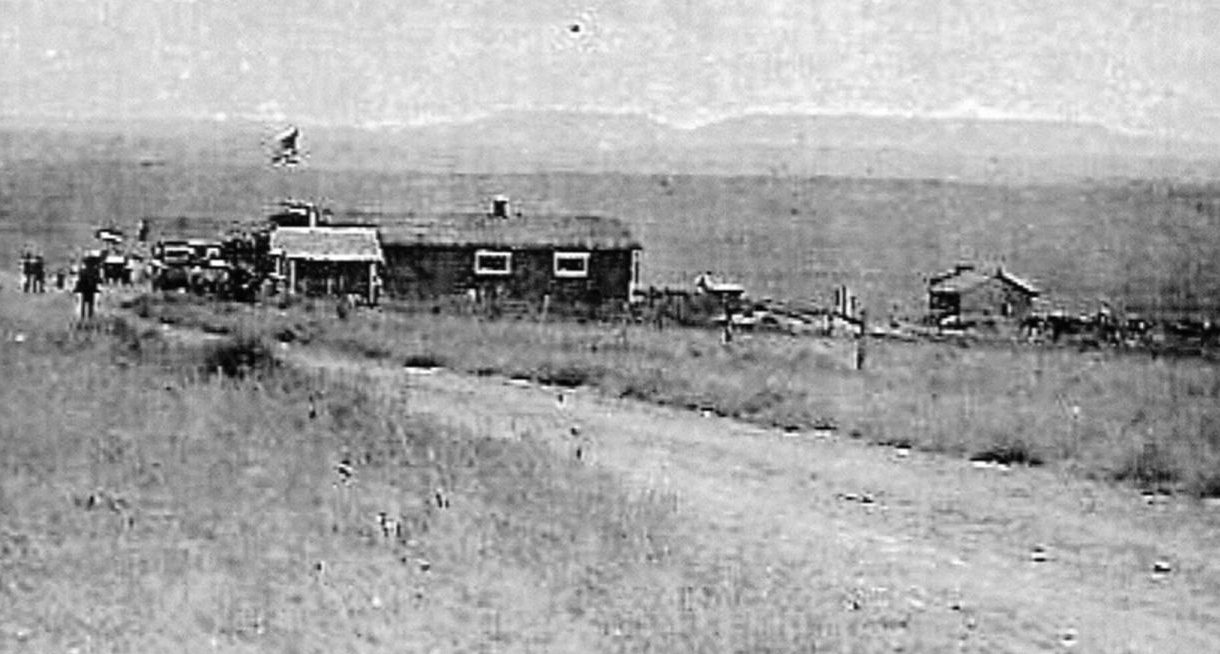 legged on my pet rock, watching the sun set behind the Big Horn Mountains, listening to the many birds settling in for the night. The Meadowlarks sang their last sweet song of the day. The hills were blanketed with wildflowers, and the air was fresh and sweet.” She went on to successfully earn her claim and she stayed in Wyoming, eventually marrying a man named Archibald Smith, a resident of Gillette and former rancher in the area. The couple eventually settled in Cheyenne, where “Arch” had been appointed commissioner in charge of the dairy, foods and oil division for the Wyoming Department of Agriculture.


Leave a Reply