Monthly Archives: June 2025

 Christopher Latham Sholes was an American inventor who invented the QWERTY keyboard, that most people are would recognize today. Also, along with Samuel W Soule, Carlos Glidden, and John Pratt, he is said to be one of the inventors of the first typewriter in the United States. In addition, Sholes was a newspaper publisher and Wisconsin politician. Sholes was born February 14, 1819, in Mooresburg, in Montour County, Pennsylvania, to Orrin and Catherine (Cook) Sholes. He later moved to nearby Danville and worked as an apprentice to a printer there. I rather don’t think he liked his first name, because over the course of his life, he went be a number of names, including, C. Latham Sholes, Latham Sholes, or C. L. Sholes, but never Christopher Sholes or Christopher L. Sholes.
In 1837, after completing his apprenticeship, Sholes moved to Milwaukee, Wisconsin, and later to Southport, Wisconsin (now named Kenosha). On February 4, 1841, in Green Bay, he married Mary Jane McKinney. Together they had ten children, Charles Latham Sholes born 1843, Clarence Gordon Sholes born 1845, Mary Katherine (Tyrrell) born 1847, Frederick Sholes born 1847, Louis C. Sholes born 1849, Elizabeth (Gilmore) born  1852, Lillian (Fortier) born 1856, George Orrin Sholes born 1859, Jessie Sholes born 1861, and Zalmon Gilbert Sholes born 1864.
He became newspaper publisher and politician, serving in the Wisconsin State Senate from 1848 to 1849 as a Democrat, in the Wisconsin State Assembly from 1852 to 1853 as a Free Soiler, and once more in the Senate as a Republican from 1856 to 1857. He played a pivotal role in the successful effort to abolish capital punishment in Wisconsin. His newspaper, The Kenosha Telegraph, covered the trial of John McCaffary in 1851. Then, in 1853 he spearheaded the campaign against capital punishment in the Wisconsin State Assembly. Equally significant was Sholes’ involvement in the massive railroad corruption scandal that engulfed the legislature 1856. He was one of the few decent legislators who rejected the bribe that was offered.
While Sholes did not invent the keyboard, itself, he integrated and innovated upon the work of prior inventors in this area. The QWERTY layout on the typewriter was designed to slow typing so as to prevent the jamming of typewriter keys from too-fast typing. What strikes me as funny is that this design has continued, despite the fact that jamming is no longer a problem for computer keyboards. Some have suggested alternative keyboards  would be more efficient…for instance, the Dvorak keyboard. While that keyboard might be more efficient, the time and work that would be involved in the changeover from QWERTY would be something akin to changing from inches to the metric system. Some people have embraced the metric system, but many, including myself, have not. I just can’t begin to imagine switching from QWERTY to Dvorak.

 Spy cases are always filled with intrigue and mystery, but the Hollow Nickel Case proved to be a particularly odd version. The FBI investigation grew out of the discovery of a container disguised as a US nickel, containing a coded message. On June 22, 1953, fourteen-year-old Jimmy Bozart, a newspaper boy was collecting for the Brooklyn Eagle, at an apartment building at 3403 Foster Avenue in the New York City borough of Brooklyn. One man paid him with a nickel, but it felt too light to Bozart. Curious, he dropped it on the ground, to see how it sounded, and it popped open. Inside was a microfilm containing a series of numbers. Knowing this could be big, Bozart to his friend who was the daughter of a New York City Police Department officer. They told her dad, and he told a detective who, in two days, told an FBI agent about the strange nickel.
After agent Louis Hahn of the FBI obtained the nickel and the microfilm, the agency tried to find out where the nickel had come from and what the numbers meant. “The coin had a 1948-dated obverse (the heads side) with the usual copper-nickel composition, but the reverse was minted sometime between October 1942 and the end of 1945, based on the copper-silver alloys used during this period. On the microfilm, there were five digits together in each number, 21 sets of five in seven columns and another 20 sets in three columns, making a total of 207 sets of five digits. There was no key for the numbers.” The FBI tried for nearly four years to find the origin of the nickel and the meaning of the numbers.
Finally, when KGB agent Reino Häyhänen (a.k.a. Eugene Nicolai Mäki) chose to defect in May 1957. With information received through that defection, the FBI was able to link the nickel to the KGB. That, in itself, should be something to make everyone cringe. Häyhänen had been operating in the US for some time, but when he was recalled to Moscow for good, he knew that he did not want to go. As he was on his way back to Russia, he defected on a stop in Paris.
Amazingly, the nickel was an item that Häyhänen had collected from a dead-drop. The amazing, and truly unbelievable part is that Häyhänen accidentally spent the nickel before opening it. I suppose he could have somehow not realized that it was the special nickel he was spending, but it seems odd, nevertheless. Once he was caught, Häyhänen gave the FBI the information needed to crack the cipher. The deciphered message in the nickel turned out to be a message to Häyhänen from the KGB in Moscow, welcoming him to the United States and instructing him on getting set up. The Translation is as follows (Translation was in all caps).
“1. WE CONGRATULATE YOU ON A SAFE ARRIVAL. WE CONFIRM THE RECEIPT OF YOUR LETTER TO THE ADDRESS `V REPEAT V’ AND THE READING OF LETTER NUMBER 1.
2. FOR ORGANIZATION OF COVER, WE GAVE INSTRUCTIONS TO TRANSMIT TO YOU THREE THOUSAND IN LOCAL (CURRENCY). CONSULT WITH US PRIOR TO INVESTING IT IN ANY KIND OF BUSINESS, ADVISING THE CHARACTER OF THIS BUSINESS.
3. ACCORDING TO YOUR REQUEST, WE WILL TRANSMIT THE FORMULA FOR THE PREPARATION OF SOFT FILM AND NEWS SEPARATELY, TOGETHER WITH (YOUR) MOTHER’S LETTER.
4. IT IS TOO EARLY TO SEND YOU THE GAMMAS. ENCIPHER SHORT LETTERS, BUT THE LONGER ONES MAKE WITH INSERTIONS. ALL THE DATA ABOUT YOURSELF, PLACE OF WORK, ADDRESS, ETC., MUST NOT BE TRANSMITTED IN ONE CIPHER MESSAGE. TRANSMIT INSERTIONS SEPARATELY.
5. THE PACKAGE WAS DELIVERED TO YOUR WIFE PERSONALLY. EVERYTHING IS ALL RIGHT WITH THE FAMILY. WE WISH YOU SUCCESS. GREETINGS FROM THE COMRADES. NUMBER 1, 3RD OF DECEMBER.”
Häyhänen, code name “Vic” told the FBI about a number of Soviet operatives in North America. These included “Vitali G Pavlov, a former Soviet embassy official in Ottawa; Aleksandr Mikhailovich Korotkov; and U.S. Army Sergeant Roy Rhodes, code name ‘Quebec,’ who had once worked in the garage of the U.S. embassy in Moscow. The Soviets were able to get to Rhodes because they had ‘compromising materials’ about him.” 
In addition, and more importantly, Häyhänen helped the FBI uncover the identity of his two main contacts in New York: Mikhail Nikolaevich Svirin (a former United Nations employee) and William August Fisher, whose code name was “Mark.” Svirin had returned to the Soviet Union in October 1956 and was not available for questioning or arrest, but Fisher was still working in the United States, principally seeking information on the U.S. atomic program and U.S. Navy submarine information. With Häyhänen help, they eventually found information on the espionage activities of William August Fisher, who used the code name of Rudolf Ivanovich Abel.

 Like it or not, travelers of Route 66, during its heydays had to deal with the infamous Jericho Gap that was known to trap numerous visitors on its 18-mile swath of muddy black soil. In the 1930s, much of Jericho Gap was bypassed due to the problems it presented. These days Jericho Gap’s original stretch is missing segments and is partly on private property.
While the Jericho Gap area was a frustration to travelers, the locals often benefited from the many stranded vehicles on this stretch of the Mother Road. They found themselves with the job of pulling stranded cars out of the quagmire, for a profit, of course. It was even rumored that some locals watered down the road to increase their business. The whole thing rather reminds me of the speed traps on the “Dukes of Hazard” show…if they actually watered down the road, that is.
Today, when you travel beyond Johnson Road, located at exit 132, you will find that old Route 66 continues paved for a while before turning to gravel, then turning paved again, and back to gravel for about two miles. At that point, it becomes a rutted dirt road and enters a private ranch. It would seem that slowly, but surely, Jericho Gap is disappearing. Nevertheless, Jericho’s old site can still be accessed by taking exit 124 south on Highway 70 about one mile. In that location, you can see the endings of both the Jericho-Alanreed and Groom-Jericho sections of the Jericho Gap at County Road B Jericho Gap Road.
The town of Jericho, now a ghost town, was once a village and train station in the late 1880s, along the stage route that carried passengers and mail from Saint’s Roost (now Clarendon) to Fort Elliott (now Mobeetie). There was very little there when the station was built…just a dugout and drinking water that had to be hauled in from a nearby spring. The Jericho Cemetery was established after the Indians were removed to reservations and more people began to settle the area. In 1894, an unusual outbreak of Malaria killed several settlers. Construction on the Choctaw, Oklahoma, and Texas Railroad brought even more people to settle there. The town of Jericho was officially established in 1902 when the railroad built a station and a post office there, and the town was named for the biblical city in Palestine. In the Bible, the name “Jericho” represents a symbol of victory, faith, and the power of God. It signifies overcoming obstacles and entering into a promised land.
Jericho began to quickly flourish. Cattle were shipped from there and passengers could take the train to the area. When Route 66 was established through Jericho, it brought several gas stations, stores, and a motel. It was then that the town gained its infamous reputation as the Jericho Gap, which helped the locals to prosper. The town of Jericho peaked in the 1930s when it had a population of about 100, a post office, three stores, a grain elevator, a tourist court, a service garage, and a filling station. Unfortunately, when Route 66 was moved one-half mile north of Jericho, completely bypassing the town. By 1939, its population had dropped in half to just 50 people. The post office was discontinued in 1955, and by the 1980s, little remained at the townsite. 
 Today, Jericho is a ghost town surrounded by cattle and ghost farms. The ruins of the old tourist court can still be seen. One house and another unidentified brick building can still be seen, as can the little bit that is left on County Road B, just west of Highway 70 and the cemetery located about two miles west of the old townsite, south of County Road B.
 In what can only be described as the strangest phenomenon, Japan has found itself in the midst of an elderly crime wave. To me that is quite shocking. As people get older, most of them become more responsible, mature, and certainly too conservative in their values, to commit petty crimes for seemingly no reason. Oddly, in Japan, the proportion of crimes committed by people over the age of 65 has been steadily increasing for 20 years. The question is why?
Following his time in prison, 69-year-old Toshio Takata now lives in a halfway house in Hiroshima. He tells of his reasons for breaking the law, saying that he broke the law because he was poor. He needed somewhere to live free of charge. In desperation, he made the decision the commit a crime and sacrifice his freedom for the relative security of life behind bars. Takata says, “I reached pension age and then I ran out of money. So, it occurred to me – perhaps I could live for free if I lived in jail.” That is such a sad solution, but it was the one he felt he could live with.
Takata says, “So, I took a bicycle and rode it to the police station and told the guy there: ‘Look, I took this.'”
His plan worked. This was Takata’s first offence…a crime committed when he was 62 years old, but Japanese courts treat petty theft seriously, so it was enough to get him a one-year sentence. Takata was a small, slender man, and with a nervous giggle. He looks nothing like a habitual criminal…how could he? He looks even less like someone who would threaten women with knives, but following his release from his first sentence, that’s exactly what he did. He needed another prison term. He says, “I went to a park and just threatened them. I wasn’t intending to do any harm. I just showed the knife to them hoping one of them would call the police. One potential victim did.”
In all, Takata has spent half of the last eight years in jail. When asked if he likes being in prison, he points out  the less obvious financial upside…his pension continues to be paid even while he’s in prison. He says, “It’s not that I like it, but I can stay there for free, and when I get out, I have saved some money. So, it is not that painful.” Sadly, Takata represents a sad new trend in Japanese crime. Normally a remarkably law-abiding society, a rapidly growing proportion of crime is now being carried about by its over-65-year-old members. In 1997, that age group accounted for about one in 20 convictions, but now, 20 years later that number has grown to more than one in five!! It is a sad statistic for sure, but one that clearly depicts the plight of this group of people in Japan.

 The CSS Alabama was a Confederate warship, built in an English shipyard and sold to the Confederates in 1861, the Alabama was a state-of-the-art ship. It was 220 feet long, with a speed of up to 13 knots. During the Civil War in the United States, CSS Alabama was used as a commerce raider. The cruiser was equipped with a machine shop and could carry enough coal to steam for 18 days, but its sails could greatly extend that time. Under its captain, Raphael Semmes, CSS Alabama prowled the world for three years, capturing United States commercial ships. It sailed around the globe, usually working out of the West Indies, but taking prizes and bungling Union shipping in the Caribbean, off Newfoundland, and around the coast of South America. In January 1863, CSS Alabama sunk a Union warship, USS Hatteras, after drawing it out of Galveston, Texas. The Union navy spent an enormous amount of time and effort trying to track down CSS Alabama.

The ship was designed to disrupt Union merchant shipping, and over its two-year career, CSS Alabama captured or destroyed more than 60 Union vessels, making it one of the most successful of the Confederate ships. Nevertheless, as history has proven, no ship is unsinkable. For CSS Alabama, the end came in 1864 when it was sunk by the USS Kearsarge off the coast of Cherbourg, France, in a dramatic naval battle. The wreck of CSS Alabama was not discovered until 1984. It remains a significant historical artifact to this day.
The demise of CSS Alabama came in a rather unusual way. The ship had sailed around South America, across the Pacific, and then docked in India in 1864. By the summer, Captain Semmes knew that after three years and 75,000 miles his vessel needed overhauling in a modern shipyard. So, he sailed around Africa to France, to request dry dock repairs. The French denied him access to a dry dock. With no other option, Semmes moved 
 the ship out of Cherbourg Harbor and immediately found the USS Kearsarge waiting. I’m sure he knew that his fate was sealed at that point. His ship was not in good shape, and he was unprepared for the upcoming fight. In a spectacular battle, the USS Kearsarge bested and sank CSS Alabama. During its career, it is said that CSS Alabama captured 66 ships and was hunted by more than 20 Federal warships.

 In the early years of the California gold rush, cholera invariably struck each spring at the thronging jumping-off towns along the Missouri River where thousands of gold seekers and Oregon-bound emigrants gathered to outfit. Jumping-off towns were the towns along the border of American frontier settlement where emigrants completed their outfitting for the journey across the Plains during the 1840s and 1850s. Cholera is “a severe diarrheal disease caused by bacteria (Vibrio cholerae). It spreads through contaminated water and can be fatal within hours if not treated. Researchers estimate that there are 1.3 to 4.0 million cases and 21,000 to 143,000 deaths from cholera worldwide each year.” On the Westward trails, the deadly disease often claimed many settlers’ lives before the victims even had a chance to start across the prairies of Kansas or Nebraska. Many lives were lost along the trail corridor to Fort Laramie, Wyoming, as well as in American Indian encampments and villages.
Cholera, being an intestinal bacterial infection, causes severe diarrhea and kills its victims through dehydration. The bacteria spreads through water and food contaminated by human waste. These days, cholera is treated by rehydrating the patient with salty solutions, making it much less deadly, but in the Old West, the cause, means of transmission, and treatment of the disease were unknown. The Westward travelers actually spread the infection among the already unsanitary outfitting towns and carried it west from campground to campground and waterhole to waterhole. The emigrants tried using pain medications such as camphor; the oil of the Asian camphor tree; and laudanum, a bitter-tasting, addictive tincture made from opium. Nevertheless, the victims often died within a matter of hours…healthy in the morning and dead by noon. It was a devastating situation. “For four hundred miles the road was almost a solid graveyard. At one campground I counted seventy-one graves,” recalled George Tribble, who traveled to Oregon in 1852. Of ten Tribble family members who started west, only five reached Oregon.
Of the many trailside cholera grave, most remain unmarked. One exception is that of twenty-five-year-old George Winslow, who died on June 8, 1849, near present-day Fairbury, Nebraska. The symptoms of cholera struck poor Winslow as his party crossed Kansas, not long after jumping off onto the trail. The party Winslow was with kept moving, carrying him in a wagon for the next six days. As they went, Winslow seemed to improve, but when a violent thunderstorm struck, bringing rain and cooler temperatures, Winslow took a chill. For another week he hung on, but then, as a companion, Bracket Lord, sadly wrote, “George is dead— —his body lays here in the tent but his spirit has fled — Our company feel deeply this solemn providence. I never attended so solemn funeral — here we were on these plains hundreds of miles from any civilized being — and to leave one of our number was most trying.” I’m sure that expressed the feeling of anyone who had to leave friend or loved ones behind in the grave.
Winslow was on the trail without his family, who was to join him later. His friends buried him deep on a grassy hillside, marked his grave with an inscribed sandstone slab. Then they sent word back to his wife and family in Connecticut. The Winslow family didn’t relocate to the west, but many years later Winslow’s sons relocated the gravesite and erected a beautiful monument beside the trail ruts. Owners of the family farm where the grave lies have protected it and the ruts since 1873.
Another sad cholera story is the one about Rachel Pattison. “Rachel taken sick in the morning, died in the night,” said twenty-three-year-old Nathan Pattison in reference to the death of his wife of two months, Rachel Warren Pattison. Nathan and Rachel were married April 3, 1849, in Randolph County, Illinois. The adventurous 
 newlyweds decided to take the Oregon Trail one week later, and they set off with Nathan’s immediate family. On June 18th, they reached Ash Hollow and stopped to do some repair work. The next day, Rachel was taken with Cholera and died just 12 hours later. She was just 18 years old. Her trailside grave was the beginning of this pioneer cemetery known as Ash Hollow Cemetery. Cholera made traveling the trails dangerous.

 While we use items in our everyday lives, that would be impossible were it not for the person who invented these things, we seldom give much thought to the inventive mind that thought up the items in the first place. Before we could use the cell phone, the computer, the television, the camera, the airplane, the automobile, or the train, someone had to invent these items and make them not only work but make them accessible to the general public. Of course, these items are just a “drop in the bucket” when it comes to the many inventions there have been over the years of our world’s existence. There have been so many inventions that no one could possibly count or name them. In addition, whether you believe in God or not, it is my opinion that none of these inventions would be possible were it not for God speaking to these inventors. Seriously, have you ever “tried” to come up with an invention? Most of us would be clueless when it comes to inventing something totally new, and that is because these ideas come from God first…like it or not. Just try to think of something that would be useful, and also not done already. Right!! You probably drew a blank. So did I.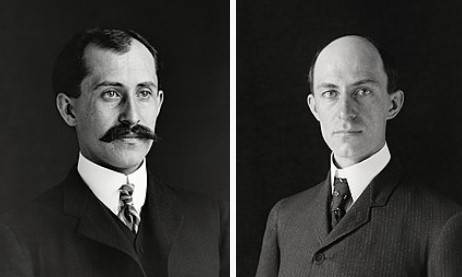
Nevertheless, there were great minds, great because they got their ideas from God, believe it or not, that put these ideas into practical use, and have gone on to make the world a much better place. Without things like planes, trains, and automobiles, we would be severely limited in how far we could travel. Communication and technology would be severely limited if we didn’t have telephones, computers, and even cameras…not to mention the limitations concerning safety. These are just a few inventions, and they are the more modern type. There were also things like the cotton gin, the printing press, microwave ovens, sewing machine, various drugs, and so much more. The minds of those we call inventors have improved life in our world so much, and we do 
 owe them a debt of gratitude for their hard work and for their imaginations.
People like Thomas Edison, Alexander Graham Bell, Marie Curie, Orville and Wilber Wright, Eli Whitney, George Eastman, Louis Braille, Isaac Singer, Karl Benz, Henry Ford, and so many more, have contributed to the betterment of the world as we know it. That is a given, but what puzzles me is how these minds work. How do they think up these inventions. And most of these people go on to invent multiple things. If it was one invention, we could call it a fluke, but when they invent multiple things, we have to believe that we are dealing with a unique kind of mind…a very imaginative kind of mind. The mind of an inventor.

 While rides at the fair have become increasingly complicated and intense, they actually started out rather simple. Rides have been around for a long time, even before June 16, 1884, when the first roller coaster in America opened at Coney Island, in Brooklyn, New York. The first roller coaster in history originated in Russia in the 15th century as a form of ice sledding. The first rollercoaster in America was known as a switchback railway, and it was the brainchild of LaMarcus Thompson. It traveled approximately six miles per hour and cost just a nickel to ride. The new entertainment was an instant success and by the turn of the century there were hundreds of roller coasters around the country.
While no one is certain, it is believed that Coney Island was named for the Dutch Konijn Eilandt, or Rabbit Island. Coney Island is a tract of land along the Atlantic Ocean discovered by explorer Henry Hudson in 1609. It was immediately a popular place, with the first hotel being established in 1829. By the post-Civil War years, Coney Island was an established resort area with theaters, restaurants and a racetrack. Then, between 1897 and 1904, something new got started. Three amusement parks sprang up at Coney Island…Dreamland, Luna Park, and Steeplechase. Coney Island was accessible by subway by the 1920s, and summer crowds of a million  people a day flocked there for rides, games, sideshows, the beach, and the two-and-a-half-mile boardwalk, completed in 1923.
It is thought that Charles Feltman invented the hot dog at Coney Island in 1867. A nickel hot dog stand called Nathan’s was opened in 1916, by a former Feltman employee and went on to become a Coney Island institution and international franchise. Today, Nathan’s is famous not only for its hot dogs, but also for its hot dog-eating contest, which is held each Fourth of July at Coney Island.
Like most things, the Great Depression hit the amusement parks hard. Roller coasters and amusement parks experienced a decline during the Great Depression and World War II, mostly because Americans had less cash to spend on entertainment. The saving grace came in 1955, with the opening of Disneyland in Anaheim, California. That signaled the advent of the modern theme park and a rebirth of the roller coaster. They became bigger and scarier. No longer was it a ride for everyone. Now, it was not recommended for those with a weak stomach. Nevertheless, Disneyland’s success sparked a wave of new parks and roller coasters. In the 1970s, parks were competing to create the most thrilling rides…leaving the simple rides at Coney Island in

 By the mid-1960s, the major amusement parks at Coney Island had closed down and the area took on a seedy image, but in recent years it’s been revitalized, and had become a popular tourist attraction again. Coney Island is still home to the Cyclone, an old wooden roller coaster that made its debut in 1927. That one was capable of speeds of 60 mph and with an 85-foot drop, the Cyclone is one of the country’s oldest operational coasters today.

 My Grandnephew, James Renville is a multi-talented guy. When he and his dad, James Renville’s team finished 1st in the 10 Ball pool league, the won a trip to Las Vegas USAPL National Championship. The trip was all expense paid, and the guys had a great time. It isn’t often that James and his dad get to take a trip together, and that made this even more special. Playing pool on a team together has really been great for James and Jim. James also took a trip with his dad to Florida to watch the world nationals, called the Mosconi Cup. It was a 9-ball pool tournament. It was a big surprise Christmas present to his dad. James flew both of them out to Orlando Florida to watch it. He accidentally got tickets on the European side of the tournament though, so that was a pretty funny little side note. I can just see it now…cheering for what appears to be the opposite team, at least when it comes to the side you are sitting with. Nevertheless, I can imagine the guys saw the humor in the situation and got a good laugh out of it.
James’ mom, Toni Chase and stepdad, Dave Chase have also done some traveling with James and his wife, Manuela this past year, taking a trip to Glacier National Park last July 4th. They did a bunch of hiking and touring, and everyone had a great time. James has long loved to travel, so any trip is a big deal for him, but Glacier National Park is a special trip from any point of view. And as for snow and mountains, James and  Manuela decided to take a stab at snowshoeing this year. That may not seem like such a big deal, but since Manuela immigrated from Columbia, loving the snow is not exactly natural to her. Nevertheless, she seems to have taken to the Northern weather pretty well.
James and Manuela have been saving up for a trip to Columbia this year. James’ birthday is on the same day as Manuela’s mom’s birthday. That has made their relationship special, and because Manuela’s mom is turning 50 this year, it is a big deal. They plan to have a celebration together for it. James had a great time on their first trip to Columbia, and he is very much looking forward to this trip too. Today is James’ birthday. Happy birthday James!! Have a great day!! We love you!!
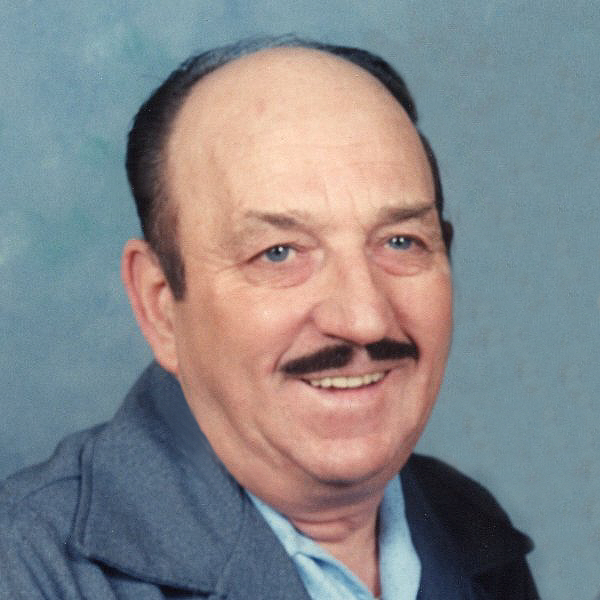
 For those who no longer have their dad on Earth, Father Day inevitably carries a touch of sadness. Many of us long for just one more day or one more memory to share with their dad, but that is not possible. Instead, we quietly wish him a Happy Father’s Day in Heaven, confident that he is at peace and filled with joy. It is we, his children, who feel the weight of sorrow and loneliness. For me, both my father, Allen Spencer, and my father-in-law, Walter Schulenberg, live in Heaven now, and I often find myself forgetting the approach of day, perhaps as a way to shield myself from the sadness that follows the thought of their absence. My solace lies in the certainty that I will see them again in Heaven. Until then, to my dads, I say Happy’s Day in Heaven. I know it will be a truly wonderful day there…better than any we could possibly plan for them here on Earth.
I was just so blessed to have two wonderful dads in my life. My dad made sure that we, his five daughters and our mom, had opportunities to see the country, go camping, read maps and plan trips, and so many other things. He taught us responsibility, love for one another, and most importantly, love for God. My father-in-law 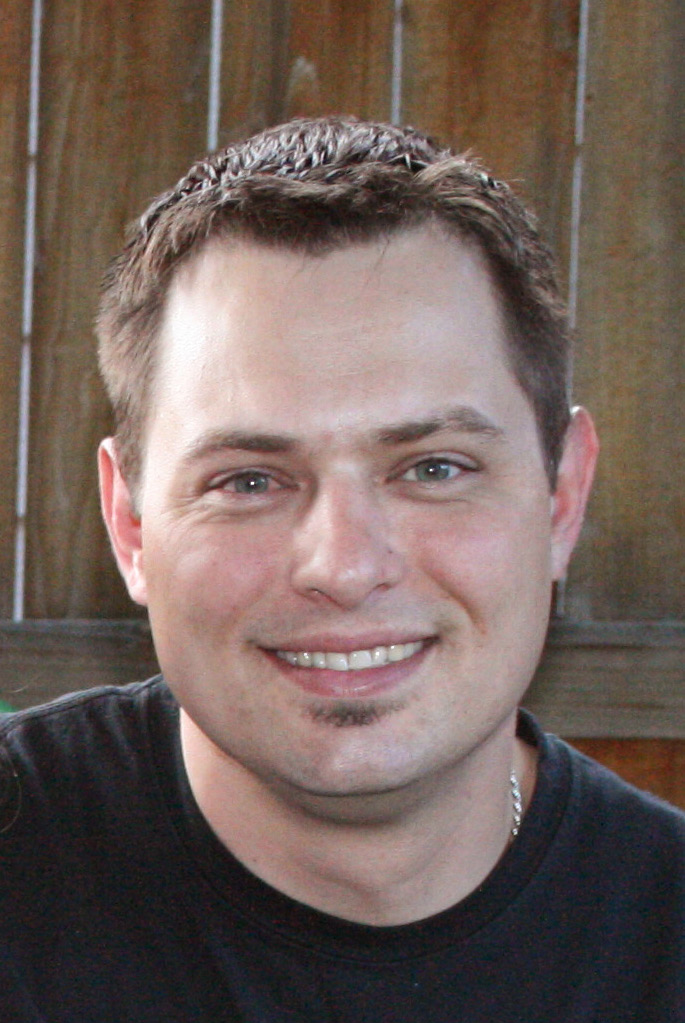
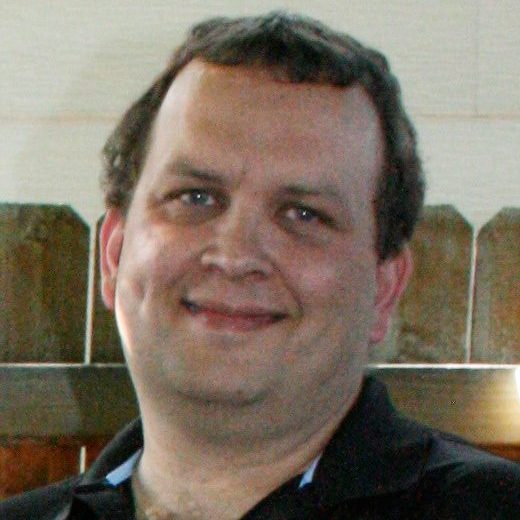
 was much the same kind of man, even though the family didn’t do a lot of traveling. They were still a very close family and helped each other in any way they needed. It was and still is almost a network of people with unique talents who share the load when it comes to needs. I will always be proud of and grateful for my two dads, who are now in Heaven.
I also have several other men who qualify as dads in my life. While these men are not my dads, they are part of my family. The first is my husband, Bob Schulenberg, who is the father of my children, Corrie Petersen and Amy Royce. Kevin Petersen and Travis Royce are my sons-in-law, and they have been wonderful husbands and dads to my daughters and grandchildren. They have worked very hard to give them happy lives. Then, there are my two grandsons, Chris Petersen who has a daughter and two sons, and my grandson, Josh Petersen who 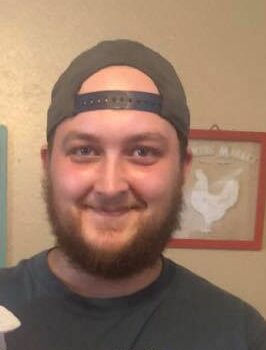
 has three sons. Both have very active roles in raising their children. I am so proud of all of these men…dads who are with the mothers of their children and are showing their children what it means to be a great dad. They are great role models and loving fathers, and in them we have all been blessed. I also want to recognize all my brothers-in-law and nephews, because they are amazing dads and great blessings too. Today is Father’s Day, and while it must be a memory day for me, it is a special day for all of us. Happy Father’s Day to these and all dads today. Have a great day!!

