Monthly Archives: February 2025
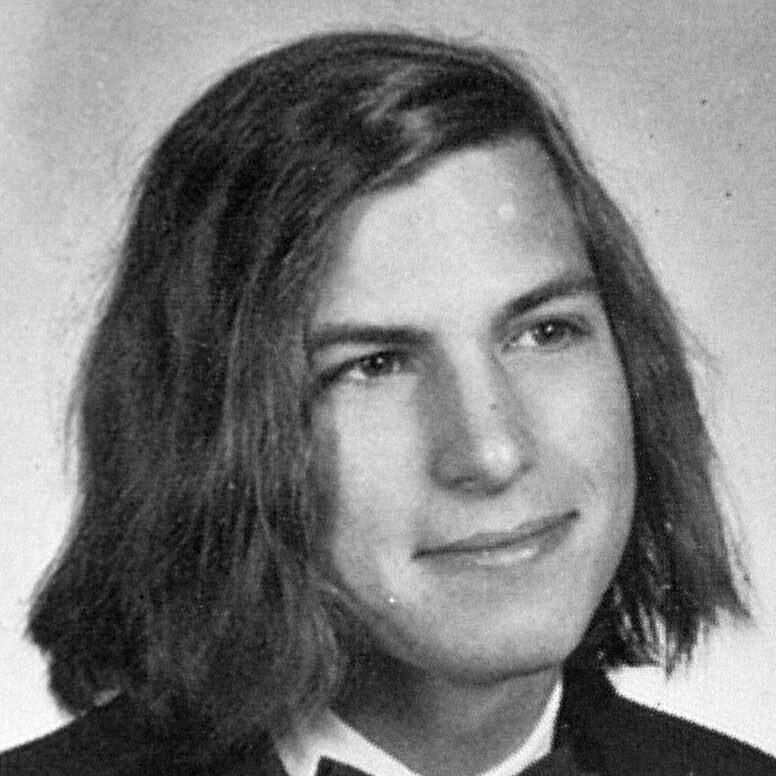
 In 1976, while I was married, having kids and raising a family, a man named Steve Jobs was creating Apple, a company that would change my life and the lives of many other people. At that time, most of us hadn’t really heard of computers, much less actually used one. Nevertheless, the future would bring a computer in almost every home, and in fact, one in almost every hand. My own introduction to the world of computers would come a little over a decade later when I went to work for an agent with Farmers Insurance. The computer we had there was a closed DOS system, so there was nothing like the internet and surfing the web. For me, that would come yet another decade later while working for an Allstate agent…again on a closed system. By that time, I was hooked and that closed system just didn’t do it for me anymore. So, as a mother of two and a grandmother of three (at that time…one more grandson would follow very soon), I bought my first computer…a Gateway. It was a good computer, but nothing like the models we have today, and these days, it would have driven me up a wall. My phone is, of course, an iPhone, and my computer is a Lenovo laptop. One day maybe I will have a Mac laptop. We shall see. My niece, Liz Masterson loves them.
My iPhone is by far my favorite item, so I guess, I have Steve Jobs, and his associates, Steve Wozniak, and Ronald Wayne to thank for that. Apple Inc, which was originally Apple Computer, Inc, is a multinational  corporation that creates and markets consumer electronics and attendant computer software and is a digital distributor of media content. Apple’s core product lines are the iPhone smartphone, iPad tablet computer, and the Mac personal computer. The company offers its products online and has a chain of retail stores known as Apple Stores. The men founded the company on April 1, 1976, in the childhood family home of Steve Jobs on Crist Drive in Los Altos, California. The original site of Apple Computer, Inc, was added to a list of historic Los Altos sites in 2013. They started the company to market Wozniak’s Apple I desktop computer. Jobs and Wozniak incorporated the company on January 3, 1977, in Cupertino, California.
Jobs was born on February 24, 1955, to Joanne Carole Schieble and Abdulfattah “John” Jandali. Because Jandali was Muslim, Schieble’s parents objected to the marriage, so she traveled to San Francisco to give birth to her son and place him for adoption. Schieble requested that her son be adopted by college graduates. A lawyer and his wife were selected, but they withdrew after discovering that the baby was a boy, so Jobs was instead adopted by Paul Reinhold and Clara (née Hagopian) Jobs. Since they lacked a college education, Schieble initially refused to sign the adoption papers and went to court to request that her son be removed from the Jobs household and placed with a different family but changed her mind after Paul and Clara promised to pay for their son’s college tuition. He chose Reed College, which was an expensive college, and after a year, dropped out because he didn’t want to financially burden his parents. Instead he audited the courses he wanted to take, and while he never got a degree, he did get the necessary knowledge. And so began the life and career of a man who would change technology.
Jobs’ vision for user-friendly devices began with the Apple I and grew rapidly from there with groundbreaking products like the Macintosh, iPod, iPhone, and iPad. Jobs was a man known for his perfectionism and marketing genius. He was perfect for that company, and he revolutionized personal computing, music, and mobile 
 communication. He inspired the global tech revolution with his “Think Different” philosophy, making Apple one of the most influential companies in history. He left a legacy defined by his innovation, creativity, and relentless pursuit of excellence. In 1985, Jobs was awarded the National Medal of Technology from President Ronald Reagan, awarded jointly with Steve Wozniak. Unfortunately, he died far too young from pancreatic cancer complications on October 5, 2011, at the age of just 56 years.
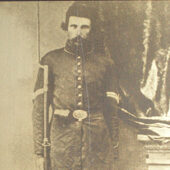
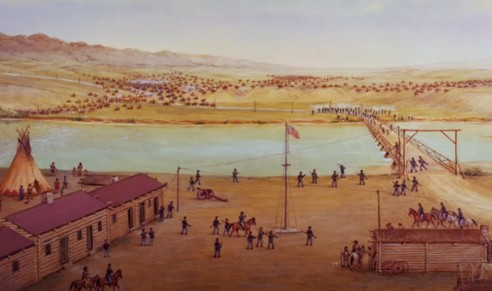 Everyone has heard of “Custer’s Last Stand,” but what about “Custard’s Last Stand.” Well, it is a real thing. I was shocked when I heard that too. The battle actually had two names. It was known first as the Battle of Red Buttes, and it was fought in 1865, near modern-day Casper between American Indians and US Cavalry soldiers, but it was also known as “Custard’s Last Stand.” It was a small battle, but it was significant too. It directly contributed to the Battle of Little Bighorn, which was also known as “Custer’s Last Stand” and was also the way Casper, Wyoming got its name.
Everyone knows about the Battle of Little Bighorn, which is also known as “Custer’s Land Stand” mainly because Lieutenant Colonel George Armstrong Custer, commander of the 7th Cavalry Regiment, was among the 286 US soldiers killed while fighting warriors from the Lakota Sioux, Northern Cheyenne and Arapaho tribes. Well, “Custard’s Last Stand” was also named after a man who was killed in the battle. Following the American Civil War, which wrapped up in the summer of 1865, another war was beginning in the American West. The brutal path that led to the Battle of Red Buttes started the previous winter with the Sand Creek Massacre in southeastern Colorado. On November 28, 1864, Colonel John Chivington and 675 soldiers in the 3rd Colorado Cavalry descended on a Cheyenne and Arapaho village and killed at least 135 people, mostly women and children. These massacres were the catalyst that often sparked these Indian wars. Like the rest, “The massacre united the Lakota, Cheyenne and Arapaho to get revenge for what had happened,” according to Rick Young, manager of the Fort Caspar Museum in Casper.
Emotions were out of control in the summer of 1865. The Indians were attacking and killing settlers all across Wyoming and Colorado. A soldier from Platte Bridge Station, 20-year-old 2nd Lieutenant Caspar W Collins of Ohio, was ordered to meet Commissary Sergeant Amos Custard and the supply wagons. Soon after Collins left the fort that morning with 25 men of the 11th Kansas, they were attacked by as many as 1,000 Cheyenne, Lakota, and Arapaho warriors. Collins and five other soldiers were killed in what would become known as the Battle of Platte Bridge and would thus give Casper, Wyoming its name, in an unfortunate misspelling. The survivors retreated to the fort while Sergeant Custard and his wagons bravely continued their approach.
Unfortunately, the Indians were not yet done with the soldiers. As they approached the fort, the soldiers inside fired a cannon as a warning of warriors in the area. Of course, the warriors could also see the wagons and headed out to attack. Sergeant Custard circled the wagons, and the 11th Kansas Volunteer Cavalry prepared to stand against the attack. The 25 men fought bravely, but they were outnumbered. Their stand failed, and the 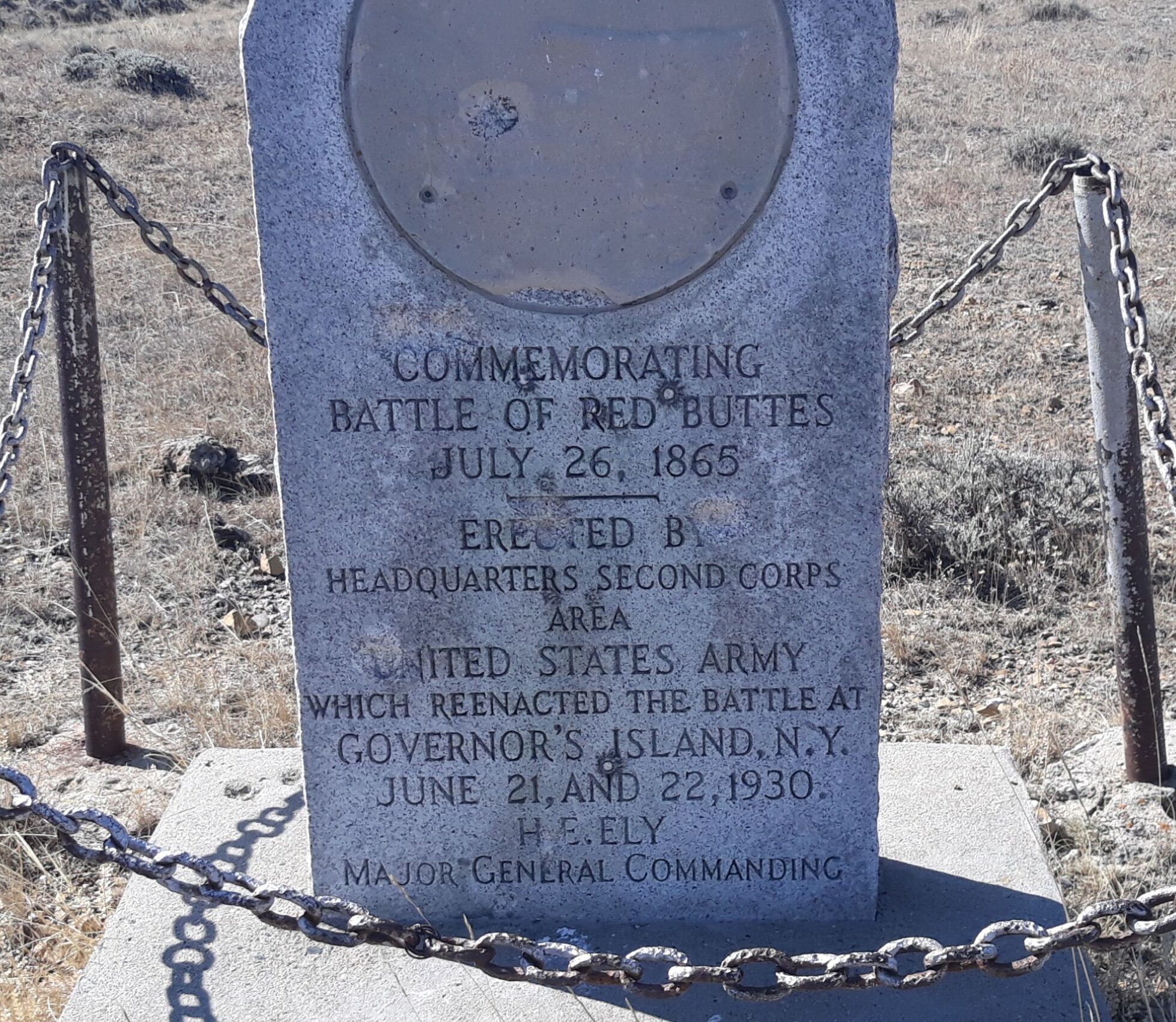
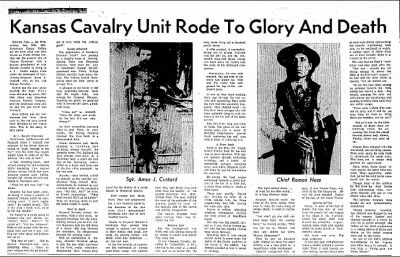 22 men with the wagons were killed, including Custard. Only three men escaped and reached safety at Platte Bridge Station. That was a horrific day, and in the end, 29 US soldiers and at least eight Native American warriors were killed in the Battles of Platte Bridge and Red Buttes. “Custard’s Last Stand” would later spur “Custer’s Last Stand” as the soldiers went after the Indians who had been the cause of so much bloodshed.
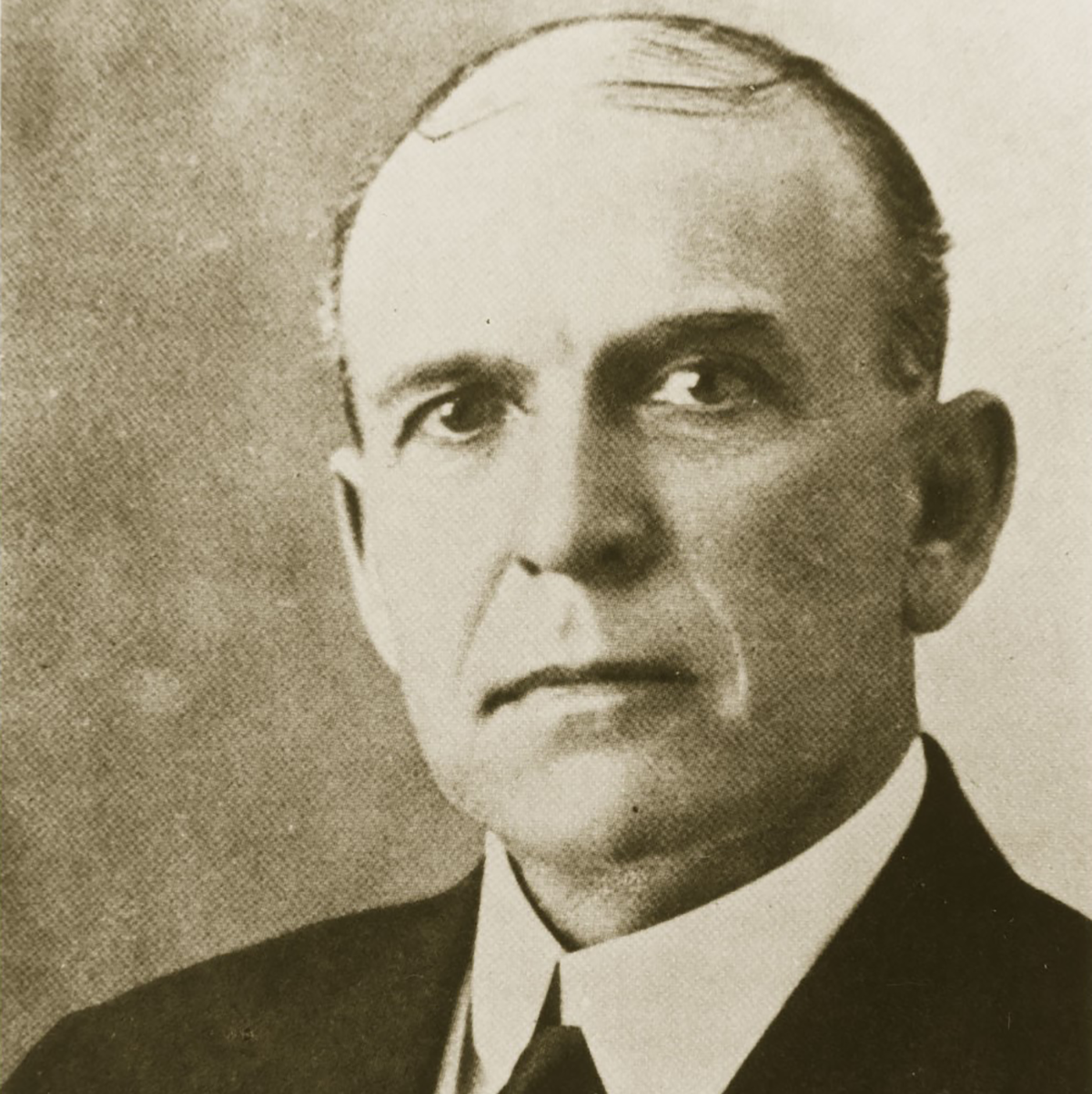 Douglas Arnold Preston was destined for great things in the state of Wyoming. Born on December 19, 1858, to Finney D Preston and Phoebe Mundy. He was admitted to the Illinois bar in 1878 and practiced law in Illinois courts until 1887. Then he decided to relocate to Cheyenne, Wyoming Territory. During his life in Wyoming, Preston was not only an attorney, but also a politician. He served as the 6th Attorney General of Wyoming from 1911 to 1919, as a member of the Democratic Party. He also served as a member of the Wyoming House of Representatives from 1903 to 1905, and as a member of the Wyoming Senate in 1929 until his death.
When Preston moved to Wyoming in 1887, he established a law office in Rawlins in partnership with John R Dixon. Apparently, Rawlins wasn’t his cup of tea, so the following year, he moved to Lander, where he continued his legal practice. In 1895, he again relocated, settling in Rock Springs, which became his long-term residence and base for his legal and political career.
While Preston’s political career was extensive, probably one of the oddest parts of his legal career was the fact that he was once retained as a defense attorney for the infamous Butch Cassidy. Cassidy and his cohort, Al Hainer, had been arrested on April 11, 1892, a seven-man posse led by Uinta County Sheriff John Ward and Deputy Sheriff Bob Calverly, and charged in Fremont County with grand larceny “involving the theft of a horse valued at forty dollars from the Grey Bull Cattle Company on or about October 1, 1891.” District Court Judge Jesse Knight set bond at $400 each and both men were released pending trial. The trial was delayed for more than a year, due mostly to problems encountered in locating one prosecution witness and several defense witnesses. During that time, Cassidy retained Douglas A Preston of Lander as his attorney. Preston was assisted by C F Rathbone.
Preston and Cassidy had crossed paths and become friends so retaining him made sense. Unsubstantiated 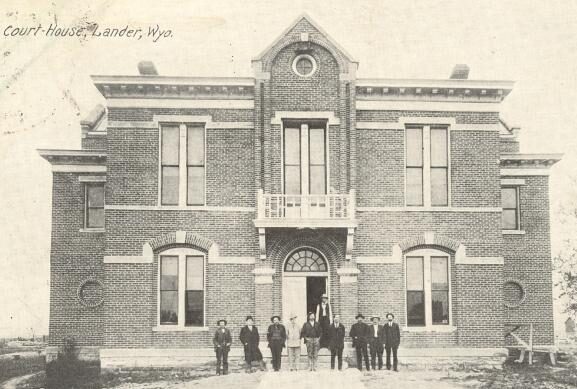 rumor has it that Cassidy and Preston met when Cassidy saved Preston from a beating in a saloon in Rock Springs. However, that rumor has been disputed, and since Cassidy was an outlaw, it seems odd that he would play the hero in that one situation. Nevertheless, the two men were friends, and Preston did defend Cassidy.
The trial finally began in Lander on June 20, 1893, with Judge Knight presiding. The trial was short and the defense simple. Cassidy and Hainer did not deny being in possession of the horses but maintained they had bought them from a man named Billy Nutcher in good faith, unaware they were stolen. Conveniently, though he had been subpoenaed to testify, Nutcher did not appear at the trial. Nor did two men Cassidy claimed had witnessed the transaction. In the end, the jury deliberated only a few hours before finding both men not guilty. The reality was that there was just not enough evidence.
As the trial progressed and a “not guilty” verdict appeared likely, rancher Otto Franc filed charges against Cassidy and Haines in the theft of different horses in August of 1891, valued at $50. Both were re-arrested and were once again freed on bond. The trial on the new charge opened on June 30, 1894. While Cassidy was found guilty, Hainer was once again acquitted. On July 10, Judge Knight sentenced Cassidy to two years at hard labor in the Wyoming State Penitentiary in Laramie. That pretty much ended the relationship with Preston and Cassidy, and Preston went on to focus on his political career.
Preston served as the prosecuting attorney for Richland County, Illinois from 1880 to 1894. By 1889, and now in Wyoming since 1887, Preston was selected as one of the Democratic delegates to the Wyoming Constitutional Convention. Their task was to draft the state’s constitution for submission to the US government  for statehood. From 1903 to 1905, Preston served in the Wyoming House of Representatives. Governor Joseph M Carey appointed him as Attorney General of Wyoming in 1911, and he was reappointed by Governor John B Kendrick in 1915.
Preston was elected to the Wyoming Senate in 1928, but on October 8, 1929, he was involved in a car crash that left him with four broken ribs and a severe skull fracture. Unable to recover from his injuries, Preston died on October 21, 1929, in a hospital in Rock Springs, Wyoming. He was 70 years old. In the 1930 Wyoming state elections, his widow, Anna Preston, was nominated as the Democratic candidate for Wyoming Superintendent of Public Instruction.
 Beating the computer…sound impossible. Well for most of us, it probably is. Garry Kasparov would be the exception to that statement. Still, it was not a common event…even for Kasparov. On February 10, 1996, at the Pennsylvania Convention Center in Philadelphia, Kasparov was beaten by a computer called Deep Blue in the first game of a six-game match, marking the first time a computer had ever beat a human in a formal chess game. Prior to that time, most likely no one had programmed a computer to really play chess. So, it was experimental. Since that time, computers have improved significantly, and today they can easily surpass scores of 3500, while the current all-time human record is 2882. Not being a chess player, I can’t exactly say that that I know about the scoring system.
Being beaten at chess was not something Kasparov took kindly to. After all, he was a world class player. Nobody was supposed to beat him, much less a machine. He could hardly stand it. It became an obsession. He was determined to beat the computer. Then, on February 17th…the final day of the tournament, Kasparov actually beat Deep Blue. It was the final game of a six-game match, and IBM’s chess-playing computer finally lost. Kasparov won the match, 4-2. While he had his victory, the sweetness of it was short lived, because the  following year, in a widely publicized rematch, Deep Blue once again went on to defeat Kasparov.
Kasparov was born April 13, 1963, in the Russian republic of Azerbaijan. In 1985, at 22, Kasparov became the youngest world champion in history when he defeated Anatoly Karpov. The computer, Deep Blue can also be traced back to 1985, when Feng Hsiung Hsu, a Carnegie Mellon University doctoral student, began developing a chess-playing computer called “ChipTest,” which later became known as “Deep Thought,” after a machine in the science-fiction novel The Hitchhiker’s Guide to the Galaxy by Douglas Adams. IBM saw value in Hsu and his collaborators, Murray Campbell, and Thomas Anantharaman, and later hired them, to continue to work on the chess-playing computer. Deep Thought evolved, but in 1989, Gary Kasparov easily trounced it when they met for a 2-game match. Not giving up, the IBM team continued to refine their supercomputer. In 1993, it was renamed “Deep Blue,” a combination of Deep Thought and Big Blue, which was IBM’s nickname.
“Deep Blue” was capable of evaluating 100 million different chess positions per second. Nevertheless, the IBM team wasn’t sure how the computer would perform in competition and Kasparov was favored to win. How odd is  it that a man was favored to win over a computer. Still, it was so. In a frustrating turn of events, Kasparov lost the first game to “Deep Blue.” Not to be outdone, he came back and won the second game. The third and fourth games ended in a draw, and Kasparov won the fifth game. On February 17, the human chess master triumphed over Deep Blue in the sixth game and took the match, with a final score of 4-2. Of course, computers have evolved over the years, and these days it is believed that no human cam beat the computer. I guess time will tell if that is the case. As for Kasparov, well, he retained his world chess champion title until 2000. In March 2005, he announced his retirement from professional chess.
 Potatoes weren’t very popular in France at first. This changed when Antoine-Augustin Parmentier took matters into his own hands to promote the potato as a food source for humans in France. He’d surround his potato patch with guards during the day, to suggest valuable goods were growing there, and then remove the guards at night so people would come and steal the potatoes. You might ask why he would do such a thing. Well, during the Seven Years War, when Parmentier was a prisoner of war, he was given potatoes and discovered their nutritional value. Before Parmentier’s efforts, the French thought that potatoes were poisonous and disgusting. Parmentier’s potato patch was a plot of land near Neuilly, west of Paris. There he grew potatoes to promote their consumption. Parmentier’s efforts were successful in making potatoes a staple of the French diet.
While trying to promote potatoes, Parmentier did crazy things, like holding dinners where he served potato dishes. I can only imagine how hard it was to get people to try  his dishes. He also gave bouquets of potato flowers to the king and queen…seriously!! I wonder how the king and queen reacted to that!! Parmentier also surrounded his potato patch with armed guards during the day, and instructed them to let thieves steal the potatoes at night. That way, the people thought the potatoes were some kind of exotic good of great value. He also published a Treatise on the Culture and Use of the Potato, Sweet Potato, and Jerusalem Artichoke in 1789. This man was totally dedicated to the potato.
Born on August 12, 1737, Parmentier was a French pharmacist and agronomist, who was best remembered as a vocal promoter of the potato as a food source for humans in France and throughout Europe, but his many other contributions  to nutrition and health included establishing the first mandatory smallpox vaccination campaign in France (under Napoleon beginning in 1805, when he was Inspector-General of the Health Service) and pioneering the extraction of sugar from sugar beets. Parmentier also founded a school of breadmaking and studied methods of conserving food, including refrigeration.
Parmentier died on December 13, 1813. He was 76. He is buried in Père Lachaise Cemetery in Paris. His grave is ringed by potato plants. He was also honored with his name given to a long avenue in the 10th and 11th arrondissements (and a station on line 3 of the Paris Métro). His bronze statue was placed at Montdidier and surveys Place Parmentier from its high socle, while below, in full marble relief, seed potatoes are distributed and another monumental statue of Parmentier, by French sculptor Adrien Étienne Gaudez, in the square of the town hall of Neuilly-sur-Seine.
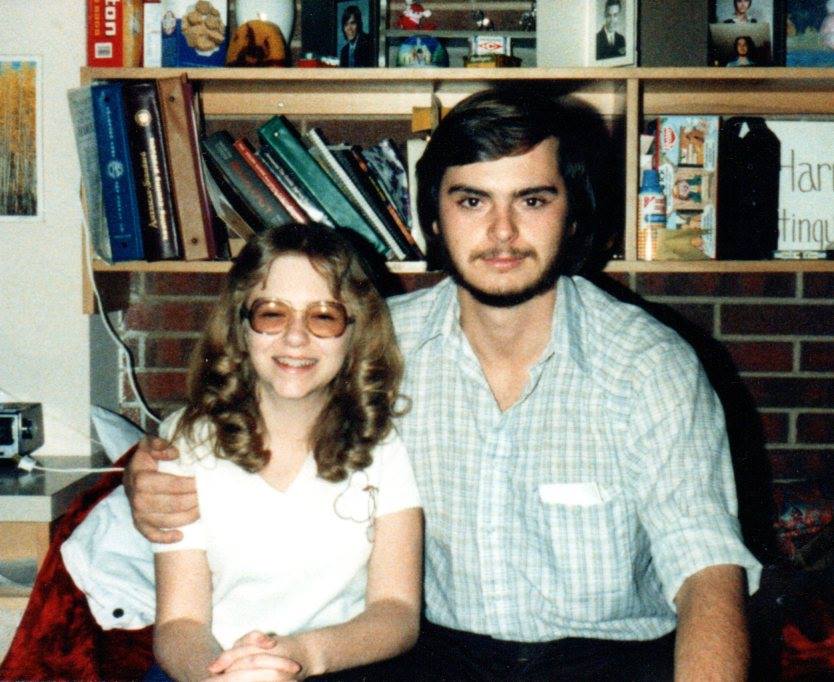
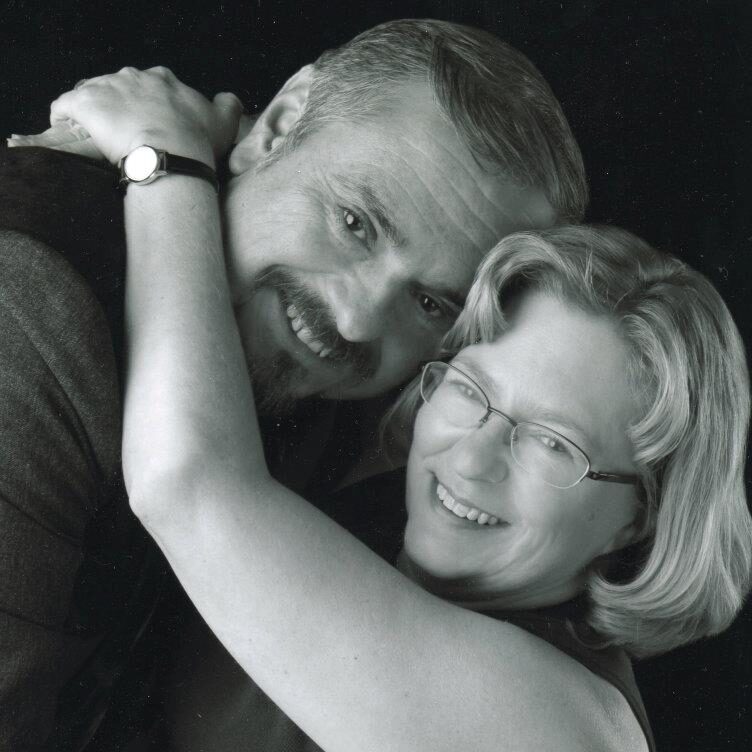 While I didn’t see her in person very often, my cousin Liz Byer was a bright light shining from Facebook into the lives of those privileged enough to call her friend. She loved flowers, making Spring and Summer her seasons of choice, but she actually received a gift from Jesus on December 27th, when some of her outdoor flowers decided to be “blooming idiots” by blooming in the Winter. Leave it to Liz to come up with that. The reality is that she often came up with funny things. That was a big part of her charm. She would post things like “All of my flabbers are gasted” or show a picture of the birds at her “cat food bistro.” You really had no choice but to laugh at the stuff she found to brighten the day of anyone who followed her page. I would often go look at her page just to start my day with a smile. Oh…how I will miss those silly little posts.

Liz was born with Brittle Bone Disease, but she never let that get her down. She always wore a smile and always had a kind word or a funny quip to lift the spirits of those around her. You may not have even been feeling down, but after you talked to Liz or read her posts, you knew that your day got just a little bit brighter. She had a way of making your day better, even when you didn’t know you needed that. That is a person who is a bright light. That was Liz.
Liz’s top priority, after the Lord, was her family. She was married to my cousin Tim Byer on July 12, 1986. I’m sure that one of the things Tim noticed first about Liz, was her winning smile. You could just see the joy in her heart through her smile. Their marriage brought them two sweet daughters, Danielle Elizabeth and Nickole Marie, and when the girls married, they added James Forseen and Caleb Holscher. Liz and Tim now have six beautiful grandchildren, Natasha Elizabeth, Eleanor Mercedes, Joanna Carlyne, and Henry Axel Forseen; and James Timothy and Judah Everett 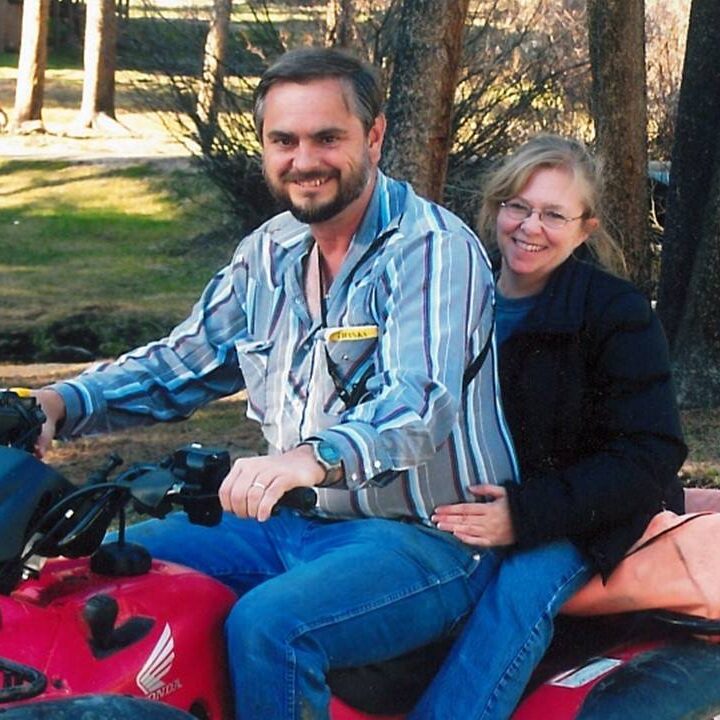
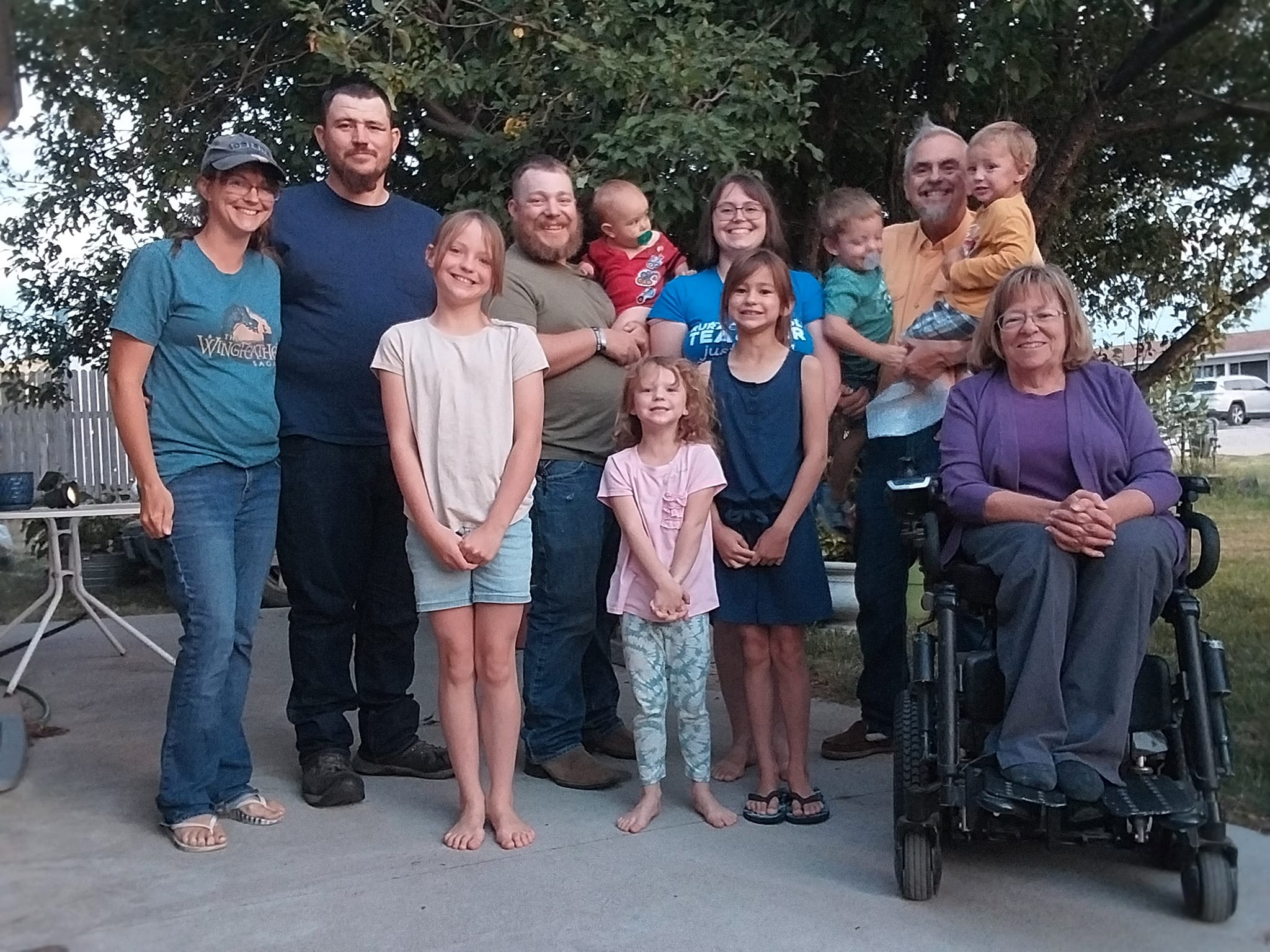 Holscher. They are her pride and joy. Together, Liz and Tim started a beautiful family, and their family will continue on long into the future. While her home going will bring sadness to the family, they know that because she had accepted Jesus as her Lord and Savior, she is not in their past now, but rather in their future. They will see her again when they all join her in Heaven with the Lord. We will all miss Liz very much. Liz, we love you and look forward to seeing you again when we go to Heaven too.

 Paris is known as the city of love, and France is famous for love, so it’s not too surprising that it is thought that the first-ever Valentine’s Day card originated in France. At that time, Charles, the Duke of Orleans was in prison as a prisoner of war. He spent 25 years there, and he sent love letters to his wife from there in 1415. These days, the French village called “Valentine” turns into the epicenter of romance between the 12th and 14th of February. Everyone gets in on the fun. Yards, trees, and homes, are decorated with love cards, roses, and proposals for marriage. It seems like everyone gets in on the fun, making it one of the most beautiful Valentine’s Day traditions in the world. And it all started from a prison cell. Charles was allowed to live in relative freedom, and could even write letters, but he was not allowed to go free or be ransomed for almost 25 years. Sadly, his wife Bonne of Armagnac, the daughter of Bernard VII, Count of Armagnac, died before he returned from captivity. So, while he was rather famous for his letters and poems to her, they did him no real good. Still, their love was an unending love.
Sadly, some valentines have good endings and others don’t, but the idea of valentines, and Valentine’s Day is as timeless as the love between Charles and Bonne. Every year, couples exchange things like cards, candy, flowers, and gifts to show their love for one another. Many of these gifts are exchanged over a nice dinner and wine. Other times, the dinners might be held at home, even including the children of the couple. It doesn’t 
 really matter how it is done…the idea is to celebrate the love the couple has for each other. Some people might think the tradition is silly, but usually those are the people who don’t have anyone to spend the day with. Some people think that it has become too commercialized, and maybe it has, but as commercialization goes, this one seems to be the sweetest. Happy Valentine’s Day!! I hope yours is very special.

 Lawmen are supposed to be the keepers of the law and the protectors of the people, but that is not always the case, in the Old West or even today. One such group was the Dodge City Gang, comprised of a group of notorious Kansas gunfighters and gamblers who dominated the political and economic life of Las Vegas, New Mexico in 1879 and early 1880. Their leader was Hyman G Neill, better known as Hoodoo Brown, had managed to secure the position of justice of the peace in Las Vegas, Nevada. Brown quickly put together a gang of unlikely lawmen, including fighters from the recent Railroad Wars of Raton, New Mexico and Royal Gorge, Colorado. These included John Joshua Webb, “Dirty” Dave Rudabaugh, and Mysterious Dave Mather. Doc Holliday was in town at that time, and he was friendly with gang members, though he is not generally listed as a member of the loose-knit association. At the time, Las Vegas was booming and was thought to be the future metropolis of New Mexico. As with many a boomtown, it attracted a number of opportunists and outlaws, making the need for lawmen very important, and that meant they weren’t always chosen for their lack of criminal record.

Along with known gunfighters, the gang also managed to get their friends into local law enforcement positions too. The idea of the Dodge City Gang was, for the most part, that their actions were to control the gambling establishments and rake in huge profits. However, some of the members, notably Dave Rudabaugh, seemed unsatisfied with that, and felt like they should have special privileges. They were suspected of several stagecoach robberies and other criminal acts. I guess the good thing about hiring criminals is that they don’t mind committing crimes for you, provided they get a cut!!
Due to the town’s rough reputation, there was always a criminal element there. Men like, Billy the Kid passed through in 1879, as did Jesse James, although neither was ever a known part of the gang. Still, a local legend has the two famous outlaws meeting for dinner in the Old Adobe Hotel in nearby Hot Springs, New Mexico. Supposedly, at that meeting, Jesse invited Billy to come to Missouri and join his gang, but the Kid declined, but there is no real proof of that claim.
Sooner or later, people get tired of corruption in law enforcement, and in 1880 the tide of public opinion turned against the gang. Webb was arrested for his involvement in a shooting that might have actually been self-defense. Nevertheless, his association with the gang backfired on him, and he received a jail sentence for the shooting. Rudabaugh was also jailed due to his involvement in criminal acts. Both men eventually escaped. Jails weren’t as difficult to escape from back then. In the face of the negative public opinion, many other members of the organization left town. The power of the gang had lasted only a matter of months. In the end, the gang was doomed by the greed and excesses of its members, as well as their inability to disguise their acts. Oddly, 
 this wasn’t the only “Dodge City Gang” because the name could also be associated with the informal group who dominated Dodge City, Kansas in the 1870s. At one time or another that group included Wyatt Earp, Bat Masterson, Doc Holliday, and Luke Short. When you think about it, calling the La Vegas, New Mexico gang the “Dodge City Gang” really made no sense at all. Nevertheless, that was the name given.

 While I’m not a bicycle fan, I know that a lot of people really love to go cycling. In the United States, the recreational bicycling fad began on February 11, 1878, when the Boston Bicycle Club became the first organization for recreational cyclists. The fad caught on, and the following year, a club was also formed in Buffalo, New York, followed by a club in New York City in 1880. Soon, clubs were starting up everywhere, as middle-class participation in cycling grew. There were literally hundreds of cycling clubs formed across the United States.
Once formed, the Boston Bicycle Club organized various rides. They quicky organized events…from tricycle races to 100-mile rides. The trend caught on and less than 20 years after its founding, more than 100 cycling clubs had formed in Massachusetts alone. In fact, according to the Massachusetts Historical Society, the clubs catered to rider expertise, gender, nationality and more. The early bicycles resembled what we might view as a tricycle today, with an oversized front wheel. Nevertheless, they still only had two wheels, and not the three that are found on a tricycle.
In October 1879, Boston Bicycle Club members rode an 87-mile round trip course through the city and its suburbs in an event with the Massachusetts Cycling Club. For short distances, the cyclists achieved speeds of 16 mph, according to the Boston Post. While the club was not necessarily considered an exercise club, the members did a lot of training to prepare for the different events. Of course, when you think about it, you would  need to practice and train to get used to the Victorian-style penny farthings, as they are called.
Over the years, the two-wheeler evolved, and the oversized front wheel became a thing of the past, except on vintage bicycles, called Victorian Style Penny Farthings. The changes to the bicycle became a great improvement over the course of a century, thanks to several different inventors. Every so often, someone might decide to test their horses against the bicycles, such as the man in Watertown who was “driving a spirited horse engaged in a race with the riders and was beaten by Terront, the French rider, in about three-quarters of a mile,” according to the Post. It’s funny that the old “horse and buggy crowd” would feel the need to pit their horses against the bicycles. Still, you would have expected the horses to win the race and maybe they would have in a longer distance. Or maybe the horses were a little bit spooked by the contraption beside them. Either way, they lost the race that day.
In 1896, Boston highlighted the club that bore their name. The Boston Globe highlighted the work of the first club in the United States. Since then, “The name and fame of the Boston Bicycle Club has gone all over this fair land, and is spreading to foreign shores, whither some to its members have carried it.” The early bicycle clubs were great advocates for better roads that would be safer for bicyclists. When the automobile entered the scene, bicyclists would quickly find themselves caught between the road, and the cars that now 
 occupied it with them. Many is the bicyclist that has lost his life at the hands, or wheels of a car. Of course, with the rise of automobiles early in the 20th century, the popularity of recreational cycling declined. In more recent years, bicycling as started to make a comeback, both in the exercise arena and the recreational arena.

 With her family living in several areas of the state, my youngest sister, Allyn Hadlock’s family decided to meet in Wheatland so that everyone could be there for a birthday celebration. Most of her family lives in Casper, but she has daughters and their families in Laramie and Cheyenne too, so Wheatland is the logical choice. Everyone decided that a “destination birthday party” was a great idea, even if it wasn’t like to Hawaii or something. Allyn really is all about her family. She would give her right arm for any one of them. She is a very involved grandmother too. Even though, granddaughters Adelaide Sawdon and Mackenzie Moore live in Laramie and Cheyenne, Allyn is always willing to happily go and stay a few days to babysit them if their parents have to be out of town or something. That time with the girls is so special to her, and everyone is so happy that she can work that out.
Speaking of work, Allyn has worked from home now for the past few years, so it’s pretty easy to just take her 
 work with her when she is spending time with the grandkids. Allyn is actually a boss at her work, and somehow, she manages to juggle all the responsibilities she has, without missing a beat when it comes to family time. Working from home really gives her that freedom. She loves having the girls, or her local grandkids, Ethan and Aurora Hadlock come to her house and spend time too. The summertime might find her house filled with kids hanging out. She also has a bonus-granddaughter, Jolene Thompson, who joined the family a few years ago, and while she lives in Rock Springs, she gets to come and spend time periodically, especially in the summer. And we must remember the “grand dogs” too, because they love spending time with grandma too.
While she can’t always be with her kids, she talks to them just about every day, sometimes several times a day. Daughter Lindsay Moore says she can’t even imagine how many phone calls her mom gets a day. Allyn has four children, Jessi Sawdon, Ryan Hadlock, Lindsay Moore, and Kellie Hadlock, but that is only a small part of the family. Jessi is married to Jason, and they have Adelaide; Ryan is married to Chelsea, and they have Ethan and Aurora; Lindsay is married to Shannon, and they have Mackenzie; Kellie is engaged to Tim Thompson, and they 
 have Jolene; and we must not forget her fifth child…her dog, Liberty…whose picture is also on the mantle!! Allyn is married to Chris Hadlock, who is just as dedicated to the family as Allyn is. The Hadlock bunch are very dedicated to each other.
This year is an extra special one, because Allyn is the mother of the bride. With Kellie and Tim getting married this summer, she and Kellie are busily planning the wedding. She and Kellie have been picking out the decorations and “doing all the things” that go along with putting on a wedding. Kellie says, “She is the most supportive, kind, funny, and amazing person, and I’m so happy she is my mom!!” And I know everyone in her family would heartily agree. Today is Allyn’s birthday. Happy birthday Allyn!! Have a great day!! We love you!!

