History
 Daniel Webster was an American lawyer and statesman who represented New Hampshire and Massachusetts in the United States Congress. He also served as the 14th and 19th United States secretary of state under presidents William Henry Harrison, John Tyler, and Millard Fillmore. As one of the most prominent American lawyers of the 19th century, Webster argued over 200 cases before the United States Supreme Court during his career. Webster was a member of the Federalist Party, the National Republican Party, and the Whig Party. He was among the three members of the Great Triumvirate (a group of three men holding power) along with Henry Clay and John C. Calhoun.
Webster was born in Salisbury, New Hampshire, on January 18, 1782, to Abigail (née Eastman) and Ebenezer Webster, a farmer and local official who served in the French and Indian War and the American Revolutionary War. Ebenezer had three children from a previous marriage who survived to maturity, as well as five children from his marriage to Abigail. Webster was the second-youngest of the eight siblings. Webster established a successful legal practice in Portsmouth, New Hampshire, after graduating from Dartmouth College and serving a legal apprenticeship. A prominent opponent of the War of 1812, he won election to the United States House of Representatives, where he served as a leader of the Federalist Party. Webster left office after two terms and moved to Boston, Massachusetts. He became a leading attorney before the U.S. Supreme Court, winning cases such as Dartmouth College v. Woodward, McCulloch v. Maryland, and Gibbons v. Ogden.
While he was an excellent attorney, perhaps the biggest thing he is remembered for is the Seventh of March speech. On March 7, 1850, Senator Daniel Webster delivered his Seventh of March speech, where he endorsed the Compromise of 1850 aimed at preventing a civil war. This speech was significant as it sought to unite the nation during a time of deep division over slavery and territorial expansion. Webster’s efforts to persuade the Senate to support compromise measures were ultimately unsuccessful, which also lead to his political downfall in New England, because many people viewed his stance as a betrayal of the antislavery movement.
By early 1852, Webster was suffering from cirrhosis of the liver, and his poor health increasingly made it difficult for him to serve as secretary of state. In September 1852, Webster returned to his Marshfield estate. His health continued to decline due to cirrhosis and a subdural hematoma. He died in Marshfield, Massachusetts on October 24, 1852, at the age of 70, and is buried in Winslow Cemetery near his estate. His last words were, “I still live.”
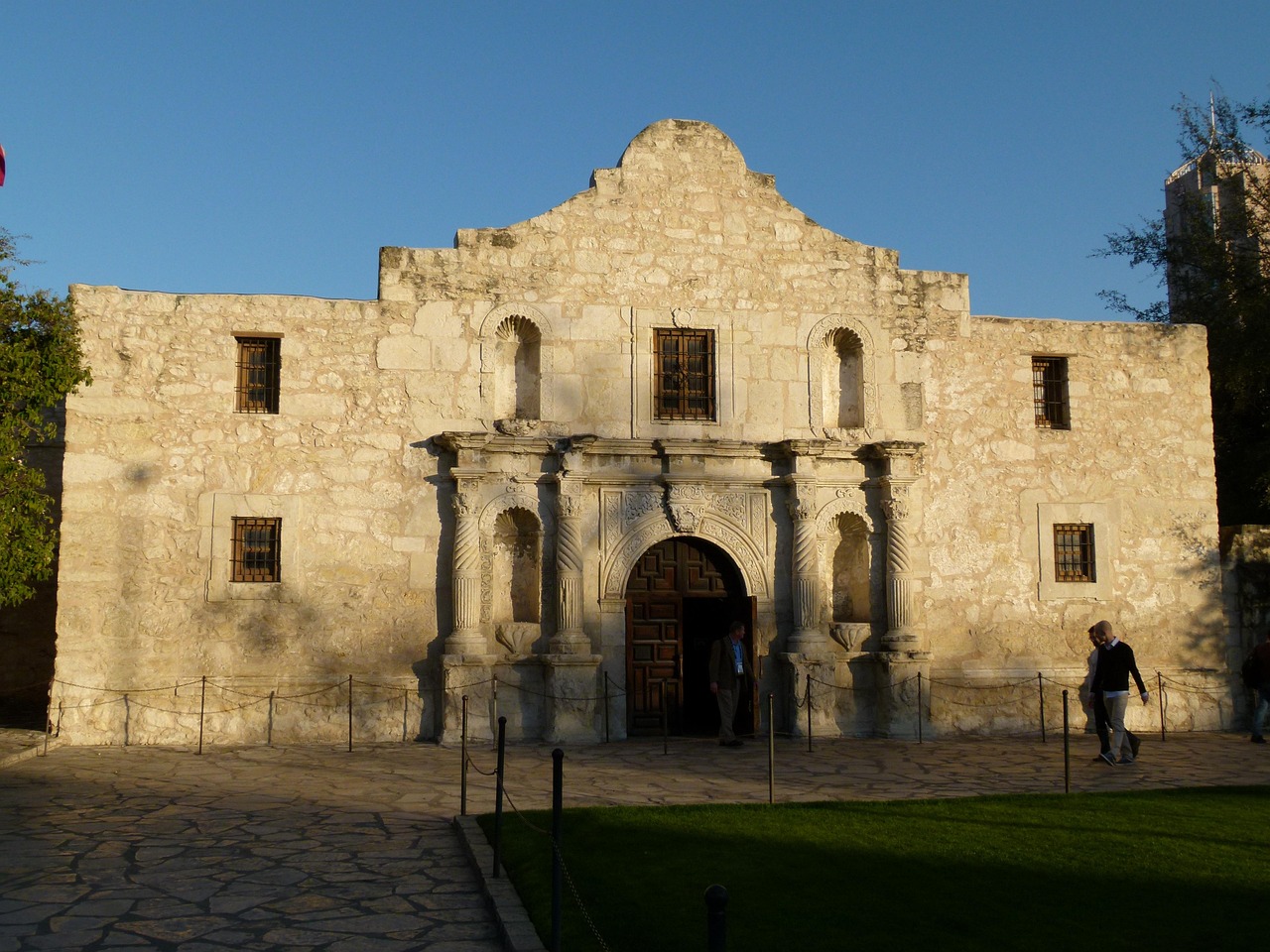 Few people, of an age to have studied history, can say they have never heard of the Alamo. While we all know that the people who fought and died there were very brave, can we honestly say that we really understand what the fight was all about? In February of 1836, an outnumbered band of Texan independence fighters faced a Mexican army in what would become one of the most storied conflicts in American history…the Battle of the Alamo. The Texan fighters would lose that battle badly, but it was their final stand that would become a historic symbol of resistance and freedom, and immortalize the famous battle cry, “Remember the Alamo!” The battle was important…militarily, politically, and symbolically.
After winning independence from Spain in 1821, Mexico allowed pioneers from the expanding United States to settle in the northern Tejas region of Mexico. The settlers were known as “Texians” and over the next decade, enjoyed a relative degree of invisibility far from Mexico’s capital. However, as the number of settlers grew, the Mexican government responded by prohibiting US immigration and imposing tariffs on the Texas settlers, causing tensions to escalate. The situation eventually exploded into armed clashes between the settlers and the Mexican government with the Battle of Velasco in 1832, which was a prelude to the brewing Texas Revolution. The Texas settlers believed that Antonio López de Santa Anna, who was a celebrated general vying for the Mexican presidency, might be their saving grace in the situation. They thought he backed their continued autonomy due to his Federalist campaign platform, which supported a division between federal and local governance. Then, they felt betrayed when, upon winning the presidency in 1833, Santa Anna did an about-face and abolished the Mexican Constitution of 1824, which had enshrined the Federalist system, seeking to centralize power as a military dictator.
It was the last straw in a long line of betrayals by the Mexican government. On October 2, 1835, tensions had 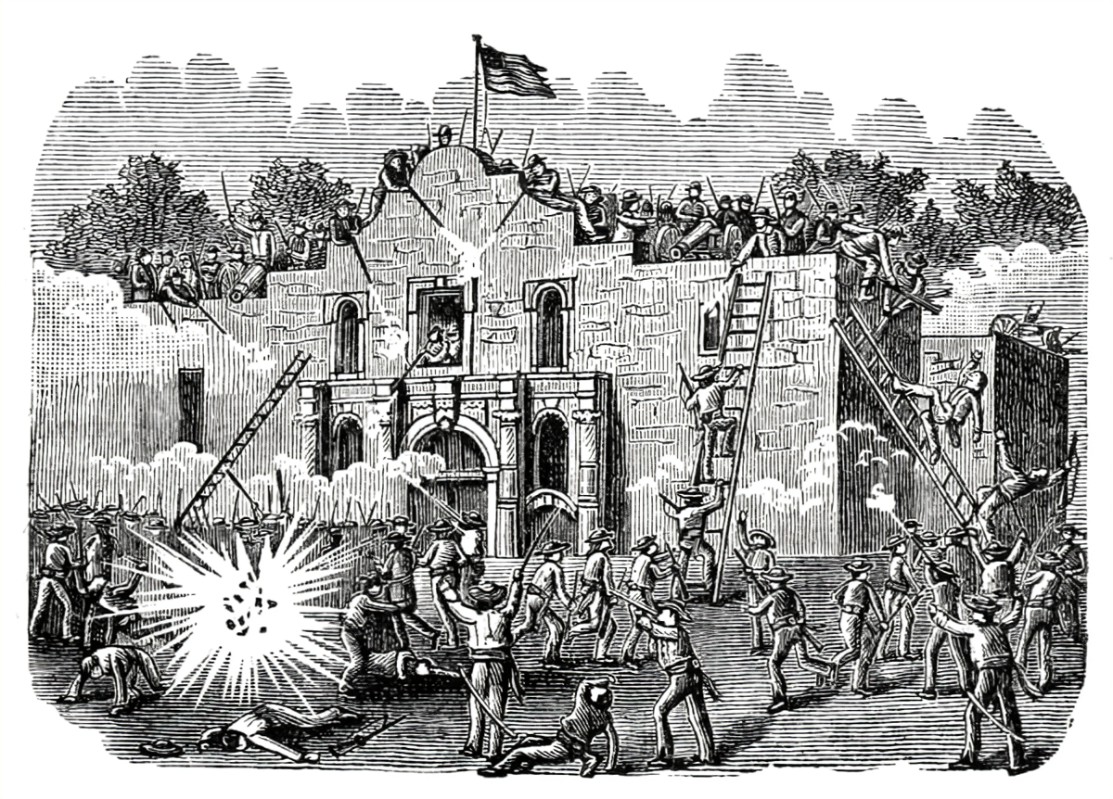 finally reached a breaking point, and the Texas Revolution began in earnest with the Battle of Gonzales. The revolutionaries won their first fight, but the quest for independence was just the beginning. With that, the stage for the Battle of the Alamo was set. The Alamo was named after the Spanish word for the cottonwood trees that surrounded it. The structure is a former Spanish mission, but it was used as a military fort starting in the early 19th century. A group of Texan volunteers captured the Alamo from Mexican forces in December 1835. Its location in the town of San Antonio de Bexar (now San Antonio, Texas) was of strategic importance for supply lines and communications, making it one of the first frontier outposts to encounter the advancing Mexican army. On February 23, 1836, General Santa Anna arrived at the Alamo with an army. His intent was to take back the fort and put down the revolution. The estimates of the Mexican army’s size vary. It was estimated to be between 1,800 and 6,000 people, but what’s not in dispute is that the Alamo’s defenders had less than 200 fighters, and they were greatly outnumbered. Santa Anna’s demands for unconditional surrender were met with a cannon shot from the Alamo, and with that began a 13-day siege.
The Texan volunteers were led by Colonel James Bowie, who is now well known as a famous adventurer and knife fighter, and 26-year-old Lieutenant Colonel William B Travis. The group came from all walks of life. In addition to early American settlers, including Davy Crockett, the legendary frontiersman and Tennessee congressman, the numbers of those at the Alamo included native-born San Antonians of Mexican heritage and European immigrants. On February 24, while surrounded by enemy forces, Travis penned one of US history’s most famous letters. It was addressed “To the People of Texas and All Americans in the World,” the letter was a 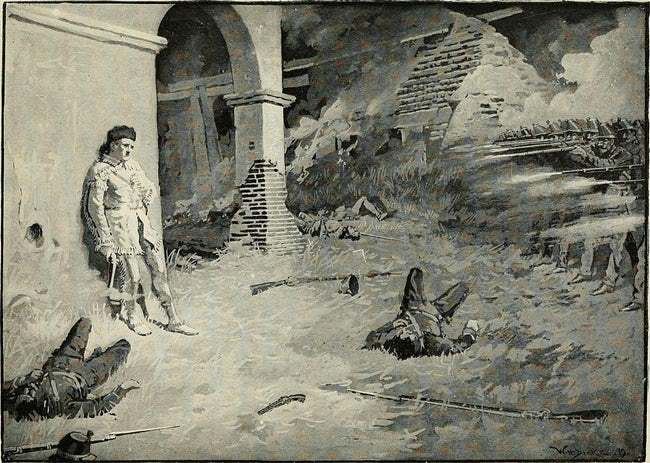 passionate call for aid from supporters of the revolution. It was then reprinted in newspapers all around the United States and even Europe. The Alamo fighters knew, that as Travis had spoken, the only choices were “victory or death.” On March 6, Mexican forces breached the fort and overpowered the defenders. On Santa Anna’s orders to take no prisoners, almost all of the Alamo’s defenders were killed and their remains burned, including Bowie, Travis, and Crockett. The Mexican victory was not without significant losses, estimated between 600 and 1,600. In the end, the outnumbered defenders held off the Mexican army for 13 days, buying time for Texas General Sam Houston to gather forces and prepare for future victories in the Texas Revolution.
 When the Presidential Inauguration ceremony comes to mind, we all think of it being a lot of pomp and circumstance. The president is sworn in with his hand on the Bible. The tradition of using a Bible for the presidential oath of office has long been an important part of the inauguration ceremony. Nevertheless, it is not a part of official protocol, and there have been several presidents throughout history who opted to use a different object, or no object at all, when taking their oath of office. To me, that is a totally strange situation, and while it isn’t official protocol, I feel like it should be. I know that is my own opinion, but we are “one nation, under God” and that means taking the oath on the Bible.
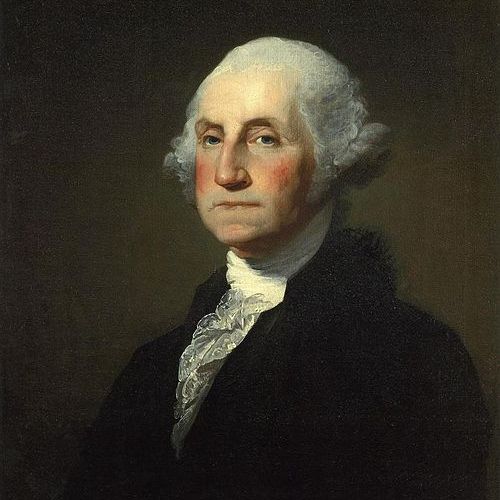
However, since some presidents didn’t agree, there comes a need to understand the reasons why some presidents chose not to use a Bible, in order to provide insight into their personal beliefs and principles. The use of a Bible for the presidential oath began with George Washington in 1789. At his inauguration in New York City, Washington placed his hand on a Bible as he took the oath. This set a precedent that many future presidents chose to follow. Using a Bible underscored the solemnity of the oath and allowed presidents to affirm their faith as they began their term.
However, the use of a Bible is not required by the Constitution. The only requirement is that the president recite the 35-word oath as stipulated in Article II, Section 1: “I do solemnly swear that I will faithfully execute the Office of President of the United States, and will to the best of my ability, preserve, protect and defend the Constitution of the United States.” That left the matter to the president himself. So, for presidents who opted not to use a Bible, it was their personal choice. Their decisions often carried symbolic meaning about their priorities and principles as they entered office. For me, the rejection of the Bible during the oath points to a man who, does not honor God. That is something that bothers me immensely.
Some presidents, like John Quincy Adams, the 6th president, seemed to think that the Constitution said that religion had no place in government, while in reality, it says that no law can be put in place that allows government to dictate a common church. Nowhere does it say that religion should be kept out of government. Nevertheless, John Quincy Adams chose to use a book of US laws rather than a Bible at his inauguration in 1825. To this day, there is debate around why he made this choice, with some arguing it represented his deep devotion to defending the rule of law above all else. Others say he was making a statement of his strong separation of church and state views. There are also claims that Adams simply forgot to bring a Bible to his inauguration. In his later years, Adams clarified that he firmly believed in keeping his oath of office and official duties separate from religious matters. This seems to confirm the idea that his use of a law book was intentional and symbolic.
Theodore Roosevelt was another president that did not use a Bible for his inauguration in 1901 after the assassination of President William McKinley thrust him into the presidency. There was no indication that he chose to forego the Bible had anything to do with being non-Christian. In fact, the opposite was true, Roosevelt was a devout Christian. Roosevelt wanted to avoid any appearance of impropriety or disrespect toward McKinley by immediately using a Bible. Nevertheless, he felt his faith commitment did not require using a Bible to confirm his sincerity. When he was officially sworn-in months later after winning election in his own right, Roosevelt did use a Bible for the ceremony. In another possible scenario, some say that the hurried swearing-in ceremony was done without time to obtain a Bible. 
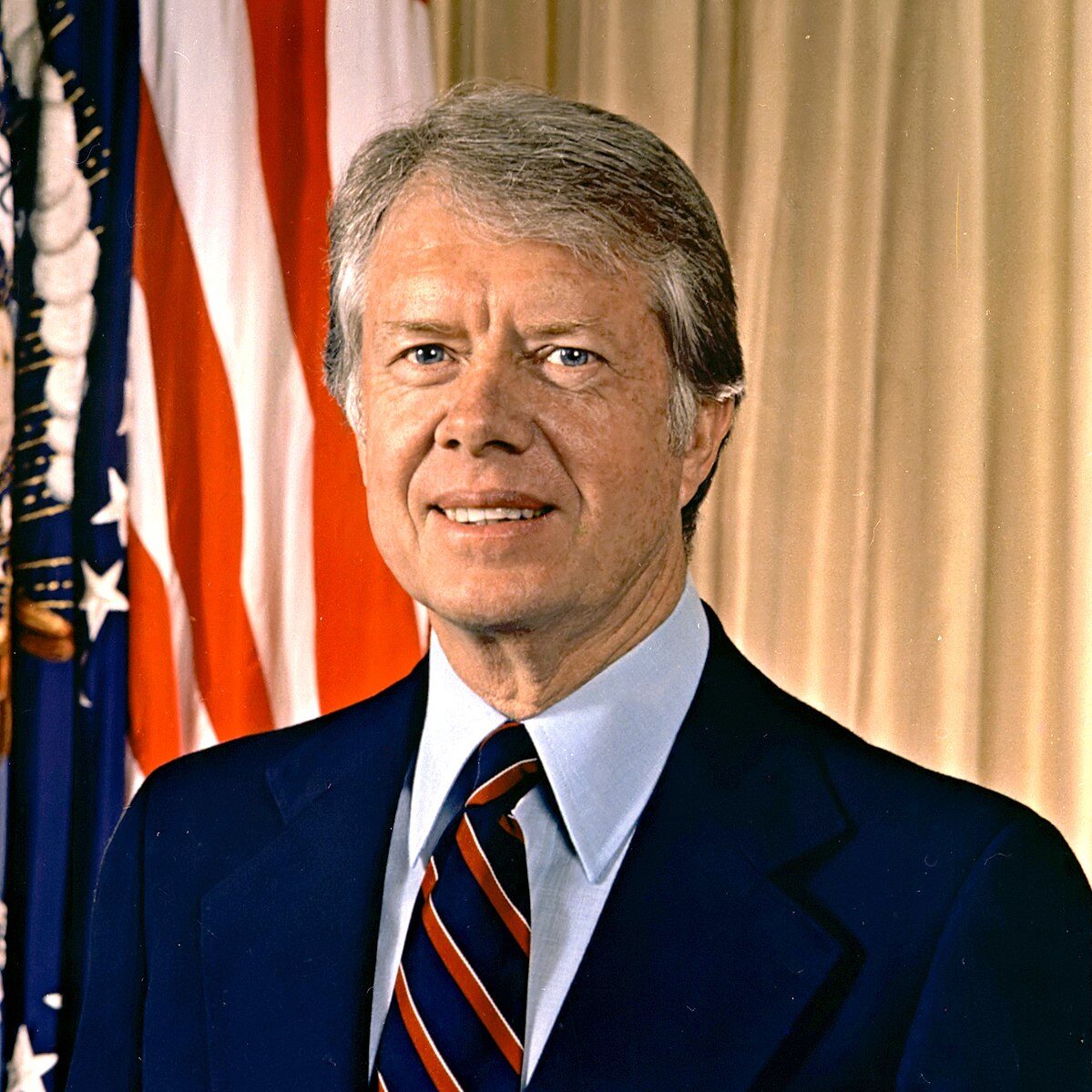
Perhaps the most religiously motivated non-use of the Bible to swear the president in was Franklin Pierce, who did not use a Bible for his inauguration in 1853. A family tragedy provides a likely explanation for this departure from tradition. Shortly before his inauguration, Pierce’s son was killed in a train accident right before his parents’ eyes. The trauma and grief from this accident caused Pierce to struggle with his faith. At the time of his inauguration, using a Bible may have felt inauthentic or difficult emotionally. His son’s death haunted Pierce throughout his presidency. It is thought that it caused his choice to forego the Bible as he entered office.
Lyndon B Johnson was sworn-in quickly following John F Kennedy’s assassination without a Bible in 1963. Apparently, that was because of the hurried nature of the impromptu ceremony onboard Air Force One. When Johnson was officially inaugurated months later, he did use a Bible. There is no evidence that Johnson wanted to depart from the tradition but that he was unable due to the extraordinary circumstances of Kennedy’s death.
Jimmy Carter used his personal family Bible when taking the oath in 1977. What was distinctive is that he opened it to a specific passage from Micah 6:8: “He has shown you, O mortal, what is good. And what does the Lord require of you? To act justly and to love mercy and to walk humbly with your God. Carter was transparent about this choice, indicating that this Bible verse summarized how he aspired to carry out his presidency. His bold decision to open directly to a specific passage broke with precedent but reflected his sincere faith.
For his inaugurations in 2009 and 2013, Barack Obama chose to use Bibles that held historical significance. In 2009, he used the Bible used by Abraham Lincoln for his 1861 inauguration. In 2013, he used the “Robinson Family Bible” and Martin Luther King’s traveling Bible. Rather than using his personal Bible, Obama’s choices honored previous presidents and civil rights leaders who inspired him. This represented his grounding in history and promotion of inclusivity as core principles.
John F. Kennedy, who was the first Roman Catholic president, used a Catholic translation of the Bible at his 1961 inauguration. Specifically…the Douay-Rheims translation. By opting for a Catholic version, Kennedy was able to take the oath on a Bible while still honoring his own faith tradition. His decision also demonstrated religion’s important but complex role within a pluralistic democracy.
Franklin D Roosevelt’s was the only president to serve more than 2 terms as president, before or since. For his oaths, he used the Roosevelt family Bible in 1933, the West Thompson Bible (used by George Washington) in 1937, the Warburg Family Bible in 1941, and the Roosevelt family Bible in 1945. His choices were symbolistic as well. His family Bible was chosen for his first and fourth inaugurations. The Washington Bible was chosen as 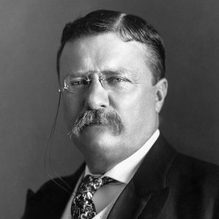
 a link to the first president and the Warburg Bible, underlining freedom of religion.
Ultimately, the choice of Bible or other object is seen as a deeply personal decision for each president. This visible decision also provides us with insights into their character and demonstration of their faith, or the lack thereof, on the day they accept the weighty responsibility of leading the nation. Whether following or departing from tradition, inauguration choices set the tone for a president’s vision and principles guiding their term.
 John Dillinger was an American gangster during the Great Depression. He commanded the Dillinger Gang, which was accused of robbing twenty-four banks and four police stations. Dillinger was imprisoned for his crimes several times and shockingly, he escaped twice. His most notorious escape occurred on March 3, 1934, from the Crown Point jail in Indiana using a carved fake gun. That was not his first escape, however.
Dillinger was initially captured in September 1933 and jailed in Ohio. It seemed as if his life of crime was finally over. Then, in October of the same year, he was rescued by five former convicts who had escaped from Indiana State Prison, an operation  Dillinger had financed and planned. During this incident, a sheriff was killed, highlighting the violent nature of Dillinger’s criminal activities. Dillinger was ruthless, and he would stop at nothing to get what he wanted.
While the first escape was shocking enough, it was not his most famous escape. Dillinger’s most famous escape took place from the Crown Point jail, which was previously considered escape-proof. Dillinger managed to make a fake pistol from a piece of wood and a razor, which he painted black with shoe polish. During a morning exercise session, Dillinger suddenly brandished this fake gun, catching the guards by surprise. Dillinger then took several guards hostage and fled the jail in the sheriff’s car, singing as he left, “I’m heading for the last roundup.”
You might have expected Dillinger to lay low following his escape, but he was bold, and continued his crime spree, robbing banks and engaging in shootouts with law enforcement. His escape led to a nationwide manhunt, and he was eventually tracked down and killed by FBI  agents on July 22, 1934, outside the Biograph Theater in Chicago. Not many criminals are able to escape from prison, so when it happens not once, but twice it is especially shocking. Things like that can cause a bit of panic for the public. Nobody wants to think of a murdering bank robber running around town. It gives a distinct sense of unease. A prisoner who escapes one can seem like dumb luck, but when they escape twice or mor, they start to get a reputation as a criminal who can’t be held. That leads to much concern in the public eye. They had to figure out a way to hold Dillinger, or as was the case, simply track him down and kill him. That was what ended Dillinger’s reign of terror for good.
 For a long time, people didn’t understand the dangers of carbon monoxide. These days, we know wat can happen, but on March 2, 1944, when a train stopped in a tunnel near Salerno, Italy, it was a recipe for disaster. The train had more than 500 people on board, and before long, they were dead. The tunnel they stopped in with the train running caused dangerous levels of carbon monoxide and that caused the people to suffocate and die. The details of the incident, which occurred in the midst of World War II, were not revealed at the time and remain somewhat murky today as well.
Train Number 8017 left Salerno heading for the rural area south of the city through the Apennine Mountains, where they would encounter the tunnel. The train was a freight train, and it was not supposed to carry passengers. Nevertheless, it was common at the time for both soldiers and civilians to hitch rides on any convenient train. It was a habit they would regret…had they lived. As they were passing through the towns of Eboli, Persano, and  Romagnano, train number 8017 had picked up approximately 650 passengers by the time it reached Balvano.
Balvano was a tiny town located between two long tunnels in the Apennines. On that fateful day, it was raining as train number 8017 began to ascend the Galleria delle Armi tunnel pass located just outside of Balvano. Almost immediately, the train was forced to stop. The reasons for the stop vary, with some saying the train was unable to pull the overloaded freight cars up the slope, while others say the train stopped to wait for a train descending in the opposite direction. In any case, the train sat idling in the tunnel for more than 30 minutes. Had the train been burning high-grade coal, the problem may not have occurred, but during World War II, high-grade coal was hard to come by, so the train was burning a low-grade coal substitute which produced an excess  of odorless and toxic carbon monoxide.
During that 30-minute stop, approximately 520 of the train’s passengers were asphyxiated by the carbon monoxide as they sat in the train. The Italian government, who like every other nation, was in the midst of an intense war effort, kept a lid on the story, so it was barely reported at the time although it was one of the worst, and most unusual, rail disasters of the century and came less than two months after a train wreck in the Torro tunnel in Spain killed 500 people. That is the reason why little was known then, and details are sketchy to this day.
 On February 26, 1938, the explosive situation that had been brewing finally blew up, resulting in the National Dollar Stores Strike in San Francisco’s Chinatown. The three-month strike delivered a win for workers and became the neighborhood’s first major organized labor dispute. The whole thing really started when the 1906 earthquake destroyed the city and plans to rebuild didn’t include a place for Chinese immigrants. Faced with the prospect of resettling to Oakland, Look Tin Eli employed white architects to create an even grander Chinatown.
In 1938, the garment industry represented the primary source of employment within San Francisco’s Chinatown. The majority of garment factories in this area were not unionized, due in part to longstanding tensions between American labor unions and Chinese workers. By the 1930s, however, organizations such as the International Ladies Garment Workers Union (ILGWU) began to recognize the significant benefits of organizing Chinese American workers. Employees in Chinatown’s garment factories typically received low wages and worked extended hours.
Sue Ko Lee, a buttonhole operator at National Dollar Stores earning 25 cents an hour, helped unionize her coworkers as part of ILGWU Local 341. After bilingual negotiations, Local 341 reached a preliminary deal with National Dollar Stores for better wages and shorter hours. Joe Shoong, who was the owner of National Dollar Stores and described by “Time” magazine as the top Chinese businessman in the US, sold his factory to his managers on February 8, 1938. Workers, including Sue Ko Lee, suspected this move was to sidestep previous agreements. This caused Local 341 began their strike on February 26th. 
The workers explained that the main concern during this strike was whether Chinatown workers would have jobs or lose their sources of income. A total of 159 women garment workers protested at three National Dollar Store locations in San Francisco, calling for better wages and improved working conditions. After fifteen months, the Chinese Ladies’ Garment Workers’ Union reached an agreement with their employer. They achieved important wins, such as a 5% pay increase, a 40-hour work week, and stronger enforcement of health and safety rules. The women simply couldn’t accept anything less. In the end, I think they would have had to choose full job loss over the way their workplace had been running prior. Their very lives depended on it.

 Thomas Davenport was a Vermont blacksmith. He was born in Williamstown, Vermont on July 9, 1802, the eighth of 12 children, to Thomas Sr and Mary Davenport, who were poor farmers. At 14, he began a seven-year apprenticeship with a local blacksmith. In return for his work, Thomas learned the trade and was given six weeks each winter to attend school. He lived much of his life in Forest Dale, a small village in the town of Brandon.
Though he had humble beginnings, he went on to do great, but somehow long forgotten things. As early as 1834, he and his wife, Emily (nee Goss) Davenport developed a battery-powered electric motor. They used it to run a small model car on a short track, setting the stage for the later electrification of streetcars. It was the first attempt to apply electricity to locomotion. In 1833, Davenport visited the Penfield and Taft iron works in Crown Point, New York, where an electromagnet based on Joseph Henry’s design was in operation. Inspired by what he saw, he bought one from the factory and dismantled it to understand its workings. He then crafted a better iron core and rewired it, using strips of silk from his wife’s >wedding gown. Now, all I can say is that his wife must have really loved him, or she was as crazy as he must have been, because most women would not appreciate having their wedding gown cut up to be used as insulation for wiring. Nevertheless, she is listed as a contributor to the  project. I don’t know if that means scientifically, or if it was to appease her for allowing the dress to be cut up.
In 1837, Davenport, along with his wife Emily and colleague Orange Smalley, received the first American patent for an electric machine, US Patent Number 132. Just a few years later, in 1840, he published The Electro-Magnetic and Mechanics Intelligencer, the first magazine ever printed using electricity.
In 1849, Charles Grafton Page, the Washington scientist and inventor, commenced a project to build an electromagnetically powered locomotive, with substantial funds appropriated by the US Senate. Davenport challenged the expenditure of public funds, arguing for the motors he had already invented. Page defused that objection by publishing a statement about his unique device. In 1851, Page’s full sized electromagnetically operated locomotive was put to a technical test on the rail line between Washington and Baltimore. The project hit more snags. Low on funds, Page asked for more money. In the summer of 1850, Benton told the Senate that Page had achieved a force ten times greater than his early battery tests. Benton then pushed for funding to let Page build an electromagnetically powered warship. This request met strong resistance. Senator Henry Stuart Foote argued Page hadn’t shown real progress or benefits, while Senator Jefferson Finis Davis opposed giving government money to one inventor when others, like Thomas Davenport, got nothing. Both the Senate 
 and House denied further funding. To get the locomotive ready for its 1851 trial, Page went over $6,000 into debt. After the trial failed publicly, the press was harsh, and with no financial backing, Page was left in dire straits both financially and emotionally…leaving Thomas Davenport as the real sole inventor of the successful electromagnetically powered locomotive, and yet it is Page who is recognized for that invention.

 It was a place no one wanted to go…but no one who went there was given a choice. On February 24, 1864, when the first Union prisoners arrived at Andersonville prison, it was still under construction in southern Georgia. Before long, the prison went from brand new to infamous, as nearly a quarter of its inmates died while in captivity. No wonder it was a place no one wanted to go. The warden, Henry Wirz, was at the top of the “problem list.” Wirz was executed after the war for the brutality and mistreatment that occurred under his watch. His methods of abuse of prisoners were absolutely horrific.
Camp Sumter, better known as Andersonville, was built after the prisoner exchange system between the North and South broke down in 1863 over disputes about the treatment of Black soldiers. Thrown together quickly using slave labor, the stockade sat in the Georgia woods near a railroad but far from the fighting. Covering 16 acres, it was meant to have wooden barracks, but skyrocketing lumber prices stalled construction, leaving Union prisoners under the open sky in makeshift “shebangs” cobbled from wood scraps and blankets. A nearby stream started out as their water source, but within months it was fouled by human waste.
Andersonville was designed to hold 10,000 men…a shockingly large amount. Nevertheless, within just six months, over three times that number were crammed inside its walls. That was the least of the problems Andersonville Prison had. The prison soon became famous for its extreme overcrowding, lack of supplies, and staggering death toll. From February 1864 to May 1865, around 45,000 Union soldiers were confined there, and nearly 13,000 died from disease, malnutrition, and exposure. In fact, over 100 men died each day during the worst periods. By 1890, fewer than 1,000 survivors remained. Andersonville prison camp was one of the grimmest places of the American Civil War. Erosion along the creek banks created a swamp that took up much of the compound. Food rations were scarce, and at times, half the prisoners were sick. Some guards mistreated inmates, and there was frequent violence between different prisoner groups. The story of Andersonville is a 
 stark reminder of the human cost of war and the resilience of the human spirit in the face of some of the most overwhelming hardships. Andersonville stood out as the worst of the many grim Civil War prisons on both sides. Wirz ultimately faced the consequences for the cruelty there, being executed after the war ended.

 On the morning of February 21, 1916, at 7:12am, a shell from a German Krupp 38-centimeter long-barreled gun, which was one of more than 1,200 weapons aimed at French forces along a 20-kilometer stretch of the Meuse River, hit a cathedral in Verdun, France. It is unknown if this was their target, but the destruction set off a chain reaction that marked the start of the longest battle of World War I. The Battle of Verdun was a grueling fight that would last 10 months. The war in France, in early 1916, stretching from the Swiss border to the English Channel, had turned into the treachery of trench warfare. While the conditions were harsh, Erich von Falkenhayn, the German army’s chief of staff, believed the path to victory wasn’t through battling Russia in the east, but by defeating the French in a decisive fight on the Western Front. So, they would just have to persevere in the trenches.
In December 1915, Falkenhayn persuaded the kaiser that despite opposition from other military leaders like Paul von Hindenburg, pairing unrestricted submarine warfare at sea with a major French defeat on land would drive the British, whom he considered the strongest of the Allies, out of the war. Falkenhayn’s planned offensive targeted the fortress city of Verdun, located on the Meuse River in France. Verdun was chosen not only for its symbolic value…it had been the last stronghold to fall in the Franco-Prussian War of 1870, but also because it could be attacked from three sides, making it a strategically appealing objective. In 1915, despite warnings about a possible German attack in the area, the French command began pulling heavy artillery from Verdun, a key element in defensive warfare. They chose instead to focus on an offensive strategy crafted by General Ferdinand Foch, head of the army’s prestigious War College, known as Plan XVII. As a result, when the Germans launched their attack on February 21, the French were caught largely unprepared.
Right from the start, the Battle of Verdun caused massive losses for both sides. Falkenhayn openly admitted that his goal wasn’t to seize the city quickly, but to wear down the French, even if it meant higher German casualties. Just four days into the bombardment along the Meuse, French front-line divisions had lost over 60 percent of their troops, with German losses nearly as severe. After some rapid German territorial advances, the battle ground to a halt, with heavy casualties piling up on both sides. The newly promoted French commander, Henri-Philippe Pétain, was set on dealing maximum damage to the German forces, famously vowing to his commander-in-chief, Joseph Joffre, “They shall not pass.”
By mid-1917, German forces were under intense strain, facing both a British-led push along the Somme and Russia’s Brusilov Offensive in the east. In July, the kaiser, frustrated with the situation at Verdun, replaced Falkenhayn, sending him to lead the 9th Army in Transylvania, while Paul von Hindenburg stepped into his role. Earlier in April, Petain had been succeeded by Robert Nivelle, who by early December had successfully led the 
 recapture of much of their previously lost ground. Between December 15 and 18, the French captured 11,000 German prisoners, and on December 18, Hindenburg finally halted the German attacks after ten exhausting months. With German losses at 143,000 dead (out of 337,000 total casualties) and French losses at 162,440 dead (out of 377,231), Verdun came to epitomize the relentless, bloody grind of warfare on the Western Front during World War I.
 If the United States were about to be hit by nuclear weapons, the hope would be that the government would issue a warning through the Emergency Broadcast System. The hope is that the warning would be followed by calm controlled adherence to the warning’s instructions. However, that system hasn’t always existed, and it hasn’t always been reliable. On February 20, 1971, a botched test caused over 40 minutes of widespread panic when people believed the country was under nuclear attack.
Since 1951, the United States has used TV and radio stations, and now, even cell phones, to broadcast emergency information. All of this began during the Cold War. It had been driven by fears of nuclear war. Tensions between the USSR and the United States grew, so defense officials developed a way not only to communicate with the public but also to confuse potential Soviet aircraft. Known as CONELRAD, it involved quickly shutting down most radio stations, then activating select ones to share civil defense updates, making it harder for enemy planes to use radio signals for navigation.
In 1963, the system was upgraded to the Emergency Broadcast System. It was designed for national emergencies and for sharing local updates about weather and natural disasters. In a nationwide crisis, an alert would go out from the National Warning Center inside NORAD, the aerospace defense hub buried deep in Cheyenne Mountain, Colorado Springs. Once triggered, the EBS was meant to let the president address the nation within 10 minutes…at least, that was the idea.
The system was tested every Saturday, but on one Saturday in 1971, a real message and not just a test came through the special teletype network in every radio and TV station. “Message authenticator: hatefulness, hatefulness,” it read. “This is an Emergency Action Notification (EAN) directed by the President. Normal broadcasting will stop immediately.”
The word “Hatefulness” matched the special daily code sent to broadcasters to confirm an emergency alert, and  that at this time it was no drill. Broadcasters jumped into action, cutting into regular programming to read a federally mandated script explaining the interruption was at the government’s request. While the voices calmly directed listeners to tune into a station carrying news and updates, behind the scenes the mood was anything but calm. Variety noted that parts of the broadcast industry, and the nation, were in disarray. Some stations aired the announcement and went off the air as required, leaving listeners confused. Others didn’t catch the warning until it had already been cancelled, and some shut down without even broadcasting it.
Outside radio stations, chaos reigned. As expected, panicked listeners jammed the phone lines, desperate for answers, while others huddled around TV sets, bracing for grim news. With the Vietnam War raging, many feared the U.S. fight against Communism had tipped into nuclear conflict. Confused officials scrambled for information as calls flooded the Pentagon. When the warning center discovered the error, employees frantically hunted for the code word to stop the broadcasts, but it was nowhere to be found. Six attempts to cancel the message were made, and every single one failed. At last, over 40 minutes after the initial transmission, the Office of Civil Defense sent out a cancellation message with the correct code word, “impish” to broadcasters. The first big test, and failure, of the Emergency Broadcast System had ended. Programming returned to normal, and Americans collectively breathed a sigh of relief.
In the end, the Office of Civil Defense said an operator at the Cheyenne Mountain Complex, W.S. Eberhardt, had accidentally loaded the wrong tape. Broadcasters were livid. “The whole darn system won’t work,” one station worker told UPI. “They could’ve been dropping H-bombs on us.” The public was upset as well, realizing the nation’s primary communications system wasn’t as reliable as believed. “Could similar ‘human error’ here or in the Soviet Union…trigger American or Soviet weapons?” asked The New York Times, criticizing “incompetence and unpreparedness at every link of this vital chain.”
The disastrous test caused officials to revise how tests were conducted. They updated the wording, although radio stations could, and sometimes did, deliver it however they pleased, even as a song!! In 1997, the system  received another upgrade, becoming the Emergency Alert System. On October 2, 2018, the government sent its first nationwide “Presidential Alert” to all cell phones.
Though the system has changed over time, one thing from the 1971 false alarm still lingers: the loud, screeching tones you hear during Emergency Alert System tests. Much like the sound of a modem sending data, these tones carry information to broadcasters, letting them know what’s going on and whether it’s a drill or a real emergency. Without the chaos of 1971, those safeguards might never have been put in place.

