
 The San Francisco Gold Rush was a wild chapter in American history, full of excitement and anticipation. Gold has a way of changing people, and the mere thought of striking it rich inspired many to pack up and head west to try their luck at mining. After making their fortunes, a lot of folks chose to return east. The idea of traveling back by wagon wasn’t very appealing, so these newly wealthy individuals opted for a sea route instead. The easiest path was through the Panama region. Of course, the Panama Canal didn’t exist yet…though the French had tried to build it…so the journey required two separate ship trips.
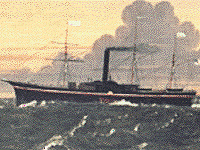
On August 20, 1857, several hundred passengers in San Francisco boarded the SS Sonora of the Pacific Mail Steamship Line and set sail for Panama City. The gold on board was worth $1.6 million at the time—imagine its value today. Among the treasures were thousands of freshly minted 1857-S double eagles, earlier $20 coins, ingots, and other forms of gold. Many of the double eagles were neatly stacked in long rows inside wooden boxes, while passengers carried their own stash in purses and boxes, showcasing their success in the goldfields. Upon arrival in Panama City, they took the Panama Railroad—a 48-mile line completed in 1855 that cut the isthmus crossing to just three or four hours instead of days of paddling and trekking through jungle. When the train reached Aspinwall, the passengers disembarked, and the treasure was moved into storage. The next part of the journey was aboard the side-wheel steamer SS Central America, formerly known as the SS George Law. It was on its forty-fourth voyage for the Atlantic Mail Steamship Company, which operated under a federal contract to deliver mail between the 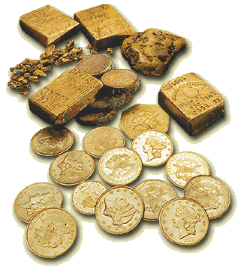 East and West. The steamers were captained by experienced Navy men with solid reputations, and at the helm of the Central America was Capt. William Herndon.
In early September 1857, the gold treasure was securely loaded onto the ship as passengers settled into their cabins, ready for a pleasant voyage to New York City. The time of year was perfect for travel. On September 7th, the ship arrived in Havana’s harbor, a favorite stop where passengers eagerly bought souvenirs and explored the town. The journey toward New York remained smooth and sunny, with calm seas—at least for the moment. At 5:30am on Wednesday, September 9th, the ship’s second officer reported they had covered 286 nautical miles in the past 26½ hours. Noticing a breeze picking up, he thought a storm might be coming, but wasn’t worried—after all, they were seasoned sailors. That confidence turned out to be their first mistake. The storm intensified, and with no port nearby, all they could do was keep the SS Central America facing into the waves. By Friday morning, September 11th, the crew still had control, but the ship was taking on water through the drive shaft, broken or open lights, and other spots. The vessel pitched violently, making it nearly impossible to feed coal into the boilers.
At 11:00am, Captain Herndon warned the passengers that the ship was in serious danger and called on all the men to help bail water using a bucket brigade. By 1:00pm, the rising water in the hold had doused the boiler fires of the SS Central America, and the paddlewheels stopped, leaving the ship at the mercy of the sea. By Saturday, September 12th, 1857, the storm began to pass, but it was too late—the ship was doomed. Passengers were ordered to abandon ship, and the SS Central America sank with all its treasure. In  total, 425 lives were lost, while only 153 were rescued by the brig Marine, which had also been damaged by the storm, though not as severely. The wreck was rediscovered on September 11, 1988, almost exactly 131 years after it went down in the hurricane—a valuable find for Thomas G Thompson, his crew, and the museums that would benefit.

